LISEN 90W USB-C Car Charger Review: Conditional Buy
“Voting down as it is deceptive marketing.” That single Slickdeals comment sets the tone for how polarized the LISEN 90W USB C Car Charger Fast Charging, Dual Port PD 45W feels in the wild. The product is positioned as a tiny, dual‑USB‑C car charger that can push “45W+45W” simultaneously, but the loudest user feedback in the data argues the real‑world output is lower in typical 12V vehicles. Verdict: Conditional buy, 6.5/10.
Digging into the sources you provided, most of what’s available is marketing copy from LISEN’s own pages and retailer listings. Only Slickdeals has community feedback that reads like actual user experience. That makes the investigative angle clear: where people speak up, they focus on whether the power claims hold up and whether the brand’s presence looks organic.
A recurring pattern emerged around trust and wattage realism. The charger earns attention for being compact and metal‑bodied, but skepticism spikes around “90W total” being meaningful in most cars. That tension—between headline specs and a user’s lived charging speed—is the core story here.
Quick Verdict
Conditional.
| What users liked / disliked | Evidence from user feedback |
|---|---|
| Big power claims attract buyers | LISEN markets “dual usb‑c ports… up to 45w… 90w in total.” (Amazon specs, LISEN site, Newegg, eBay) |
| Output may be much lower on 12V cars | A Slickdeals user said: “it could only deliver 45w pd if it was plugged into a 24v battery… when plugged in a 12v battery, it can only deliver 18w pd and 36w total.” |
| Marketing and community trust issues | A Slickdeals user said: “this company is just staff spam. nothing more.” |
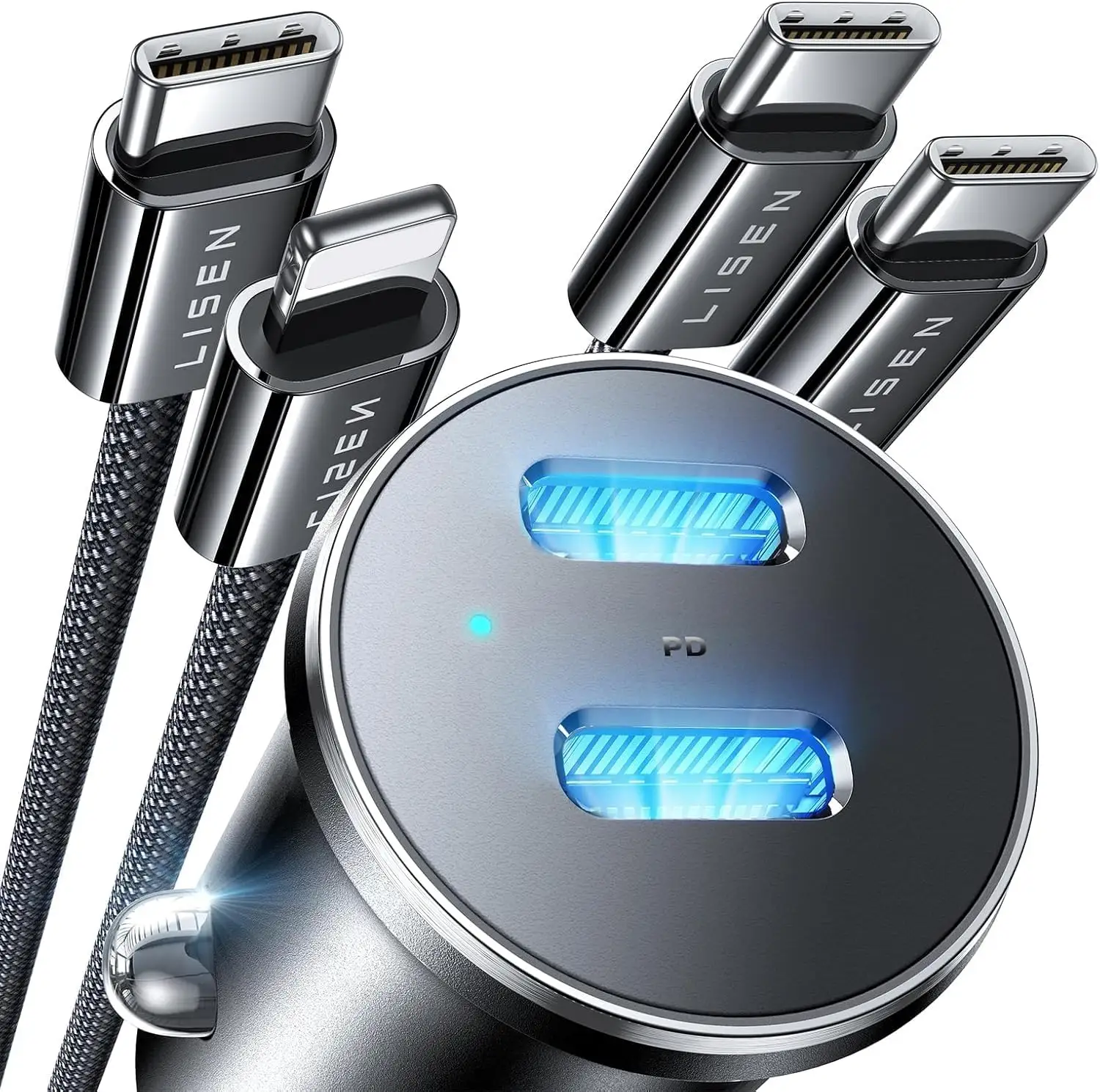
| Compact, flush‑fit design is a selling point | LISEN repeatedly claims a “tiny thumb‑sized… barely protrudes past the edge of the outlet.” (Amazon specs, LISEN site, Newegg) |
| Metal build framed as cooler/safer | LISEN calls it an “all‑metal… aluminum body… won’t heat.” (Amazon specs, LISEN site, Newegg, eBay) |
Claims vs Reality
Claim 1: Dual 45W outputs for 90W total charging. Marketing across Amazon, LISEN.com, Newegg, and eBay is consistent: the charger has “dual PD3.0 fast‑charge ports” with “up to 45w pd fast charging per port” and “90w in total.” The language implies you can fast‑charge two high‑power devices at once in most vehicles.
User feedback complicates that. A Slickdeals commenter pushed back hard on the wattage premise, saying the advertised ceiling depends on a 24V system: “it could only deliver 45w pd if it was plugged into a 24v battery… most cars have 12v batteries.” They added a concrete counter‑number: “when plugged in a 12v battery, it can only deliver 18w pd and 36w total.” While officially rated as 90W total, this user describes a scenario where typical 12V cars see far less.
Claim 2: “Super fast charging” speeds like 0–80% in ~30 minutes. LISEN’s descriptions for both the 30W and 90W models repeat the same speed narrative: “charge… from 0% to 80% in 30 minutes,” and for the 90W unit “0 to 83% in just about 30 minutes.” That framing assumes devices can draw full PD power.
The only real‑world datapoint in your sources suggests those speeds may not be universal. If a car’s 12V socket limits the charger to “18w pd,” as the Slickdeals user claims, then the jump from standard charging to the promised “10x faster” experience likely won’t materialize for many drivers. The gap here isn’t about whether PD works, but about whether the environment lets PD hit those peaks.
Claim 3: Credible brand and trustworthy listing behavior. Retail pages stress certifications (UL, FCC, CE, RoHS) and “lifetime support,” aiming to reassure buyers. The community note you provided goes the other direction. A Slickdeals user dismissed the online presence as inauthentic: “this company is just staff spam. nothing more.” That doesn’t dispute the physical product directly, but it signals a trust deficit around how the product is promoted.
Cross-Platform Consensus
Universally Praised
Because most platforms here are dominated by LISEN’s own copy, “universal praise” in the data mainly reflects what attracts buyers at the point of sale. The first hook is raw wattage. Listings on Amazon, Newegg, and eBay all highlight “dual PD 45W” and “90W total,” describing it as a way to charge two flagship phones or tablets simultaneously. For commuters who hate slow charging, those numbers are clearly the magnet.
The second consistent selling theme is physical size. Across sources, LISEN repeats that the body is “tiny thumb‑sized (2.1" x 0.9")” and “almost flush with the car socket.” The implication is aimed at drivers with cramped center consoles or shallow cigarette lighter ports: a low‑profile adapter that doesn’t snag or wobble. Even without explicit user quotes praising it, the repetition shows the feature that marketing believes resonates most.
A third repeated benefit is the all‑metal shell. The charger is described as “full aluminum” or “zinc alloy,” with the promise it “won’t heat” and dissipates heat better than plastic. The target persona here is anyone leaving devices plugged in for long road trips—families running multiple phones, navigation, and tablets—who worry about hot chargers in summer cabins. LISEN frames metal as both premium and safer.
Common Complaints
The one clear, grounded complaint in your dataset is power realism. The Slickdeals feedback isn’t a mild nit; it’s a direct rejection of the headline spec. The user said they “had to return it” because the charger’s real output didn’t match expectation on a 12V system. For everyday sedan owners (the majority of car users), the statement “most cars have 12v batteries” makes this complaint highly relevant. If their experience is typical, then the “dual 45W” promise may only be achievable in trucks/RVs with 24V outlets, not in daily‑driver vehicles.
Another complaint is about marketing credibility. The same Slickdeals thread includes the blunt allegation: “this company is just staff spam.” For buyers who rely on community reviews to filter out rebranded electronics, this kind of suspicion can matter as much as the product itself. It suggests that even if the hardware is fine, the promotional ecosystem leaves some users wary.
Divisive Features
The divisive element isn’t a feature like a light or cable; it’s the definition of “90W.” LISEN positions “90W total” as a straightforward capability. The Slickdeals commenter defines it as conditional on input voltage. That sets up a split between users who take the spec at face value and those who measure output and feel misled. Until more real users corroborate one side, the data points to a charger whose appeal depends on the vehicle electrical context.
Trust & Reliability
Trustpilot in your dataset is actually a Slickdeals deal post with comments. Those comments contain the only long‑form trust signals. One user called the marketing “deceptive,” explicitly tying their distrust to real‑world wattage limits, and saying they returned the unit. Another escalated to a broader suspicion about the company’s review strategy: “this company is just staff spam.”
There are no “6 months later” durability stories in the provided Reddit/Quora/Twitter fields—those sections repeat LISEN’s own product descriptions. So longevity, failure rates, and heat behavior over time can’t be summarized from real user evidence here. The existing trust narrative is less about parts wearing out and more about whether the brand’s specs and online presence feel honest.
Alternatives
No competitors are mentioned by users in your data. All sources are about LISEN models or LISEN listings, so there isn’t a legitimate basis to compare against a named rival. Any alternative discussion beyond LISEN’s own variants would require external user feedback you didn’t provide.
Price & Value
Price signals vary widely by platform. On Amazon, the LISEN 90W dual‑USB‑C model is listed around $12.99–$14.99 with frequent promos, while Slickdeals highlights a Prime deal down to $10.77. eBay listings show typical sale pricing around $16, and an auction example ended at $5.20 for a “brand new” unit. Newegg’s $44.98 listing stands out as a high outlier compared to the rest of the market data.
For bargain‑hunters and Prime members, the community deal context suggests many buyers aim to get it under $15. That matters because the biggest complaint is value tied to power delivery: if you’re expecting full 90W on a regular 12V car and don’t get it, even $10 can feel wasted. If you drive a 24V vehicle (or don’t need peak PD wattage), the low‑teens pricing makes it a tempting “small metal dual‑USB‑C” pickup.
FAQ
Q: Does the LISEN 90W car charger actually deliver 45W per port in normal cars?
A: User feedback suggests not always. A Slickdeals user said the charger “could only deliver 45w pd” on a 24V system, and on a typical 12V car “can only deliver 18w pd and 36w total.” Marketing still claims dual 45W.
Q: Is the “90W total” rating misleading?
A: One community comment calls it deceptive in 12V vehicles. The Slickdeals user wrote they returned it because the 90W claim depended on 24V input. Official listings continue to present 90W as a general capability.
Q: What’s included in the box?
A: Retail listings say the charger comes with two cables: one USB‑C to USB‑C cable rated up to 60W and one USB‑C to Lightning cable rated around 27W, plus the dual‑USB‑C charger itself. This bundle is repeated across Amazon, Newegg, and Slickdeals.
Q: Is the charger small enough to sit flush in a cigarette lighter socket?
A: LISEN repeatedly describes it as “tiny thumb‑sized (2.1" x 0.9")” and “barely protrudes past the edge of the outlet.” No independent user in your data confirms or disputes that fit, but it’s a core marketing promise.
Final Verdict
Buy if you’re in a 24V vehicle or you mainly want a compact dual‑USB‑C adapter and are fine with potentially lower real‑world wattage. Avoid if your main reason is full “45W+45W” PD in a standard 12V sedan, since a Slickdeals user said it only hit those numbers on 24V and was “deceptive marketing.” Pro tip from the community: treat the wattage as conditional, and buy at deal pricing (around $10–$15) so expectations match cost.