KICKER K-Series LOC Review: Conditional Verdict 8.4/10
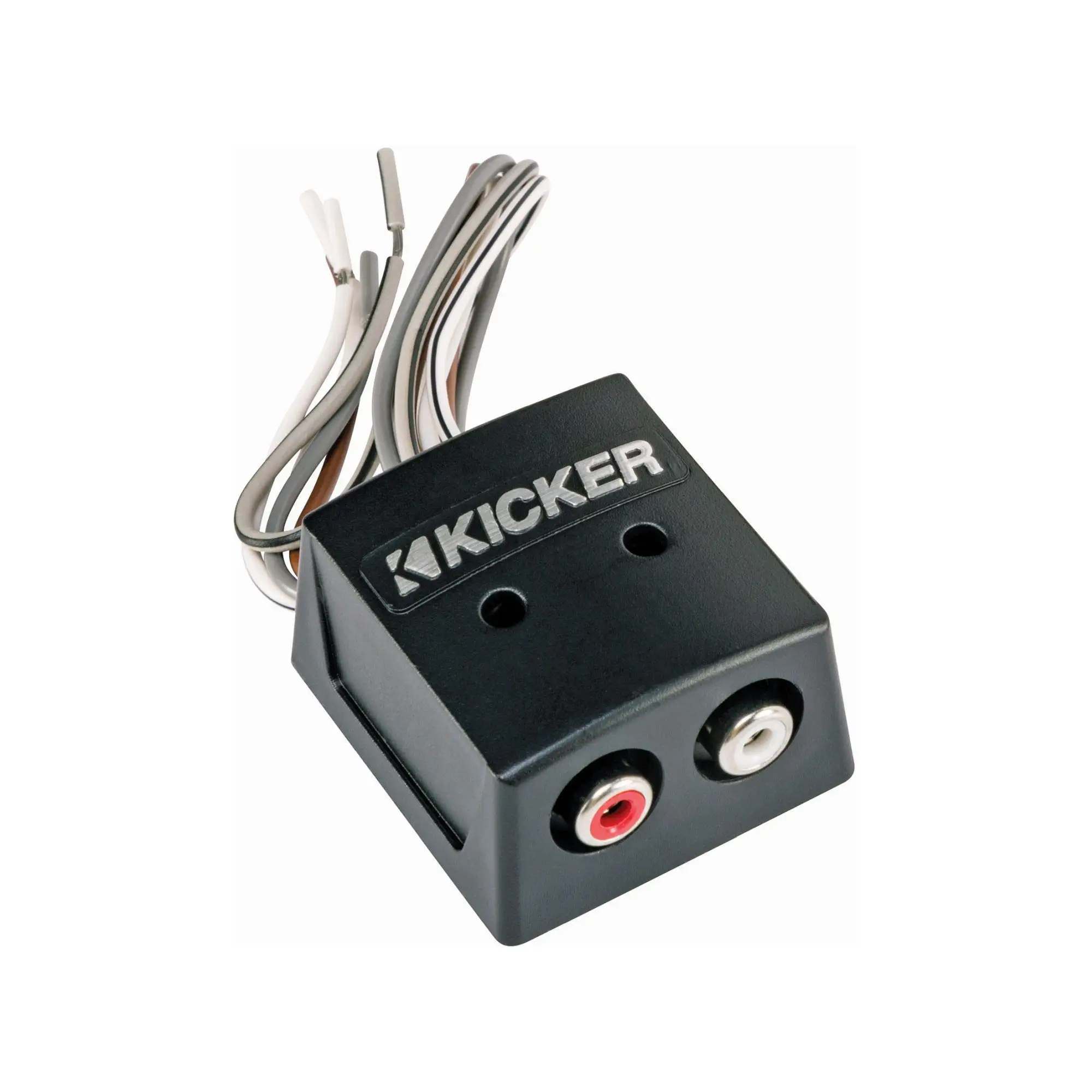
“Get one of these… wire the speakers to it… done.” That blunt Reddit confidence shows up again and again around the KICKER K-Series Interconnect Speaker to RCA Line-Out Converter—and it earns a Conditional verdict at 8.4/10 based on cross-platform sentiment and recurring install outcomes.
Quick Verdict
Conditional — Yes, if you’re adding an amp/sub to a factory radio and need a compact speaker-level to RCA solution; No, if your problem is actually noise/grounding or you need OEM-integration features beyond a basic LOC.
| Decision Factor | What the data shows | Who it’s for |
|---|---|---|
| Adding an amp/sub to factory radio | Reddit repeatedly recommends it as the “you’re golden” fix | Factory head-unit owners |
| Sound neutrality / flat response | Reddit calls it “one of the very few passive locs that’s flat 20-20khz” | SQ-focused budget builds |
| Install simplicity | Users describe quick splices at door/rear speakers | DIY installers |
| Noise risk | Some users recommend extra ground loop isolators/chokes | People chasing whine/hiss |
| Connector/fit issues (adjacent K-Series cables) | Best Buy review mentions “connectors are a bit loose on amplifier” | Tight-fit amp inputs |
Claims vs Reality
KICKER positions this converter as a “next level” line-out converter that stays “sonically neutral” and works with OEM radios that have protection circuitry. Digging deeper into user reports, the most consistent real-world “reality check” is that buyers aren’t obsessing over lab specs—they’re obsessing over whether it solves one problem: getting RCA signal from speaker wires without tearing apart the dash.
Claim 1: “Easy factory integration without pulling the head unit.”
That message aligns strongly with community behavior. A Reddit commenter framed it as a shortcut for reluctant dash-disassemblers: “i did nt really want to mess with the dash stereo… so you need a something like a line out converter, i used this one and connected to a door speaker… it was very simple.” Another user echoed the same path: “secondly, if you’re just trying to add a subwoofer… you can find the speaker wires elsewhere… kick panel or running board.” The reality, per these stories, is that the product’s value is tied to where you tap in—rear seat, door speaker, stock sub wiring—more than the converter itself.
Claim 2: “Flat response / sonically neutral.”
Marketing emphasizes neutrality; Reddit users actually repeat this as a buying reason. One commenter made it unusually specific for a forum recommendation: “one of the very few passive locs that’s flat 20 - 20 khz.” Another positioned it as the budget alternative to pricier processors: “if the audiocontrol is too much money, this should be the one you buy.” The reality is that “flat” becomes a trust signal for people who don’t want their line-out converter to become the bottleneck—especially when adding a subwoofer to a factory system.
Claim 3: “OEM protection compatible.”
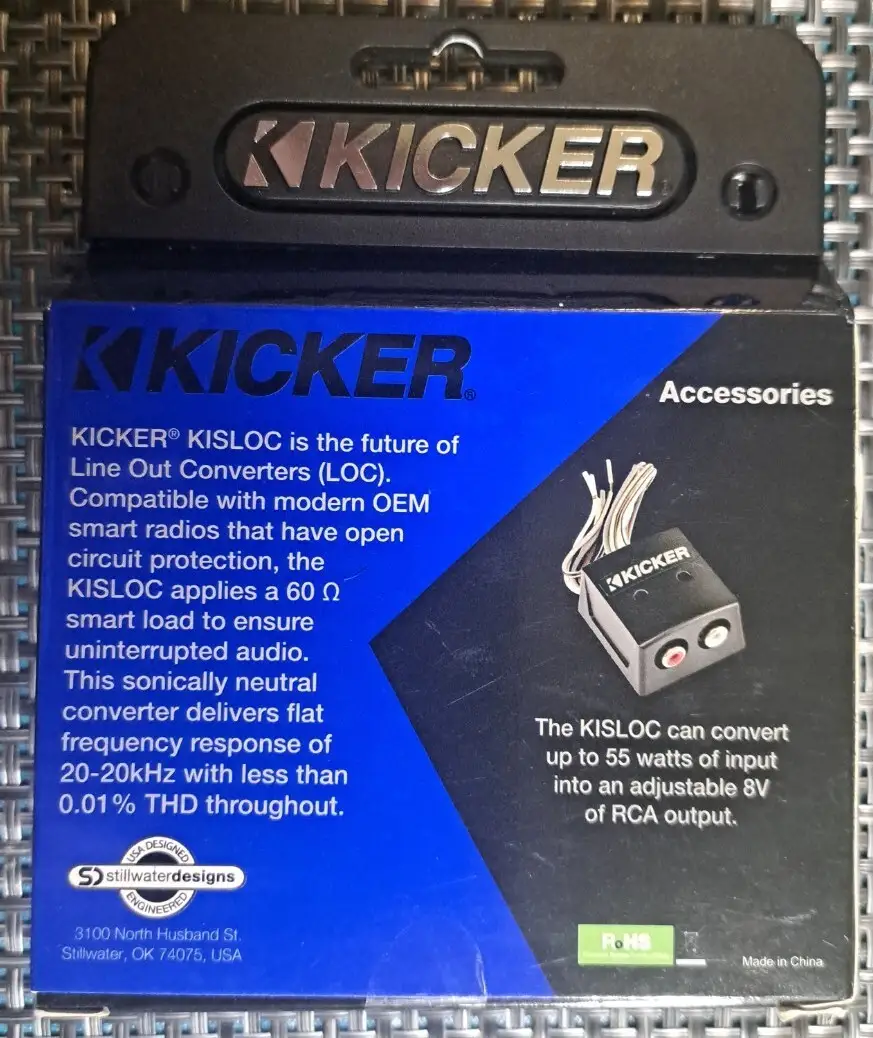
Crutchfield’s description highlights a load to bypass open-circuit protection. Users indirectly validate the need by repeatedly recommending a LOC when factory radios lack RCA outputs: “the stock radio doesn’t have a sub out so you’ll need to buy a converter and splice it.” But user stories also reveal that compatibility doesn’t equal perfection—noise and gain staging still show up as practical hurdles, leading some to stack fixes (polarity checks, ferrite chokes, ground loop isolators) around the converter.
Cross-Platform Consensus
Universally Praised
The strongest praise isn’t poetic—it’s procedural. A recurring pattern emerged: people treat this converter as the missing “bridge” between factory speaker wires and an aftermarket amplifier or powered sub. For factory head-unit owners who don’t want an aftermarket stereo, that bridge is the whole point. A Reddit user summarized the appeal with minimal drama: “if you’re desperate for dome punchier bass… you can splice from your speaker wire… and turn them into rca ports for your amp… so you can add a subwoofer no problem.”
DIY installers also praise flexibility in tap locations, which changes the effort level dramatically. One Reddit user described bypassing the head unit entirely: “tapped into speakers behind the rear seat… and ran to a 400 watt amp.” Another spelled out how it’s commonly wired in practice: “connect to the 2 right wires… and 2 left wires… this requires you to cut the rear speaker wire though.” For someone building a budget system in a sedan or hatchback, that “cut and splice” reality is exactly what they’re signing up for.
A third praise theme is cost-to-results. People repeatedly frame it as the sensible, cheaper alternative to more expensive integration gear. A Reddit commenter drew that line explicitly: “if the audiocontrol is too much money, this should be the one you buy.” And even when the discussion drifts into home-audio hacks, the converter is still described as a straightforward fix: “they are usually meant for car audio but there is no reason they won’t work for home audio.”
After those stories, the throughline is simple: for “add a subwoofer to factory radio” installs, users treat it as a practical tool rather than a luxury accessory.
- Best-fit use case: factory radio + aftermarket amp/sub without RCA outs
- Typical tap points mentioned: door speakers, rear speakers, stock sub wiring
- Motivation repeated: avoid pulling the head unit; keep install simple
Common Complaints
Complaints in the provided data skew less toward “product broke” and more toward “system problems you notice once amplification is involved.” Digging deeper into user reports, noise troubleshooting is a recurring anxiety—especially among people encountering alternator whine, buzzing, or gain mismatch. One Reddit user, advising someone chasing noise, suggested a whole chain of mitigation: “i’d suggest ferrite chokes… verifying polarity first… if that doesn’t clean it up… use something like this speaker cable to rca so you can adjust the gain… next… install ground loop isolators on the rca inputs.” The converter becomes part of the solution, but the complaint is that it’s not always the only thing you need.
Another friction point is uncertainty for first-timers: what exactly this device does, where it connects, and whether it hurts existing speaker output. One Reddit question captured that worry: “does it introduce any attenuation… and therefore does it cause any degradation in sound quality (or max volume)?” Others showed confusion about whether they needed an adapter at all: “now i’m wondering if i need this adapter that someone suggested.” The complaint here isn’t build quality—it’s that the category (LOC / speaker-to-RCA) is confusing, and mistakes can mean rework.
Finally, adjacent K-Series cable reviews hint at occasional fit/connector frustrations. A verified Best Buy reviewer (for Kicker K-Series RCA cables) praised sound clarity but noted: “connectors are a bit loose on amplifier :-(.” While that’s not specifically the LOC unit, it reflects a real install pain point that can show up in the same shopping cart and the same system.
- Most common pain: noise troubleshooting and gain staging complexity
- Most common confusion: whether you “need a LOC” and where to tap
- Occasional hardware gripe (adjacent cables): loose-feeling connectors reported
Divisive Features
The most divisive “feature” is whether a LOC is the right solution at all. In car-audio threads, many treat it as the obvious answer: “if your sub doesn’t have speaker level inputs, you can buy a converter like this and you’re golden.” But in home-audio contexts, some push back that you’re patching around the real fix. One Reddit commenter drew a hard line: “if you are spending $500 on a subwoofer, it is time for a new receiver with an rca sub out connection.” That’s a philosophical divide: adapt the existing gear versus replace it with gear designed for the job.
Another split is between “cheap is fine” and “spend for adjustability.” Users compare this product class to pricier options with features like adjustment and processing. A Reddit commenter framed the choice starkly: “you can do something cheap… or expensive with adjustment.” For a basic add-a-sub install, many accept the simple converter; for people chasing perfect integration, the converter can feel like a compromise.
Trust & Reliability
Trust signals in the dataset lean heavily on volume and repeat purchasing, especially where ratings are plentiful. On Amazon, the KISLOC listing shows a strong aggregate rating with high review count (4.5/5 across thousands of reviews), which often functions as social proof for buyers who just need a dependable speaker-wire-to-RCA converter rather than a feature-rich interface.
Long-term reliability stories in the Reddit excerpts are more about “still works” than detailed durability testing, but users do reference bringing older threads back and repeating installs across devices. One Reddit user described repeating a similar integration approach across multiple arcade cabinets: “i have also set up the same thing on atgames alu… i integrated this line out converter straight into the speaker wires… works loke a charm.” Another mentions reviving an older discussion to apply the same concept: “bringing this 6 month old thread back… you could find a line to rca adapter… i haven’t done it but i’ve done similar work… using a similar part.”
Best Buy’s verified-purchase ecosystem for related Kicker interconnects shows strong satisfaction language tied to durability and noise-free operation. A verified purchaser (PaulBGood) wrote: “work great no unwanted noise and good quality,” while another (Dad of 4) noted: “they don’t give off any noise and have been great.” These are about RCA cables, but they reflect brand trust that spills into LOC purchases for many shoppers.
Alternatives
Only a few alternatives are explicitly mentioned in the user data, and they fall into two camps: higher-end car-audio processors/LOCs and “replace the receiver” solutions for home audio.
For buyers comparing against AudioControl gear, the Kicker unit is repeatedly framed as the budget-friendly pick when you want a flat response without paying for advanced features. A Reddit user made that comparison directly: “if the audiocontrol is too much money, this should be the one you buy.” Another user described the tradeoff category-wide: “cheap… or expensive with adjustment,” linking to an AudioControl converter as the “expensive” path.
In home-audio threads, an entirely different alternative emerges: don’t adapt speaker-level outputs at all—upgrade to equipment with proper sub outs. One Reddit commenter’s advice was blunt: “it is time for a new receiver with an rca sub out connection.” That’s less a competing product and more a competing philosophy: buy a purpose-built receiver instead of a line-out converter workaround.
Price & Value
Price chatter in the dataset suggests this converter sits in the “small spend, big functional unlock” category. Amazon’s listed price in the provided snapshot shows it discounted (around the high teens USD), while Crutchfield lists it closer to $30, reinforcing the idea that where you buy can materially change perceived value.
Resale and market pricing appears stable on eBay, with new units commonly listed around the low $20s to low $30s depending on seller and shipping. That stability matters for budget installers: you’re not buying a niche accessory with unpredictable availability; you’re buying a common part that holds a fairly consistent street price.
Community buying tips tend to be procedural rather than deal-hunting: tap into accessible speaker wires, avoid tearing apart the dash, and leave power connections for last. One Reddit user advised a cautious install sequence: “install everything into the car first… dont connect the power wire… until your all done.” Another framed convenience as value: “no need to pull the head unit… kick panel or running board.” The value proposition, in user terms, isn’t just dollars—it’s hours saved and trim panels not broken.
FAQ
Q: Do I need this to add a subwoofer to a factory radio with no RCA outputs?
A: Usually yes—if your sub/amp needs low-level RCA input. Reddit user advice is direct: “if your sub doesn’t have speaker level inputs, you can buy a converter like this and you’re golden.” Multiple threads describe splicing into door/rear speaker wires and running RCA to the amplifier.
Q: Where do people commonly tap the speaker wires for the converter?
A: Users often avoid the head unit and tap closer to the speakers. Reddit users mention “behind the rear seat,” “a door speaker,” and even “kick panel or running board.” The recurring goal is reducing dash work while still getting a clean enough signal for an amp/sub.
Q: Will it fix alternator whine or buzzing noise by itself?
A: Not always. Some users treat it as one part of a noise-fix chain. A Reddit commenter suggested “ferrite chokes,” “verifying polarity,” and even adding “ground loop isolators on the rca inputs.” If noise is the core problem, you may need additional grounding and filtering steps.
Q: Is this a good idea for home audio (speaker-level to RCA)?
A: Some users say it can work as a workaround, but it’s debated. One Reddit user said, “there is no reason they won’t work for home audio,” while another argued that if you’re spending serious money, “it is time for a new receiver with an rca sub out connection.” It depends on your gear and expectations.
Q: Is it better to buy a pricier converter like AudioControl instead?
A: The data frames it as budget vs features. Reddit users recommend Kicker when “audiocontrol is too much money,” but also acknowledge an “expensive with adjustment” option. If you need advanced tuning or integration, users imply pricier options may be worth it; for basic add-a-sub, Kicker is often “the one you buy.”
Final Verdict
Buy if you’re a factory-radio owner adding a subwoofer or amplifier and you want a compact speaker-level to RCA line-out converter that forum users describe as “works loke a charm” and “you’re golden” when tapped into accessible speaker wiring.
Avoid if your main issue is noise/ground loops or if you’re trying to solve a home-audio mismatch where upgrading to a receiver with a proper sub out is the cleaner path.
Pro tip from the community: “install everything into the car first… just dont connect the power wire and fuse… until your all done,” then dial in gain carefully—and if noise shows up, consider “ground loop isolators on the rca inputs.”