KICKER CS 6x8 Speakers Review: Worth It? 8.6/10
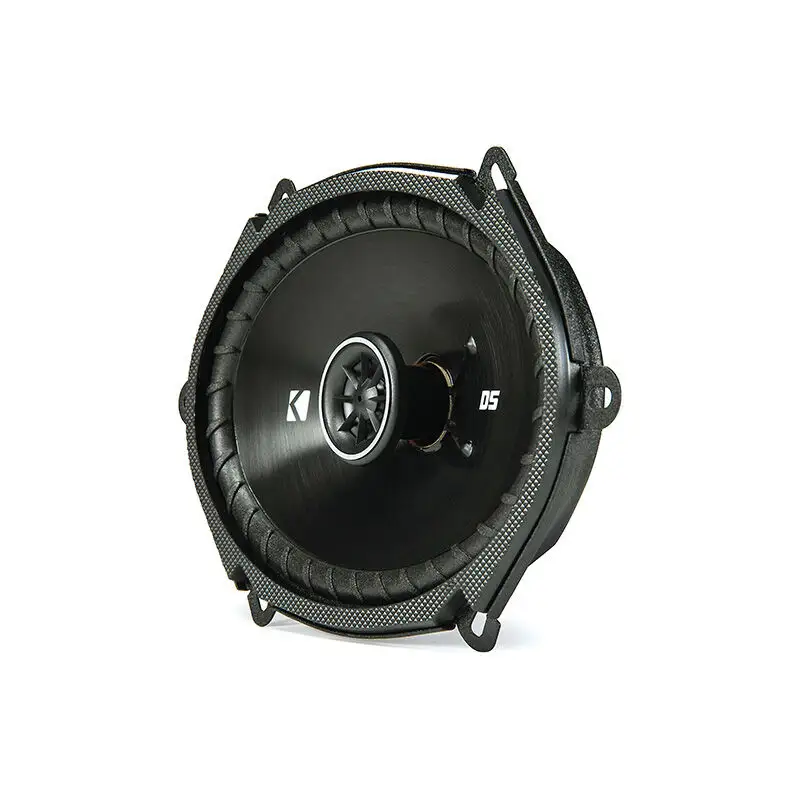
A door-panel rattle is a pretty good “problem” to have—because multiple owners say these KICKER CS Series 6 x 8 Inch Car Speaker (2 Pack, Black) upgrades hit hard enough to shake loose trim. One Best Buy reviewer even warned that these “produce some surprisingly nice bass,” adding that without sound deadening “your door panel might start to rattle from vibrations.” Verdict: a high-value factory-speaker replacement with real clarity, but bass expectations (and install effort) vary. Score: 8.6/10
Quick Verdict
Conditional Yes — worth it for most factory upgrades, especially if you value crisp highs and an easy OEM-size swap, but don’t buy expecting subwoofer-level low end without an amp and good door treatment.
| What you’ll likely experience | Evidence from user feedback | Who it’s best for |
|---|---|---|
| Clearer highs and overall clarity | Best Buy reviewers: “clear as a bell”; “I can hear the highs” | Drivers upgrading “dull factory” speakers |
| Noticeable upgrade vs OEM | “night and day difference”; “great up grade from factory” (Best Buy) | Daily commuters, older vehicles |
| Bass is debated | “not enough bass” vs “full, low, bass sound” (Best Buy) | Bass-lovers should read carefully |
| Works on head unit for some | “do not need an external amplifier to sound big” (Best Buy) | Budget builds, stock stereos |
| Amp can meaningfully help | “to get good sound quality… you need a quality amp” (Best Buy) | Anyone chasing loudness/detail |
| Install may need adapters/splicing | “connector… does not snap directly” and “had to solder” (Best Buy) | First-time DIY installers: plan ahead |
Claims vs Reality
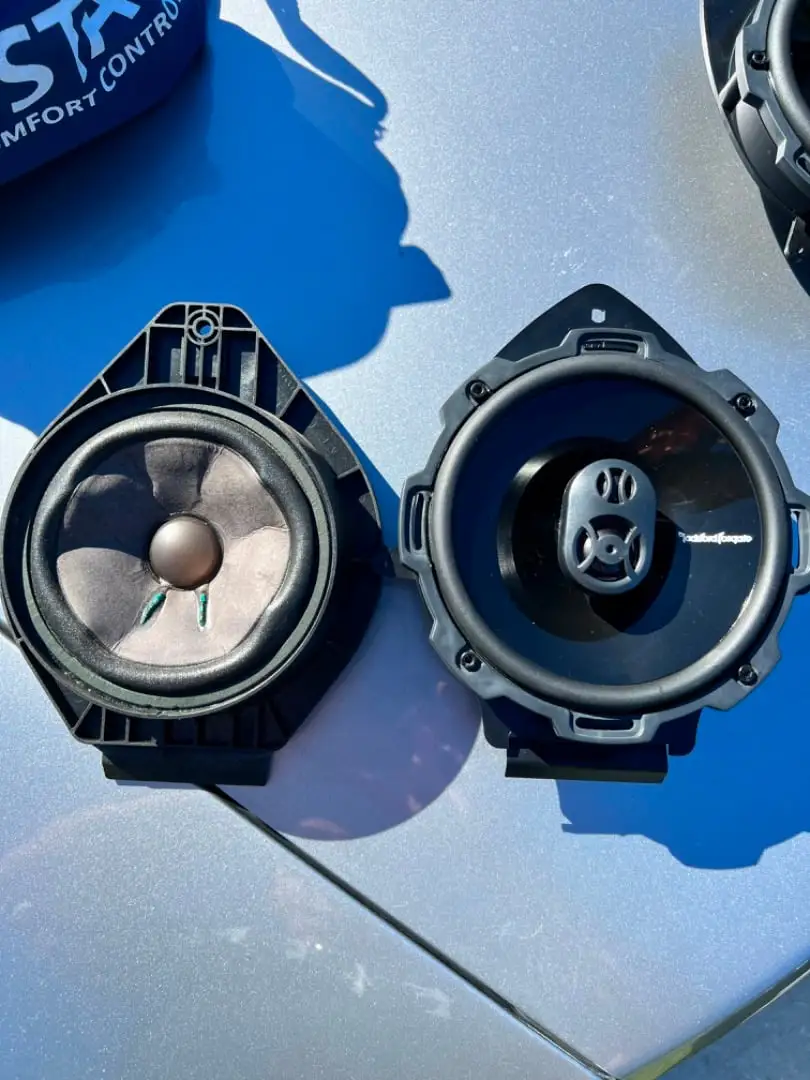
KICKER’s product positioning leans hard into “remarkable performance” and “ultra-clean bass,” and the official materials emphasize fitment—“fit nearly every car made,” “zero-protrusion tweeters,” and a shallow mount depth. Digging deeper into user reports, that broad story mostly holds: people routinely describe these as a straightforward factory upgrade that delivers more clarity and volume than tired OEM speakers.
The first place the marketing narrative collides with real-world expectations is bass. While KICKER copy promises “even deeper lows,” some owners walked away wishing the low end had more weight. A Best Buy reviewer who liked the clarity still admitted: “the lows aren’t as prominent as expected… even when turning the bass all the way up.” Another spelled it out for bass seekers: “there was some bass missing… maybe tight but not as punchy,” ultimately advising, “if you really want bass then I would suggest looking for other speakers.”
But the gap isn’t one-directional—other users describe the opposite. A recurring pattern emerged where placement, pairing, and setup determine whether bass feels “missing” or “surprisingly nice.” One Best Buy buyer running mixed speakers said the Kickers delivered “a full, low, bass sound,” and another warned the bass output can be strong enough that “your door panel might start to rattle.” So while marketing implies consistently deep lows, the data suggests bass satisfaction depends heavily on installation environment and expectations.
The second reality check is installation. The brand messaging stresses broad compatibility, and many reviewers reinforce “easy to install” and “easy to wire.” Still, multiple stories show that “fits” doesn’t always mean “plug-and-play.” One owner flagged a specific hurdle: “the cable in the door actually has a connector on it that does not snap directly onto this replacement speaker.” Another detailed a more involved DIY path: they bought harness connectors, but “had to solder the speaker cables” when the adapter didn’t work as expected. For beginners, these aren’t dealbreakers—but they’re not mentioned in the clean “drop-in” style pitch.
Cross-Platform Consensus
Universally Praised
“Clear as a bell” is the kind of line that shows up when people didn’t just want louder speakers—they wanted detail back. Across Best Buy feedback, a consistent theme is that these are a clarity-first upgrade for worn or underwhelming factory systems. One buyer replacing crackling originals described getting “a nice volume” with the stock receiver and noted the speakers’ “higher frequencies are a bit loud,” even needing to notch them down on EQ. For listeners who felt their OEM setup buried vocals and cymbals, that kind of presence reads like a win.
That clarity seems to matter most to drivers who are upgrading older vehicles where stock speakers are simply tired. A Best Buy reviewer summed up the “why” in plain terms: “great replacement for the 8 year old factory speakers… clear sound.” Another leaned into the transformation: “night and day difference in sound quality.” For commuters and truck owners—F-150 comes up repeatedly—this is framed less as audiophile tweaking and more as restoring music enjoyment without rebuilding the whole system.
Value is another recurring thread, especially when buyers catch discounts. One reviewer called them “best buy for the money,” and another framed the comparison against pricier competition: “Cannot explain the quality of sound difference from my $200 Hertz 6x8s… much clearer and crisp sounds… awesome for cheap!” For budget-focused shoppers, these anecdotes paint a picture of a product that punches above its price, particularly as a factory speaker replacement kit rather than a full custom build.
Finally, a subset of users praises that they can sound good even without adding an amplifier—important for people who don’t want to touch wiring beyond speakers. One Best Buy review said the speakers “work great powered from the head unit and do not need an external amplifier to sound big.” Another mentioned running a factory stereo that “only puts out about 20 watts” and still finding the improvement “very noticeable.” For first-time upgraders, that implies a realistic “step one” upgrade path: swap speakers now, add an amp later if you want more.
After those narratives, the praise clusters into a few repeatable points:
- Clear highs and detail (“clear as a bell,” “I can hear the highs”)
- Big perceived improvement vs OEM (“night and day difference,” “great up grade from factory”)
- Strong value when discounted (“best buy for the money,” “awesome for cheap”)
Common Complaints
Bass expectations are the most common friction point, and the complaints aren’t subtle. One Best Buy owner expected more low-end impact: “not as loud as I thought it would be… the lows aren’t as prominent as expected.” Another went further, describing “not enough bass” despite decent volume and highs. For bass-first listeners—hip-hop fans, EDM drivers, anyone equating “upgrade” with “more thump”—these stories suggest the CSC68 may feel more balanced than boomy, especially off a stock head unit.
The other recurring pain point is installation compatibility at the connector level. Even when the speaker size matches, wiring can complicate the “easy install” narrative. One reviewer warned beginners that the factory door connector “does not snap directly onto this replacement speaker,” and cutting the connector risks losing wire slack inside the door. Another described buying a harness connector but still needing to solder when it didn’t work. For DIY installers, the implication is practical: budget time and parts for adapters, and don’t assume plug-and-play.
A smaller but pointed complaint revolves around included accessories. One user was surprised: “a pair of reasonably expensive speakers did not include any speaker wire,” calling out the omission even though they were “overall pleased.” That kind of gripe typically hits beginners hardest—people expecting a “kit” experience rather than component-only hardware.
After those narratives, the complaint pattern looks like this:
- Bass can underwhelm for some (“no bass,” “not enough bass”)
- Not always plug-and-play wiring (“does not snap directly,” “had to solder”)
- Missing extras (“did not include any speaker wire”)
Divisive Features
Bass is the most divisive feature by far, because user experiences point in opposite directions. One Best Buy reviewer said “no bass but what do you expect from a 6x8 speaker,” while another said these “produce some surprisingly nice bass,” to the point of needing “dyno mat” to stop rattles. A third praised “great low-end bass sound” in a specific setup where the Kickers were placed “in rear panel directly behind me,” suggesting that vehicle layout and placement can shape perception as much as the speaker itself.
Amplification is similarly split. Some owners argue these sound “big” on head unit power and don’t “need an external amplifier,” which is compelling for simple upgrades. Yet another reviewer cautioned that “to get good sound quality out of them you need a quality amp.” Taken together, the most defensible read is that they’re usable—and often impressive—on stock power, but they scale with better amplification for people chasing loudness and control.
Trust & Reliability
One interesting trust signal in the provided data is how often reviewers anchor their praise in long ownership arcs or replacement cycles: “great replacement for the 8 year old factory speakers,” and “my stock front left speaker started making terrible noise… so it was time for a replacement.” These aren’t one-week impressions; they’re triggered by real failure points in aging OEM systems, and users frequently describe the KICKER swap as restoring “clean sound” and eliminating crackle.
That said, the Trustpilot line item in the dataset doesn’t provide standalone verified end-user commentary about scams or shipping issues; instead, it repeats a Best Buy review block. So the reliability signal here comes more from repeated installation-in-vehicles stories (F-150, Focus, Econoline) than from long-term “6 months later” durability posts. The closest durability-adjacent theme is that multiple buyers emphasize practical build satisfaction—“holds up to its name,” “working great”—but no detailed multi-month degradation reports are present in the supplied text.
Alternatives
Competitors appear directly in user comparisons, and those are the only fair alternatives to weigh here. One Best Buy reviewer compared against JBL, saying they had “JBL Stage 6x8 speakers and they didn’t sound that great… couldn’t hear the highs very well,” then said the KICKER swap “blew me away” because “I can hear the highs and the lows.” For someone whose main frustration is muffled highs, that story frames the CSC68 as a clarity upgrade.
Another user compared against Hertz, and the tone was even more decisive: “Cannot explain the quality of sound difference from my $200 Hertz 6x8s… much clearer and crisp sounds.” That doesn’t prove Hertz is worse in general, but it does show at least one buyer felt the value/clarity trade favored KICKER in their setup.
Polk is mentioned in a mixed system: one buyer paired KICKER rear speakers with “Polk Audio DB 572 up front,” saying the Kickers offered “full, low, bass sound” that “compliment the better highs” of the Polks. For shoppers building a staged upgrade, this reads like a practical recipe: let something like Polk carry the sparkle up front while KICKER fills in body and low-end presence in the rear—at least for that user’s ears.
Price & Value
The Amazon listing in the data shows a discounted price of $71.96 (down from $79.99) and an overall 4.5/5 rating snapshot for the product page. Best Buy’s review environment shows the CS 6x8 often positioned as a strong “bang for your buck” upgrade, with multiple users praising the audible jump over factory speakers and framing it as money well spent.
Resale/market pricing signals show variability depending on bundle size and seller. An eBay listing for a multi-speaker bundle (4 speakers) shows $143.92 with “39 sold,” while other eBay search results show pairs appearing in the ~$60–$100 range. For deal hunters, user feedback suggests timing matters: one reviewer celebrated paying “$61.00” as “a fantastic deal.” The buying tip implied by the community tone is straightforward—watch for sales, because value perception spikes when these land closer to the low-$60s to $70s range.
One more community tip emerges from practical experience: consider budgeting for install accessories. Between wiring harnesses, possible soldering supplies, and optional sound deadening (often discussed as “dyno mat”), the “true cost” can be higher than just the speaker price—especially for first-time DIY installs.
FAQ
Q: Do the KICKER CS 6x8 speakers need an amplifier?
A: Not always. A Best Buy reviewer said they “do not need an external amplifier to sound big,” but another insisted “to get good sound quality out of them you need a quality amp.” Expect solid results on a factory head unit, with better control and loudness if amplified.
Q: Will I get strong bass from these 6x8 speakers?
A: It depends on expectations and setup. Some owners said “not enough bass” or even “no bass,” while others reported “full, low, bass sound” and “surprisingly nice bass” that can cause door rattles. Bass perception varies by vehicle, placement, and tuning.
Q: Are these a plug-and-play replacement for factory speakers?
A: Size fit is commonly praised, but wiring may not be plug-and-play. One Best Buy reviewer warned the factory connector “does not snap directly onto this replacement speaker,” and another said they “had to solder.” Beginners may want a compatible harness adapter on hand.
Q: Do these include speaker wire or everything needed to install?
A: At least one buyer complained they “did not include any speaker wire,” even though they were otherwise pleased. Plan on reusing factory wiring or buying speaker wire/adapters separately, especially if you’re doing a first-time DIY install.
Final Verdict
Buy if you’re the driver replacing aging factory speakers and you want clearer highs, louder clean output, and a noticeable “night and day difference” without committing to a full system rebuild.
Avoid if your #1 goal is heavy bass without a subwoofer or if you need a guaranteed plug-and-play harness fit with zero wiring work.
Pro tip from the community: if you like to crank volume, consider door sound deadening—one Best Buy reviewer said the bass can be strong enough that “your door panel might start to rattle from vibrations.”