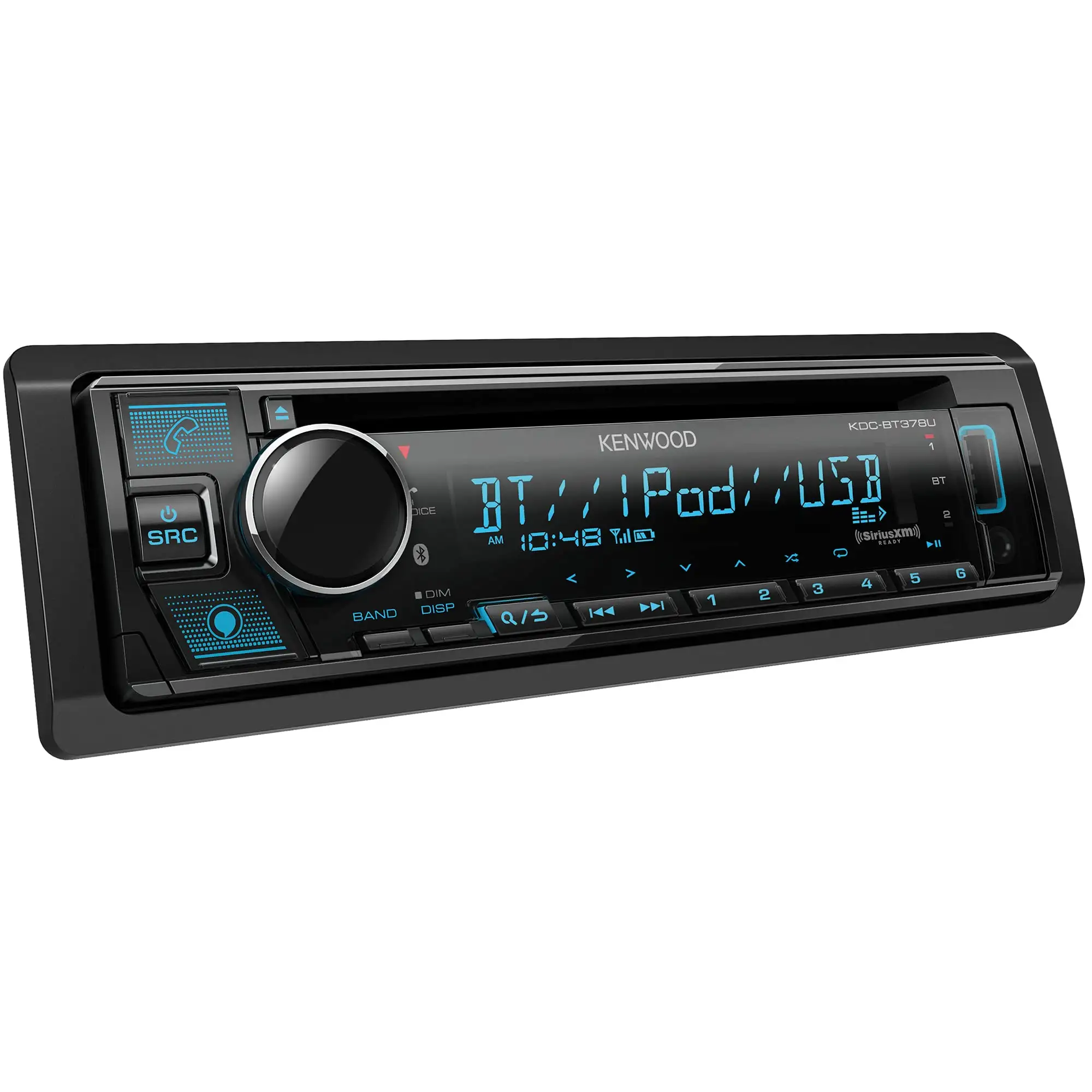
KENWOOD KMM-BT332U Review: Great Value, Some Caveats
“One of the best head unit yet!” is the kind of line that keeps showing up around the KENWOOD KMM-BT332U Bluetooth Single DIN Car Stereo—and it points to a clear theme: people buying this unit for a straightforward, modern upgrade tend to walk away impressed. Based on the feedback provided, the verdict is Conditional: it looks like a strong value pick for basic Bluetooth/USB use, but a few real-world fit and environment caveats keep it from being universal.
Verdict: 8.3/10
Quick Verdict
Yes/No/Conditional: Conditional — a strong buy for budget-minded upgraders who want Bluetooth + solid radio + simple controls, but be careful about install fitment quirks and moisture exposure in marine-ish setups.
| What buyers focused on | What they said (source) | Who it helps most | Risk/Downside noted |
|---|---|---|---|
| Overall value | “killer deal for the money” (AutoZone reviews) | Budget upgraders | Not everyone mentions install context |
| FM reception | “great fm radio reception too” (AutoZone reviews) | Commuters, rural drivers | No detailed station-by-station evidence |
| Sound quality | “sounds great when paired to the original kicker speakers” (AutoZone reviews) | People keeping factory speakers | One user warns about moisture |
| General reliability (early) | “Only had it 6 mo, but works well.” (AutoZone reviews) | Buyers wanting a simple swap | Still short-term ownership |
| Fitment | “radio flange is a little thin” (AutoZone reviews) | Older-truck installs | Cosmetic/fit concern |
| Install accessories | “use the pigtail kit sold separately - no issues” (AutoZone reviews) | DIY installers | Implies extra purchase |
Claims vs Reality
Kenwood’s official positioning leans hard on modern smartphone integration and the idea that this is an easy, flexible upgrade: Bluetooth, multi-device pairing, and “Alexa ready.” Digging deeper into the feedback provided, users don’t argue with the core premise—most praise is about it “works just fine”—but they tend to validate the product in practical, grounded terms like reception, basic functionality, and value rather than voice-assistant magic.
A recurring pattern emerged in AutoZone feedback: many comments read like relief after a clean install and immediate payoff. A verified buyer on AutoZone noted: “affordable car stereo. works just fine.” Another added a specific performance claim: “great fm radio reception too.” That’s the kind of “reality check” that matters to commuters and anyone upgrading an older vehicle: if Bluetooth works and radio pulls stations clearly, the product is doing its job.
Where marketing breadth meets real-world constraints is installation context. The official specs highlight “short chassis design” and “installation is made easier,” yet at least one buyer flags a physical fit nuance: “if you’re putting it in an obs ford, the radio flange is a little thin, but it doesn’t look too bad.” That doesn’t directly refute the short-chassis claim, but it suggests some installs will still require patience, expectations management, or extra trim/support choices.
Cross-Platform Consensus
Universally Praised
“Best bang for the buck!” is not subtle, and it’s not alone. Across the AutoZone review snippets, value is the drumbeat—especially for people who just want a reliable single-DIN head unit without paying touchscreen money. A verified buyer on AutoZone noted: “there was nothing to dislike about this stereo - killer deal for the money.” For budget upgraders replacing a dead factory radio or an aging aftermarket unit, that kind of statement signals the purchase is justified even before you get into deeper features like EQ bands or pre-outs.
A second consistent “win” is baseline performance—buyers repeatedly describe it as simply working. A verified buyer on AutoZone wrote: “works good,” and another echoed: “works just fine.” That matters most to DIY installers and daily drivers who aren’t chasing advanced integrations; they’re looking for predictable Bluetooth streaming, usable controls, and a radio that doesn’t frustrate them.
FM reception stands out as a concrete, experience-based compliment. A verified buyer on AutoZone said: “great fm radio reception too.” For commuters in fringe coverage areas or drivers who still rely on FM for local news/sports, that’s an immediate quality-of-life improvement—and it lines up with the product’s positioning as a competent AM/FM receiver even though it’s a digital media unit.
Sound quality gets praise too, especially when paired with existing speakers. One particularly situational but vivid story comes from a buyer using it in a boat context: “exact replacement for what i had previously in my boat. sounds great when paired to the original kicker speakers.” For users keeping their current speakers (factory or otherwise), this suggests the unit can deliver satisfying sound without needing a full system rebuild.
Praised themes (from AutoZone reviews):
- Value: “killer deal for the money,” “best bang for the buck!”
- Basic performance: “works just fine,” “works good”
- Reception: “great fm radio reception too”
- Sound: “sounds great when paired to the original kicker speakers”
Common Complaints
Not every issue shows up as a “complaint” in the typical rant sense; some are more like field notes that warn certain buyer types. The strongest caution is environmental: that same boat installer adds a hard warning—“make certain it does not get any moisture or it is toast!” For marine users or anyone with an open-cab/soft-top/off-road rig where water intrusion is realistic, this is a big deal. The unit is marketed as a car receiver, and this user story reinforces that it may not tolerate moisture well in real life.
Fitment and aesthetics also surface in a specific install scenario. A verified buyer on AutoZone reported: “if you’re putting it in an obs ford, the radio flange is a little thin, but it doesn’t look too bad.” That’s not catastrophic, but it’s a reminder: older dashboards, thinner mounting points, or vehicle-specific trim can change a “simple swap” into a more fiddly install—especially for users who care about a factory-clean look.
Another recurring practical point is that some installs go smoother with the right accessory. A verified buyer on AutoZone advised: “use the pigtail kit sold separately - no issues.” For DIY installers, that reads like: budget for the harness/pigtail and don’t assume the box alone solves everything. It’s less about product failure and more about the total cost and friction of getting to a clean, stable setup.
Common cautions (from AutoZone reviews):
- Moisture sensitivity warning: “make certain it does not get any moisture or it is toast!”
- Vehicle-specific fit quirk: “radio flange is a little thin”
- Install may require extras: “use the pigtail kit sold separately”
Divisive Features
The feedback set provided doesn’t include detailed arguments about advanced features like Amazon Alexa integration, multi-phone switching, or five-device “Music Mix.” What is divisive, instead, is how “simple and great” this unit feels depending on where it’s installed and how it’s used.
For straightforward car installs, the tone is glowing and confident. A verified buyer on AutoZone wrote: “i love it ! . . . best head unit yet !” Another added: “can’t get a better stereo for the price . this is awesome.” But for nonstandard environments—like a boat—the same core unit can become fragile: “make certain it does not get any moisture or it is toast!” The divide here isn’t taste; it’s context.
Trust & Reliability
On trust signals, the strongest “pattern” in the provided dataset is actually consistency of sentiment: the AutoZone review excerpts repeatedly emphasize satisfaction and value (“great price and value,” “works just fine”), which generally reduces scam anxiety because buyers sound like they received what they expected.
For durability, there is at least one explicit time-based datapoint: a verified buyer on AutoZone said, “Only had it 6 mo, but works well.” That’s encouraging for short-term reliability, but it’s not the “years later” confidence some shoppers want. The only other durability-adjacent story is the harsh environmental warning from the boat user—“make certain it does not get any moisture or it is toast!”—which frames longevity as highly dependent on keeping it dry and properly protected in exposed installs.
Alternatives
The provided data references other Kenwood models as replacements/adjacent units rather than direct competitor brands. Crutchfield explicitly notes the KENWOOD KMM-BT332U “replaces” older items like the KMM-BT232U and KMM-BT328U, which implies this is a newer step in a familiar line for shoppers who’ve owned prior Kenwood single-DIN media receivers.
On the used/open-box market, Creative Audio listings for the same model in “Used Acceptable” and “Used, Very Good” condition suggest some buyers may consider going cheaper via used inventory—especially if they want the same feature set at a lower entry price. The tradeoff is implied by the condition notes: “may be missing some parts or accessories,” which can matter a lot for installation success.
Price & Value
The pricing signals in the dataset cluster around a “value head unit” narrative. Amazon shows a bundle listing at $139.00 (with SiriusXM tuner included in that specific listing), while Crutchfield lists the receiver at $109.00 (with open-box savings shown). AutoZone shows the unit at $109.99 with “4.3 (40 reviews),” and buyer language there repeatedly reinforces that price-to-performance ratio: “killer deal for the money,” “best bang for the buck,” and “can’t get a better stereo for the price.”
Resale and secondary-market pricing appears active. Creative Audio lists used units around $79.52 (Used Acceptable) and $89.99 (Used, Very Good), and eBay shows new units around $109.00 (plus shipping). For bargain hunters, that implies a fairly stable market value near the low-$100s new, with a meaningful discount available used—if you’re comfortable with possible cosmetic wear or missing accessories.
Buying tips from community-style feedback skew practical rather than strategic: “use the pigtail kit sold separately - no issues.” That reads like a cost-control tip too—spend a bit on the right harness to avoid chasing problems later.
FAQ
Q: Is the KENWOOD KMM-BT332U a good value for the money?
A: Yes—most of the feedback provided frames it as a high-value buy. A verified buyer on AutoZone wrote: “killer deal for the money,” and another said: “best bang for the buck!” That’s especially relevant for drivers who want a simple Bluetooth/USB head unit without paying for a touchscreen.
Q: How is the FM radio reception in real-world use?
A: Several buyers explicitly praised it. A verified buyer on AutoZone noted: “great fm radio reception too.” If you still rely on AM/FM for commuting or local programming, this kind of feedback suggests it performs well in the basics, not just Bluetooth streaming.
Q: Are there any installation issues to be aware of?
A: Sometimes—install success can depend on vehicle and accessories. A verified buyer on AutoZone advised: “use the pigtail kit sold separately - no issues.” Another warned about fitment in an older truck: “if you’re putting it in an obs ford, the radio flange is a little thin.”
Q: Is this stereo suitable for a boat or wet environment?
A: Feedback suggests caution. One verified buyer on AutoZone said they used it in a boat and liked the sound, but warned: “make certain it does not get any moisture or it is toast!” If moisture exposure is likely, that user experience suggests you may need serious protection or a marine-specific unit.
Q: Does it hold up over time?
A: The only explicit time-based report in the provided data is short-term but positive. A verified buyer on AutoZone said: “Only had it 6 mo, but works well.” That’s encouraging, but the dataset doesn’t include multi-year ownership stories, so long-term durability is less documented here.
Final Verdict
Buy if you’re a budget-minded upgrader who wants straightforward Bluetooth streaming, usable controls, and strong AM/FM performance—especially if your priority is “works just fine” reliability. Avoid if your install is exposed to moisture or you’re putting it into a tricky older dash where fitment details matter most.
Pro tip from the community: A verified buyer on AutoZone advised: “use the pigtail kit sold separately - no issues.”