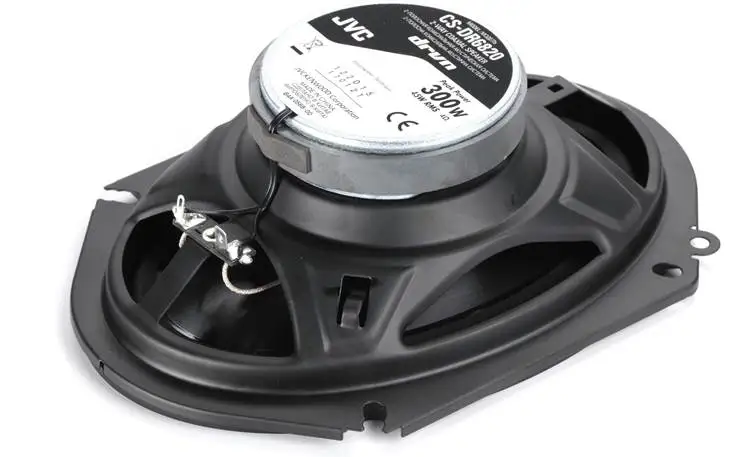
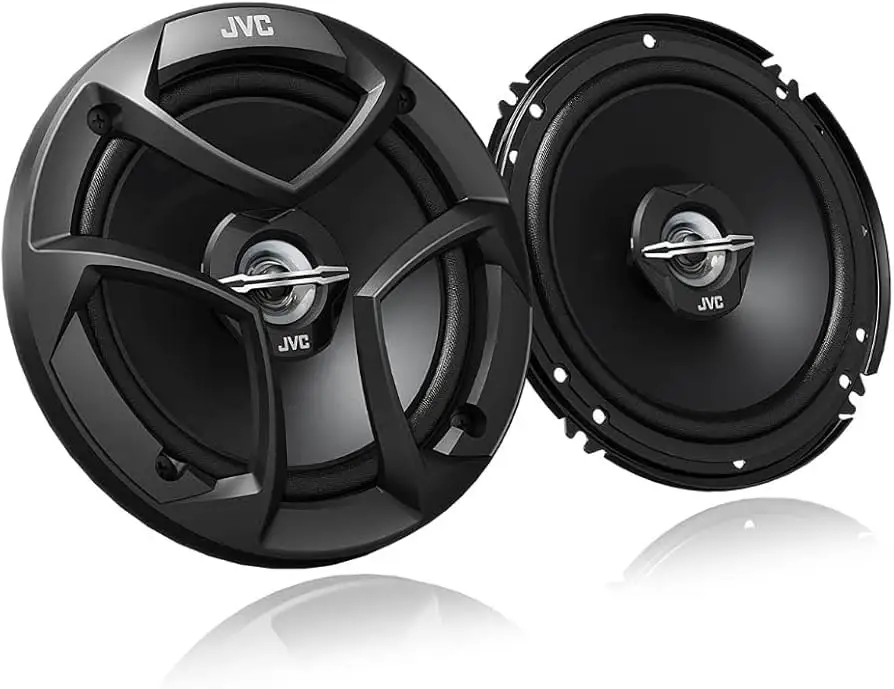
JVC CS-J620 Review: Cheap, Clear, But Weak Bass
“$22 for a pair… is a steal”—and that single line captures both the appeal and the limits of the JVC CS-J620 6.5" Coaxial Car Speakers (Set of 2). Verdict: a budget OEM replacement that can sound “clear and crisp,” but expectations collapse fast if you’re chasing real low-end bass. Score: 7.4/10.
A verified buyer on Amazon noted: “Let’s be honest, you and i did not come here for a set of high-end speakers… budget friendly and get the job done… clear and crisp, but not much bass.” That “get the job done” theme shows up across platforms—alongside an equally consistent warning: don’t expect miracles.
Reddit/Revain-style community reviews lean more skeptical than Amazon’s overall 4.4/5-star average. Reddit user hong hng quang ᠌ said: “I fell for the price and the reviews. Was not satisfied. don’t expect miracles from these speakers.” The split is less about whether they work, and more about what “upgrade” means for your car and your ears.
Quick Verdict
JVC CS-J620 6.5" Coaxial Car Speakers (Set of 2): Conditional (great as a cheap factory speaker replacement; weak choice for bass-heavy listeners without a sub).
| What users focused on | Evidence from feedback | Who it’s best/worst for |
|---|---|---|
| Price-to-performance | Amazon buyer: “$22 for a pair… is a steal” | Best for budget repairs |
| Clarity/treble presence | Reddit user maria r. called clarity “decent” with “built in tweeters” | Best for vocals/radio |
| Bass limitations | Amazon buyer: “not much bass”; Reddit user cathy d.: “poor bass response” | Worst for bass-first listeners |
| Loudness/distortion at max | Amazon buyer: “distortion when playing extremely loud” | Worst for crank-it-all-the-way users |
| Install ease | Amazon buyer: “install… was a snap”; YouTube reviewer mentions “installation was simple” | Best for DIY door swaps |
| Longevity (some positive) | Amazon buyer: “owned them for a few years… still going” | Best for “set it and forget it” budget builds |
Claims vs Reality
Claim 1: “35–22,000 Hz frequency response” (Amazon/JVC spec pages).
Digging deeper into user reports, bass and top-end extension are the first places people challenge the spec sheet. A recurring pattern emerged: even when users accept these as cheap coaxials, they describe the low end as present but quiet relative to mids/highs. Reddit user cathy d. said: “they reproduce sound in this range (as the specs show), but at a lower volume than the rest of the frequency range.”
On the other end, one Russian-language owner review argued the highs don’t reach the marketed ceiling in real listening. A user on Slonrekomenduet (no visible username provided) wrote: “the claimed 22 kHz isn’t there… even 20 kHz is already quiet.” While that’s a single measurement anecdote (and they also mention imperfect measuring conditions), it directly contradicts the marketing promise of full extension.
Claim 2: “Powerful and dynamic bass sound” (JVC U.K. page copy).
User narratives repeatedly push back on the idea that these are “bass” speakers. The most consistent story is that they’re fine for replacing blown OEM paper cones, but they don’t satisfy anyone expecting punchy low bass without help. A verified buyer on Amazon summed it up: “clear and crisp, but not much bass.”
Some owners adapt by filtering out bass rather than boosting it. Reddit user tim h. described using a head unit high-pass filter: “used the head unit’s high pass filter setting to cut out the lowest bass tones,” framing that as a practical setup choice rather than a flaw—suggesting the speakers can sound cleaner when you stop asking them to do subwoofer work.
Claim 3: “Designed to fit most factory speaker location / easy install” (JVC pages + Amazon copy).
On installation, the gap is smaller: many users agree the swap is straightforward, but vehicle fitment quirks still matter. A verified buyer on Amazon wrote: “replacing the front door speakers… was a snap… drilled 7/64" pilot holes and used the supplied screws.” A YouTube reviewer similarly said: “The installation was simple.”
Still, fit expectations can break when people assume “6.5 inch” means perfect alignment with factory holes. A verified buyer on Amazon admitted: “i wish the size was a little closer but that’s my fault,” suggesting adaptation (brackets, drilling, foam) is part of the real-world install story.
Cross-Platform Consensus
Universally Praised
The loudest agreement across Amazon and community reviews is the value proposition: these are cheap enough to feel like a “repair” rather than a “build.” For drivers with blown or buzzing factory speakers, that matters more than audiophile detail. A verified buyer on Amazon framed it bluntly: “replacing blown or buzzing oem speakers with an economical set makes perfect sense.”
Clarity—especially for vocals, radio, and general listening—gets recurring nods when expectations are calibrated. Reddit user maria r. called them an “entry-level factory speaker upgrade” and said, “clarity is decent… particularly impressive upgrade” in an older Civic with worn stock speakers. Another owner on Slonrekomenduet (anonymous) said: “installed [them] instead of the originals… low frequencies ‘bass,’ highs ‘squeak’,” which reads like satisfaction with basic full-range coverage rather than refined tuning.
Ease of installation and compatibility with basic head units is another consistent win. Users describe simple door swaps and minimal tooling. A verified buyer on Amazon wrote: “install… was a snap,” and another shared a practical anti-rattle approach: “apply foam… to cut down on any vibrations.” For DIYers restoring sound in older trucks and daily drivers, these stories position the CS-J620 as a low-risk weekend project.
After those narratives, the “universally praised” takeaway is narrow but real:
- Low cost makes OEM replacement feel worthwhile (Amazon)
- Noticeable clarity/treble vs. tired factory speakers (Amazon, Reddit/Revain, Slonrekomenduet)
- DIY-friendly installs with common-sense tweaks (Amazon, YouTube)
Common Complaints
Bass is the repeat offender—and the complaint is specific: not that there’s no bass signal, but that the low end lacks presence and volume compared to mids/highs. Reddit user cathy d. said they “don’t respond very well to low bass frequencies,” even acknowledging the spec range, and added that EQ helps “only partially.” A verified buyer on Amazon echoed it in simpler terms: “not much bass.”
Some users turn that into a buying warning: if you’re expecting an inexpensive coaxial pair to transform your system, disappointment is likely. Reddit user alan s. warned: “if you… expect phenomenal results, you’re going to be a little disappointed,” and Reddit user wayne g. reinforced the framing: “these are $20 speakers. they sound like twenty dollar speakers.”
Another complaint cluster is “thin” or “flat” sound when compared to certain OEM systems. On Slonrekomenduet, user инкогнито wrote: “sound is empty… stock speakers… play cleaner and more spacious.” Another (юзвер) went further: “sound is flat, no lows… loses to stock speakers… by a lot.” Those stories suggest that “upgrade” depends heavily on what you’re replacing—rotted paper cones vs. decent factory drivers.
After those narratives, the “common complaints” are consistent:
- Weak low bass without a subwoofer (Amazon, Reddit/Revain, Slonrekomenduet)
- “Sounds like budget speakers” when expectations are high (Amazon, Reddit/Revain)
- Some report flatter sound than their OEM setups (Slonrekomenduet)
Divisive Features
Bass is also the most divisive point—because some listeners claim it’s adequate (or even “plenty”) once tuned, while others call it nonexistent. A verified buyer on Amazon wrote: “plenty of bass and sounds clean and loud,” but also admitted distortion “when playing extremely loud… only with good bass coming through,” implying bass-forward EQ at high volume stresses the setup.
On the other side, Slonrekomenduet user андрей complained: “loud… but low frequencies not at all… stock… much better,” and another user said, “bass is not there at all.” Reddit user maria r. pushed back against anti-bass takes by arguing that with an equalizer “you’ll get plenty of bass, despite what some of these reviews say.” The dividing line appears to be listening habits (bass-heavy vs. balanced), car acoustics, and whether users apply EQ/high-pass filtering.
Another divisive theme is whether these are “good enough long term” or merely temporary. Slonrekomenduet user гость said: “works… as a temporary solution,” while a verified buyer on Amazon said: “I’ve owned them for a few years now and they’re still going.” Same product, radically different expectations—and potentially different installs and power levels.
Trust & Reliability
On Trustpilot/Revain-style community pages (average rating shown as 3.6), dissatisfaction often clusters around expectation management and description matching. Reddit user hong hng quang ᠌ said: “A normal product, however, does not fully correspond to the description,” then added: “don’t expect miracles.” That “not as described” sentiment is less about counterfeit/scam claims in the provided data and more about perceived performance oversell.
Longer-term durability stories do appear, especially from Amazon, but they’re anecdotal rather than systematic. A verified buyer on Amazon claimed: “I’ve owned them for a few years now and they’re still going.” Another Slonrekomenduet user, александр, reported: “two years—flight normal… didn’t start rattling… nothing unsoldered,” portraying a budget speaker that can survive normal use.
No Reddit “6 months later” posts were provided in the dataset; the longevity evidence here comes from Amazon and Slonrekomenduet owner timelines.
Alternatives
“Pay a little extra” is the most common alternative advice, and the brands named in the data are Pioneer, JBL, and Kenwood. Reddit user hong hng quang ᠌ said: “it is better to pay a little extra and buy a pioneer or jbl, you will be satisfied,” framing CS-J620 as more “for show.”
Kenwood appears as the most directly compared option in user commentary. One Slonrekomenduet review (no username shown) compared them to “Kenwood KFC-S1666,” saying they sound “almost the same” overall for much less money, but also argued Kenwood has better highs: “Kenwood will be better… highs… 20–22 kHz,” while “JVC [highs] still aren’t enough… no ‘crystal’.” Meanwhile, an Amazon buyer replacing speakers in a Chevy Colorado said the CS-J620 sounded “pretty good with the Kenwood stereo,” suggesting head unit pairing can matter as much as speaker brand.
If your core complaint is bass, multiple users imply the real “alternative” is adding a subwoofer rather than swapping to another coaxial. Reddit user cathy d. said they’re “meant to be used with a subwoofer,” and Slonrekomenduet user александр said weak bass isn’t a real problem “for bass there are subwoofers.”
Price & Value
The price story is central to nearly every review. Amazon listings show heavy emphasis on bargain pricing (often around the low-$20s for a pair), and users anchor their expectations to it. A verified buyer on Amazon called it “a steal,” and Reddit user wayne g. repeated the reality check: “these are $20 speakers… they sound like twenty dollar speakers.”
Resale value signals from eBay listings show these trading in the roughly $29–$50+ range depending on condition and bundles, with multiple “brand new” listings clustered around the $29–$45 zone. That suggests the market sees them as commodity replacements: easy to sell, but not a premium upgrade asset.
Community buying tips skew practical: install tweaks (foam to reduce vibration), and sound tuning (EQ, high-pass filter). A verified Amazon buyer wrote they “apply foam… to cut down on any vibrations,” and Reddit user tim h. described using a “high pass filter” and said the speakers “broke in less than 2 hours.”
FAQ
Q: Do the JVC CS-J620 speakers have good bass without a subwoofer?
A: Not for most buyers. A verified buyer on Amazon said they’re “clear and crisp, but not much bass,” and Reddit user cathy d. wrote they “don’t respond very well to low bass frequencies” and are “meant to be used with a subwoofer.”
Q: Are these a real upgrade from factory speakers?
A: It depends on your OEM condition and model. Reddit user maria r. called them an “instant upgrade to many factory speakers,” especially when stock speakers are worn. But Slonrekomenduet user инкогнито said stock speakers sounded “cleaner and more spacious.”
Q: Are they easy to install in door locations?
A: Many DIYers say yes, with minor prep. A verified buyer on Amazon wrote the swap “was a snap” and used pilot holes and supplied screws. Another buyer added they used foam behind mounting points “to cut down on any vibrations.”
Q: Will they distort at high volume?
A: Some users report distortion when pushed hard. A verified buyer on Amazon said they “seem to have some distortion when playing extremely loud,” especially “with good bass coming through,” even after EQ—suggesting max-volume, bass-boosted listening can stress them.
Q: Do they last long enough to be worth it?
A: Some owners report solid longevity for the price. A verified Amazon buyer said they’ve had them “for a few years… still going,” and Slonrekomenduet user александр reported “two years—flight normal,” with no rattles or parts failing.
Final Verdict
Buy if you’re fixing blown OEM door speakers on a tight budget and want “clear and crisp” sound with simple installation—especially if your expectations match the “$20 speakers” framing.
Avoid if your goal is strong low-end bass from door speakers alone; multiple users say “not much bass” and “low frequencies not at all,” and even supporters often suggest pairing with a subwoofer.
Pro tip from the community: Reddit user tim h. used a head unit “high pass filter” to “cut out the lowest bass tones,” while an Amazon buyer reduced door vibration by adding foam behind the mounts.