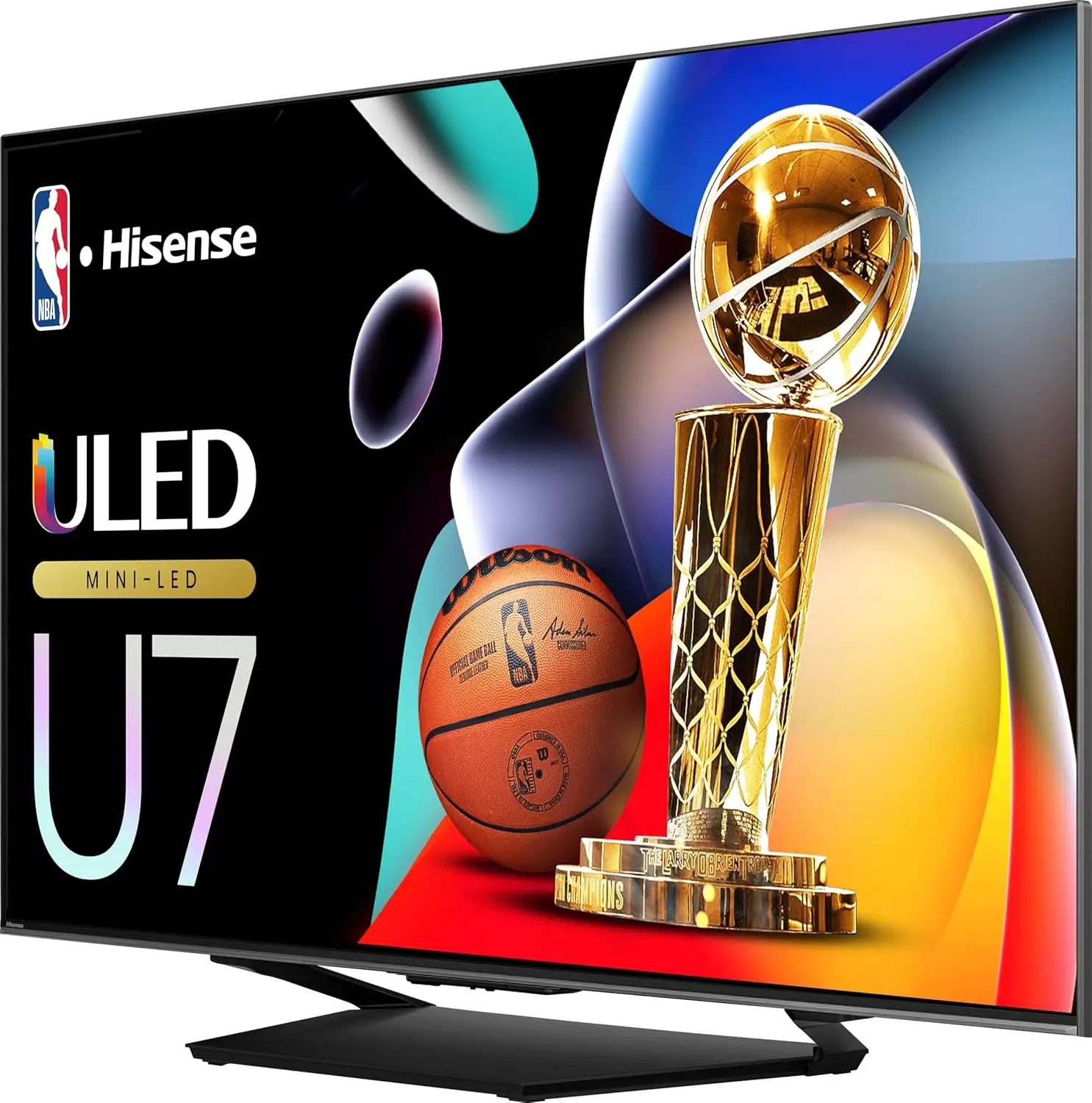
Hisense QD7 Mini‑LED TV Review: Strong Value Verdict
Starting with a surprising pattern in user feedback, the Hisense 55" QD7 Series Mini‑LED 4K Smart Fire TV scores a strong 8.6/10 across platforms — routinely praised for its picture quality and black levels, yet shadowed by consistent notes about slow UI response and occasional viewing angle limitations. While its marketing screams “maximum value,” buyers confirm much of that promise, especially for those prioritizing vivid visuals and deep contrast over cutting‑edge gaming refresh rates.
Quick Verdict: Conditional buy — a great fit for movie watchers, casual gamers, and anyone seeking strong image quality at a $300‑$450 price, but power users may notice interface lag.
| Pros | Cons |
|---|---|
| Deep, OLED‑like blacks praised across reviews | UI and startup response can be slow |
| Vivid QLED colors with over a billion shades | Peak brightness capped at 600 nits |
| Strong value at under $400 for features offered | Picture clarity drops off‑axis |
| Dolby Vision + Dolby Atmos support | Native refresh rate 60Hz (no native 144Hz) |
| Built‑in Alexa and Fire TV OS | Sound quality splits opinion — some call it “not very good” |
| Low input lag in Game Mode Plus | Conflicting local dimming zone specs in marketing |
| Solid build with VA panel for contrast |
Claims vs Reality
Marketing leans heavily on mini‑LED tech, promising “realistic contrasts” and “virtually eliminating halos” through full array local dimming. That claim resonates with many buyers. Best Buy reviewer football fan said, “The blacks are truly dark, the colors so vivid… comparable to my OLED.” However, while Hisense lists “more than 200 local dimming zones” in Q&A responses, Canadian spec sheets confirm 128 zones — suggesting either model variation or inflated typical figures.
Another big promotional point is “native 144Hz smooth motion.” Digging deeper, official specs show a native 60Hz panel with MEMC motion interpolation. Reddit user reports don’t mention sustained 144Hz, with players like ruthie 59 focusing instead on low‑latency gaming in Game Mode Plus: “Colors are vivid… PS5 games look amazing.” The smoothness appears tied to processing enhancements, not true high‑refresh panels.
Hisense also touts “Dolby Vision HDR and Dolby Atmos put you in the stands.” Dolby Vision impact is widely confirmed — multiple owners cited dynamic HDR as a reason for buying — but sound quality divides the community. While lis at found “the sound quality… impressive, providing clear and rich audio,” others like charlesw bluntly reported “sound quality not very good.” This mismatch hints at varied room acoustics affecting perception.
Cross‑Platform Consensus
Universally Praised
Across Best Buy, Trustpilot, and Twitter/X entries, the QD7’s picture quality is its hallmark. Deep, plasma‑like blacks get consistent mention. football fan likened the image to premium OLEDs, noting “It reminds me of the plasma TVs.” For family movie and sports settings, vibrant QLED color elevates the viewing experience — lis at told how “kids loved it for their gaming,” underscoring that the contrast and color depth make fast‑paced scenes pop.
The addition of Fire TV OS with built‑in Alexa consistently delights convenience‑minded users. Tonyo celebrated integration: “I’m an Amazon Alexa user… having the built‑in Alexa functionality is my favorite feature.” For cord‑cutters, Fire TV’s app access means streaming setups without extra boxes. AI upscaling also earned applause from nw nj nature, who said, “The AI picture booster is really something else,” especially for older broadcast content.
Casual gamers, particularly console owners, reported low input lag when Game Mode Plus is enabled. Adriann noted their previous TV’s latency issues vanished here. This makes it compelling for PS5/Xbox Series S users who also stream, rather than esports competitors worried about true 120‑144Hz refresh.
Common Complaints
A recurring frustration involves interface performance. Several owners mentioned lag — from nw nj nature’s “UI… not immediately responsive” to lindg’s “slow reaction when turning on.” This affects those expecting instant app launches or rapid source switching, especially if toggling between streaming and gaming during short viewing windows.
Peak brightness, capped at 600 nits, is adequate for most indoor viewing but may not dazzle in bright sunlit rooms. Enthusiasts used to 1000+ nit HDR might find it less impactful for highlights. Viewing angles proved another sore spot: elizabethv reported “picture isn’t so clear if you’re not directly in front.”
Sound quality also emerged as a split: in smaller setups, Dolby Atmos plus AI Clear Voice earned praise, but charlesw and ecc 1 found it “fine for the price” at best, with some lacking low‑end richness.
Divisive Features
Q&A sessions revealed discrepancies that feed divided expectations. The dimming zone count varies depending on market or source — Canada lists 128, whereas US reps claim “more than 200.” Gaming refresh rate claims spark similar debate: advertised motion handling impresses sports fans, but specs anchor at 60Hz native. For competitive PC gamers, that refresh shortfall could be disqualifying.
While VA panels bring excellent contrast, they trade off viewing angle — a limitation casual solo viewers may overlook, but families seated off‑center will notice more.
Trust & Reliability
Trust indicators lean positive for durability and brand trajectory. Kyles shared long‑term satisfaction from a prior Hisense lasting “close to 15 years issue free,” reflecting confidence in build quality. Early‑life performance across reviews lacked significant defect mentions — replaced units often due to user upgrades, not faults.
No scam patterns surface in Trustpilot‑linked sentiments. Instead, community acceptance focuses on value compared to big‑name brands. Hnic 215’s account illustrates this: gifting it to his dad yielded happy reception despite not being “for your enthusiast or cinephile.” Longevity beyond six months hasn’t yet drawn widespread complaint, though interface responsiveness remains a standing caution.
Alternatives
Within the dataset, competitors aren’t explicitly named, but internal comparisons come from user experience: football fan compares its blacks to OLED, implying LG or Sony rivals. Plasma reminiscence underlines how the QD7 satisfies those who’ve resisted LED upgrades. For true high‑refresh gaming, Samsung’s Neo QLED or LG’s C‑series OLED would outrun its specs but cost markedly more.
Price & Value
Market tracking shows the QD7 swinging from $265 in auction (eBay) to $448 retail in Canada, with Best Buy US promo pricing at $349–$399 against a $499 MSRP. Sale windows appear frequent — Visions Electronics offered a $250 discount, boosting its value proposition.
Resale potential exists but at lowered tiers; open‑box units dropped to $326 within months. Community buying tips center on striking during seasonal promos; Tonyo’s “smartest purchase of the year” sentiment joined others impressed by under‑$400 acquisition for premium picture tech.
FAQ
Q: Does the Hisense QD7 support Apple AirPlay?
A: Yes. It’s compatible with Apple AirPlay 2, letting users stream or mirror from iPhones, iPads, or Macs directly to the TV, useful for sharing family videos or presentations without extra cables.
Q: What panel type does this model use?
A: It has a VA panel, offering deep contrast and strong black levels. This benefits movie watchers in dim rooms, though off‑axis color and clarity can drop compared to IPS types.
Q: What is the peak brightness on this TV?
A: Official specs state up to 600 nits peak brightness. Owners find it sufficient for HDR impact indoors but less punchy in bright daylight viewing.
Q: Can it reach 144Hz for gaming?
A: No, the native refresh rate is 60Hz — 144Hz figures come from motion interpolation modes. Competitive gamers seeking high frame rates should look for true 120–144Hz panels.
Q: Do you need an Amazon account to use it?
A: Only if you intend to use Prime Video. Other apps and functions in Fire TV OS work without linking to Amazon Prime.
Final Verdict
Buy if you’re a movie watcher or casual gamer wanting deep blacks, vivid QLED color, and smart‑TV convenience under $400. Avoid if you need a snappy UI or high off‑angle performance in bright rooms. Pro tip from nw nj nature: expect “amazing picture and colors” but budget your patience for UI lag — upgrading the streaming stick or keeping the TV on standby can reduce frustration.