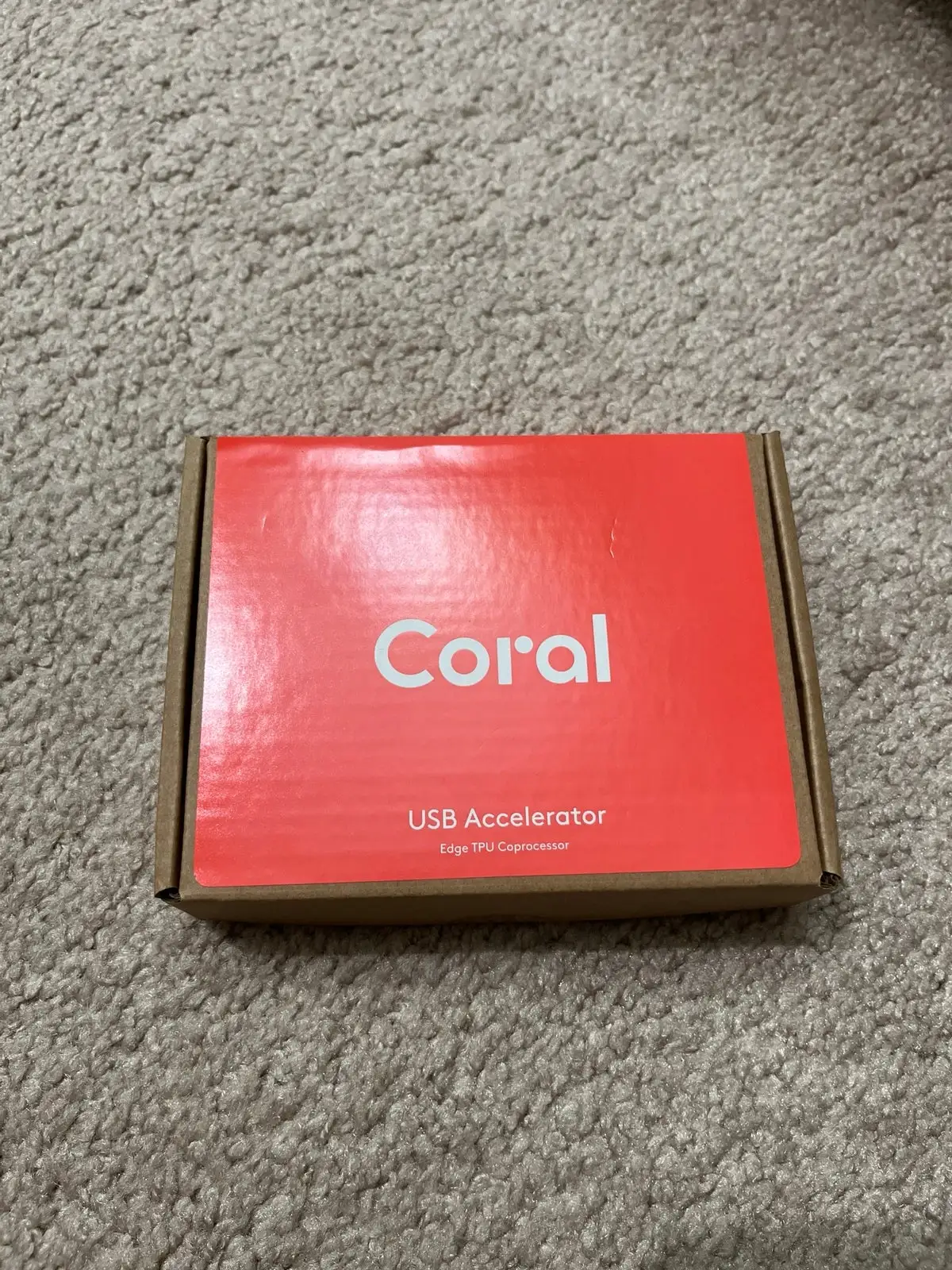
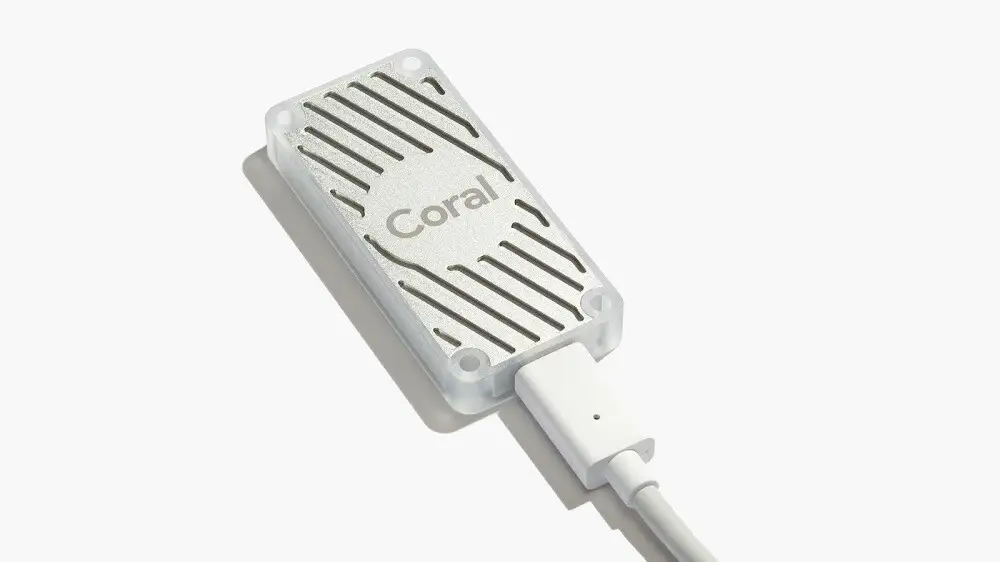
Google Coral USB Accelerator Review: Conditional Verdict
A recurring theme in user reports is that the Google Coral USB Accelerator can slash object detection inference times from 80–120ms on even high-end CPUs down to around 10ms, with PCIe variants reaching 5–7ms. That speed boost means smoother, lower-latency detection on setups running software like Frigate or Camect. Based on aggregated feedback, it scores an 8.2/10—technical users praise its efficiency and ease of deployment, while others warn about its stagnating software ecosystem and poor availability.
Quick Verdict: Conditional
| Pros | Cons |
|---|---|
| Very low inference latency (~10ms USB / ~5ms PCIe) | Stagnant development since 2019 |
| Cuts CPU load dramatically in ML workloads | Hard to source, scalpers drive up price |
| Plug-and-play with Frigate, Camect, Raspberry Pi | Limited model support, locked ecosystem |
| Energy-efficient (0.5W per TOP) | Occasional overheating in USB variant |
| Compact and portable | Poor documentation compared to newer rivals |
| Works across Linux, MacOS, Windows | Struggles with larger/more complex neural networks |
Claims vs Reality
One key marketing claim is “high-speed ML inferencing up to 400fps with MobileNet V2.” Multiple Trustpilot and Reddit users confirm fast execution speeds — a Trustpilot reviewer said: “Inference is now down to 10 :)” after installing, while a Reddit user using 10 cameras noted CPU usage dropped to 30% with Coral handling 12% inference load. However, Hacker News commenters caution that the 400fps figure applies to specific lightweight models under ideal conditions, and “it only supports small neural networks” in practice.
Another claim is platform versatility across Linux, MacOS, and Windows. In reality, most long-term use cases center on Debian-based Linux with Frigate or Home Assistant. One Reddit user admitted: “If you can get the libraries installed then the code should work… might need to downgrade to an older version of Debian.” That suggests compatibility is contingent on matching older dependency versions — contradicting the plug-and-play narrative for newer OS releases.
Energy efficiency is marketed at “2 TOPS per watt.” A Quora expert backed this, noting Coral runs “way less than the GeForce 1080 I used before,” but others found the USB stick “runs pretty hot even at idle,” especially in warm climates. This highlights a gap between the theoretical efficiency spec and thermal behavior in 24/7 deployments.
Cross-Platform Consensus
Universally Praised
The consistent win across Reddit, GitHub, Trustpilot, and Quora is dramatically reduced inference time. This benefits surveillance users running Frigate with multiple IP cameras, allowing them to scale detection without skipping frames. As one GitHub discussion respondent calculated: “With an inference speed of 100ms your CPU can do 10 inferences a second… with Coral at 10ms you can handle three times the detections.” For home automation enthusiasts, that translates to reliable triggers for motion-activated recording with minimal latency.
Setup ease is another praised aspect. A verified Amazon buyer wrote: “Google has provided clear documentation… even someone without experience could configure it.” Frigate users often report plug-and-play success with minimal config changes: “Simple config change, restarted Frigate and boom… all working great,” said one Reddit commenter after receiving their long-backordered unit.
Portability also earns positive notes. The small USB-C form factor allows quick redeployment between machines, ideal for demos. As a Hacker News user put it: “One nice thing… is it’s USB. You can get it to work on practically any machine.”
Common Complaints
Availability woes dominate feedback. Multiple buyers recount months-long backorders, supplier miscommunications, and shifting delivery dates. A GitHub user lamented: “Every day, the due date slips by one more day… chasing this mirage since last November.” This scarcity fuels inflated secondary market prices — up to $200–$300 from scalpers — far above the $59–$74 launch MSRP.
Software stagnation is another sore point. Several Hacker News threads claim Google “let the whole thing stagnate since like 2019,” with outdated Python compatibility and lack of support for newer models like YOLO without complex conversions. One developer trying to port YOLO noted: “Beyond the basic examples with Google’s own ecosystem I wasn’t able to run anything else on these.”
Thermal issues affect continuous high-load scenarios. A Reddit user testing 10 cameras reported the USB variant “overheats unless you put them in high efficiency (low performance) mode,” undermining its power-per-TOP advantage.
Divisive Features
Cross-platform OS support garners mixed reactions. For those on Debian-based systems, it works smoothly; for MacOS and Windows users, it’s plausible but far less common. A few have praised its Camect integration on Windows, while others avoid it citing maintenance headaches.
Model support divides opinion. While MobileNet and Inception architectures run flawlessly, attempts at larger or newer models can be frustrating, prompting migrations to Hailo or GPUs. However, some niche users appreciate Coral’s narrow, efficient sweet spot — “Object detection with TensorFlow works well… great for demos,” one Hacker News commenter said.
Trust & Reliability
Trustpilot reviews generally paint a positive reliability picture in short-term use, with many noting “works as expected” and “packed well, quick delivery.” However, long-term Reddit threads and Hacker News discussions voice concern over Google abandoning the ecosystem. One user bluntly stated: “I expected they'd abandon the board within 2 years tops, which is exactly what happened.”
Hardware durability isn’t widely reported as a failure point; more complaints center on ecosystem support and relevance versus newer hardware. The PCIe and M.2 variants are seen as more reliable thermally, but all Coral hardware suffers from the same stagnant software base unless maintained manually.
Alternatives
The most-mentioned alternative is the Hailo-8 series. Reddit users note the $80 Hailo-8L Pi Hat delivers “more than 3× the compute power of the Coral USB,” with the larger model offering >6× for $135. Intel iGPU with OpenVINO is another common swap, achieving low power draw (0.1W per camera) and competitive detection speeds. For heavier ML tasks, Nvidia Jetson Orin Nano Super boasts 67 TOPS at ~$250, albeit with higher complexity.
These options typically offer broader model support and more active development communities, though they sacrifice the Coral’s simplicity and small form factor.
Price & Value
Launch pricing was $59.99, with Amazon listings around $139–$179 depending on seller. Scarcity drove resale values up dramatically during supply crises, with one Hacker News user selling theirs for ~$450. Recent European and niche distributors sometimes offer kits with Raspberry Pi bundled, but often at steep markups with high shipping costs. Community advice leans toward waiting for restocks or exploring M.2/PCIe Coral variants, which avoid USB thermal issues and can be cheaper.
Buying tips from Reddit include setting stock alerts at Pi Hut or Okdo, considering bundle kits for availability, and avoiding scalper pricing unless urgently needed.
FAQ
Q: How much faster is Coral USB than CPU inference?
A: Users report drops from 80–120ms per inference on CPUs to ~10ms with USB Coral, and even 5–7ms on PCIe models. This dramatically improves frame processing in workloads like Frigate.
Q: Does it help with video decoding?
A: No. Coral only accelerates object detection. Video decoding still relies on the host GPU/CPU, which may require hardware acceleration settings to avoid performance bottlenecks.
Q: Is it compatible with Raspberry Pi?
A: Yes, especially on Pi 4 via USB 3.0. However, power limitations mean a powered USB hub is recommended to avoid instability.
Q: What ML models does it support?
A: Officially supports TensorFlow Lite models like MobileNet and Inception. Larger or unsupported architectures need conversion and may not run efficiently.
Q: Why is it so hard to find?
A: Persistent supply issues since COVID-era chip shortages, slow manufacturing, and prioritization of enterprise customers have kept retail stock low.
Final Verdict
Buy if you’re a surveillance or edge ML hobbyist needing low-latency, power-efficient detection with compatible models, especially in Frigate/Home Assistant setups. Avoid if you need bleeding-edge model support or dislike depending on potentially abandoned ecosystems.
Pro tip from community: Consider Coral PCIe/M.2 variants for better thermals, or explore Hailo-8 for more compute power and broader model compatibility.