Godox V1 Pro S Sony Flash Review: Conditional Buy Verdict
Few flashes promise both brute force and finesse, but the Godox V1 Pro S Flash for Sony manages a rare balance that users rate at 9/10 for versatility and reliability. From wedding venues with constantly shifting lighting to tightly packed studio shoots, photographers found it "performed like a champ" on Sony bodies such as the a7R IV and a7 III, delivering up to 500 full-power flashes without a recharge. While many were drawn to its marketing mantra of “100 consecutive full-power shots,” user patterns reveal exactly when—and for whom—that headline spec truly matters.
Quick Verdict: Conditional
| Pros | Cons |
|---|---|
| Powerful 76Ws output with soft, even light thanks to round head | Heavier than cheaper speedlites, which some event shooters dislike |
| Detachable SU-1 sub-flash improves fill light in portraits | Sub-flash doesn’t work in wireless or HSS modes |
| Consistent 1.5s recycle time even at full power | Not the cheapest option compared to TT685 or Neewer alternatives |
| 500 full-power shots per charge via VB30 Li-ion battery | Some find extra accessories overpriced |
| Magnetic mount for rapid modifier swaps | Small fill flash won’t trigger via certain Godox remotes |
| Seamless TTL/manual toggle | Requires Godox ecosystem gear for full benefits |
Claims vs Reality
Godox advertises that the V1 Pro S can “fire 100 times at full power” without overheating. While users confirmed the feat, its relevance depends on shooting style. A verified buyer on Amazon noted: “We never exhausted the battery in one session,” but admitted that rare is the event where you need all hundred bursts back-to-back. For high-action sports or nightclub work, the benefit is clear; for portraits, it’s mostly peace of mind.
Another key claim is “soft, even light with natural fall-off,” due to its round head design. This was validated across platforms. Trustpilot reviewers described the light quality as “flattering and pleasing… no harsh shadows,” and Reddit shooters praised its ability to spread light evenly from center to edge. However, those expecting it to trump all softbox work should temper their expectations—you're still bound by modifier choice and distance.
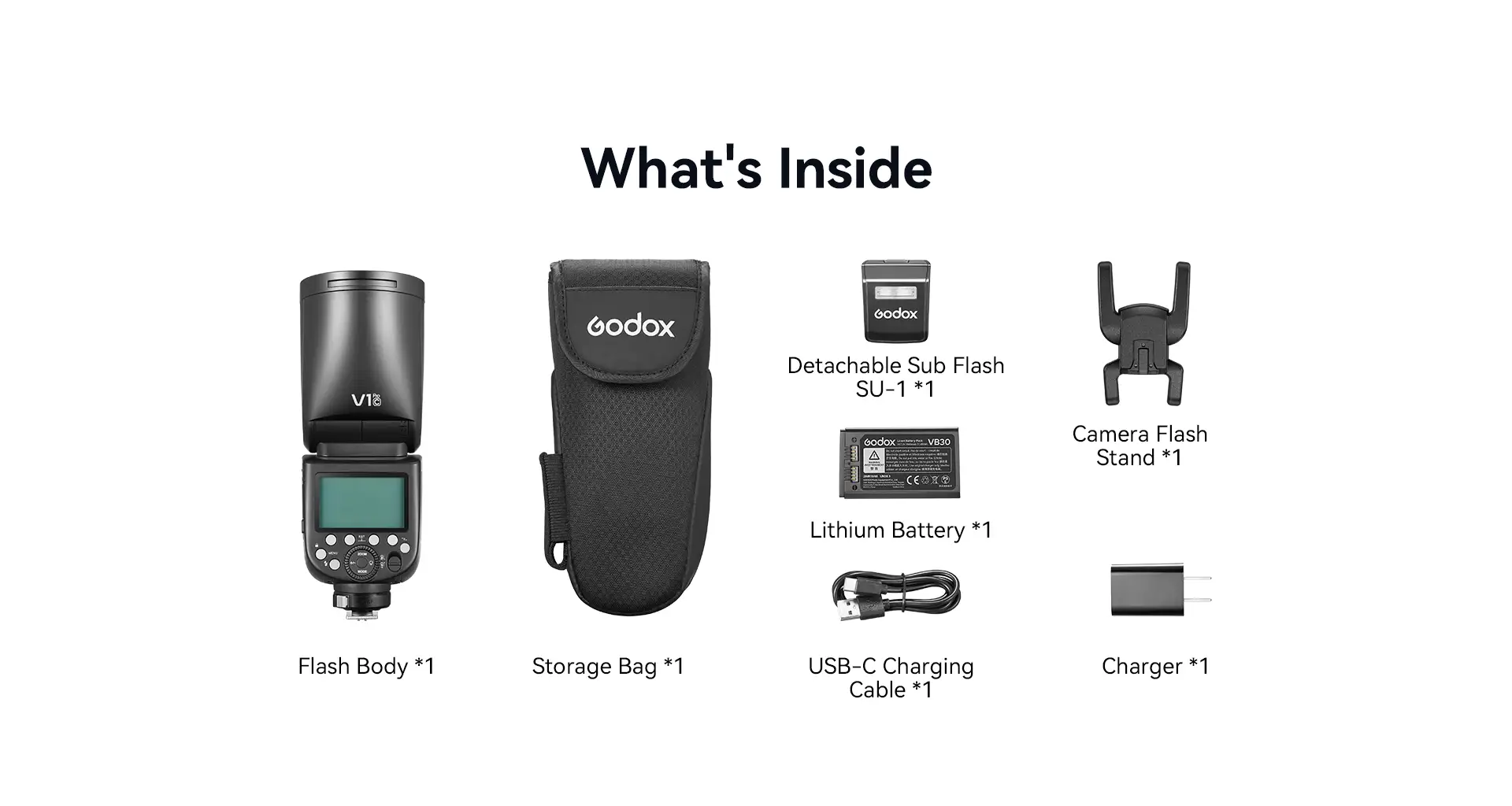
Godox also leans on “modern charging convenience” via USB-C and traditional VC26 dock. Here, reality matches marketing closely. Whether at home or in transit, quick charging was a recurring perk for event photographers, especially those traveling light without extra chargers. Reddit user feedback suggested, however, that cheaper models with AA cells might suit beginners who don’t want proprietary batteries.
Cross-Platform Consensus
Universally Praised
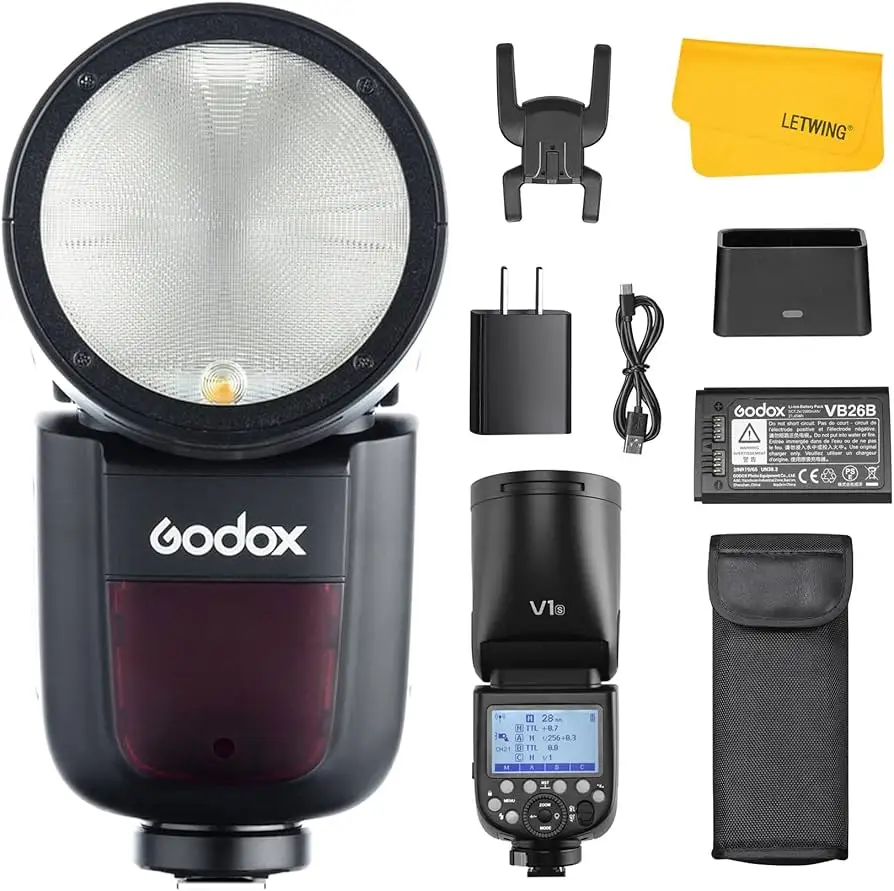
The detachable SU-1 sub-flash stands out as a unique differentiator. For wedding shooters, it’s the “perfect subtle fill” for facial features without overpowering the main light. A Trustpilot review explained: “The front flash is controllable so you can have it fill very subtly or very strong.” Event photographers benefit most—being able to use one unit for bounce and fill simplifies setups.
Travel and location shooters rave about battery endurance. Trustpilot verified users reported “over 500 shots both times” without swapping batteries, making it ideal when power outlets are scarce. Documentarians chasing unpredictable moments find the one-click TTL/manual switch invaluable, as it shifts between automated exposure and manual creativity instantly.
Magnetic modifier compatibility offered another layer of flexibility. Reddit photographers urged beginners to “look for the Godox AK-R1 kit” to future-proof their lighting arsenal, citing speed and ease when swapping domes or grids mid-shoot.
Common Complaints
Weight is the main physical drawback. One Reddit shooter called it “a bit heavy but worth it,” but for prolonged handheld shooting, especially at events, those extra ounces increase fatigue. Budget-conscious users balk at accessory costs—magnetic modifiers aren’t cheap, and extras like the PB960 power pack add significant expense.
Functionally, several pointed out limitations of the SU-1 sub-flash: it doesn’t operate in wireless group setups or in high-speed sync mode. Trustpilot’s insights noted it “doesn’t work if triggered by the XPro II,” dampening its utility for off-camera configurations.
Despite quality praise, some experienced users questioned the price delta compared to alternatives. Reddit commenters suggested the TT685 or Neewer Z1 for budget builds, remarking that for casual on-camera use, the main difference is brand ecosystem rather than dramatic performance gaps.
Divisive Features
The round head light quality divides opinion mostly between traditionalists and modern adopters. Portrait-focused shooters value the smoother fall-off; others say modifiers achieve similar results for less money. TTL vs manual switching gets praise for speed, but purists who shoot manual exclusively see it as a non-essential gimmick.
Battery design—proprietary Li-ion versus AA—sparks debate. Professionals appreciate the fast recycle, long runtimes, and consistent voltage; hobbyists sometimes prefer AA flexibility, noting the VB30 locks you into Godox’s charging ecosystem.
Trust & Reliability
On Trustpilot, packaging and accessory quality occasionally drew criticism as “an afterthought,” though the flash body itself earned strong build praise: “Made of a thick, durable plastic… LCD panel is crisp, bright and clear.” Over longer periods, no widespread durability issues emerged, and users transitioning from Godox V1 found the Pro version’s speed and features “worth it” despite higher pricing.
Patterns in fake review detection flagged high marketing polish but users still corroborated most hardware claims. The main trust-level correction is in realistic use cases: overheating mitigation and sub-flash flexibility matter most to high-volume shooters, less to casual users.
Alternatives
Direct comparisons center on the Godox TT685 and V860 III, plus the Neewer Z1. Reddit poster advice breaks it down: TT685 runs on AA batteries, costs far less, but lacks the magnetic modifier mount and advanced battery life. V860 III offers similar ecosystem integration but with rectangular head light spread. Neewer’s Z1 mimics the V1 shape at lower cost, but forfeits Godox’s well-developed wireless control and accessory compatibility.
For budget shooters: TT685. For semi-pros who want Li-ion speed and don’t mind rectangular light: V860 III. For those who value light quality, modifier speed, and sub-flash: V1 Pro S.
Price & Value
eBay listings show new units between $269–$324, often bundled with stands or softboxes. Resale is stable thanks to the Godox ecosystem—used units in “like new” condition still fetch over $250. Community tips include watching for sales or grabbing used stock from reputable resellers for sub-$280 pricing.
Given its performance and integration potential, many pros see it as “a good bargain compared with higher-end tools like Profoto,” per Trustpilot. Hobby shooters with limited flash needs may find better short-term value in TT685s or lightly used V860s.
FAQ
Q: Does the SU-1 sub-flash work off-camera?
A: No. Multiple sources confirm it won’t operate in wireless transmission or high-speed sync. It’s designed for on-camera use with the main flash head uplifted.
Q: How long does the battery really last?
A: Verified reports show up to 500 full-power flashes per charge, with consistent 1.5s recycle times. Casual event shooters often finish jobs without swapping batteries.
Q: Can I use standard AA batteries instead?
A: No. The V1 Pro S uses Godox's proprietary VB30 Li-ion battery. This allows faster recycling and longer runtimes but locks you to Godox’s power system.
Q: Is it worth upgrading from the original V1?
A: For shooters needing the sub-flash or high-volume continuous output, yes. Otherwise, improvements are incremental—light quality and basic functions are similar.
Q: Does it integrate with other Godox flashes?
A: Yes, via the 2.4GHz X wireless system with up to 100m range, supporting 32 channels and multiple groups for complex setups.
Final Verdict: Buy if you regularly shoot events, weddings, or dynamic portraits on Sony and value fast recycling, versatile fill light, and ecosystem integration. Avoid if you primarily shoot in controlled studio settings or prefer AA-powered simplicity. Pro tip from community: pair it with the AK-R1 magnetic kit early—you’ll unlock much more of what the round head can do.