Garmin Forerunner 970 Review: Elite Tracking, Mixed Value
If there’s one thing that stands out from real-world reports, it’s that the Garmin Forerunner 970 GPS Running and Triathlon Smartwatch delivers elite-level tracking capabilities — but at a price and with quirks that make it a conditional buy. Across platforms, seasoned triathletes praise its precision, mapping, and new training metrics, while casual users often question whether the $700+ asking price is justified. Based on aggregated user sentiment, it earns an 8.4/10.
Quick Verdict: Conditional — ideal for data-driven endurance athletes, but overbuilt and overpriced for casual fitness users.
| Pros (User-Reported) | Cons (User-Reported) |
|---|---|
| Exceptional GPS accuracy and elevation tracking | High price compared to feature gains over 965 |
| Bright, durable AMOLED + sapphire/titanium build | Early firmware bugs and lag in maps |
| Built-in LED flashlight praised for utility | Sleep tracking inconsistencies |
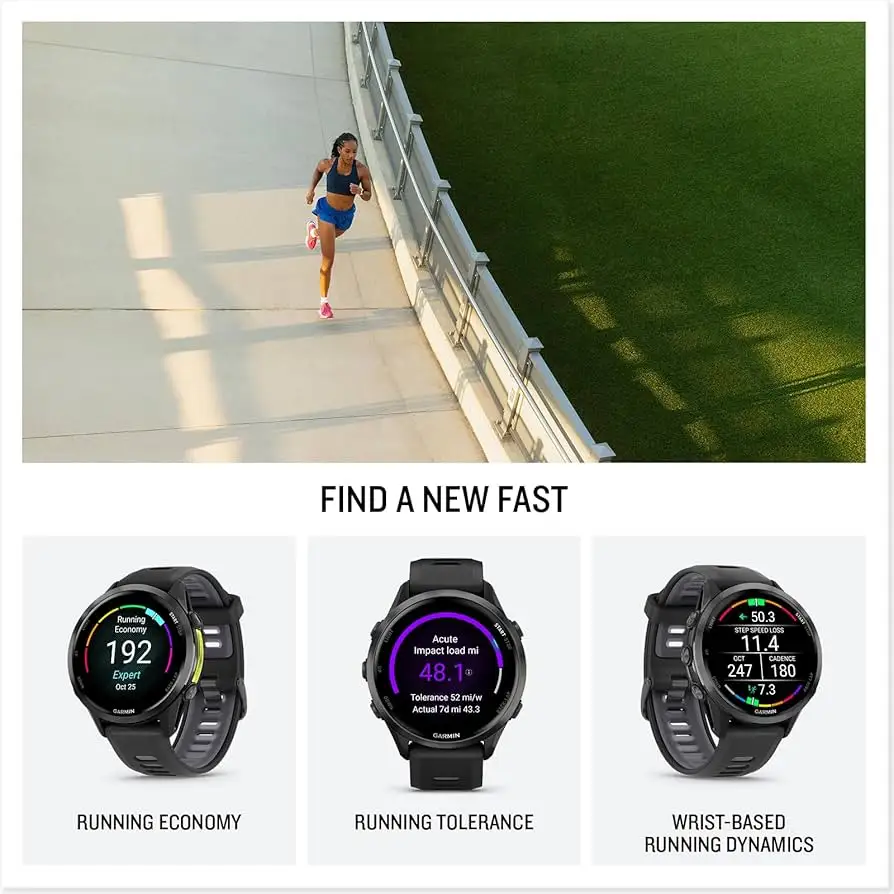
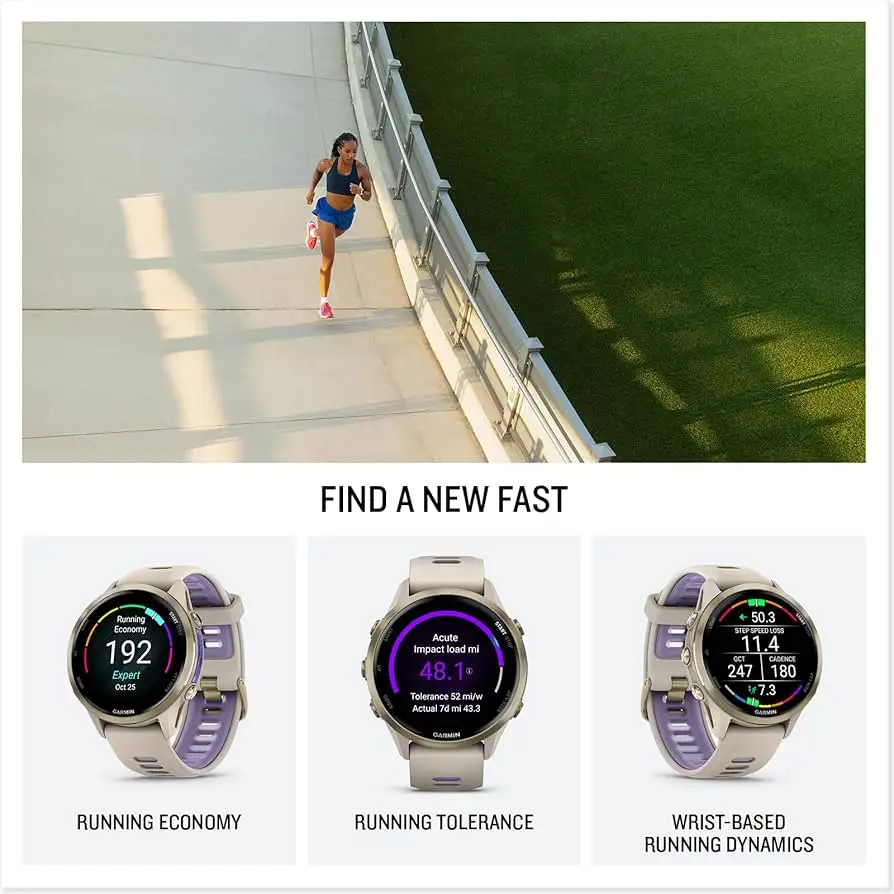
| Advanced metrics like Step Speed Loss and Running Tolerance | Voice assistant/mic performance underwhelming |
| Long battery life for multi-day events | Band comfort divides opinions |
| Accurate HR with Elevate V5 sensor | Some features require extra accessories (HRM-600) |
Claims vs Reality
Marketing emphasizes the “brightest AMOLED display yet” and “full-color mapping with multi-band GNSS” as game-changers. In practice, athletes confirm the screen is “crisp, easy to read even at noon,” with Best Buy reviewer petel noting it “handles bumps like a Fenix” thanks to its sapphire and titanium build. However, Runner’s World testers found that “panning or zooming on large maps could cause noticeable lags of 5 to 15 seconds,” especially with overlays enabled.
Garmin also touts “up to 26 hours GPS battery life” and “15 days smartwatch mode.” While ultra runners report it “easily outlasted a race day,” real-world numbers often fall short with always-on display and SatIQ enabled. A Reddit user j1 claimed battery life feels “worse than the previous model,” contrasting with Best Buy buyer libbye who reported “around 17 days of battery” without GPS mode.
The third pillar claim — “built-in mic and speaker for calls and voice commands” — has been met with skepticism. A Twitter forum post complained “the mic and voice thing is utterly useless… barely got it working once,” aligning with Best Buy’s russell, who found “Google Assistant doesn’t work well” and lag made it frustrating.
Cross-Platform Consensus
Universally Praised
For serious endurance athletes, the Forerunner 970’s accuracy and depth of data are its defining strengths. Best Buy reviewer sergiog, a marathon trainee, switched from Apple Watch and “couldn’t be happier… battery lasts for days… works seamlessly with the Runna training program.” The Elevate V5 HR sensor drew praise for consistency, with a GameraSnap tester finding it “remarkably consistent” with a chest strap after initial startup lag.
Navigation features also shine. Runner’s World testing confirmed recalculation and ClimbPro worked reliably in cities and backcountry, with audible and haptic cues preventing wrong turns mid-run. The built-in flashlight is often cited as an unexpectedly valuable safety tool — dannyr uses it on “early morning runs… amazing for safety,” while GameraSnap’s mountain descent after dark became “much clearer and safer” thanks to wrist illumination.
Battery life, while debated, still impresses most. Best Buy’s kuyu reported a week of use with battery still at 33%, and dick cheeseburger comfortably gets “at least 2 weeks” per charge.
Common Complaints
Early firmware stability is a recurring sore point. From Twitter forums: “massive issues… not even nailing the basics… swimming stroke tracking broken… cycling recording a mess.” Sleep tracking bugs are common — russell’s missed nap led to skewed readiness scores, and the same Twitter user found the watch “always tells me you slept like 4 hours even if I sleep till noon.”
The mic and voice control features fall short of expectations. Users describe them as laggy, with poor feedback on when to speak, and no reliable on-watch commands without a phone. Reddit user j1 lamented the “lack of smart features” like native voice notes or better social integration, comparing unfavorably to cheaper Huawei/Amazfit models.
Comfort divides opinion, especially regarding the stock band. The Twitter forum poster replaced theirs within two weeks, preferring older Garmin or nylon options. While some, like trizzo8, found the nylon Ultrafit strap “super comfortable,” others disliked the feel compared to the 965.
Divisive Features
The new Step Speed Loss metric, available only with the HRM-600 strap, fascinates data-focused runners. GameraSnap deemed it “the most significant advancement” for analyzing form efficiency, but its value is limited if you don’t own the $100+ accessory. Similarly, the ECG function appeals to those with heart rhythm concerns, but its manual, snapshot nature disappoints users expecting continuous monitoring.
Price is polarizing. UK buyers like 1138152 see the £30 increase over the 965 as “small for the added features,” while j1 insists €750 “simply doesn’t align with actual user value,” suggesting €450-500 as fair.
Trust & Reliability
Long-term Garmin owners express concern over battery degradation and communication. Reddit’s j1 recounted their Fenix 7 battery dropping to “40% capacity after 1.5 years” without a clear replacement path, calling it “neither sustainable nor cost-effective.” This ties into a broader complaint that Garmin is “silent” on known software issues, leaving customers to trade fixes in forums.
However, durability of the Forerunner 970’s materials earns praise. Multiple Best Buy buyers highlight the sapphire lens’ scratch resistance and titanium bezel’s resilience. petel called it “tough yet light,” weighing just 56g, and Quora’s durable smartwatch roundup emphasized its “very accurate” tracking and rugged build.
Alternatives
The Forerunner 965 is the most cited comparison point. Garmin’s own blog notes the 970’s sapphire lens, flashlight, new running metrics, and slightly longer battery in certain modes — but at a higher price. Some, like 9905971, see the upgrade as “worth it” for clarity and compactness, while others stick with the 965 unless they need the new metrics.
Competitors like Huawei Watch and Amazfit offer more smart features at lower prices, which appeals to value seekers like j1. However, as jmto countered, “we have different needs and expectations,” implying these watches can’t match Garmin’s pro-level training ecosystem.
Price & Value
At launch, US pricing hovered around $749.99, with early Amazon discounts cutting $50. In the UK, the gap over the 965 was minimal, but in the EU, the €750 tag sparked resistance. GameraSnap advises holding off until production ramps and prices ease, unless you specifically want the new Step Speed Loss metric.
Resale value for high-end Garmins tends to hold better than mid-tier models due to their materials and niche audience. Community buying tips include watching for 10% discount codes, checking for bundle deals with the HRM-600 strap, and considering prior models if you don’t need every new feature.
FAQ
Q: Does the Forerunner 970 have better GPS than the 965?
A: Yes. Multi-band GNSS with SatIQ delivers exceptional accuracy, with GameraSnap’s 30km run showing just 0.02km variance between wrists. Elevation tracking is also precise, though one test found the 965 slightly closer to official peak height.
Q: How good is the battery life in real use?
A: Most users get 1-2 weeks depending on GPS usage and display settings. Always-on screen and advanced GNSS modes shorten life, but it still outlasts most smartwatches in its class.
Q: Is the flashlight actually useful?
A: Very. Runners use it for pre-dawn safety, hikers for night descents, and even day-to-day tasks like cabling work. Multiple reviewers call it a favorite feature.
Q: Do I need the HRM-600 strap?
A: Only if you want Step Speed Loss and certain running dynamics metrics. Basic GPS, HR, and most features work without it.
Q: How is sleep tracking?
A: Mixed. Some find it accurate, others report missed naps or underreported totals, which can skew readiness scores.
Final Verdict: Buy if you’re a triathlete, ultra runner, or metrics enthusiast who will leverage its deep analytics, mapping, and durability. Avoid if you want smartwatch conveniences, flawless sleep tracking, or the best value per dollar. Pro tip: Pair with HRM-600 only if you’ll regularly analyze form efficiency — otherwise, save the cash for future upgrades.