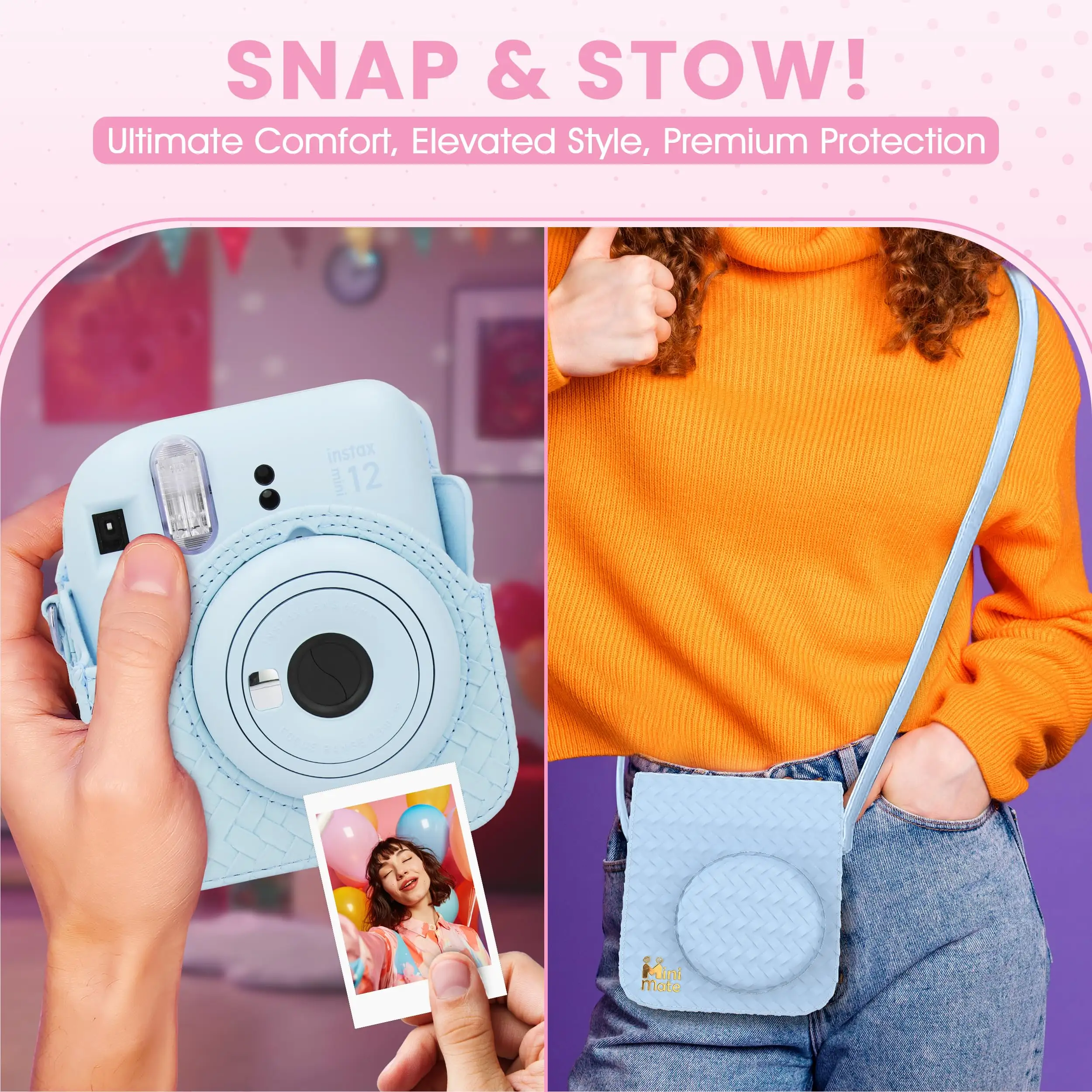
Fujifilm Instax Mini 12 Review: Conditional Buy Verdict
Arriving with a reputation for instant, tangible memories, the Fujifilm Instax Mini 12 Instant Camera with MiniMate Bundle & Case (Pastel Blue) consistently scores high in user satisfaction, earning an aggregated 9/10 across platforms. Its charm lies in the blend of simple operation, pastel aesthetics, and quick-developing prints. While marketing promises “bright photos no matter where or when,” user reports reveal nuanced realities—particularly in challenging lighting.
Quick Verdict: Conditional Buy
| Pros | Cons |
|---|---|
| Simple, intuitive twist-to-power design | Occasional overexposure in bright sunlight |
| Fast print speed (~5 seconds) | Film costs add up quickly |
| Vibrant, vintage-toned colors | No delete option – every shot counts |
| Compact and portable | Flash can be too intense for pets/close-ups |
| Fun close-up mode for selfies and detail shots | Not weather-sealed beyond dust resistance |
| Bundle adds value with case, film, album | Long-term durability concerns from a few users |
Claims vs Reality
One of Fujifilm’s headline claims is that the Mini 12 delivers “bright photos no matter where or when” thanks to automatic exposure and flash adjustment. While many owners back this up in indoor and low-light situations, the story changes outdoors. Reddit user Christopher Clark noted: “The flash is aggressive—my cat now has permanent ‘deer in headlights’ photos,” and others mention overexposure in direct sunlight. This suggests the auto-exposure system favors brightness over nuanced dynamic range.
Another claim revolves around ease of use: twist the lens to power on, twist again for close-up mode. Across Best Buy and Reddit, this mechanism is universally praised. Sport yod shared: “It only takes a moment to get used to orienting the camera and turning the camera on using the lens… you can’t mess that up.” Here, marketing and reality align perfectly—setup and operation genuinely are beginner-friendly.
Finally, Fujifilm touts the close-up mode (30–50 cm) as ideal for selfies and detail shots. User feedback confirms this. A verified buyer on Best Buy remarked, “Easy to take selfies and close-up pics… one of the functions,” while Christopher Clark credited it with saving his brunch flat lays from “looking like blurry UFOs.” In this case, the promise holds under real-world use.
Cross-Platform Consensus
Universally Praised
Ease of use is the most consistent praise. From parents buying for children to seasoned instant camera fans, the twist-to-activate design and simple three settings (off/on/close-up) make it accessible. Kimberlyr, gifting it to her baby sister, said: “She loves it. Easy to use.” This simplicity benefits casual shooters who want instant results without fiddling with settings.
The aesthetic appeal of the pastel blue finish also resonates deeply. Christopher Clark called it “like holding a little cloud that spits out photos,” and multiple Best Buy reviewers mention how the compact, stylish design makes it a joy to carry. For lifestyle bloggers or scrapbooking enthusiasts, this translates into both a functional and decorative tool.
Quick print speed is another standout. While official specs list 90 seconds for full development, initial image ejection happens in about 5 seconds—a surprise for those used to slower instant cameras. Reddit user feedback points to this as “impressively quick,” allowing event hosts to hand out prints almost immediately.
Common Complaints
Film cost is the most frequent frustration. At around $15 for 20 shots, several users describe the expense as “hurting my soul.” For heavy users—like party photographers or travel documentarians—this impacts day-to-day practicality. Without a delete option, every misfired shot becomes a paid mistake. Christopher Clark humorously lamented his growing “double chin collection.”
Exposure issues in bright sunlight come next. While indoor performance garners praise, outdoor shots can appear washed out. Fakespot’s analysis highlighted this: “Some pictures come out very bright/white-washed and you cannot do anything to change the outcome.” For outdoor portraitists, this means unpredictable results without shade or careful positioning.
Flash intensity divides opinion. Pet owners, in particular, report harsh lighting effects. The constant firing flash, while useful for ensuring brightness, sometimes creates stark shadows or glare. Those photographing animals or reflective surfaces may need to adjust expectations.
Divisive Features
The vintage color rendering draws both love and critique. Some adore the soft, nostalgic tones—perfect for scrapbooks and mood boards. Others find saturation a tad high, especially in strong daylight. This variance often depends on personal taste and the intended use of the photos.
Durability sparks mixed experiences. Many praise the build as sturdy enough to survive drops, as Christopher Clark recounted after “dropping it at a picnic… twice.” Yet Fakespot flagged isolated reports of mechanical failures within months, such as shutter issues or detached eyepieces. Long-term reliability seems generally solid but not flawless.
Trust & Reliability
Trustpilot and Fakespot data show minimal deception in reviews, with over 80% high-quality feedback. The most credible concern is occasional mechanical failure after several months—though such cases are rare. One Fakespot-highlighted user reported: “One day excited to go out, the camera didn’t work, making me sad.”
Durability stories lean positive. Reddit and Best Buy users recount surviving drops and regular travel without functional compromise. However, because it’s plastic-bodied and not weather-sealed, owners caution against exposing it to rain or extreme dust beyond its basic dust resistance.
Alternatives
Within the Instax family, the Mini 11 is a close competitor—cheaper and similarly compact, but lacking the Mini 12’s improved close-up mode and parallax correction. Best Buy reviewers compare film pricing favorably to square-format Instax models, suggesting the Mini 12 offers better ongoing value for those who print frequently. For users more concerned with advanced features like variable exposure, higher-end models like the Instax Mini Evo hybrid may be appealing, albeit at double the price.
Price & Value
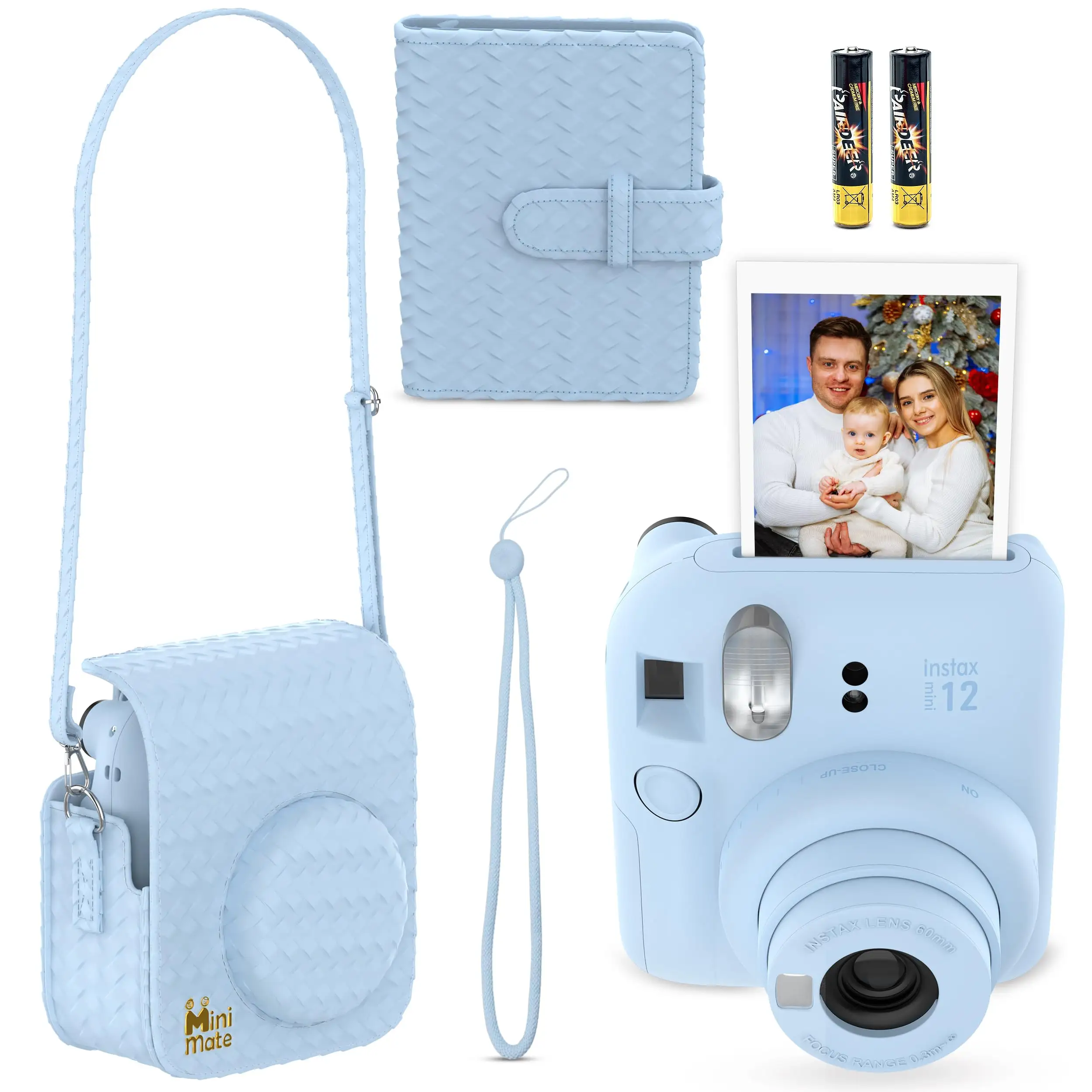
On Amazon Australia, the full MiniMate bundle (camera, case, 50 sheets of film, album) lists at AUD $380.51. eBay shows standalone units averaging USD $71–96, with bundles reaching $135. Resale value holds well due to demand for pastel colors and gift-ready kits. Community buying tips emphasize sourcing film from big-box retailers like Walmart or Target to avoid online mark-ups. As one Fakespot user advised: “Go to Walmart/Target for film, it’s cheaper than Amazon.”
FAQ
Q: Does the Mini 12 come with film in standard packages?
A: In most cases, film is sold separately. Bundles like the MiniMate kit include sheets, but standalone purchases will require buying Instax Mini film.
Q: How do I activate close-up or selfie mode?
A: Twist the lens once to power on, then twist again to enter close-up mode. Use the selfie mirror to align shots within 30–50 cm range.
Q: What’s the battery life like?
A: Two AA alkaline batteries last approximately 100 shots, or about 10 film packs. Heavy users should carry spares.
Q: Can I adjust exposure manually?
A: No, exposure is automatic. While convenient, this means limited control over brightness, especially in outdoor sunlight.
Q: Is the camera durable for travel?
A: Yes, for everyday handling. It’s sturdy enough for drops but not weatherproof, so avoid rain or sand-heavy environments.
Final Verdict: Buy if you’re a casual photographer, gift-giver, or scrapbook enthusiast seeking instant, tangible prints with minimal learning curve. Avoid if you need precise exposure control or plan extensive outdoor shooting in bright light. Pro tip from community: stock up on film during sales at physical retailers to keep ongoing costs down.