Fractal Design Define 7 XL Review: Spacious but Pricey
The Fractal Design Define 7 XL Full Tower Case earns an 8.8/10 from cross-platform user feedback — winning over enthusiasts with cavernous space, modular customization, and excellent noise dampening, while drawing criticism for price hikes, challenging cable management, and airflow quirks in certain configurations.
Quick Verdict: Conditional — ideal for builders prioritizing storage, liquid cooling support, and silence, but less appealing for airflow-focused gamers or budget-conscious users.
| Pros | Cons |
|---|---|
| Massive interior with dual layouts for E-ATX/SSI-EEB | Expensive compared to prior Define series |
| Supports up to 18 HDDs + 5 SSDs | Tight PSU and cable management space reported |
| Flexible cooling options with 480mm radiator support | Limited front intake when door closed |
| Strong noise dampening with steel panels | Airflow challenges in storage-heavy setups |
| Modular design with swappable panels | Manual lacks detail; build process can be fiddly |
| Premium build materials | Back panel clearance can cause fitment issues |
| Edge-to-edge tempered glass available | Front radiator push-pull not possible in server layout |
Claims vs Reality
Fractal’s marketing hails the Define 7 XL as “a new standard” for modularity and “outstanding cooling capacity.” The reality is nuanced.
The brand promotes up to 11 fan mounts and space for gargantuan loops, with OC3D TV calling its attention to detail “just next level better.” Reddit user feedback indicates this capacity is real — one builder ran a 3990x Threadripper with quad GPUs and multiple storage arrays without thermal throttling. However, as one PCPartPicker reviewer noted, “front intake is limited with door closed,” meaning airflow depends heavily on layout choices and fan positioning.
Fractal also claims near-silent operation thanks to industrial-grade acoustic panels. Multiple owners corroborate this, such as an LDLC customer who called it “the silent giant” and found the walls “so soundproof that you don’t know when the computer is on.” Techtesters’ benchmark — “all you heard was a gentle little breeze” at 100% fan speed — mirrors these experiences.
For storage, the company advertises unprecedented capacity — 18 HDDs plus 5 SSDs. Data hoarders confirm this but point to quirks: one PCPartPicker reviewer described drive cages as “fiddly and flimsy” when fully populated, and changing drives later can require partial disassembly.
Cross-Platform Consensus
Universally Praised
Space is the defining virtue. Builders with niche needs — from workstation pros to home server admins — cite its roomy interiors and open layout. Reddit user u/ data hoarder posted about cramming “8 Exos 16TB and 5 SSDs” alongside a Fractal Celsius+ S28 AIO without hitting cooling limits. LDLC reviews highlight its flexibility: “whether it’s a bulky air cooling system or a complex liquid cooling configuration, the Define 7 XL will accommodate it with ease.”
Noise suppression delivers on the promise, with Trustpilot reviewers finding the design “perfect for work and gaming environments” thanks to solid steel and dampening panels.
Its modular approach — swappable top, reversible hinges, multibrackets — delights tinkerers. A PCPartPicker user praised the “good margin for experimentation” in configuring cooling vs. noise balance, while noting the benefit of removable filters and fillport consideration for water cooling.

Common Complaints
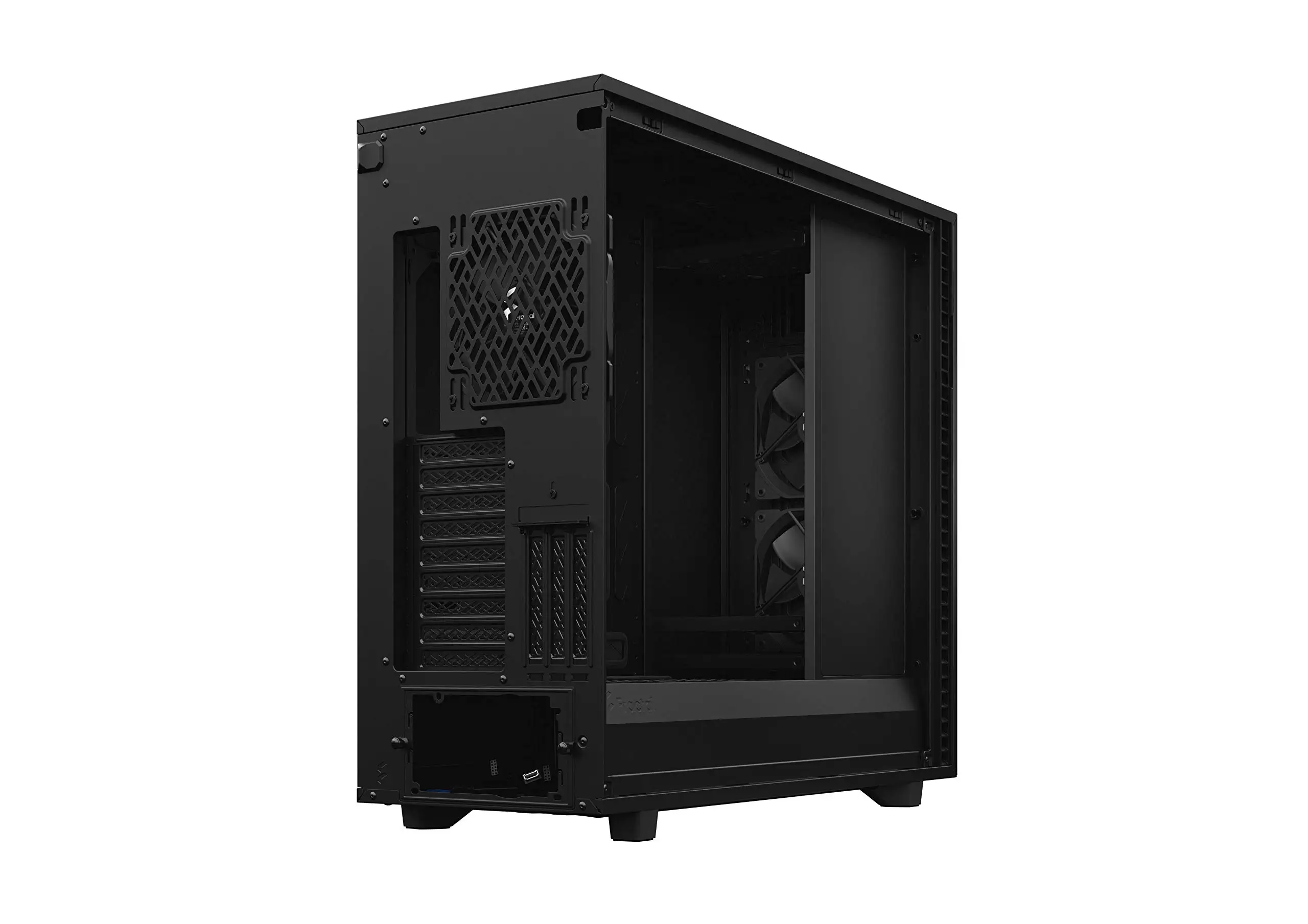
Cable management space in the rear is a recurring headache. One watercooling enthusiast noted their “24-pin cable is crammed tight” and that the magnetic back panel “pops off if you don’t spend time getting everything pushed tight.” The PSU area’s plastic shroud can make this worse, according to multiple PCPartPicker reviews.
Airflow gets mixed marks: although top and bottom ventilation options help, those using the storage layout find top fan capacity capped at 280mm. A data hoarder reported this limits adding certain radiator setups without removing drives. Others mention front intake being “limited with door closed,” which impacts cooling in quiet-focused builds.
Build complexity is another friction point — the sparse manual forces many to rely on community videos. One user observed that “the many swappable panels can make the building process a bit painful” despite their utility.
Divisive Features
Price-to-value perception splits the audience. Enthusiasts defending the cost argue that its unprecedented capacity, premium finish, and rare combination of noise suppression and watercooling readiness justify $200–$300+ MSRP. On the other side, long-time Fractal fans lament “pricing themselves out of the market,” as one Trustpilot reviewer put it.
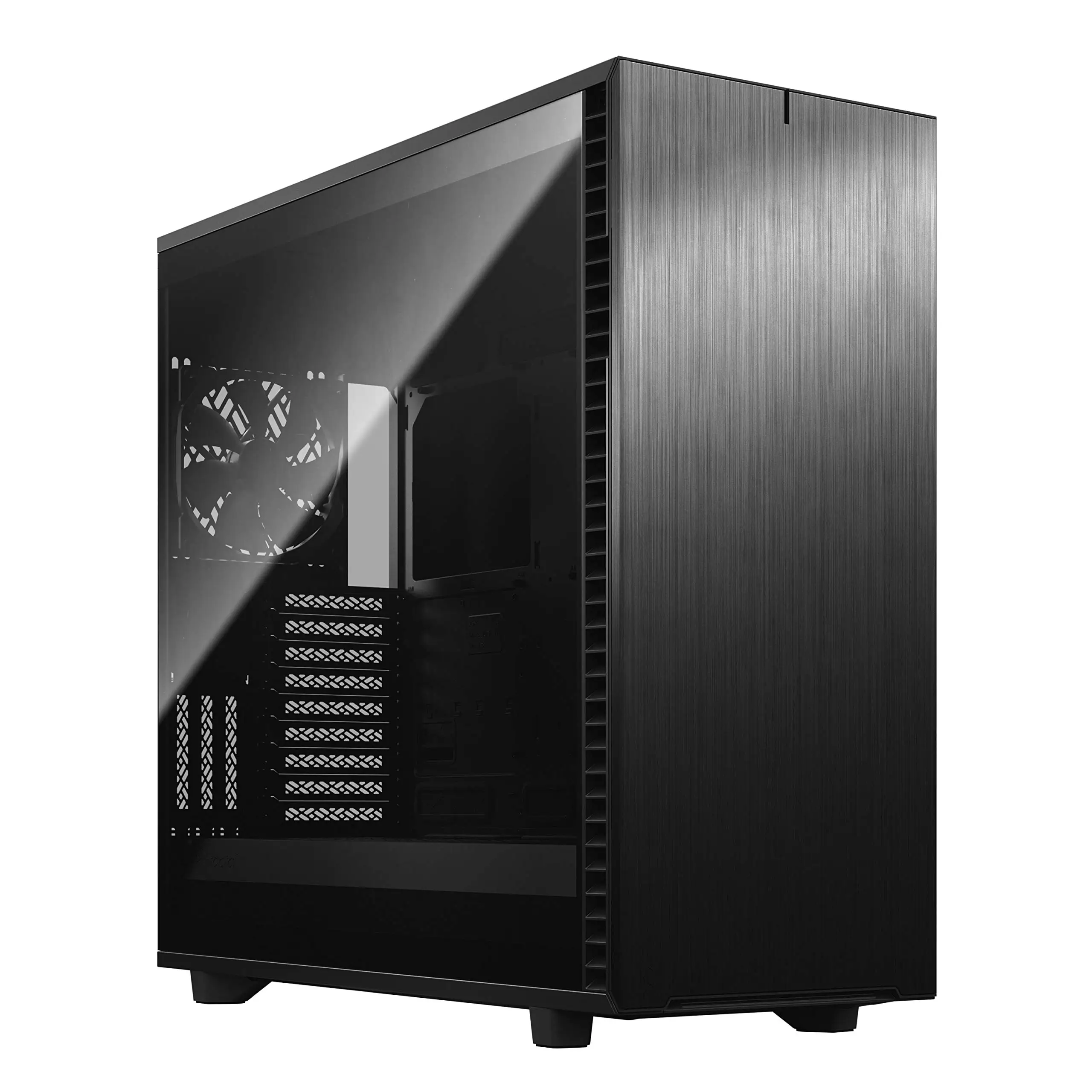
The styling — minimalist matte black with clean lines — draws praise for professional environments but leaves RGB fans seeking extra mod work. Some embrace it as a blank canvas, painting side panels or adding LED strips, while others feel constrained by limited mounting surfaces for lighting.
Trust & Reliability
There’s no widespread scam concern — buyers across platforms consistently receive the advertised product. Durability gets high marks: Reddit builders report years of trouble-free operation from prior Define series and expect the XL to “last even longer” due to its heavy steel construction. LDLC users commend robustness, with one saying, “the anodising of the surfaces is of excellent quality.”
However, shipping protection has room for improvement. A long-time Fractal buyer recalls having to RMA their R5 twice due to transport damage, suggesting better padding for this heavy chassis.
Alternatives
Gamers Nexus reviewers of the regular Define 7 suggested airflow improvements in other Fractal models — like the Meshify S2 — for those prioritizing cooling over silence. Reddit users echo that mesh-panel designs give better thermal performance but at the cost of acoustic isolation and storage expansion.
For builders not needing XL’s monumental storage, mid-tower cases such as the Define 7 Compact trim size and price while keeping some modularity. Nonetheless, no competitor in this feedback set matches the XL’s blend of 18-drive capacity, multi-GPU space, and noise control.
Price & Value
eBay sales in 2023–24 show new Define 7 XL units selling in the $224–$369 range, depending on glass panel type, with used units sometimes dipping to $125–$179 in good condition. Community buying tips include watching for sales — as one Trustpilot user scored a prior series Define for under €100 during Black Friday, and predicting similar seasonal drops.
LDLC reviewers caution that for the price, extras like additional drive plates would be “justified.” Long-term, the resale market appears resilient — aided by Fractal’s reputation for durability and timeless design.
FAQ
Q: Can the Define 7 XL handle dual 480mm radiators?
A: Yes, with certain models and configurations — one PCPartPicker user mounted a 480 and 420 front/top setup, though clearance depends on radiator thickness and avoiding HWL SR2 units.
Q: Is cable management space sufficient for high-end builds?
A: It’s serviceable but tight — multiple users noted cramped routing for thick cables, especially behind the motherboard tray, requiring extra time and careful organization.
Q: How quiet is it under full load?
A: Exceptionally quiet for its size. Sound-dampened panels mean even stress testing “only sounded like a gentle breeze,” according to Techtesters and LDLC reviews.
Q: Does the storage layout affect cooling?
A: Yes, it limits top fan/radiator size to 280mm and front push-pull options, impacting maximum airflow unless drives are relocated.
Q: Is it worth the high price compared to mid-towers?
A: For users needing extreme storage, multi-GPU setups, or custom loops, most say yes. For typical gaming rigs, mid-sized cases may offer better value.
Final Verdict: Buy if you’re a workstation pro, data hoarder, or watercooling enthusiast wanting maximum capacity and silence. Avoid if you prioritize mesh-panel airflow or have limited space. Pro tip from the community: plan your cooling and cable routing in advance — the XL rewards careful build strategy but punishes last-minute changes.