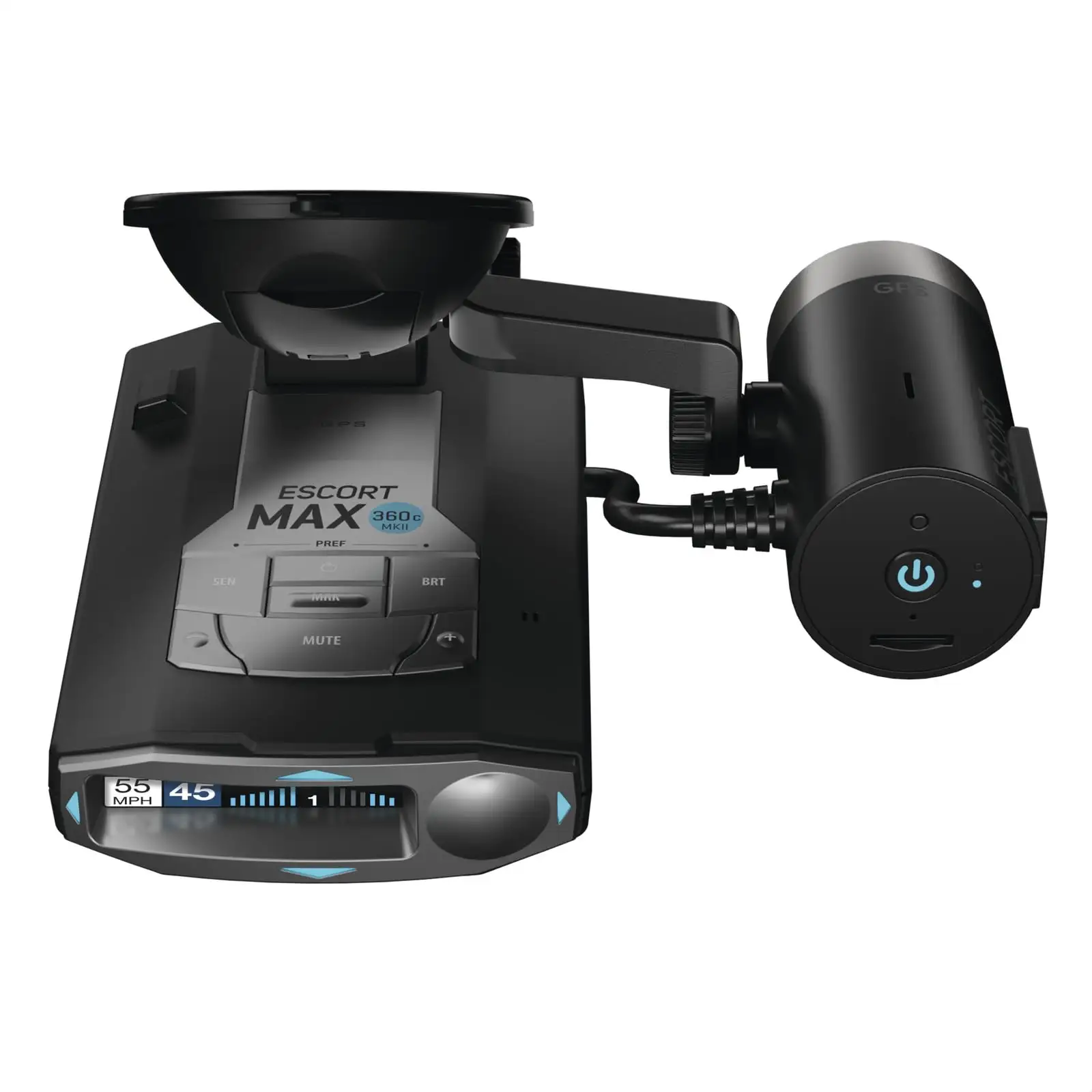
Escort MAX 360c Bundle Review: Great Range, App Issues (8.2/10)
A recurring theme across platforms is that Escort MAX 360c Radar Detector with Mount & OBDII Cord Bundle wins people over on raw detection and day-to-day livability—but it can lose them the moment software, app pairing, or “connected” features become the main reason they bought it. Verdict: 8.2/10 based on cross-platform sentiment that praises range, arrows, and auto-lockouts while repeatedly flagging connectivity and price frustration.
Quick Verdict
Conditional Yes — Buy it if you want a high-end windshield detector with directional arrows and strong range; think twice if your purchase hinges on app connectivity or “smart” features working perfectly every drive.
| What buyers agreed on | Evidence from user feedback | Who it matters to | Risk/Trade-off |
|---|---|---|---|
| Strong detection range | Best Buy reviewers repeatedly cite “far range” and “amazing range” | Highway drivers, frequent road trippers | Premium cost |
| Directional arrows are genuinely useful | Best Buy reviewers describe arrows “pointing in the direction” of the radar | New detector users, situational awareness | Doesn’t fix false alerts alone |
| Auto-learn can quiet repeat falses | Best Buy: “learned repeat signals… my ride is much quieter” | Daily commuters on repeat routes | Lockouts can be a double-edged sword |
| App experience is inconsistent | Best Buy: “bad smart app link… contantly lose communication” | People buying for connected features | Can drive returns |
| Price is a common sticking point | Best Buy: “overpriced… very expensive product” | Value-focused buyers | You’re paying for premium features |
Claims vs Reality
Escort’s marketing leans hard on connectivity and community-driven alerts—“built-in wifi,” “automatic updates,” and the larger ecosystem feel. Digging deeper into user reports, the “connected car” pitch lands best when the detector is treated primarily as a standalone unit, not as an always-synced smart device.
One gap shows up around app reliability. A Best Buy reviewer loved the core performance but drew a hard line at the pairing experience, writing: “Great radar detector ! bad smart app link . … they contantly lose communication with each other… i ended up returning this item.” That’s a notable contradiction to the promise of frictionless connectivity—especially for buyers who choose the bundle expecting fewer hassles.
Another marketing promise is that false alerts get “automatically” filtered out. Many users do echo quieter operation over time, but the reality varies by environment and settings. A Best Buy reviewer described the upside of learning behavior: “detector has learned repeat signals along my normal routes and my ride is much quieter.” Yet another reviewer went the opposite direction on the same theme, saying: “Overpriced… lots of false alarms.” The pattern suggests filtering can be excellent when it’s tuned and trained—but not universally magical out of the box.
Finally, directional awareness is a big claim, and here the lived experience is closer to the marketing. In third-party testing, RadarTest wrote the arrows are “generally accurate,” and Best Buy reviewers kept returning to that one feature as the reason the device feels more actionable than older detectors. The feature seems to translate well from brochure to windshield.
Cross-Platform Consensus
Universally Praised
The first thing that keeps resurfacing is range—especially among people who drive long distances and want earlier warnings than budget detectors provide. A recurring pattern emerged in Best Buy feedback: buyers describe getting alerted well before visually spotting enforcement. One reviewer wrote: “picks up radar long before you ever see a cop.” Another framed it more bluntly in outcomes: “works really well . has saved me from at least 4 citations.” For commuters and road trippers, that “heads-up time” is the feature that justifies the premium.
Directional arrows are the other centerpiece, and users talk about them as a stress reducer rather than a gimmick. A Best Buy reviewer explained why it changes driving decisions: “alerts you to where they are with an arrow pointing in the direction of the radar.” For newer detector owners, that clarity matters because it turns a generic beep into “front vs rear,” especially when passing a source or when multiple signals exist nearby.
A quieter, less “chatty” ride is also a frequent win—particularly for repeat-route drivers. The way users describe it isn’t about settings menus; it’s about daily quality of life. A Best Buy reviewer wrote: “detector has learned repeat signals along my normal routes and my ride is much quieter.” Another echoed the same arc from noisy to calmer: “detects from far range and learns unnecessary bands.” For a commuter, that’s the difference between living with the device or eventually turning it off.
After those core benefits, the mount experience gets a surprising amount of love. People repeatedly single out the magnetic mount as something that makes an expensive device easier to live with—especially if they remove it to avoid theft. RadarTest also praised the “magnetic windshield mount,” and Best Buy sentiment lines up with that appreciation for quick on/off usability.
- Most-cited strengths: long-range detection, directional arrows, quieter operation over time, magnetic mount convenience
- Most-quoted outcomes: “saved me” from tickets/citations, earlier warnings than previous detectors, less false-alert noise on familiar routes
Common Complaints
Software and connectivity issues are the most consistent pain point, and they’re not limited to one type of user. Some people only want firmware updates and occasional app features, and even that can be unreliable. A Best Buy reviewer described a repeated failure cycle: “they contantly lose communication… i had to constantly keep removing and re - adding the escort max back into the app.” For road-trippers who expect the app to “just work” for hours, this becomes a deal-breaker.
Price is the other major complaint, often stated without nuance—suggesting sticker shock rather than disappointment with raw detection. A Best Buy reviewer called it out directly: “very expensive product,” while another added: “quality not that good… built so much better back in the 80 s.” That “value” frustration tends to intensify when paired with the app issues, because buyers feel they paid for a connected experience that doesn’t feel dependable.
There are also reports that the detector can be slow to identify police radar, according to Best Buy’s aggregated summary: “a few complaints about the slow speed at which the detector identifies police radar.” While individual quoted reviews focus more on range and falses, this surfaced enough to be included in the platform’s synthesis—suggesting it’s a minority but repeated issue.
- Most common negatives: app connectivity instability, premium price, occasional false alarms, occasional slow identification complaints
- Most likely to trigger returns: “full capabilities” depending on the phone app and connectivity
Divisive Features
False-alert filtering is both the hero and the controversy. Some buyers experience the “quiet operation” Best Buy highlights, especially after the detector learns routes and locks out repeat noise. Others still report “lots of false alarms,” indicating that environment (dense urban sensors, BSM-heavy traffic) and configuration can swing satisfaction dramatically.
Connectivity is similarly polarizing because some users barely need it, while others bought the bundle specifically because they want the modern connected ecosystem. One Best Buy reviewer said the app worked well for them: “also the app works great so you can set it up to how you want it to work.” But another reviewer’s experience ended in a return due to repeated disconnects: “leave a lot to be desired… i ended up returning this item.” The divide appears less about ideology and more about whether a buyer’s specific phone/usage pattern behaves reliably.
Trust & Reliability
Best Buy feedback contains a notable cluster of “it saved me” stories that read like real-world reliability proof over time rather than first-day impressions. A reviewer wrote: “has saved me more times than i can count,” and another quantified it: “saved me from at least 4 citations.” These aren’t lab metrics, but they show repeated perceived performance, especially for people who keep the detector mounted daily.
At the same time, durability and long-term satisfaction show cracks around hardware issues and ecosystem friction. One Best Buy reviewer mentioned a hardware problem: “having to exchange it because of a power issue i love it . ( replaced it ).” That’s not widespread enough here to call a trend, but it’s a reminder that reliability isn’t only about detection—it’s also about power and daily startup consistency.
The dataset provided doesn’t include actual Trustpilot user posts or Reddit “6 months later” threads with usernames for this specific bundle, so long-term forum-style durability stories can’t be responsibly quoted beyond what appears in the included Best Buy review excerpts and third-party review sources.
Alternatives
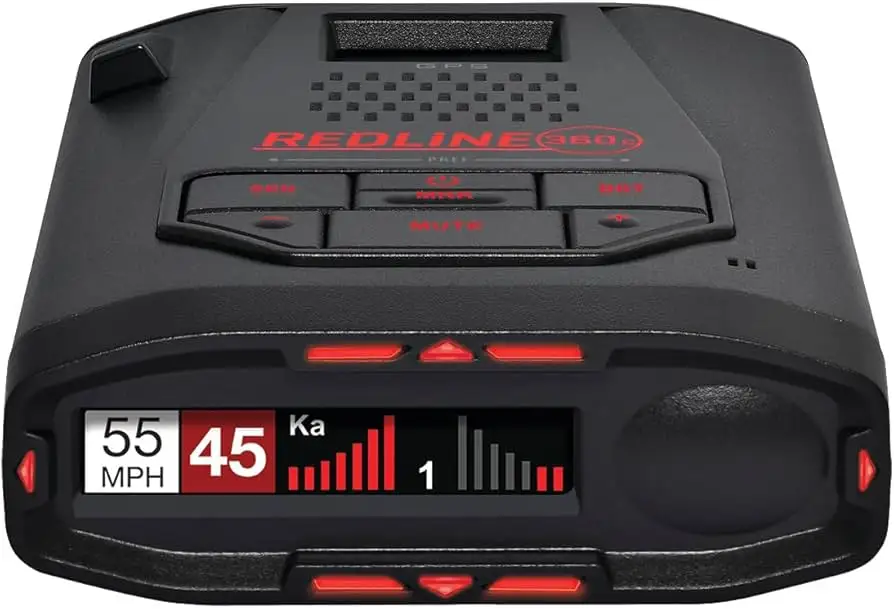
Only a few competitors are explicitly mentioned in the provided data, and the comparisons tend to come from users upgrading within the same brand. A Best Buy reviewer wrote: “i actually upgraded to the redline and its quite a bit better in terms of long - range detection.” That positions the Escort Redline 360c as the “if you want more range” option—at a likely higher spend.
Another comparison comes from RadarTest, which frames how the MAX 360c behaves versus Valentine One in threat reporting. RadarTest wrote that in town “a single radar signal is generally reported as one threat,” while “the v1… shrieks alerts of up to nine simultaneous threats.” For drivers overwhelmed by noisy multi-alert behavior, that’s a meaningful qualitative difference—less chaos in urban driving.
Price & Value
Price sensitivity shows up constantly in buyer language because the MAX 360c sits in premium territory. Best Buy reviewers call it “very expensive,” “overpriced,” and still sometimes “worth it” when the detector prevents tickets. One reviewer framed the return on investment plainly: “works really well . has saved me from at least 4 citations . love it . definitely worth the $ $.”
Resale and market pricing signals also appear in the eBay listings included. New units were listed around $469.95 (discounted from $549.95) in one listing, while another used listing was $599.99. A separate auction-style listing showed a sold price of $416.00. These swings imply that deal-hunting (or buying lightly used) is a real strategy for value-focused buyers who still want “360 degree protection” and arrows without paying close to MSRP.
Buying tips embedded in feedback are indirect but clear: if you’re paying premium, you want the device to work well without depending on the app. Buyers who treat it as “excellent as a stand-alone radar detector” seem happiest, while buyers who “plan in using escort 's full capabilities” are the ones most likely to return it if connectivity is unstable.
FAQ
Q: Does the Escort MAX 360c actually reduce false alerts over time?
A: Conditional yes. Several Best Buy reviewers describe the detector learning repeat signals, including: “detector has learned repeat signals along my normal routes and my ride is much quieter.” But others still report “lots of false alarms,” so results depend on your area, traffic tech (like BSM), and settings.
Q: Are the directional arrows useful in real driving?
A: Yes, for many. Best Buy feedback repeatedly highlights arrows as actionable guidance, like: “alerts you to where they are with an arrow pointing in the direction of the radar.” RadarTest also reported the arrows are “generally accurate,” especially in typical approach/pass scenarios.
Q: Is the app and connectivity experience reliable?
A: Not consistently. Some buyers say “the app works great,” but others describe frequent disconnects, such as: “they contantly lose communication… i had to constantly keep removing and re - adding.” If the bundle’s OBDII/connected features are your main reason to buy, this risk matters.
Q: Is it worth the price compared with other detectors?
A: It depends on how much you value range and reduced daily noise. Many buyers justify it through avoided tickets: “has saved me more times than i can count.” Others feel it’s “overpriced,” especially when paired with app frustrations, so value is strongly tied to expectations.
Final Verdict
Buy if you’re a frequent highway driver or daily commuter who wants premium range, directional arrows, and a detector that can get quieter on familiar routes; Best Buy reviewers repeatedly describe it as “best radar detectors on the market” and say it “picks up radar long before you ever see a cop.”
Avoid if your priority is a flawless connected/app experience or if premium pricing already feels hard to justify; one Best Buy reviewer summed up the deal-breaker: “Great radar detector ! bad smart app link… i ended up returning this item.”
Pro tip from the community: treat it like a top-tier standalone detector first—then consider the app a bonus. As one Best Buy reviewer put it, it can be “excellent as a stand-alone radar detector,” even when “full capabilities” through the phone “leave a lot to be desired.”