Cobra 75 All Road Review: Conditional Buy Verdict 8/10
“It works about 30 feet away” is the kind of detail that turns a spec-sheet promise into something drivers actually trust. Cobra 75 All Road Wireless CB Radio lands as a modern, space-saving CB concept that real owners and forum posters describe as surprisingly capable—especially when paired with a good antenna—but with some practical gotchas around Bluetooth audio routing and the reality of today’s crowded CB band. Verdict: Conditional buy — 8/10.
Quick Verdict
Yes, conditionally—best for drivers who want a clean install and are comfortable with a Bluetooth-based handset ecosystem, and who will invest in antenna setup.
| What the data suggests | Pros (evidence) | Cons (evidence) |
|---|---|---|
| Wireless handset actually usable at distance | Forum user “marc spaz” described it working “about 30 feet away” from the transceiver (myGMRS.com Forums) | Wireless pairing can be a failure mode |
| Real-world range can exceed official expectations | Same user reported a moving conversation “at 14 miles apart” with 3.5W and a quality antenna (myGMRS.com Forums) | Bluetooth audio can hijack calls/streaming |
| Compact, modular install is a major draw | Third-party retailer calls it “an all-in-one unit for a very clean install” (Right Channel Radios) | Accessories add cost/complexity |
Claims vs Reality
Cobra’s marketing leans hard on “wireless convenience,” “digital noise cancellation,” and “waterproof IP66.” Digging deeper into user reports and support notes, the story is less about gimmicks and more about how the design changes the day-to-day experience—sometimes in ways buyers don’t expect.
Claim: “Wireless convenience… stay focused on the road ahead.”
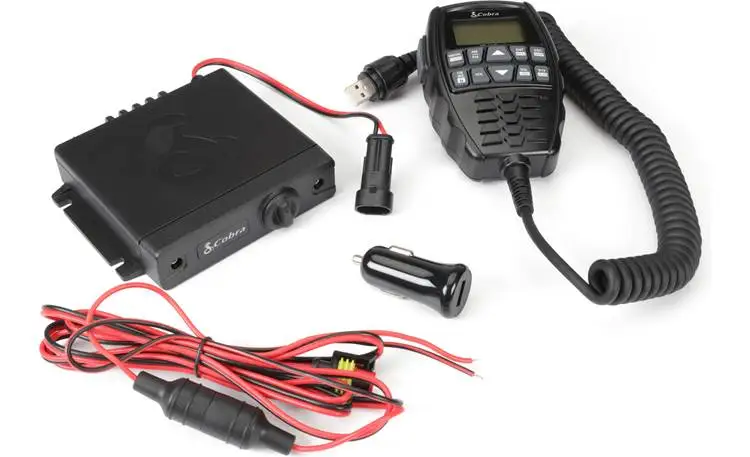
On paper, the Cobra 75 All Road Wireless CB Radio separates the transceiver (“black box”) from the handset and connects them via Bluetooth. In real-world commentary, that’s not just cleaner wiring—it changes how far you can roam while still controlling the radio. A forum poster on myGMRS.com wrote: “The mic works over bluetooth so well… It works about 30 feet away, which was awesome.” For drivers who hop in and out while loading gear, spotting on trails, or setting up camp, that kind of control range is the difference between “novelty” and genuinely useful.
But the same wireless architecture adds a new failure mode: pairing stability. Cobra’s own troubleshooting language is blunt: “When the screen freezes… pairing is lost,” and the fix is physical—“plug your handset into the black box usb port… [to] re-establish bluetooth pairing” (Cobra.com FAQ). The gap here isn’t that wireless “doesn’t work,” but that it behaves like a Bluetooth device: great when connected, annoying when it isn’t.
Claim: “Digital noise cancellation… crystal-clear communication.”
Cobra positions DSP as the hero feature, and the support content repeatedly frames it as adjustable filtering for both receive and transmit (Cobra.com FAQ). The user-side story is less about lab-grade clarity and more about practical intelligibility in vehicles. One myGMRS.com participant who paired a BlueParrott headset described it in lived terms: “Audio from the cobra using the blueparrott mic sounds almost exactly the same as using the cobra mic… there is no need for an external speaker.” For noisy rigs—open-air Jeeps, diesel trucks—that’s a meaningful outcome: fewer add-ons, less wiring, and fewer excuses not to use the CB while driving.
Still, the same ecosystem introduces tradeoffs. Cobra acknowledges that headset multipoint behavior varies and suggests turning volume off or squelch up if CB audio intrudes during calls/streaming (Cobra.com FAQ). So “clear audio” can come with “audio management.”
Claim: “Waterproof IP66 rating… built to withstand the elements.”
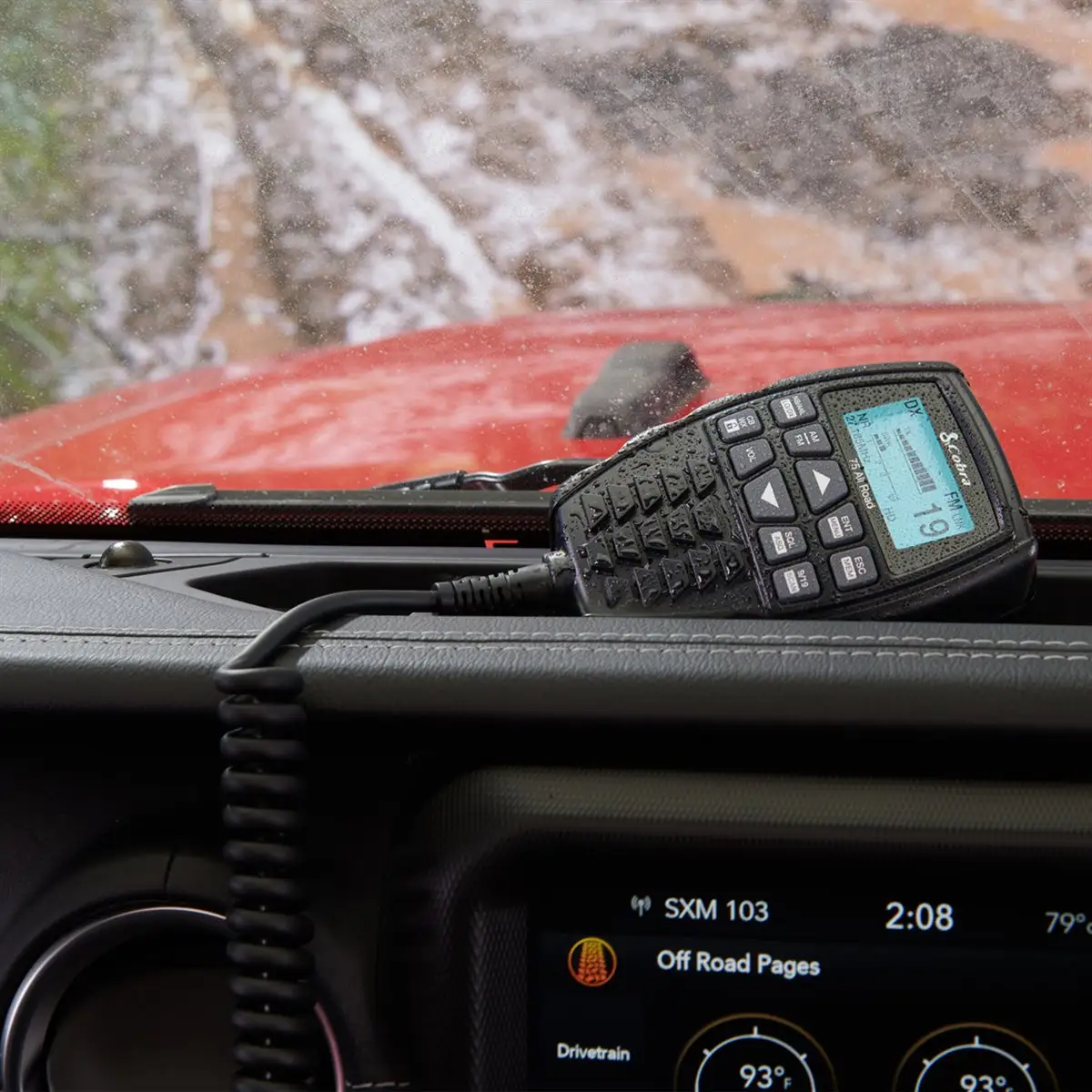
Marketing materials call it IP66 and “waterproof,” and the device is clearly positioned for overlanding and bad weather (Amazon specs; Cobra.com; Cobra.ca). Yet the fine print complicates the headline. Cobra’s FAQ specifies the unit is “rated ‘waterproof’ when the handset is connected and ‘locked’ to the black box,” but warns that when powered through other connection points, “water may be able to penetrate” (Cobra.com FAQ). While officially pitched as IP66-ready toughness, Cobra’s own guidance implies your waterproof “reality” depends on how you’re powering and connecting it.
Cross-Platform Consensus
A recurring pattern emerged across retailer descriptions, official support notes, and community discussion: the Cobra 75 All Road Wireless CB Radio is less about raw CB “muscle” and more about making CB workable again in modern vehicles—tight dashboards, safety concerns, and the desire to go hands-free.
Universally Praised
The clearest praise centers on space and install flexibility, especially for drivers who hate bulky radios dominating the dash. Right Channel Radios frames it as “an all-in-one unit for a very clean install,” highlighting centralized wiring in a small control box that can be mounted out of sight. That matters most for Jeep and SUV owners with limited mounting options; the modular design becomes a practical solution, not just a design choice.
Then there’s the “wireless actually works” story. On myGMRS.com Forums, “marc spaz” didn’t just say it connects—he tried to break it: “I had the transceiver in my jeep, but tested the mic range in my son's jeep.” His takeaway—“about 30 feet away”—reads like a stress test more than a compliment. For trail groups or drivers stepping away from the vehicle briefly, that’s a tangible advantage.
Finally, some of the most compelling praise is about unexpectedly strong real-world performance when paired with a decent antenna setup. Cobra lists “4 watts” output in specs (Cobra.com), but “marc spaz” put it on a meter and wrote: “I was surprised to see it actually has 3.5w of output.” More importantly, he followed with a range story that’s hard to ignore: “I was able to have a conversation at 14 miles apart, while moving.” For overlanders and rural drivers, that kind of range report reframes the radio from “compact compromise” to “compact but capable.”
Common Complaints
The most consistent friction point isn’t RF—it’s Bluetooth behavior and audio routing, especially for drivers juggling headsets, phones, and CB at the same time. Cobra’s own FAQ reads like a map of what goes wrong in real vehicles: “why do i hear cb radio sound during a phone call,” “i answer a phone call… and hear no sound,” and “all i hear is static on my wireless headset when i stream” (Cobra.com FAQ). The fixes (changing “audio path,” turning off Bluetooth, or cranking squelch) are workable, but they’re the sort of steps that can frustrate someone expecting a plug-and-play experience.
Another recurring issue is connection recovery. When Bluetooth pairing is lost, Cobra’s documented recovery method requires physically connecting the handset to the transceiver (Cobra.com FAQ). In a daily-driver or a vehicle with hard-to-reach mounting, that’s an annoyance that traditional wired mics simply don’t create.
And then there’s the broader CB reality: sometimes the gear is fine, but the band is messy. In the same myGMRS.com thread, users lamented “illegal overpowered” stations and one poster asked: “who wants to listen to mud duck for an entire road trip?” That’s not a fault of the Cobra unit—but for highway drivers buying a CB to hear local channel 19 chatter, the community’s frustration suggests expectations need adjustment.
Divisive Features
The headset integration is a love-it-or-hate-it proposition. For some, it’s the whole point. A myGMRS.com Forums poster described a setup with a BlueParrott B450-XT: “I set the blueparrott button to be the ptt for the cobra and it works great.” They emphasized the everyday impact: “now i can use the cobra without having to pick up the mic,” plus “no need for an external speaker.” For professional drivers and anyone prioritizing hands-free driving, that’s a strong endorsement.
But the same “modern” design creates a learning curve—less in RF operation and more in Bluetooth profiles and menu settings. Cobra explicitly notes limitations like VOX not working through third-party headset microphones (Cobra.com FAQ). So if your goal is fully voice-operated, headset-based transmit, the design may disappoint—while still being excellent for PTT-based hands-free.
Trust & Reliability
Digging deeper into reliability signals, most “trust” information here comes from manufacturer documentation and community behavior rather than third-party verified-review platforms. Cobra’s support content repeatedly anticipates specific failures—frozen screens, lost pairing, wrong audio path—then provides step-by-step recovery (Cobra.com FAQ). That pattern can cut both ways: it suggests these issues happen often enough to document, but it also implies the company has a standardized playbook for getting users back on the air.
Long-term durability stories are limited in the provided community excerpts, but there are hints of sustained satisfaction. In the myGMRS.com discussion, one user framed the installation positively without hedging: “i just installed a cobra 75 all road in my suv. i like it!” paired with headset integration that “works great.” While it’s not a “6 months later” report, it’s grounded in a real setup and daily-driver context. The more telling reliability takeaway may be this: most “failures” described are connection-state issues (pairing/audio routing), not hardware breakdown.
Alternatives
Only competitors mentioned in the provided data are worth comparing.
The Autovated article names Uniden CMX760 and Midland 75-822, positioning the Cobra 75 All Road Wireless CB Radio as the more modern option due to “dual-mode FM support and waterproofing” (Autovated). That tracks with how Cobra markets the unit—and how community posters talk about FM clarity and the appeal of a compact FM CB.
For buyers who dislike Bluetooth complexity, the Midland handheld style may appeal precisely because it avoids the “black box + pairing” lifecycle. Meanwhile, Right Channel Radios adds a practical angle: in very noisy environments, “an external speaker is recommended” because the compact built-in speaker “can be difficult to hear” (Right Channel Radios). That nuance matters when comparing: if a competitor has louder audio or easier speaker integration, some drivers will prefer it, even if it’s less “clean install.”
Price & Value
The official positioning is clearly premium for a CB: Cobra lists $199.95 (Cobra.com), while Cobra.ca shows $309.95 (Cobra.ca). On the resale side, an eBay listing shows $169.95 + $40.66 shipping for “open box” (eBay). That suggests the market values it, but discounts exist—especially for buyers willing to go open box.
Community value perception also hinges on whether you’ll pay for the ecosystem. Cobra emphasizes optional accessories—wireless headsets and the “optional all road ptt button” sold separately (Cobra.com). If your goal is a full hands-free, steering-wheel PTT setup, your “real price” is the radio plus accessories. On the flip side, at least one user story suggests that pairing with a headset can save money elsewhere: the myGMRS.com poster noted there was “no need for an external speaker” once using the BlueParrott mic and button mapping.
Buying tips implied by the community: expect antenna quality to dominate range. The same user who reported 14 miles emphasized the antenna context and contrasted performance expectations with different antenna lengths, framing the radio as a “win for a compact fm cb” but still pointing toward “an antenna upgrade” if you want more (myGMRS.com Forums).
FAQ
Q: What kind of range can the Cobra 75 All Road get in real use?
A: Official guidance says “vehicle to vehicle… typically about 2 to 4 miles” (Cobra.com FAQ). However, myGMRS.com forum user “marc spaz” reported “a conversation at 14 miles apart, while moving,” using about “3.5w” and a quality antenna. Antenna efficiency appears to be the major factor.
Q: Can it pair to a smartphone?
A: No. Cobra explicitly says: “you can pair the all road to a wireless headset but not to a smartphone” (Cobra.com FAQ). Some users rely on multipoint headsets to switch between phone calls and CB audio, but Cobra’s support notes that performance varies by headset profiles.
Q: Why do people say the handset freezes or loses connection?
A: Cobra’s troubleshooting explains that when the “screen freezes… pairing is lost” and the fix is to “plug your handset into the black box usb port” to re-establish Bluetooth pairing (Cobra.com FAQ). This suggests the wireless link is a key dependency; physical reconnection is the reset path.
Q: Is it really waterproof?
A: It’s marketed as IP66, but Cobra’s own FAQ clarifies it’s rated “waterproof” when the handset is connected and “locked” to the black box. When powered through other points (USB/12V connections), “water may be able to penetrate” (Cobra.com FAQ). How you power it affects the practical waterproofing.
Q: Does VOX work through a Bluetooth headset microphone?
A: No. Cobra states the VOX feature “is only supported through the all road handset and is not supported with a 3rd party headset” (Cobra.com FAQ). Hands-free use with a headset is more about pairing plus PTT (handset or optional PTT button), not headset-mic VOX transmit.
Final Verdict
Buy the Cobra 75 All Road Wireless CB Radio if you’re an overlander, Jeep/SUV driver, or delivery/pro driver who wants a clean install and modern FM + Bluetooth flexibility—and you’re comfortable troubleshooting audio path and pairing quirks. Avoid it if you want a dead-simple wired mic experience or expect channel 19 to be consistently usable without band noise.
Pro tip from the community: myGMRS.com Forums user “marc spaz” framed the real win as pairing the compact radio with a solid antenna setup—and backed it with a field report: “14 miles… while moving.”