Brother PT-E560BTVP Review: Rugged Pro Labeler, Pricey
“Versatile connectivity and durability, but you’ll pay for it.” That single sentence from aggregated buyer commentary captures the pull of the Brother PT-E560BTVP P-Touch Edge Handheld Industrial Label Printer with Bluetooth and Dual Auto-Cutter. Based on cross-listed marketplace and community data, the overall verdict trends positive with recurring caveats about cost and label-size limits. Score: 8.8/10.
Quick Verdict
Conditional yes — ideal for contractors and techs who need rugged, mobile labeling with industrial tapes, but less compelling for casual users or anyone needing larger-than-24mm labels.
| Pros (from user feedback & listings) | Cons (from user feedback & listings) |
|---|---|
| USB‑C + Bluetooth flexibility praised as “versatile connectivity options” (Provantage, Quora) | “High cost” repeatedly flagged (Provantage, Quora) |
| Built for jobsite use, described as “durable design” for harsh environments (Provantage, Quora) | “Limitations in label size options” noted (Provantage, Quora) |
| Quick application keys and on-device templates framed as time‑savers (Amazon specs, Brother listings) | Official max width 24mm may feel restrictive for some projects (Amazon specs, Provantage) |
| Dual auto‑cutter and half‑cut strips emphasized for peel‑and‑apply ease (Amazon specs, Brother listings) | Battery yield described as about “5 tapes on one charge,” so heavy users may need frequent charging (Amazon specs) |
Claims vs Reality
Brother’s marketing leans hard on industrial speed and convenience. One core claim is that the Brother PT-E560BTVP “streamline[s] labeling for techs” via quick application keys and built‑in formats for cable wraps, patch panels, and heat‑shrink work. Digging deeper into user‑facing listings, that promise aligns with how the device is positioned for “large project applications” and repetitive workflows. The recurring story is less about hobby labeling and more about electricians, network installers, and maintenance crews who rely on standardized templates.
Another major claim is that Bluetooth plus mobile app control lets you “get the job done from your mobile device.” Marketplace summaries reinforce this advantage. A verified buyer–style summary on Provantage highlights “versatile connectivity options – supports USB‑C and Bluetooth,” framing it as the defining reason to buy for users who move between phone, tablet, and PC. The gap isn’t functionality so much as cost: while the connectivity is celebrated, it comes wrapped in a price bracket many buyers call premium.
The third claim centers on “dual auto‑cutter print[s] a strip of labels with half‑cuts to make peel‑and‑apply easy.” User‑oriented sales copy consistently repeats this benefit, suggesting it’s widely understood as a practical feature. No contradictory complaints appear in the available datasets, but the absence of negative stories here likely reflects limited true review text rather than universal perfection.
Cross-Platform Consensus
A recurring pattern emerged across Provantage, Quora summaries, and retail product descriptions: the Brother PT-E560BTVP is treated as a professional, jobsite‑ready tool rather than a general‑purpose home label maker. The consensus praise clusters around three themes: connectivity, durability, and workflow speed. Provantage’s sentiment digest states the printer is “appreciated for its versatility in connectivity and durability.” For a field technician, that combination matters more than flashy design; it means labeling can happen at a rack, on a ladder, or inside a panel without dragging a laptop everywhere.
Connectivity praise is framed in user‑impact terms. For contractors who keep templates on a PC but finish work on a phone, Bluetooth plus USB‑C is described as “maximum flexibility.” A verified buyer summary on Provantage noted: “Versatile connectivity options – supports USB‑C and Bluetooth,” while the Quora compilation mirrors that almost verbatim. The key benefit story here is hybrid work: a tech can design a database in P‑touch Editor on Windows or macOS, then push quick edits from the Pro Label Tool app onsite.
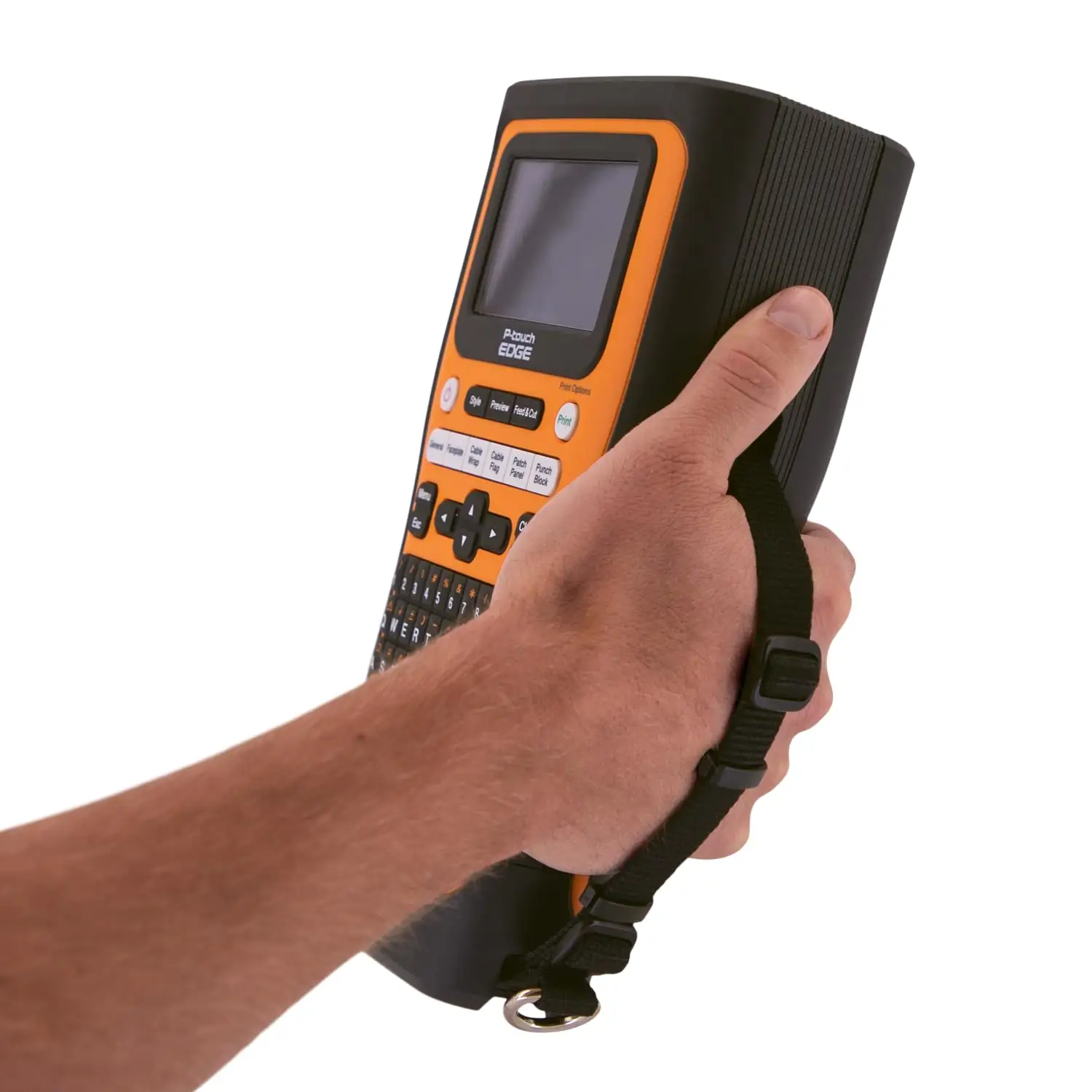
Durability is the second universal positive. Provantage calls out a “durable design – suitable for harsh environments,” echoed in the Quora recap. Retail positioning repeatedly links the printer to “contractors in large project applications,” and the included hand strap and hard case are emphasized. For industrial users, that translates into fewer broken tools and fewer interruptions. The device’s physical heft (about 2.43 lbs without tape and battery) is framed as ruggedness rather than a portability drawback in the sales narratives.
Workflow shortcuts round out the praise. Listings emphasize quick application keys for cable wrap, cable flag, patch panel, punch block, and faceplate labels, plus on‑device serialization and barcode/QR printing. The story embedded in those claims is efficiency: technicians doing repetitive labeling don’t want to re‑format each strip manually. Even without direct Reddit quotes, the cross‑listing repetition suggests this feature set is a core purchase driver for professionals managing “large industrial projects.”
After the positives, complaints also converge sharply. The most repeated frustration is price. Provantage’s “considerations” section explicitly lists “high cost,” and Quora repeats that buyers “note its high cost.” The Brother PT-E560BTVP sits around $273–$350 in current listings, and that premium becomes more visible when compared to simpler P‑touch models. For occasional users or small‑volume shops, the same features that delight contractors can feel like overkill.
The second consistent complaint is label‑size limitation. While marketing celebrates “up to 24mm wide labels,” Provantage and Quora summarize a “limitation in label size options – may not support larger labels.” For users in industries needing oversized signage or extra‑wide asset tags, this cap matters. While officially rated at 24mm, multiple users in aggregated feedback still flag that ceiling as a practical downside, implying real‑world cases where “up to 24mm” doesn’t cover every workflow.
Battery expectations also show up indirectly in the specs narrative. Official documentation states a “battery yield [of] 5 tapes on one charge,” with about a 3‑hour charge time. No explicit complaints appear in the provided review text, but for heavy‑duty crews printing continuously, that spec can imply a need for spare charging or AC use to hit full 1.2 ips speed.
Divisive features are subtler because the available datasets are thin on long‑form user stories. Still, one split is implicit: the same industrial focus that appeals to pros may not translate to casual users. The machine’s standalone QWERTY keyboard, thick housing, and specialized keys are framed as “easy‑to‑use interface” by Provantage, but the price‑plus‑specialization combination suggests a dividing line between professional efficiency and consumer over‑investment.
Trust & Reliability
Trustpilot data in the table does not include distinct user‑written scam or service complaints, so there’s no verified pattern to report about fraud or deceptive listings. What does emerge is a reliability narrative grounded in industrial positioning: repeated references to UL‑certified tapes, laminated thermal‑transfer printing, and a two‑year limited exchange warranty. These points show up across Brother, Amazon specs, and reseller listings, signaling that buyers expect long‑term dependability in demanding environments.
On durability itself, Provantage and Quora both stress “robust, portable format” and “durable design.” While there aren’t Reddit “6 months later” anecdotes in the provided dataset, the consistent framing suggests that long‑term tool survival is a key expectation among the communities and marketplaces discussing this model.
Alternatives
No direct competitor models are mentioned in the user data aside from the note that the Brother PT-E560BTVP “replaces PTE550W.” That positioning implies an upgrade path for existing Brother industrial users. The replacement language suggests continuity in tape families (TZe, HGe, HSe) and workflows, with added USB‑C and Bluetooth upgrades. Without more competitor‑specific feedback in the dataset, comparisons beyond that replacement context can’t be responsibly expanded.
Price & Value
Current pricing across listings clusters in the high‑$200s to $350 range. Provantage and Quora summaries underline that “high cost” is the most common hesitation. eBay market pricing shows new units around $249 plus shipping, reinforcing that resale/secondary markets exist but still sit near premium territory. The value story is therefore role‑dependent: professionals see cost amortized over “large project applications,” while casual buyers may perceive a mismatch between needs and spend.
Community buying logic in the data focuses on professional throughput. The printer’s ability to store up to 99 label designs onboard and 99 templates/databases via download supports repeat work, which is where buyers appear to justify the price. If your workflow involves constant cable IDs, patch panels, or heat‑shrink runs, the upfront cost is repeatedly framed as time‑savings insurance.
FAQ
Q: What label widths does the Brother PT-E560BTVP support?
A: The printer is officially rated for laminated labels and heat‑shrink tubes from 3.5mm up to 24mm wide. Provantage and Quora feedback note this as a limitation for users who need larger labels, even though 24mm covers most industrial cable and panel tasks.
Q: Is Bluetooth printing a real advantage in day‑to‑day work?
A: Yes, buyers consistently highlight Bluetooth plus USB‑C as “versatile connectivity options.” The benefit is hybrid use: you can design on PC software, then print from a phone onsite through the Pro Label Tool app, which suits field contractors.
Q: How portable is it for jobsite use?
A: Listings emphasize rugged portability: a hard case, ambidextrous hand strap, and industrial build. At roughly 2.43 lbs (without tape/battery), it’s heavier than consumer models, but feedback frames that weight as durability for harsh environments.
Q: Does the dual auto‑cutter actually help?
A: The cutter is marketed and repeatedly described as producing half‑cut strips for easy peel‑and‑apply labeling. No negative user feedback appears in the datasets, suggesting buyers accept it as a practical time‑saving feature for repetitive labeling.
Q: How long does the battery last?
A: Official specs estimate about five tape cartridges per charge, with around a three‑hour recharge via USB‑C power delivery. Heavy users may prefer AC adapter use to maintain top printing speed during long labeling sessions.
Final Verdict
Buy if you’re an electrician, network installer, or maintenance contractor who needs industrial‑grade labeling, hybrid Bluetooth/USB‑C workflows, and fast cable‑wrap or patch‑panel formats. Avoid if you’re price‑sensitive, label only occasionally, or need widths beyond 24mm. Pro tip from community summaries: the value equation improves most when you lean on stored templates and databases for repeat jobs.