ASURION Toy Accident Protection Plan Review: 7.6/10
“It was clear to me after two hours on a chat that the company has a clear agenda of denying and delaying to avoid coverage.” That single Reddit complaint sits right beside a very different chorus of Amazon buyers saying refunds were “within minutes.” ASURION Toy Accident Protection Plan lands as a conditional buy, not a blanket recommendation: 7.6/10.
For families buying easily-breakable toys—RC cars, drones, robot dogs—the plan reads like a safety net, and plenty of users describe it that way. But digging deeper into user reports across platforms, the biggest risk isn’t the idea of coverage—it’s whether you can locate the plan, file the claim, and avoid denial/delay loops when something goes wrong.
Quick Verdict
Conditional (depends on item type + your patience for claims)
| What the data suggests | Pros (from users) | Cons (from users) |
|---|---|---|
| Claims can be very fast | “resolved within minutes with a full refund” (Amazon) | “made it very difficult to file a claim” (Amazon) |
| Refunds often come as Amazon credit | “sent… a link to a gift card” (Amazon) | Some feel stonewalled |
| Good fit for crash-prone toys | RC cars/drones/helicopters stories dominate | Plan “missing”/hard to pull up |
| Shipping label experience varies | “prepaid shipping label” (Fakespot highlights) | Long timelines for some |
Claims vs Reality
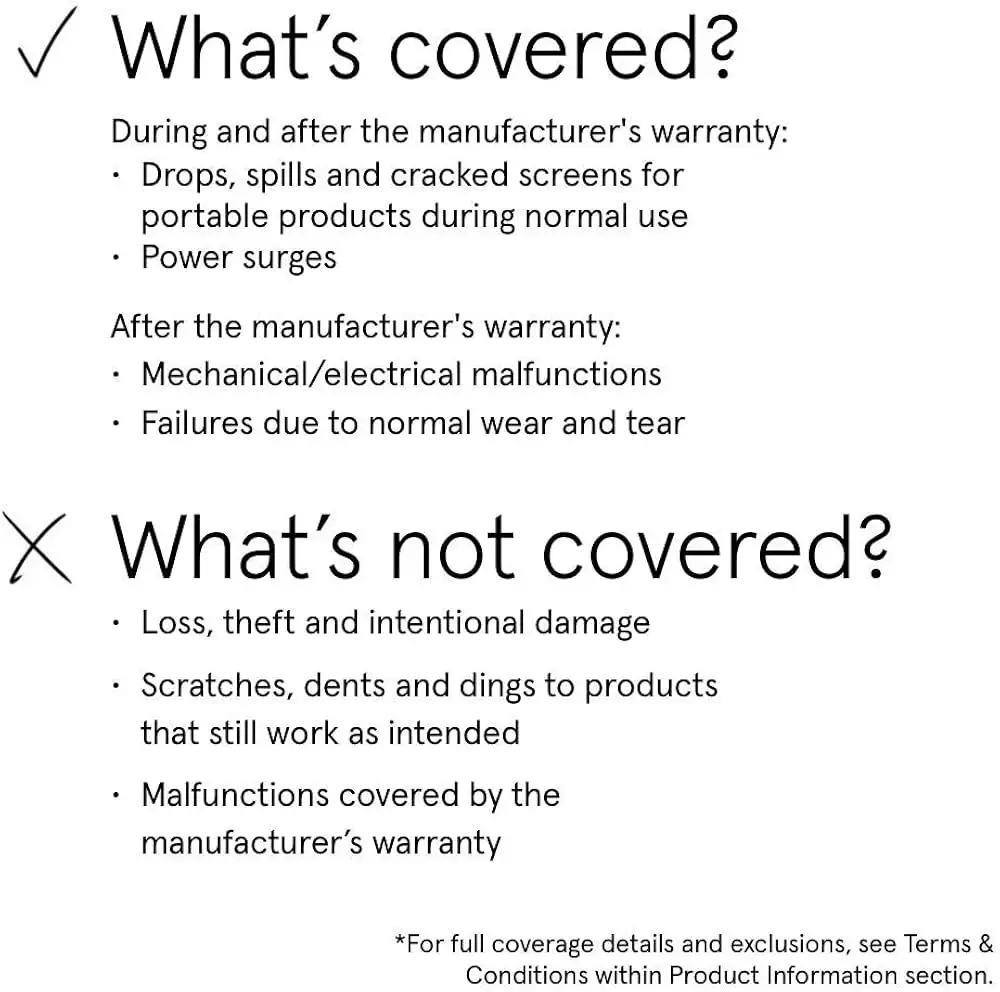
Amazon’s product language makes three big promises: no extra repair cost, broad accidental coverage from day one (for portable items), and an easy claims process with quick approvals. On paper, it’s clean: “you pay nothing for repairs – parts, labor, and shipping included,” and “most claims approved within minutes,” with the fallback that “if we can’t repair it, we’ll send you an Amazon e-gift card for the purchase price… or replace it” (Amazon specs pages).
Digging deeper into user reports, that “minutes” claim sometimes lines up perfectly with real experiences. A verified buyer on Amazon wrote about an RC car claim: “purchased a rc csr for our grandson… made a claim and it was resolved within minutes with a full refund.” Another verified buyer described the process as almost frictionless: “we filled out the form online, shipped back the parts and got a full credit. could not have been easier” (Amazon reviews). For gift-givers and parents, that kind of rapid payout translates to replacing a broken birthday toy quickly—often without dealing with manufacturer warranty back-and-forth.
But the same “easy claims process” promise runs into repeated complaints about access and process breakdowns. Reddit user u/kjtonjm said: “I’ve had a laptop (about $250) and when I called they had no record of my plan even though I could see it on my account.” Another Redditor, u/lfn673q, alleged intentional friction: “after two hours on a chat… the company has a clear agenda of denying and delaying to avoid coverage.” And across review aggregations, the recurring practical issue isn’t always denial—it’s simply getting traction: “when the headphones broke, i tried to pull up the plan but could not” (ReviewIndex excerpt).
A recurring pattern emerged: while marketing frames coverage as straightforward, the lived experience often hinges on whether your claim lands in the “quick label + quick gift card” lane or the “can’t find plan + long chat” lane. That split shows up most clearly in how users talk about time—some saying “within a week” (Amazon drone claim story) and others saying “it took months to get everything lined up” (ReviewIndex excerpt).

Cross-Platform Consensus
Universally Praised
The strongest praise is tied to a specific outcome: the plan pays out in a way that lets people replace a toy quickly. For parents and relatives buying RC cars and drones for kids—items that can meet a tree, branch, or bathtub—users repeatedly describe a simple loop: file claim, ship item, receive Amazon credit. A verified buyer on Amazon wrote: “i contacted asurion… they sent a mailing… once they received the broken car… i was sent a link to a gift card to amazon for the amount of my initial purchase.” Another verified buyer summed it up bluntly: “no hassle. well worth the money. easy to file a claim” (Amazon).
There’s also a clear persona where the plan feels almost tailor-made: households with “crash-prone” toys. One verified Amazon reviewer described an RC car destroyed by accident: “the insurance gave us a full credit when my son's rc was accidentally destroyed.” Another framed it as repeatable value for breakable categories: “would do again for something that i think could break easy like a drone or something. great for kids” (Amazon). The benefit here isn’t theoretical coverage language—it’s that the toy category is inherently high-risk, and users are buying relief from that risk.
Speed, when it works, becomes part of the product’s identity. A verified buyer on Amazon called the claim flow “extremely easy and fast,” emphasizing that it was “refreshing” compared to other processes (Amazon). Fakespot’s highlights echo similar moments, including: “got an email in a few minutes accepting the claim and a link to a prepaid shipping label,” and “whole process completed in 4 days” (Fakespot page excerpts). For time-pressed parents, “prepaid label + fast decision” is the difference between a disappointed kid and a quick replacement order.
Summary (after the stories):
- Fast refunds/credits are a recurring win when claims go smoothly.
- Crash-prone toys (RC cars, drones, helicopters) are the clearest “good fit.”
- Many satisfied users describe a simple “ship it back → Amazon credit” experience.
Common Complaints
The most consistent complaint theme isn’t that coverage never works—it’s that the process can become hard to navigate at the worst moment. ReviewIndex’s excerpts capture the frustration of not being able to access the plan: “when the headphones broke, i tried to pull up the plan but could not,” and the feeling that bureaucracy stretches out simple replacements: “the toy broke right away… and it took months to get everything lined up.” For buyers who purchased the plan “just in case,” the value collapses if the “just in case” moment turns into a scavenger hunt.
On Amazon itself, there are verified buyers who describe the process as structurally difficult. One verified buyer wrote: “they have made it very difficult to file a claim - online process does not work and you will have to dial in to talk to a representative which takes quiet long time” (Amazon). That kind of friction hits hardest for people who bought the plan precisely to avoid a long repair saga—especially if the broken item is a child’s toy that’s used daily.
Reddit adds a sharper edge: suspicion about incentives and denials. Reddit user u/lfn673q alleged: “denying and delaying to avoid coverage.” Another Reddit user, u/k5epn5y, voiced the broader skepticism many people have about warranties: “these 'insurance' plans are very rarely worth it… commonly deny coverage due to nebulous terms.” Whether or not every case reflects a denial, the shared fear is consistent: that unclear terms or procedural hurdles can become the reason a claim fails.
Summary (after the stories):
- “Hard to file” and “hard to find the plan” complaints appear across sources.
- Some users describe long waits or phone escalation as necessary.
- Skepticism centers on denial/delay and ambiguous coverage boundaries.
Divisive Features
The plan’s “replace or reimburse” mechanism—often via Amazon gift card—lands as a win for some and a limitation for others. Many happy users treat the gift card as effectively equivalent to a refund because it funds a replacement immediately. A verified buyer on Amazon described being “given several refund options” and then receiving “a gift card… for the amount of my initial purchase.” Another verified buyer emphasized instant credit: “they refunded the money on a gift card instantly” (Amazon).
But the same setup can feel unsatisfying if you want a direct replacement, or if you’re already frustrated by the claim experience. The tone flips from “fast and easy” to “why is this so hard?” quickly when the process stalls. ReviewIndex’s negative snippets—“feels like a scam” and repeated “waste of money” quotes—show how strongly some users react when they don’t get the smooth lane (ReviewIndex excerpts).
Finally, “normal use” boundaries become a gray zone in community discussion, especially when people use products outside intended conditions. In the Reddit thread, when someone asked about using indoor security cameras outdoors, one reply cautioned: “generally using an indoor product outdoors means it falls outside of normal use.” While that isn’t toy-specific, it reflects a recurring anxiety: coverage can hinge on definitions and intended use, not just the fact that something broke.
Trust & Reliability
“Scam” language appears repeatedly in negative snippets, and it’s often tied to process rather than a single denied claim. ReviewIndex includes blunt reactions like: “feels like a scam,” and price-focused frustration: “first time bought insurance for a toy… waste of money because there’s no one to honor the insurance” (ReviewIndex excerpts). Fakespot’s page includes a similarly suspicious complaint: “is the friction purposeful to make people give up? they make up a reason to not pay” (Fakespot excerpt). The common thread is mistrust fueled by difficulty, waiting, or perceived runarounds.
At the same time, long-tail “it came through” stories also show up—especially around devices that break in dramatic ways. A verified buyer on Amazon described a drone hitting water and getting made whole: “within a week… we received a gift card to amazon to replace the drone… communication was excellent” (Amazon). Another verified buyer summarized their satisfaction in reliability terms: “a company that keeps their word” after an RC toy claim was “resolved within minutes” (Amazon).
Reddit’s “insider” post also frames claim denial reasons and emphasizes documentation and plan linkage through Amazon orders, suggesting users should keep receipts and plan confirmations. But even with that guidance, a user story like u/kjtonjm’s—“no record of my plan even though i could see it on my account”—illustrates why confidence can be fragile when the system doesn’t behave predictably in edge cases.
Alternatives
Only one direct competitor is named in the data: DJI’s own coverage. A verified Amazon reviewer who had a denied claim advised: “go with dji care refresh. asurion is nothing but a grab n go scam” (Amazon, $1000–$1249.99 plan reviews). That comment is narrowly tied to a drone controller connectivity issue, but it matters for drone buyers: manufacturer-backed plans may feel more aligned with diagnosing product-specific failures.
On the other side, some drone owners describe Asurion stepping in after the manufacturer response felt insufficient. A verified Amazon reviewer wrote: “after dji… said… ‘software just does that sometimes’, asurion stepped in… ultimately… replace it instead” (Amazon). For drone owners, the “alternative” choice isn’t just pricing—it’s whether you want a brand-specific support path or a retailer-linked warranty path that may resolve via replacement credit.
Price & Value
Value judgments depend heavily on the toy’s replacement cost and break risk. The Amazon specs emphasize that there’s “no additional cost” for repairs (parts/labor/shipping included) and that if repair isn’t possible you get “an Amazon e-gift card for the purchase price” (Amazon specs). Users echo that logic most strongly for items they expect to break: drones, RC vehicles, and kid-handled electronics.
Community stories show two opposing “value math” outcomes. When it works quickly, users frame it as obvious ROI: “this plan was worth every penny” (Amazon) and “well worth the money” (Amazon). When it doesn’t, the plan price becomes the grievance itself—ReviewIndex includes repeated “waste of money” reactions, often tied to difficulties honoring or accessing the plan.
Buying tips embedded in user experiences are practical: keep documentation, expect a shipping step, and be ready for Amazon credit rather than a repair. Reddit’s thread also suggests checking eligibility timing and plan linkage through Amazon Orders, which aligns with the Amazon specs stating the plan must be purchased with the product or within 30 days (Amazon specs + Reddit explanation).
FAQ
Q: Is the ASURION Toy Accident Protection Plan worth it for RC cars and drones?
A: Conditional: it looks most valuable for crash-prone toys. Verified buyers described quick outcomes like “resolved within minutes with a full refund” and “got a full credit” (Amazon). But others complain it can be “very difficult to file a claim” or even “took months” (Amazon, ReviewIndex).
Q: How do reimbursements usually happen?
A: Many user stories describe Amazon credit rather than a repaired item. One verified buyer said they were “sent a link to a gift card to amazon for the amount of my initial purchase” after shipping the broken toy (Amazon). Others describe “full refund… on a gift card instantly” (Amazon).
Q: What’s the most common complaint about making a claim?
A: Friction and access issues. Users say they “tried to pull up the plan but could not” and that replacement “took months” (ReviewIndex). A verified buyer on Amazon reported the “online process does not work” and required calling, which “takes [a] long time” (Amazon).
Q: Are denials and delays a real concern?
A: Some users strongly believe so. Reddit user u/lfn673q said: “after two hours on a chat… [they] have a clear agenda of denying and delaying” (Reddit). Others report smooth approvals and fast labels or credits (Amazon, Fakespot excerpts), so experiences appear split.
Q: What alternative did users mention for drones?
A: DJI Care Refresh. A verified buyer on Amazon advised: “go with dji care refresh” after a denied claim (Amazon). However, another verified buyer described Asurion stepping in after DJI’s response and ultimately replacing the drone (Amazon), showing the choice depends on which support path you trust.
Final Verdict
Buy if you’re the kind of buyer replacing high-risk toys—RC cars, drones, helicopters—where a single crash can wipe out the purchase, and you’re comfortable with a “ship it back → Amazon credit” resolution. Avoid if you can’t tolerate claim friction or you’re already wary of escalation-heavy support experiences, echoed by users who said filing was “very difficult” or “took months” (Amazon, ReviewIndex).
Pro tip from the community: keep your purchase/plan documentation handy and be prepared to locate the plan through Amazon order history—especially given reports like Reddit user u/kjtonjm’s: “they had no record of my plan even though i could see it on my account.”