ASURION Personal Care Plan Review: Conditional 7.6/10
“Two hours on a chat” and still no resolution is the kind of line that sticks with people—and it shows why ASURION Personal Care Protection Plan lands as a Conditional buy for many shoppers: 7.6/10.
On paper, the plan reads like a safety net: repairs with “parts, labor, and shipping included,” plus coverage starting “on the date of purchase,” and an “easy claims process” where “most claims [are] approved within minutes” (Amazon product listing). Digging deeper into user reports, that promise often holds up—especially when reimbursement is the end result—but it also collides with stories of missing-plan records, delays, and disputes over what’s “normal use.”
A recurring pattern emerged across platforms: when the process clicks, it feels almost effortless; when it doesn’t, people describe a maze of chat sessions, repeated calls, and documentation requests. Reddit user u/kjtonjm said: “I’ve had a laptop (about $250) and when I called they had no record of my plan even though I could see it on my account.” On the other end of the spectrum, Reddit user u/ls8rc4v described a clean outcome: “when it stopped working just over a year later they refunded me the entire amount on my amazon gift card balance.”
Quick Verdict
Conditional — worth it if you’re protecting a higher-value portable item or something you expect to fail; riskier if you want guaranteed “no-fuss” claims every time or you’re unclear on exclusions.
| What the data suggests | Upside (with evidence) | Downside (with evidence) |
|---|---|---|
| Claims can be fast when approved | Reddit user u/ls8rc4v said: “they refunded me the entire amount” | Reddit user u/lfn673q said: “clear agenda of denying and delaying” |
| Reimbursement/refunds are common outcomes | Reddit user u/ksae2vb said: “refund me and I keep the tent” | Reddit user u/kjtonjm said: “no record of my plan” |
| Coverage language is broad, but not unlimited | Amazon listing: “drops, spills and cracked screens due to normal use” | Reddit commenters warned indoor cameras used outdoors “falls outside of normal use” |
| Some users love the convenience | Amazon Verified Purchase: “process was quick & easy” | Reddit user describing TV claim: “took me over 6 months” |
| Replacements may not meet expectations | ConsumerAffairs reviewer said: “$900 phone for a $60 phone” | Others praise speed and condition (“battery capacity was still 100%”) |
Claims vs Reality
Amazon’s official pitch emphasizes a frictionless experience: “You pay nothing for repairs – parts, labor, and shipping included” and “most claims approved within minutes” (Amazon product listing). In user stories, that “minutes” claim sometimes feels real—especially for straightforward reimbursements. A verified buyer on Amazon noted: “we filed a claim through their chat and got the credit back right away. very nice person with no pushback.”
But digging deeper into complaints, the “easy claims process” can also become the core frustration. Reddit user u/lfn673q described a drawn-out interaction: “It was clear to me after two hours on a chat that the company has a clear agenda of denying and delaying to avoid coverage.” The gap here isn’t just speed—it’s the perception that the process changes depending on the representative, the product category, or how the issue is framed.
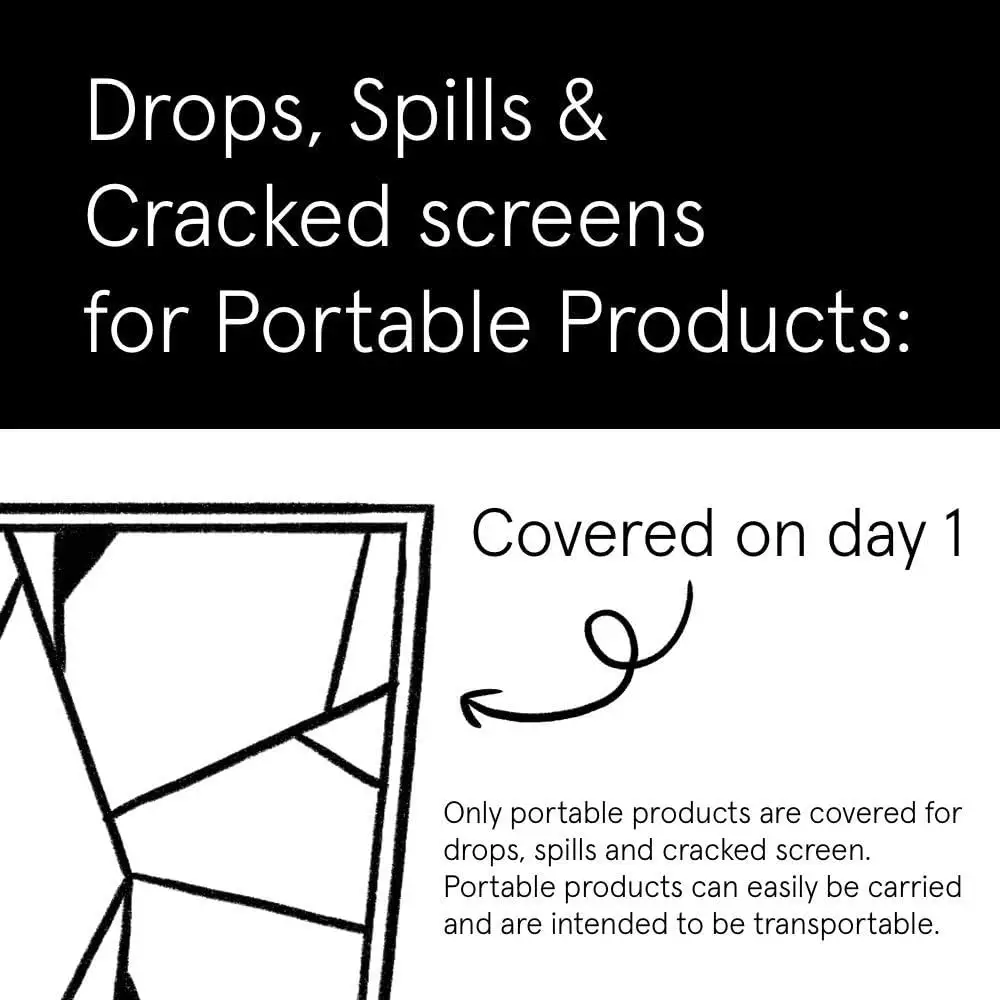
The plan also highlights broad coverage starting day one for certain damage types: “drops, spills and cracked screens due to normal use covered for portable products” (Amazon product listing). Users repeatedly run into the boundary implied by that phrase: “normal use.” In the Reddit thread about coverage edge cases, one commenter stated flatly: “generally using an indoor product outdoors means it falls outside of normal use.” For buyers who assume protection plans are a blanket promise, this becomes the difference between “covered” and “denied.”
Cross-Platform Consensus
Universally Praised
Speed and simplicity are the standout when things go right. The clearest through-line is fast reimbursement or next-day replacement. Reddit user u/ls8rc4v said: “when it stopped working just over a year later they refunded me the entire amount on my amazon gift card balance.” For budget-conscious buyers protecting mid-priced gear, that kind of outcome reads like the plan doing exactly what it advertised: a quick path back to whole.
This shows up again in “send a few pics, get the refund” stories. Reddit user u/ksae2vb described an unusually favorable outcome for a leaky tent: “they could just refund me and I keep the rent I got my money back after sending some pics etc. definitely not a scam.” For campers, parents, or anyone buying bulky items where shipping a replacement is a pain, “refund and keep it” is the best-case scenario.
A second recurring positive is how the process can minimize paperwork—at least in some cases. A verified buyer on Amazon wrote: “process was quick & easy.” Another Amazon review described a non-working device with delayed return timing: “we waited some time before deciding to return it… got the credit back right away.” For occasional Amazon shoppers who don’t want to fight with a manufacturer warranty, that “chat → credit” pathway is the emotional sell.
Some longer-form reviews outside Amazon also praise the structure: clear instructions, packaging, and fast turnaround. A ConsumerAffairs reviewer, Johnathan, said: “The claim took me less than 5 minutes to file… reimbursement in less than a day,” emphasizing the interface and return process. For people who dread claims administration, that’s a meaningful part of the “worth it” argument—when it happens as described.
Common Complaints
The harshest theme is denial, delay, or confusion about whether the plan is properly attached to the purchase. Reddit user u/kjtonjm said: “they had no record of my plan even though I could see it on my account.” That kind of mismatch is especially damaging because it undermines the basic premise of buying coverage at checkout: buyers expect the plan to be trivially verifiable.
Another complaint cluster centers on drawn-out customer service loops. In one Reddit post aimed at warning others, a user described a TV claim that spiraled: “it took me over 6 months to finally get paid out… constantly dealing with customer service reps who are clueless.” Even without product-type parity, these stories shape the fear that claims will become a part-time job if anything deviates from a straightforward failure.
Documentation requirements can also become the breaking point. In an Amazon review from the 3-year plan page, a 1-star reviewer described the process as “a grift,” saying: “the website would not allow me to submit my claim since the website did not even recognize withings as a product option,” and later complained that proof requests went beyond what they expected: “the email I saved… is not enough. the receipt downloaded from amazon is not enough.” For buyers who assume “Amazon receipt = done,” this is the nightmare scenario.
Finally, some buyers feel burned by replacement outcomes or equivalency. A ConsumerAffairs reviewer wrote: “I gave up a $900 phone for a $60 phone for a replacement.” Even though this isn’t specific to the personal care plan SKU, it feeds a broader skepticism about protection plans: a replacement isn’t always perceived as “like for like,” and that becomes a trust issue rather than a logistics issue.
Divisive Features
“Normal use” is the quiet fault line. In the Reddit discussion, a user asked about using indoor cameras outdoors; the response was direct: “falls outside of normal use.” For cautious users who read terms literally, this is expected. For improvisational users—people who repurpose devices, travel with them, or push them outside intended environments—it feels like a loophole that can swallow the coverage.
The other divisive point is whether protection plans are ever worth it as a category. Reddit user u/k5epn5y took the skeptical stance: “these ‘insurance’ plans are very rarely worth it… commonly deny coverage due to nebulous terms.” Meanwhile, Reddit user u/kdhuthx offered the opposite lived experience: “We have made three claims and they were paid immediately. it’s been totally worth it to us.” The split isn’t just opinion—it maps to how often you claim, what you claim for, and whether your situation cleanly matches the covered scenarios.
Trust & Reliability
Scam concerns show up most strongly in the “denied and delayed” stories, where frustration escalates into accusations. In the anti-plan Reddit post, the author called the company “a total scam” and described calling “3 times a day” to push a payout through. That tone isn’t just anger—it reflects a fear that the system is designed to exhaust claimants.
At the same time, long-running customers describe a more nuanced arc. A ConsumerAffairs reviewer, Dianne, framed it as decades of “ups and downs,” saying coverage and pricing “really even out in the last 10 years or so,” and then described a fast claim and replacement device “on the way.” That kind of story doesn’t erase negative experiences, but it explains why Asurion remains widely used: some people genuinely experience “fast and easy” outcomes, even after initially assuming it would be “a waste of money.”
Alternatives
Only a few competitors are explicitly mentioned in the provided data. AppleCare comes up as a reference point in the Verizon/Asurion context. One Reddit user in that thread said: “i have applecare+ now, but i feel like i’m paying extra for tech support that i never use.” This frames an alternative value proposition: if you prefer manufacturer-backed repair ecosystems (and accept their limits), AppleCare+ can feel cleaner—though some users resent paying for support they don’t touch.
SquareTrade and Mulberry appear in the article-style comparison source, presented as alternatives with different tradeoffs (pricing, claim limits, and registration flexibility). Since those references aren’t direct user quotes, the practical takeaway from the dataset is narrower: shoppers are already comparison-shopping extended warranties, and the deciding factor often becomes claim friction versus monthly cost.
Price & Value
On Amazon, the plan is priced by product value tier—for example, one listing shows $36.99 for the $250–$299.99 coverage bracket (Amazon product listing). That structure matters most for buyers protecting mid-priced personal care devices (or similar checkout add-ons) where replacement cost would sting but isn’t catastrophic.
Value arguments in the community tend to hinge on household risk. Reddit user u/kdhuthx said: “We have made three claims and they were paid immediately,” which reads like the plan paying for itself in claim-heavy households. Another Reddit commenter framed it in family terms: “having multiple school aged kids has changed my opinion… i have them on every one of their phones and tablets,” describing damage frequency as the deciding factor.
Buying tips from user narratives skew practical: keep your receipts and confirmation emails, and expect that some claims may be routed through manufacturer warranty first. Tabitha’s ConsumerAffairs review described Asurion stepping in even while a manufacturer warranty was active: “asurion stepped in and processed a full refund for me, even with the warranty still valid.” That’s a best-case “advocate” story—but it’s contrasted by other reports where warranty routing becomes perceived delay.
FAQ
Q: Is the ASURION Personal Care Protection Plan worth it?
A: Conditional. Some users describe fast reimbursements—Reddit user u/ls8rc4v said: “they refunded me the entire amount”—while others report delays or denials, like Reddit user u/lfn673q saying there was an “agenda of denying and delaying.” It appears most valuable for higher-priced items or frequent-claim households.
Q: How fast are Asurion claims through Amazon?
A: It ranges from immediate credit to prolonged disputes. A verified buyer on Amazon noted: “got the credit back right away,” while a Reddit user describing a TV claim said it “took me over 6 months.” The “approved within minutes” promise (Amazon listing) matches some reimbursement stories but not all.
Q: What does “normal use” mean in practice?
A: Users treat it as a boundary that can exclude unconventional setups. In the Reddit thread, a commenter warned that using an indoor camera outdoors “falls outside of normal use.” If your use case stretches the intended environment, expect that coverage could be challenged.
Q: Do you always get a replacement device?
A: Not necessarily; many stories end in refunds or gift-card reimbursement. Reddit user u/ksae2vb said they were told they could be refunded and “keep the tent,” while other platforms include complaints about replacement equivalency, such as a ConsumerAffairs reviewer claiming a much lower-value replacement.
Q: What’s the biggest risk buyers mention?
A: Claim friction—missing plan records, documentation hurdles, and delays. Reddit user u/kjtonjm said: “they had no record of my plan,” and a 1-star Amazon reviewer said the site “did not even recognize” their product and demanded more proof than expected.
Final Verdict
Buy if you’re protecting a mid- to higher-priced personal care device (or similar portable purchase) and you want the possibility of quick reimbursement—especially if you’ve had gear fail before and you can document purchase details.
Avoid if you need guaranteed low-friction claims every time or your use case could be argued as outside “normal use,” where users report disputes.
Pro tip from the community: Reddit user u/ksae2vb’s “sent some pics” refund story and Reddit user u/kjtonjm’s “no record of my plan” warning point in the same direction—keep your plan confirmation and purchase info handy before you ever need to file.