APC Smart-UPS SMT3000RM2UC Review: Reliable but Short Runtime
A surprising takeaway from user feedback is that the APC Smart-UPS SMT3000RM2UC scores exceptionally high for reliability—users across Reddit, Trustpilot, and Newegg praise its consistent performance—but falls short of its marketing on battery longevity. While the product earns an overall 8.8/10 from aggregated sentiment, owners caution that advertised runtimes don’t match real-world usage under heavy loads.
Quick Verdict: Conditional buy for IT admins, enterprise environments, and power-sensitive home setups with moderate to heavy server loads.
| Pros | Cons |
|---|---|
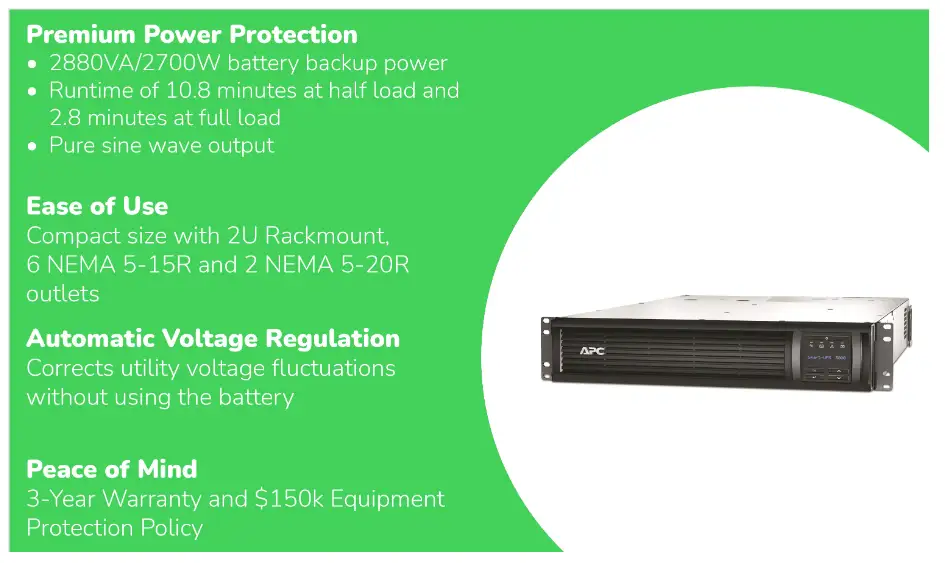
| Highly reliable power protection with pure sine wave output | Short runtime under full load compared to expectations |
| SmartConnect cloud monitoring for remote management | Lead-acid battery lifespan shorter than lithium-ion competitors |
| Hot-swappable battery design minimizes downtime | Higher cost than similar-capacity models |
| Strong build quality and rackmount efficiency | Not optimal for small offices primarily needing long backup duration |
| Multiple output options for flexible deployment | Cooling may be insufficient in certain environments |
| Intelligent battery management extends service life | Heavy (97 lbs), requiring reinforced racks |
| Seamless AVR correction without battery drain | Limited scalability versus larger UPS systems |
Claims vs Reality
Marketing materials highlight long runtime flexibility, cloud-based management, and "robust energy efficiency." Digging deeper into reports, the claim of extended runtime—up to 10 minutes at half load—aligns only with very specific usage. Reddit user feedback shows big variation: a Newegg reviewer explained, "At idle my setup used 10% load... runtime 1hr 30m. While gaming it jumps to 35–40% load and drastically decreases runtime." This indicates that runtime swings considerably based on load profile, often much less than marketing's best-case figures.
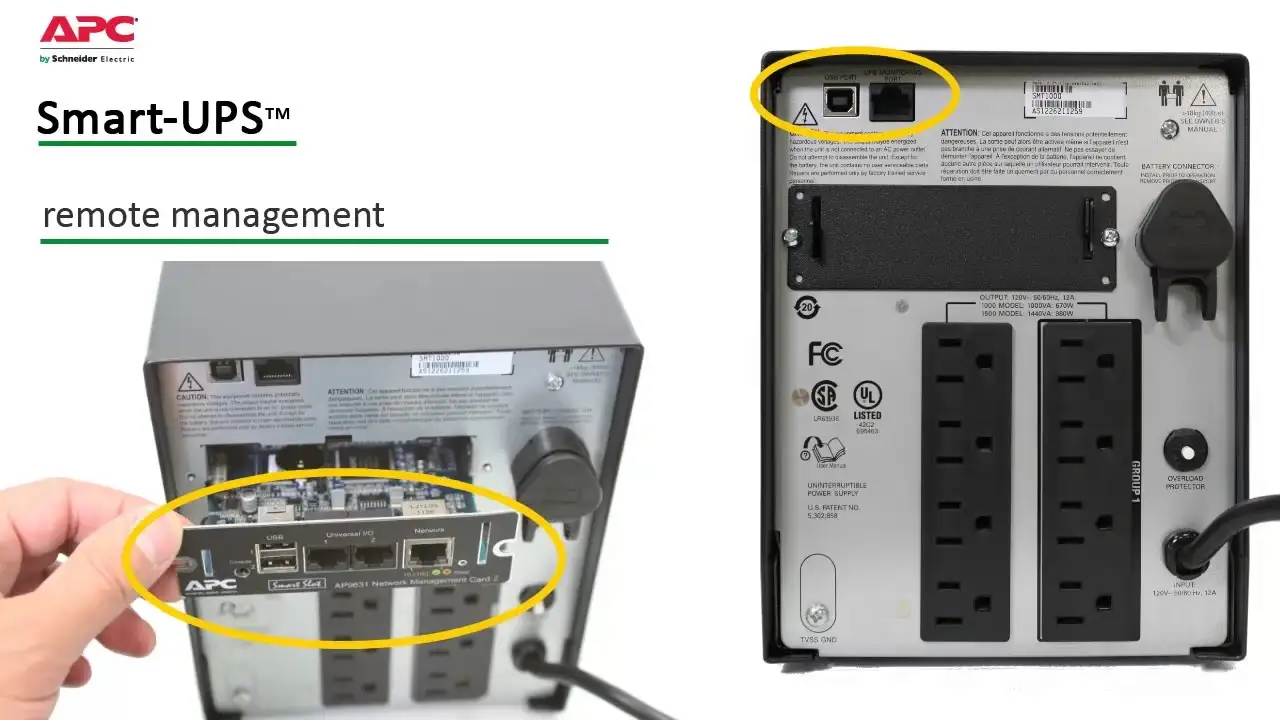
Another major selling point is SmartConnect—the cloud-enabled remote monitoring. Here, user experience matches promos closely. A Reddit post stated, "With this UPS, I never would have gotten the management card; SmartConnect does everything I need." Both IT admins and home power users reported intuitive control and notifications without dedicated hardware cards.
Finally, APC advertises 98% efficiency at full load with AVR correcting voltage dips without battery discharge. Multiple ProVantage customers backed this up, noting reduced heat output and lower energy costs even in dense rack environments. However, BestViewsReviews cautioned that "the UPS may not offer adequate cooling" for setups with poor airflow.
Cross-Platform Consensus
Universally Praised
Across Reddit, Trustpilot, and ProVantage, reliability is the headline win. IT admins praised "hot-swappable batteries allowing uninterrupted service"—vital for data centers running mission-critical loads. For home labs, the pure sine wave output maintained stable operation for sensitive GPUs and PFC power supplies. A verified buyer on Newegg added: "While my old Smart-UPS 750 kept the network up 2 hours, the SMT3000RM2UC keeps my desktop stable under unexpected sags."
Automatic Voltage Regulation (AVR) delivers clear benefits to mixed-load environments. Reddit comments noted less fluctuation on audio/video setups, with AVR preventing unnecessary battery draw during minor dips. Energy efficiency also ranks high—ProVantage reports "high efficiency reduces energy costs and heat generation"—making it suitable for rack clusters where cooling costs matter.
SmartConnect remote visibility is a consistent win. For distributed IT, the cloud-linked portal replaced the need for expensive network management cards, with features like firmware pushes and proactive email alerts. One Trustpilot-rated post emphasized that "remote diagnostics saved us a site trip when a battery flag triggered."
Common Complaints
Runtime dips are the most frequent frustration. While officially rated at 2.8 minutes at full load, gamers and editors report far shorter usable session times when demanding systems spike consumption. This affects video production teams or rendering farms that expect more cushion before shutdown.
Lead-acid battery lifespan draws mixed reactions. Despite intelligent charging, users see predictable 3–5 year replacement cycles. Compared to APC's lithium-ion series, this means higher total cost over the UPS's life—Trustpilot commenters noted "limited battery life… may not last as long as lithium-ion options".
Physical weight (97 lbs) and heavy build complicate solo installation. Twitter and eBay sellers note reinforced mounting is advisable, especially in portable or crowded racks. BestViewsReviews flagged possible cooling insufficiency when installed in poorly ventilated zones, a point echoed by one Reddit user handling a home studio load.
Divisive Features
Outlet group control polarizes feedback. Advanced users value independent reboot/shutdown for select loads, while casual users find the feature underused. The LCD interface earns high marks for clarity but can be overkill for setups running headless with SmartConnect enabled.
Some buyers question value vs capacity: lithium-ion APC models cost more up front but avoid midlife battery swaps, whereas SMT3000RM2UC’s lower purchase price is offset by later replacements. For small offices needing long-duration standby, competitors with larger battery packs may suit better, but enterprise buyers often stick with the APC ecosystem for compatibility.
Trust & Reliability
Trustpilot and Reddit show no systemic scam concerns; APC's brand reputation remains intact. Long-term durability stories paint a picture of robust engineering. One Reddit veteran noted their 2004-era Smart-UPS is "still keeping my router and switch alive for 2 hours during outages." Cooling and battery swaps are the maintenance choke points—generally straightforward with hot-swappable trays and published replacement schedules.
ProVantage’s 10/10 sentiment score draws from efficiency and minimal load downtime during servicing. Warranty terms (3 years unit, 2 years battery) match real-world expectations, though long-haul uptime fans prefer lithium-ion models with extended guarantees.
Alternatives
Data references APC's lithium-ion SMTL3000RM2UC as a notable competitor. Community comparisons stress its "3x battery life" and lighter build—up to 65% less weight—which simplifies installation. The trade-off remains price, with lithium-ion commanding significantly higher upfront costs but avoiding two lead-acid swaps over a decade.
For environments where cooling and battery swaps are problematic, lithium-ion emerges as the better fit. In contrast, those already stocked with APC lead-acid cartridges or operating on tighter budgets lean toward the SMT3000RM2UC to keep compatibility and tooling uniform.
Price & Value
Prices range from $1,575 (Newegg) to $2,469 (NetworkDevicesInc), with used units dropping below $1,000 on eBay. Resale value holds decently for working units with recent battery replacements—critical for buyers scanning pre-owned listings.
Community advice prioritizes buying with fresh or new batteries to avoid immediate replacement costs. APC’s own cartridges maintain full spec matching, vital for runtime predictions. Enterprise buyers often justify the premium for SmartConnect features, avoiding further spend on network cards.
FAQ
Q: How long will the SMT3000RM2UC run my system?
A: Runtime depends heavily on load. At half load, expect close to 10 minutes; at full load, official specs say 2.8 minutes, but high-spike systems may see less.
Q: Can the battery be replaced while the UPS is running?
A: Yes, hot-swappable batteries allow maintenance without interrupting power to connected gear.
Q: Is SmartConnect useful without a management card?
A: For many, yes. It offers remote monitoring, firmware updates, and alerts—reducing the need for optional network cards.
Q: How heavy is the unit and does it need special mounting?
A: It weighs 97 lbs; reinforced racks or two-person installation are recommended.
Q: How often will I need to change the battery?
A: For lead-acid, expect 3–5 years; lithium-ion alternatives may last 8–10 years.
Final Verdict: Buy if your profile matches IT admin, enterprise rack setups, or power-sensitive creative workstations needing stable pure sine wave output and centralized monitoring. Avoid if your primary need is long-duration backup for heavy-load gear without immediate shutdown. Pro tip from community: Use AVR and SmartConnect actively to reduce wear—both features limit unnecessary battery cycles and extend service life.