AMD Ryzen 9 9950X Review: Powerful but Gaming Falls Short
Digging into user feedback across multiple platforms, the AMD Ryzen 9 9950X emerges as a processor that delivers record-setting multi-threaded muscle but with gaming performance that isn’t always in line with its marketing. Across Reddit, Best Buy, and expert reviews, the consensus is clear: this is a productivity powerhouse, but gamers may want to think twice. On balance, aggregated scores place it around 8.7/10, with high marks for heavy workloads but deductions for inconsistent gaming gains and high power draw.
Quick Verdict: Conditional
| Pros | Cons |
|---|---|
| Exceptional multi-threaded performance for productivity | Gaming performance trails cheaper alternatives |
| Strong single-threaded gains over Zen 4 | High power consumption under load |
| Native AVX-512 support | Core parking/thread targeting issues in games |
| Cooler and more efficient than 7950X in some scenarios | Slim generational gains in certain workloads |
| Integrated Radeon graphics for basic display output | Price close to or above Intel competition at launch |
| Backward compatibility with AM5 motherboards | No bundled cooler |
Claims vs Reality
AMD markets the Ryzen 9 9950X as “the best for gaming and creating,” touting its 16 cores, 32 threads, 5.7 GHz boost clock, and Zen 5 architecture with a claimed 16% IPC uplift. The promise is a chip equally at home in AAA gaming and heavy creative workloads.
However, user reports suggest a gap between the “best for gaming” claim and actual gaming benchmarks. As Tom’s Hardware noted, “the improvements in gaming performance aren’t enough to take the crown from Intel’s competing Core i9-14900K flagship, let alone AMD’s own X3D processors.” A Best Buy buyer, carlos, pointed out that while it “worked awesome [and] runs games at 4K just as good as the 9800X3D,” the difference was “honestly marginal.”
On the productivity side, reality aligns more closely with AMD’s marketing. TechSpot found it “second to none in the desktop market” for content creation, while Reddit users praised its ability to handle multiple VMs, streaming, and rendering without breaking a sweat. franky225 reported it was “the sweet spot between a Threadripper and a 9800X3D” for combined gaming and workload use.
Cross-Platform Consensus
Universally Praised
The most consistent praise is for the chip’s multi-threaded dominance. Professional creators, 3D artists, and software developers highlight how the 16-core Zen 5 design with full AVX-512 support shaves significant time off rendering and compiling tasks. Tom’s Hardware’s lab tests showed it topping Cinebench R23 multi-core charts with 40,924 points, outpacing the Core i9-14900K.
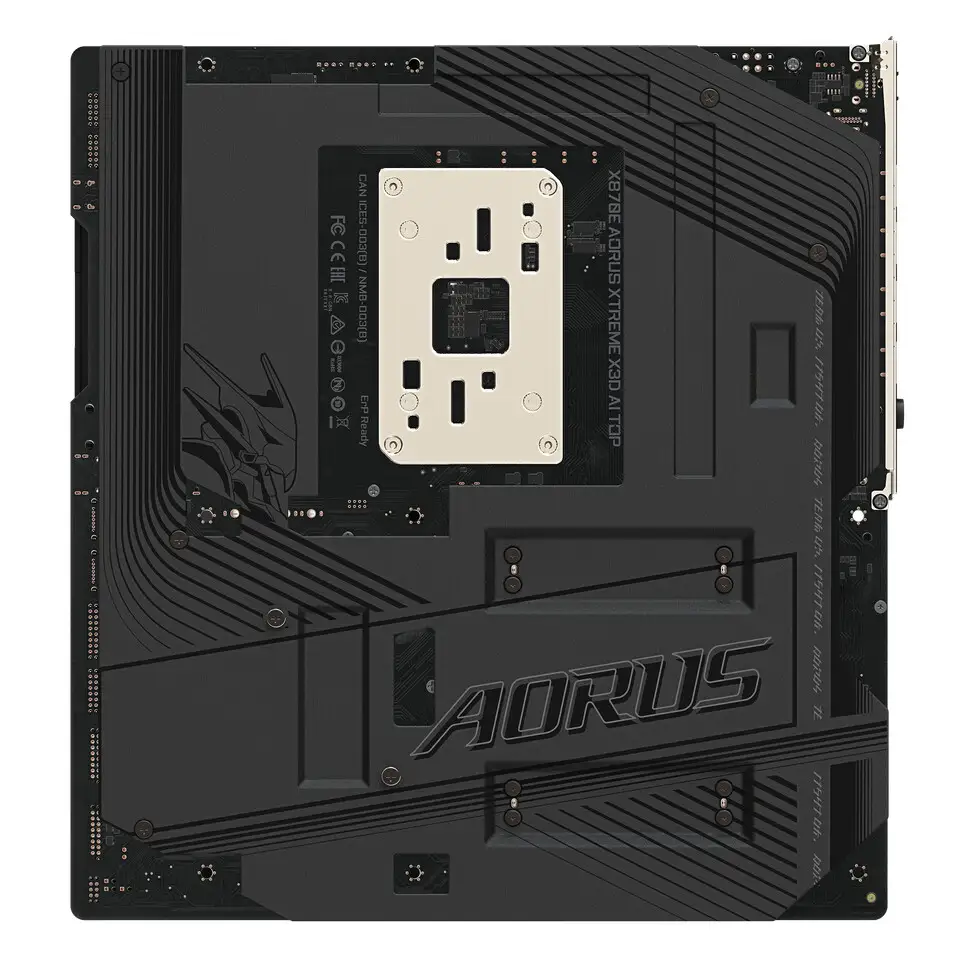
Gamers who also work with video editing or streaming seem especially satisfied. Best Buy reviewer izzi called it “nothing short of a powerhouse,” saying they could “game and stream with ease and have yet to run into any performance issues whatsoever.” The backward compatibility with existing AM5 motherboards was another appreciated feature, lowering platform upgrade costs.
Thermals also received praise compared to its Zen 4 predecessor. TechSpot noted it “runs significantly cooler than its 7950X predecessor,” and dyllonl on Best Buy highlighted “good thermals and performance” even under sustained load.
Common Complaints
The biggest recurring frustration is with gaming performance relative to price. Multiple reviewers, including TechSpot and Tom’s Hardware, emphasized that frame rates often match the two-year-old 7950X, and can lag behind cheaper Ryzen X3D models. The culprit appears partly tied to AMD’s new core parking/thread targeting system. Tom’s Hardware warned that “the core parking feature has multiple issues,” including persisting in the OS even after changing CPUs and sometimes causing performance regressions.
Power consumption is another sore point. While officially a 170W TDP part, Notebookcheck testing showed draws over 300W under heavy multi-thread loads. This makes it less appealing for small form factor builds or energy-conscious users.
Pricing complaints were loudest on Best Buy, where some buyers accused retailers of gouging. brad left a one-star review: “It’s a good CPU, but don’t buy from these retailers… selling so high above MSRP.” Others, like anonymous, claimed to have bought it “$150 less direct from AMD” just days prior.
Divisive Features
The integrated Radeon 610M graphics sparked mixed reactions. For some, like system builders who need display output without a discrete GPU, it’s a useful addition. For gamers, its limited capabilities (only truly viable for pre-2020 titles at low resolutions) make it irrelevant.
The aggressive boost behavior—pushing temps into the 90°C range under AVX loads—split opinion. Enthusiasts with 280mm liquid coolers saw it as normal for maximum performance, but more casual users worried about longevity. AMD’s recommendation of high-end cooling adds to platform costs.
Trust & Reliability
On reliability, there are isolated but alarming reports. Best Buy user ppcr wrote, “Be careful if you’ve got an ASRock board. I’ve had 2x of these killed by ASRock boards,” though they noted a BIOS update “should fix the issue.” Otherwise, no widespread defect patterns emerged in the first 6–12 months of use.
Trust concerns focus more on the buying experience. Trustpilot-style complaints about inflated pricing and retailer practices were common, with some high-spending customers threatening to take business elsewhere over perceived greed.
Long-term durability stories are still sparse given the August 2024 launch, but early adopters like rudolphb report stable performance after a month of daily use, while others plan to monitor for thermal degradation over time.
Alternatives
The Intel Core i9-14900K is its direct competitor, offering better gaming performance in many titles but weaker multi-threaded efficiency and higher peak power draw. For pure gaming, AMD’s own Ryzen 7 7800X3D or Ryzen 9 7950X3D consistently lead charts thanks to 3D V-Cache—often at lower prices.
For those prioritizing productivity without stepping into workstation-class CPUs, the previous-gen Ryzen 9 7950X remains attractive. As TechSpot noted, the generational gains in some workloads are “small enough… that the 7950X is an attractive alternative,” especially if found discounted.
Price & Value
At launch, US street prices hovered around $650, with some eBay listings surging to $899.80. Best Buy’s $599–$649 pricing drew ire when compared to AMD’s own direct sales at $479–$499. eBay resale data suggests early adopters could recoup a decent portion of value, as demand for AM5 flagships is high.
Community buying tips emphasize patience. Many Reddit and Best Buy users advise waiting for sales or buying direct from AMD to avoid retailer markups. Those with existing AM5 setups can save significantly by reusing motherboards and DDR5 kits.
FAQ
Q: Is the Ryzen 9 9950X good for gaming?
A: It’s competent but not class-leading. Performance often matches the older 7950X and lags behind cheaper X3D models, making it better suited for mixed-use systems than gaming-only builds.
Q: Does it require liquid cooling?
A: AMD recommends a 240–280mm liquid cooler for optimal performance. It can run on high-end air coolers, but boost clocks and thermals will benefit from liquid solutions.
Q: Can I use my existing AM5 motherboard?
A: Yes. It’s backward compatible with all 600-series AM5 boards via BIOS update, and will also work with new 800-series boards for added features like mandatory PCIe 5.0 graphics support.
Q: How does it perform in content creation?
A: Exceptionally well. It leads mainstream desktop CPUs in multi-threaded tasks like Blender rendering, video encoding, and compiling, making it ideal for creators.
Q: What’s the deal with the core parking issue?
A: The new thread-targeting feature can improve latency in games but has bugs—sometimes persisting after CPU swaps or causing inconsistent performance. Fixes may come via BIOS/driver updates.
Final Verdict: Buy if you are a content creator, streamer, or heavy multitasker who also games occasionally and already has AM5 infrastructure. Avoid if your sole focus is gaming—an X3D chip or Intel’s 14900K will serve you better. Pro tip from the community: wait for direct-from-AMD sales to avoid retailer markups.