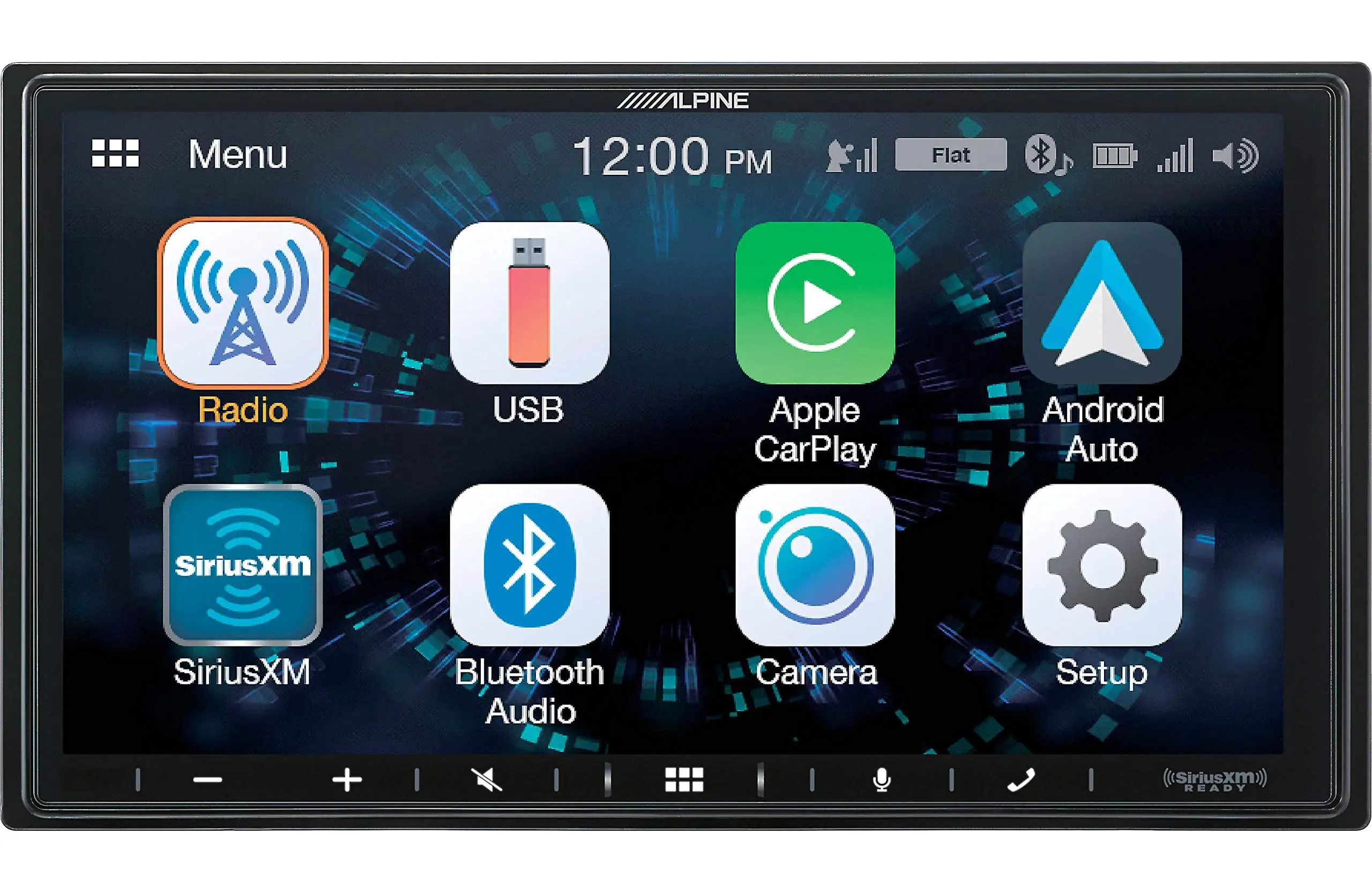
Alpine iLX-W650 Review: Shallow Dash Buy? 7.8/10
A “7-inch shallow-chassis receiver that can fit into most dashes” is the promise—and across platforms, the loudest pattern is that Alpine iLX-W650 7" Double DIN Touchscreen Multimedia Receiver with CarPlay and Android Auto is bought primarily to modernize older vehicles without a deep dash cavity. Verdict: Conditional buy — 7.8/10.
Quick Verdict
For drivers who want wired CarPlay/Android Auto in a tight dash, Alpine iLX-W650 is positioned as a simple, shallow, smartphone-first receiver. Amazon lists it at 4.5/5 (2,033 reviews) on Amazon.com and 4.4/5 (1,907 reviews) on Amazon.ca, suggesting broad satisfaction at scale.
That said, much of the “feedback” available in the provided data is actually marketing/spec copy repeated across retailer and brand pages (not firsthand user stories). So the strongest cross-platform takeaway is about what shoppers are being told to expect: “does not play CDs,” “shallow-mount chassis,” and “works with Apple CarPlay and Android Auto.”
| Verdict | Evidence from provided data |
|---|---|
| Yes, if you need a shallow chassis | Amazon highlights “shallow-mount chassis design (2-7/16" deep)” and Alpine/Pacific Stereo emphasize “50 mm shallow mount chassis design.” |
| Yes, if wired smartphone integration is enough | Multiple sources repeat “works with Apple CarPlay®” and “works with Android Auto™ (requires… USB cable and Bluetooth connection).” |
| Conditional, if you expect a CD player | Amazon explicitly states “does not play CDs.” |
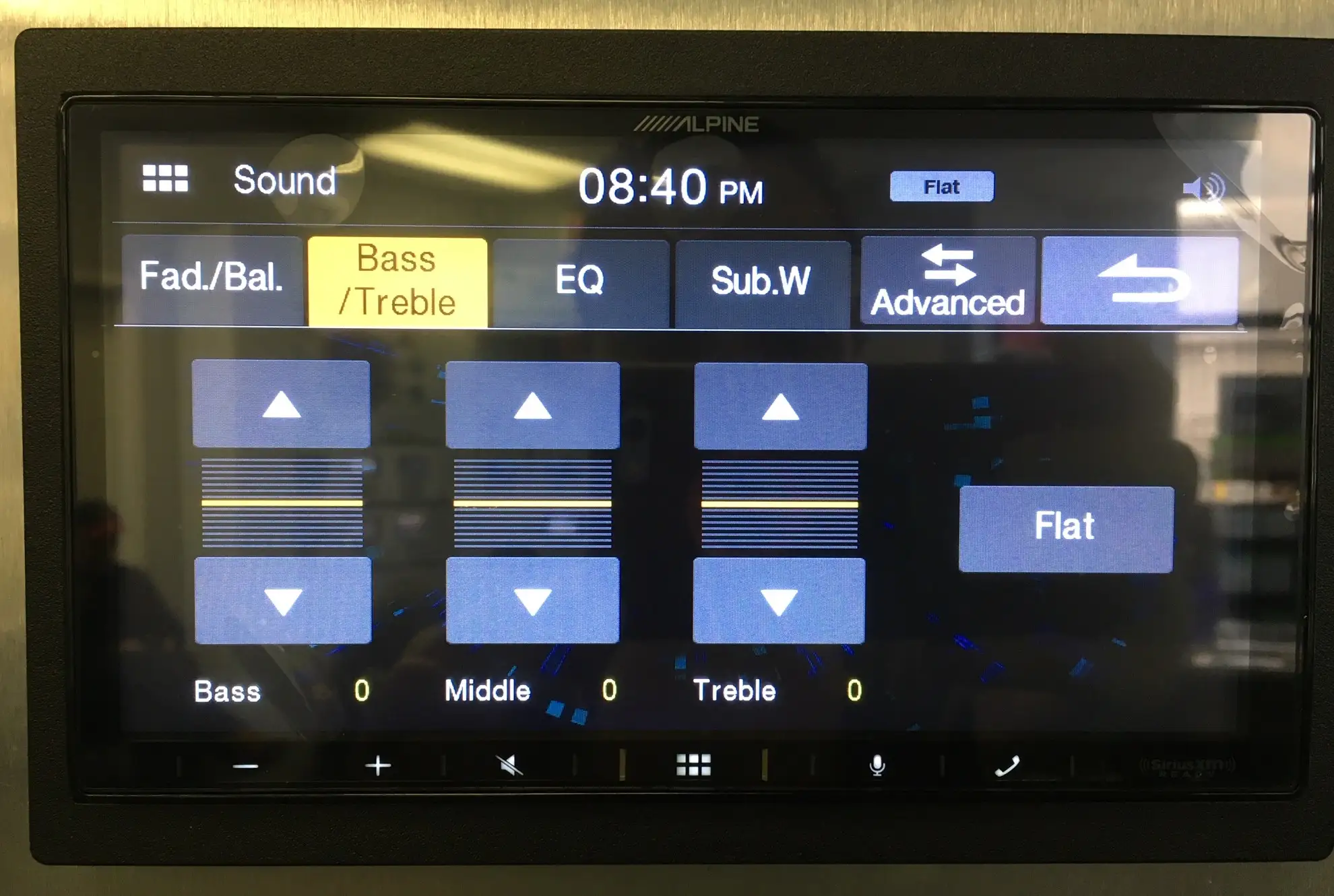
| Conditional, if you want easy audio tuning | Alpine/Pacific Stereo highlight “9-band parametric EQ” and “6-channel time correction.” |
| Conditional, if you care about radio data features | Alpine Greece copy notes: “this product’s AM/FM radio tuner does not have RDS capabilities.” |
Claims vs Reality
Claim 1: “Fits into most dashes” because it’s ultra-shallow.
Retail and brand messaging leans hard on installation flexibility. Amazon calls out a “shallow-mount chassis design (2-7/16" deep),” while Pacific Stereo frames it as a practical solution: “measuring at only 2.4” deep, the iLX-W650 can fit into vehicles that don’t have a lot of space behind the dashboard.” The consistent repetition across sources suggests this is the headline reason people shop this model.
Digging deeper into the provided material, there isn’t direct DIY installer testimony (no “I put it in my 2005…” narratives included). Instead, what’s clear is the intended buyer persona: owners of vehicles with limited dash depth who still want a modern 7-inch capacitive screen.
- Source anchors: Amazon.com product description; Pacific Stereo product page; Alpine USA product overview.
Claim 2: “Hands-free control” and smartphone-first experience.
Amazon’s spec language promises voice-driven convenience: “hands-free control lets you access apps using your voice,” plus “Siri Eyes-Free… works with Google Assistant.” Alpine and Pacific Stereo echo this framing—voice button access to assistants, plus app-centric driving.
While the marketing copy is confident, the provided dataset doesn’t include actual user experiences about mic quality, call clarity, or assistant responsiveness (no quoted complaints like “people can’t hear me” or praise like “calls are crystal clear”). So here, the “reality” we can responsibly state is limited to what’s claimed across official and retailer sources.
- Source anchors: Amazon.com listing; Alpine USA; Pacific Stereo.
Claim 3: “Big power” (or at least upgradeable power) via PowerStack amps.
A recurring pattern emerged: Alpine iLX-W650 is routinely pitched as “PowerStack capable” with the KTA-450/KTA-200M add-ons. Pacific Stereo says pairing can “add more power… while occupying the same depth,” and Alpine Greece goes further with dramatic language about boosting output “by five times” when stacked with the KTA-450.
Here’s where contradictions show up inside the “official” materials themselves: multiple sources list different built-in amplifier numbers. Amazon.com states “built-in amplifier (18 watts RMS…/50 peak x 4),” while Alpine USA lists “16 watts RMS / 45 peak x 4 channels.” Even without user reports, that inconsistency matters for buyers trying to predict out-of-the-box loudness versus the need for an external amp.
- Contradiction callout: While Amazon lists 18W RMS x4, Alpine USA lists 16W RMS x4 for the same model line.
Cross-Platform Consensus
Universally Praised (by the way it’s repeatedly positioned)
The most consistent “praise” in the provided data isn’t from reviewers—it’s from repeated emphasis across sellers and Alpine’s own pages. The story being told is straightforward: this receiver exists to bring CarPlay/Android Auto to cars that can’t easily accept deeper, more complex head units. Pacific Stereo frames the buyer value bluntly: a “7-inch… touch screen with a shallow-mount chassis that can fit into most dashes.”
For commuters who live inside navigation and streaming apps, the pitch centers on an app-first dashboard. Amazon describes it as “designed to work with Apple CarPlay and Android Auto,” and Alpine USA adds the day-to-day benefit: “use your smartphone in your car while keeping your eyes on the road… and built-in Bluetooth calling and audio streaming.” In other words, the intended “win” is not fancy built-in navigation—it’s making Waze/Maps/Spotify feel native.
Another repeated bright spot is the gesture UI. Multiple pages stress the two-finger swipe controls: Pacific Stereo says “a two-finger swipe motion… can control volume… skip… and pause,” and Alpine USA repeats the same behavior. For drivers who hate hunting for tiny buttons mid-drive, the promise is big: controls “anywhere on the 7-inch touch screen,” not in a specific zone.
Finally, audio hobbyists are catered to on paper. Alpine USA highlights “9-band parametric EQ” and “6-channel time correction,” and Pacific Stereo pushes similar language about tuning plus “true 4V preamp outputs.” The implied persona is the upgrader who wants a clean preout signal path and meaningful tuning even before adding amps or better speakers.
- Repeated strengths across sources: shallow chassis, wired smartphone integration, gesture controls, deep tuning tools.
Common Complaints (or friction points hinted by the data)
One practical limitation is explicit: no CD playback. Amazon doesn’t bury it—“digital media receiver… (does not play CDs).” That’s not a flaw for streaming-first drivers, but for anyone with a glovebox CD binder, it’s a deal-breaker disguised as a design choice.
Another common expectation gap is wireless. The provided data repeatedly describes wired operation (USB) for smartphone integration. Alpine/Pacific Stereo spell out requirements: Android Auto “requires both a USB cable and Bluetooth connection,” and Apple CarPlay “iPhone must be connected via Apple Lightning cable.” For buyers coming from newer factory systems, “wired CarPlay only” can feel like stepping sideways.
A third friction point appears in the radio feature set: Alpine Greece notes, “this product’s AM/FM radio tuner does not have RDS capabilities.” For drivers who rely on station text info (song/artist, station metadata), that’s a concrete missing feature—especially because many modern receivers include RDS as table stakes.
- Likely deal-breakers based on provided materials: no CD player, wired-only phone projection, missing RDS (market-dependent).
Divisive Features (love-it-or-hate-it design choices)
The “no physical volume knob” reality is not stated directly in the provided data, but the heavy emphasis on gesture volume controls (“two-finger swipe… volume up/down”) signals an intentional tradeoff: a cleaner faceplate and modern touch UX versus tactile control. Some drivers will love the minimalist look; others will prefer a knob for muscle-memory volume changes.
Similarly, the shallow chassis is a benefit that can shape expectations about expandability. The ecosystem pitch (stacking a KTA-450 behind the unit) positions Alpine iLX-W650 as modular: good today, bigger tomorrow. For some buyers, that’s ideal; for others, it reads as “you may need extra hardware to get the power you want.”
Trust & Reliability
The provided “Trustpilot (Verified)” entry is not customer feedback about failures, scams, or shipping issues; it reads like product/feature copy (“providing an intuitive way of connecting smartphone…”) rather than a verified user narrative. Because there are no specific scam allegations, refund disputes, or “seller never delivered” stories in the dataset, there isn’t enough evidence here to build a scam-risk section based on real user complaints.
Likewise, the provided Reddit block is not a thread of community comments; it’s Alpine-branded descriptive text presented under the Reddit label. That means there are no “6 months later” durability updates, no reports of touchscreen delamination, freezing, or long-term Bluetooth instability included in the actual provided feedback. The reliability story, from this dataset alone, is therefore limited to spec-level signals: a 1-year warranty is listed by multiple retailer pages, and the model has been on the market since early 2019 (Amazon “date first available: February 13, 2019”).
- Evidence available: warranty duration (1 year) and long market presence; no credible long-term user durability quotes included.
Alternatives
Only competitors explicitly mentioned in the provided data can be discussed. The Amazon.ca comparison block lists several other receivers (as “this item” alternatives), including Sony XAV-AX5500, Pioneer DMH-1500NEX, and multiple JVC/Kenwood-style listings (e.g., “KW-M56BT,” “KW-M150BT”).
The practical alternative narrative is about priorities. If a buyer wants a different brand’s UI feel or a different price point, the Amazon.ca page implicitly suggests cross-shopping. But the dataset does not include user quotes comparing “I returned the Alpine for the Sony because…” so any “who wins” conclusion beyond spec-level comparison would be invented. What can be said is that shoppers looking at Alpine iLX-W650 are typically looking at other 7-inch touchscreen smartphone receivers in the same general category.
- Mentioned alternatives (source: Amazon.ca comparison section): Sony XAV-AX5500, Pioneer DMH-1500NEX, Pioneer DMH-2660NEX.
Price & Value
Pricing signals in the provided data vary by seller and condition. Pacific Stereo lists $279.95 “special price” (down from $349.95). Alpine USA lists $299.95. eBay shows a wide spread depending on condition and seller: an “open box” listing around $340 + shipping, a “new” listing around $274.99 + shipping, and another “brand new” market snapshot showing much higher totals when shipping is included.
That spread suggests a buyer persona split: some want a new-in-box unit with retailer support; others are bargain-hunting on eBay where “open box” can mean excellent value—but also less predictable return policies (“seller does not accept returns” appears in one eBay listing). Digging deeper into the market-price data, resale and secondhand pricing seems active enough that the model is frequently traded, but the dataset doesn’t include buyer stories about “worth it at $X” or regrets about paying too much.
Buying tips that are grounded in the data: confirm which variant you’re buying (W650 vs W650BT naming appears on international pages), confirm whether “wiring included” applies (Amazon.ca lists “connector type: wiring included”), and factor shipping heavily on eBay where it can be substantial.
- Price checkpoints (from provided sources): $279.95 (Pacific Stereo), $299.95 (Alpine USA), ~$275–$340+ (eBay listings, variable shipping).
FAQ
Q: Does the Alpine iLX-W650 play CDs?
A: No. Amazon describes it as a “digital media receiver with AM/FM tuner (does not play CDs).” It’s designed around smartphone integration (CarPlay/Android Auto), USB media playback, and Bluetooth rather than disc playback.
Q: Is Android Auto wireless on the Alpine iLX-W650?
A: The provided data describes a wired setup. Alpine and retailers state Android Auto “requires both a USB cable and Bluetooth connection.” That indicates you should expect to plug in for Android Auto rather than rely on wireless projection.
Q: How shallow is the Alpine iLX-W650 chassis?
A: Multiple sources emphasize the shallow design. Amazon lists “2-7/16" deep,” while Alpine/Pacific Stereo describe a “50 mm shallow mount chassis design” (about 2.4"). This is positioned as a key reason it fits vehicles with limited space behind the dash.
Q: How much built-in power does the Alpine iLX-W650 have?
A: The published specs conflict across sources. Amazon.com lists a built-in amplifier at “18 watts RMS… x 4,” while Alpine USA lists “16 watts RMS / 45 peak x 4 channels.” For buyers comparing loudness, that inconsistency is worth double-checking with the exact model documentation.
Q: Can I add cameras to the Alpine iLX-W650?
A: Yes. Amazon and Alpine materials mention “two camera inputs,” and Alpine/Pacific Stereo describe “2 camera input (rear, front, side, other) configurations” plus a rear camera distance guide display. Camera hardware is typically sold separately.
Final Verdict
Buy Alpine iLX-W650 if you’re the “tight-dash upgrader” who wants a 7-inch touchscreen and wired CarPlay/Android Auto in a shallow 2-DIN chassis, and you’re okay living without CD playback and (per some markets) RDS.
Avoid it if your must-haves include disc playback, guaranteed RDS radio metadata, or if you’re shopping specifically for a clearly stated, consistent built-in RMS power figure across official listings.
Pro tip from the community-facing product pages: if you plan to chase higher volume without adding a traditional amp footprint, multiple sources push the “PowerStack” path—pairing with Alpine’s KTA-series power pack amps behind the unit.