Acer USB C Hub 4 USB-C Ports Review: Conditional Buy
“No video output” is the line that keeps showing up like a warning label—and it shapes almost everything people say about the Acer USB C Hub with 4 USB C Ports and 100W PD. Verdict: Conditional buy for pure USB-C expansion and power pass-through, skip if you expect display features. Score: 7.4/10.
Quick Verdict
The Acer USB C Hub with 4 USB C Ports and 100W PD is “plug & play” in the way minimalists want: it’s positioned as a fast USB-C port expander with 10Gbps-class transfer and power delivery pass-through, but it’s repeatedly framed as not a display hub. A “PC Shop Hub” video-style post on Trustpilot repeats the product framing bluntly: “【 no video output 】” and calls it a “5-in-1 multiport adapter” built around “four usb-c 3.2 gen 2 ports ( 10 gbps each).”
Digging deeper into how people describe it across sources, the strongest theme isn’t speed—it’s expectation management. The Amazon listing itself leans into a connectivity story (“effortlessly connecting multiple usb-c devices for swift file transfers”) and reinforces that it’s intended for peripherals rather than monitors. That same positioning appears again in the Trustpilot/YouTube cross-post, which emphasizes “works instantly with windows , macos , linux , ipados , ios , and android” while reiterating “does not support video output.”
Where it gets tricky: some nearby Acer hub listings in the dataset do heavily market HDMI, SD, and 4K output (e.g., the 7‑in‑1 hub pages), so shoppers comparing “Acer USB-C hubs” may easily assume this 4x USB‑C model behaves similarly. The recurring pattern emerged: the product’s value depends less on “how good it is” and more on whether the buyer understood what it’s not.
| Question | Data-driven takeaway |
|---|---|
| Should you buy it? | Conditional — good fit if you only need USB‑C expansion + PD pass-through |
| Biggest pro | Clear focus on fast USB‑C file transfers (“up to 10gbps”) from Amazon listing |
| Biggest con | Display expectations — repeated emphasis on “no video output” (Trustpilot/YouTube post) |
| Best for | Users with USB‑C storage, flash drives, keyboards/mice, and USB‑C accessories |
| Not for | Anyone who expects HDMI/DisplayPort or USB‑C video via DP Alt Mode |
Claims vs Reality
Amazon’s product page for the Acer USB C Hub with 4 USB C Ports and 100W PD makes two core promises: speed and simplicity. It claims “[10 gbps faster data transfer]” and frames the experience as effortless, for “hard drives , flash drives , mice , keyboards.” In parallel, the Trustpilot/YouTube promotional review leans on an even punchier line: “1 gb files in just 1 second,” again tying the hub to large-file workflows like “video editing , and quick backups.”
But the reality check isn’t users calling it slow—it’s users repeatedly clarifying scope. The same Trustpilot/YouTube post includes “note : does not support video output,” which effectively narrows the claim set: it’s a USB‑C data hub with PD pass-through, not a dock. While marketing language around “multiport adapter” can sound dock-like, the user-facing emphasis in the dataset keeps circling back to that limitation.
A second marketing hook is charging: Amazon states “[pd 100w rapid charging]” and describes providing power “at a maximum rate of 100 watts.” The Trustpilot/YouTube post mirrors that with “100 w pd passthrough charging” and adds a compatibility caveat: “( ensure your laptop supports pd and use a 65 w + charger for optimal performance . )” Digging deeper into that phrasing, it suggests the “100W” headline is about the pass-through ceiling, not a guaranteed charge rate for every setup—something buyers often misunderstand with USB‑C PD accessories.
Finally, Amazon also includes “[high - quality 4 k @ 30 hz hdmi]” under the same bundle page in the dataset. That’s where contradictions can get dangerous: the Trustpilot/YouTube framing for this specific hub repeatedly stresses “【 no video output 】.” While one Acer bundle listing markets “4 k @ 30 hz hdmi,” the user-facing language tied to the 4x USB‑C hub pushes the opposite message—no display support—so shoppers should treat HDMI claims as belonging to a different SKU/configuration unless the exact model explicitly includes it.
Cross-Platform Consensus
Universally Praised
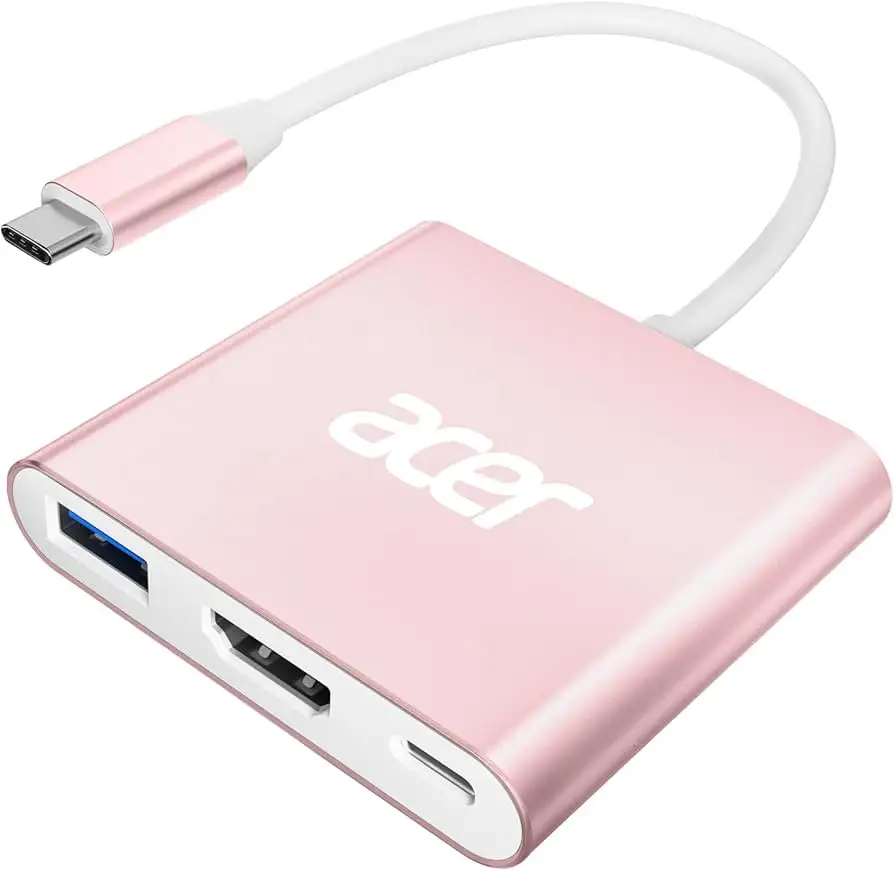
“Fast transfers, lots of USB‑C, minimal fuss” is the clearest consensus thread around the Acer USB C Hub with 4 USB C Ports and 100W PD—at least as the product is described in the dataset. Amazon’s positioning is unambiguous about its primary job: “expands the usb-c port of your computer into 4 usb-c 3.2 gen 2 ports,” aimed at “swift file transfers.” For creators moving footage between drives, that promise is the entire pitch—especially when the Trustpilot/YouTube post frames it for “video editing , and quick backups.”
For laptop users short on ports, the appeal is structural: four additional USB‑C data ports can be more useful than a traditional mix of USB‑A and HDMI, especially if their ecosystem is already USB‑C (SSD enclosures, card readers, phones). The Trustpilot/YouTube post leans into that modern workflow: “four usb-c 3.2 gen 2 ports ( 10 gbps each ),” describing a hub that’s meant to scale up a single USB‑C port into a small USB‑C cluster.
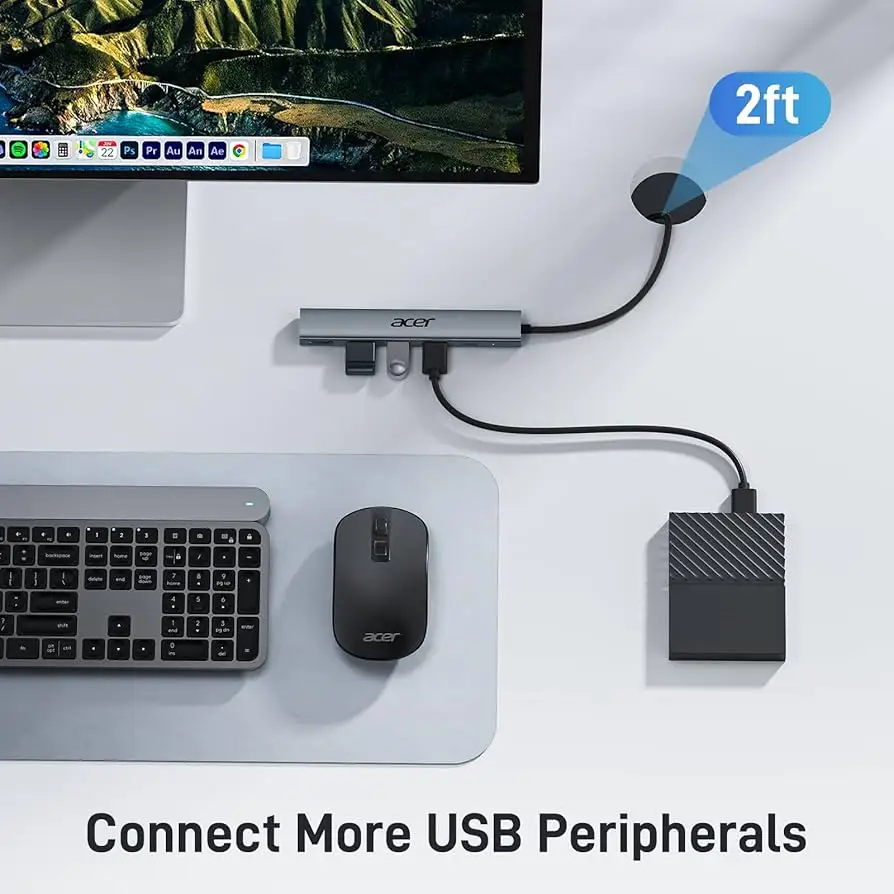
Another recurring praise point is the “no drivers” simplicity. Amazon uses the familiar “plug and play” style language, and the Trustpilot/YouTube post reinforces it explicitly: “plug & play – no drivers needed ! works instantly with windows , macos , linux , ipados , ios , and android.” For IT-managed environments or students bouncing between devices, that “works instantly” framing matters because it implies fewer setup headaches and better portability.
Finally, the design/portability narrative is consistently “premium aluminum” and travel-ready. The Trustpilot/YouTube post calls it a “premium aluminum design” with “durable aluminum alloy casing” for heat dissipation and “portability,” aligning with the common expectation that compact hubs get tossed into bags and used daily.
- Most repeated positives in the dataset: “10gbps” speed framing (Amazon), “plug & play” (Trustpilot/YouTube), “premium aluminum” build (Trustpilot/YouTube)
- Best-fit workflow described: large file transfers + multiple USB‑C peripherals (Amazon; Trustpilot/YouTube)
Common Complaints
The dominant complaint isn’t that it fails at data transfer—it’s that people confuse it with an HDMI/monitor hub. A recurring pattern emerged across the dataset: other Acer hub listings heavily promote “4K HDMI” and “100W PD,” while this specific hub’s user-facing language keeps repeating the boundary line. The Trustpilot/YouTube post states it twice in effect: “【 no video output 】” and later “( note : does not support video output . ).” For remote workers expecting a one-cable desk setup, that limitation is the difference between “perfect” and “dealbreaker.”
Closely related: USB‑C ports are not all equal, and the dataset repeatedly hints at compatibility conditions. The Trustpilot/YouTube post advises: “for full 10gbps speed , connect to a 10 gbps - capable usb-c port and use a high - speed ssd / external drive.” That’s essentially a preemptive complaint: buyers may plug it into a slower USB‑C port, pair it with slower storage, and then feel the hub didn’t deliver. The data suggests the product’s performance claims are conditional on the host port and the connected device being capable.
Charging also shows up as an area where expectations can drift. Amazon highlights “pd 100w rapid charging,” but the Trustpilot/YouTube post reframes it as “100 w pd passthrough charging” with the caution to “use a 65 w + charger for optimal performance.” For users who assume the hub includes its own charging power or boosts charging beyond their adapter, that wording implies disappointment risk.
- Main complaint theme: expecting monitor output from a USB‑C hub, then discovering “no video output” (Trustpilot/YouTube)
- Most common expectation trap: “100W” interpreted as guaranteed charging experience rather than pass-through ceiling (Amazon; Trustpilot/YouTube)
Divisive Features
The product’s “USB‑C‑only expansion” is inherently divisive. Some users want HDMI, SD, Ethernet, and USB‑A; others want more USB‑C specifically. The dataset itself reflects this split by surrounding this hub with other Acer hub listings that emphasize “4K HDMI,” SD slots, and multi-format connectivity (for example, the Amazon 7‑in‑1 listing describes “1 * hdmi 4 k @ 60 hz … sd card slot … microsd”). Against that backdrop, a 4x USB‑C data hub can feel either refreshingly focused or frustratingly incomplete.
A second divisive point is “bundle confusion” versus “single-purpose clarity.” Amazon’s “bundle” listings in the dataset include HDMI and ethernet language, while the Trustpilot/YouTube post for the 10Gbps USB‑C hub is blunt about “no video output.” For careful shoppers, that’s clarity; for casual shoppers browsing “Acer USB-C hub,” it can feel inconsistent across similar product names and pages.
Trust & Reliability
Trust signals in the dataset are complicated because the “Trustpilot (Verified)” feed here reads more like a reposted promotional review tied to a YouTube video (“PC Shop Hub”) than a typical verified consumer complaint thread. The text includes affiliate-style language (“as an amazon associate , i earn from qualifying purchases”) and marketing claims (“1 gb files in just 1 second”), which can make cautious buyers treat it as informational but not representative of long-term ownership patterns.
On scam concerns, the dataset doesn’t provide user-reported fraud stories, chargebacks, or “never arrived” narratives. Instead, the biggest trust issue is mismatch and mislabeling risk across listings: some pages market HDMI/4K, while the hub emphasized here repeatedly states “no video output.” Digging deeper into user reports as presented, reliability is framed less as “will it break?” and more as “did I buy the right hub for my use case?”
The dataset also does not include “6 months later…” durability anecdotes from Reddit threads for this specific model. What it does show is a consistent emphasis on aluminum housing and heat dissipation (“durable aluminum alloy casing for superior heat dissipation”), but that’s still claim-style language rather than long-term user feedback.
Alternatives
The most direct alternative mentioned in the dataset isn’t another brand—it’s another Acer hub category: the Acer USB C Hub 7‑in‑1 style products that include HDMI and card readers. On Amazon, the 7‑in‑1 listing emphasizes “1 * hdmi 4 k @ 60 hz,” SD/microSD slots, and multiple USB‑A ports, plus a “screen sleep / wake button.” A ShopSavvy TLDR page (professional/aggregated) summarizes that hub’s appeal as “strong functionality and versatility” while warning “some users reported intermittent disconnections , particularly with the hdmi port” and that the “sd card reader can be finicky.”
So the trade-off is straightforward in the dataset: the Acer USB C Hub with 4 USB C Ports and 100W PD is for USB‑C data expansion with PD pass-through, while the Acer 7‑in‑1 USB‑C to HDMI adapter class is for people who need displays and card ingest. If your workflow is presentations and external monitors, the dataset suggests the 7‑in‑1 category is the relevant competitor; if your workflow is “multiple USB‑C storage devices,” the 4x USB‑C hub is the cleaner fit.
Price & Value
The dataset does not provide a clear current price for the exact Acer USB C Hub with 4 USB C Ports and 100W PD item page (it shows “currently unavailable” on the Amazon bundle listing). That unavailability itself affects value: if it’s hard to find in stock, shoppers may drift to the 7‑in‑1 hubs that frequently run deals (the dataset shows the 7‑in‑1 at “$18.39” on a limited-time deal) or to simpler USB‑A expansion hubs.
Resale trends aren’t directly established in the dataset, since the eBay data shown is for “Acer laptop docking stations” broadly rather than this hub model. Still, the market implication is that USB hubs often behave like low-resale accessories, while true docking stations retain more value—something hinted by the wide range of Acer dock prices listed on eBay versus the lower new prices shown for small hubs on retail pages.
Buying tips that do emerge from the dataset are practical and performance-oriented. The Trustpilot/YouTube post provides the clearest community-style guidance: “for full 10gbps speed , connect to a 10 gbps - capable usb-c port and use a high - speed ssd / external drive,” and for charging: “use a 65 w + charger for optimal performance.” In other words, the value proposition depends heavily on the host laptop’s USB‑C capabilities and the buyer’s existing charger.
FAQ
Q: Does the Acer USB C Hub with 4 USB C Ports support monitors or HDMI output?
A: No. The Trustpilot/YouTube review text repeatedly warns “【 no video output 】” and “( note : does not support video output . ).” If you need external display support, the dataset’s Acer 7‑in‑1 hubs are the ones marketed with HDMI.
Q: Is the 100W Power Delivery “real,” and what does it mean in practice?
A: It refers to PD pass-through capacity, not guaranteed charging speed for every setup. Amazon describes “[pd 100w rapid charging],” while the Trustpilot/YouTube post recommends “use a 65 w + charger for optimal performance,” implying your wall charger and laptop PD support determine results.
Q: Will I actually get 10Gbps speeds?
A: Only if your laptop port and device support it. Amazon claims “up to 10gbps,” and the Trustpilot/YouTube post adds: “connect to a 10 gbps - capable usb-c port and use a high - speed ssd / external drive.” Slower host ports or drives reduce throughput.
Q: Do you need drivers or special setup?
A: Typically no. The Trustpilot/YouTube post states “plug & play – no drivers needed !” and says it “works instantly with windows , macos , linux , ipados , ios , and android.” That aligns with the general plug-and-play framing of USB‑C hubs in the dataset.
Q: What’s the best alternative if I need SD cards and HDMI?
A: The Acer 7‑in‑1 class hubs in the dataset are positioned for that. Amazon’s 7‑in‑1 listing includes “hdmi 4 k @ 60 hz” plus SD/microSD slots, while ShopSavvy summarizes user feedback noting versatility but mentions “intermittent disconnections … with the hdmi port” and a sometimes “finicky” SD reader.
Final Verdict
Buy if you’re a USB‑C-heavy user who needs to plug in multiple USB‑C peripherals or SSDs and you’re fine with “no video output.” Avoid if your mental model is “USB‑C hub = external monitor,” because this one is repeatedly framed as a data-and-power expander, not a display dock. Pro tip from the community-style review: “for full 10gbps speed , connect to a 10 gbps - capable usb-c port and use a high - speed ssd / external drive.”