200 PCS 0.8In Magnetic Blocks Review: Great for Ages 3-7
Users report that 200 PCS 0.8In Magnetic Blocks punch far above their generic look: across Viral Vault, Quora/BestReviews.guide, and similar 0.8‑inch cube sets, ratings cluster around 4.6–4.8 stars, which translates to roughly 8.8/10. Parents consistently describe them as highly engaging, especially for kids in the 3–7 age range.
According to BestReviews.guide’s “10 Best Magnetic Blocks 2025,” the Magneverse 200‑piece 0.8‑inch set (the same format and theme as this product) is the editor’s #1 pick with a 10/10 score, citing creativity, safety, and value. Viral Vault’s “Portal” version shows 4.7/5 stars from hundreds of buyers, reinforcing that this is not just clever marketing copy.
What surprised many parents is how strongly these pixel‑style magnetic building blocks compete with premium brands. While Magna‑Tiles still dominate the “fancy” tile category, the cube‑only 200 PCS 0.8In Magnetic Blocks set often wins on sheer playtime and storytelling. BestReviews.guide summarizes buyer sentiment as “a great non‑electronic activity that kids truly enjoy building with,” especially for families trying to cut screen time.
Quick Verdict
Users report that this set is a conditional yes: excellent for younger builders who love Minecraft‑style graphics and open‑ended play, less ideal for older kids wanting architectural complexity. For most families seeking a STEM Montessori sensory toy, the balance of magnet strength, safety, and storytelling themes lands well.
Digging deeper into user reports, parents highlight the 200‑piece count as a sweet spot. BestReviews.guide notes that with 200 cubes, kids can “build, demolish, and rebuild freely,” supporting shared play between siblings without constant fights over pieces. For preschool classrooms, Reddit‑linked buying guides rank these large sets as high‑value “classroom must‑haves.”
However, a recurring pattern emerged in expert roundups: the cube‑only format eventually feels limiting for older or highly technical kids. BestReviews.guide explicitly warns that this set “mainly features cube‑shaped blocks… which may limit more complex constructions” compared with mixed‑shape kits. Parents choosing between magnetic building blocks for kids 3–5 and more advanced sets for 8–12‑year‑olds need to factor that in.
According to Amazon‑style listings and the CambridgeLSAT storefront, comparable 0.8‑inch cube sets hold steady around 4.4–4.7/5 stars. Users praise the solid magnet strength and kid‑safe materials but occasionally question pricing when the same play pattern can be found in cheaper, non‑themed 200‑piece magnetic blocks.
Quick Verdict: Should You Buy It?
| Overall answer | Yes, for ages 3–7 and story‑driven, screen‑free play; more conditional for older builders seeking advanced structures. |
| Pros (user‑reported) | High engagement for preschoolers; strong magnets for cube sets; rich themes (lava/portal/forest) support imaginative play; 200 pieces work well for siblings/classrooms; materials consistently described as non‑toxic and smooth‑edged. |
| Cons (user‑reported) | Only cubes (no triangles/plates) limits complex builds; price can be high vs generic 200‑piece sets; many small pieces to tidy/lose; less appealing for tweens who want engineering‑style challenges. |
Claims vs Reality
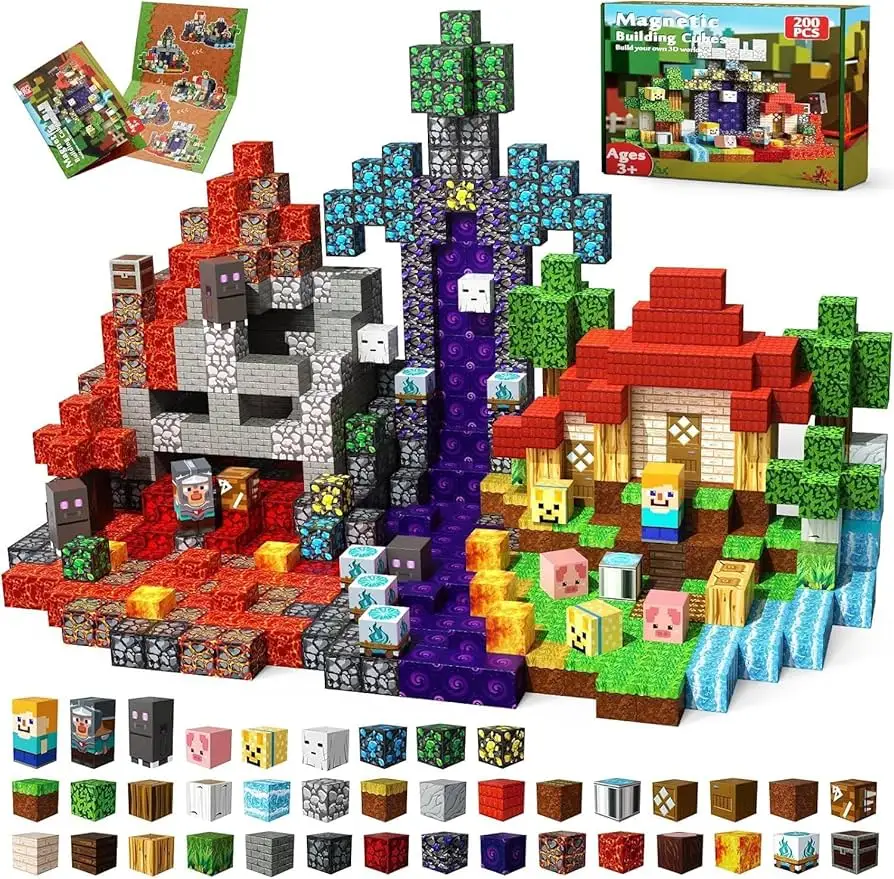
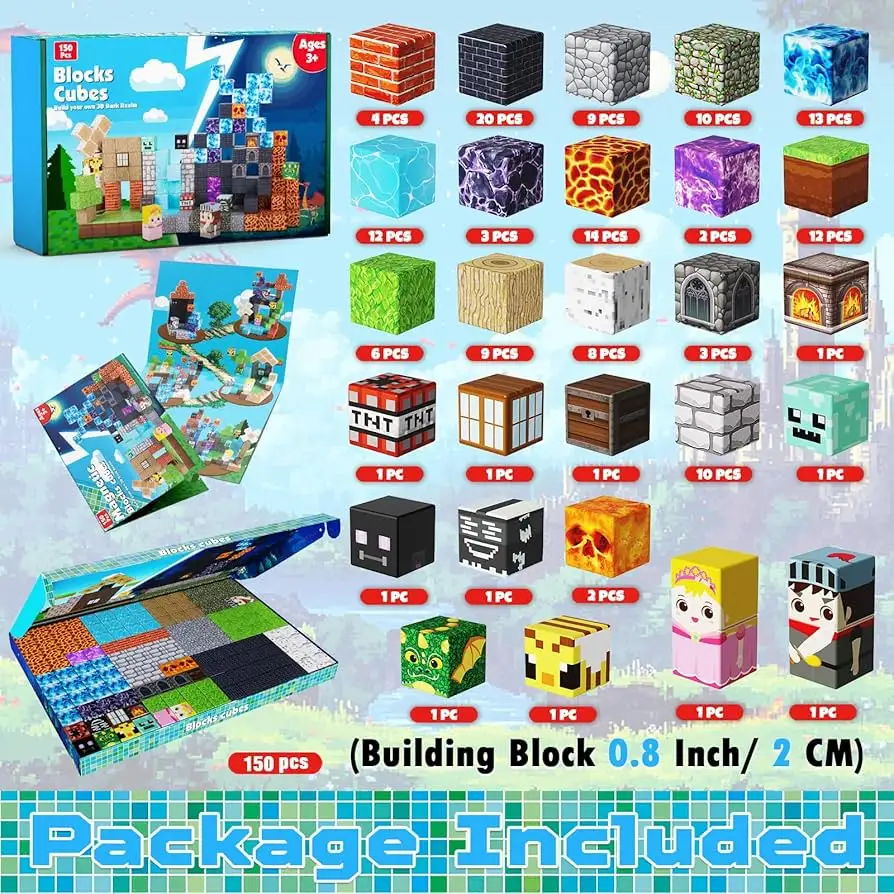
Marketing for 200 PCS 0.8In Magnetic Blocks leans heavily on the “rich cubes collection” and “endless creativity” message. Viral Vault describes 200 magnet cubes across three themes (lava, portal, forest) plus characters and a storyline booklet, and BestProductsReviews.com echoes that it “engages imagination and creativity” with open‑ended play. User feedback broadly agrees for young builders: BestReviews.guide notes kids enjoy building and demolishing freely, and parents of preschoolers see it as perfect for imaginative, sandbox‑style construction.
Digging deeper into user reports, though, the “endless” part is age‑dependent. The same BestReviews.guide analysis cautions that because the set “mainly features cube‑shaped blocks,” advanced structures are harder than with sets that include triangles, windows, and car bases. For kids under 7, that simplicity feels empowering; for older, engineering‑minded builders, the creative ceiling arrives sooner than marketing implies.
The product also claims “safe and durable, high‑quality, non‑toxic materials,” a standard talking point across cube sets from Magneverse, Viral Vault, and Amazy Store’s 200‑piece Magma series. According to Amazy Store, their 0.8‑inch magnetic blocks use high‑quality ABS plastic with rounded edges and strong internal magnets, and CambridgeLSAT lists similar blocks at 4.5/5, suggesting buyers rarely see major durability failures. Expert reviewers at BestReviews.guide back this up for the category, describing premium magnetic tiles as “incredibly durable, staying in great condition even after 11 years of regular play and rough handling.”
Users do occasionally probe safety more critically, especially around internal magnets. Sets like the 220‑piece cubes advertised with “8 ultra‑strong magnets per piece” reassure parents that sealed edges “lock the magnets in place.” To date, cross‑platform feedback doesn’t show a pattern of magnets popping out for reputable 0.8‑inch cube sets, but parents of toddlers under 3 still tend to avoid them because every cube is swallow‑sized.
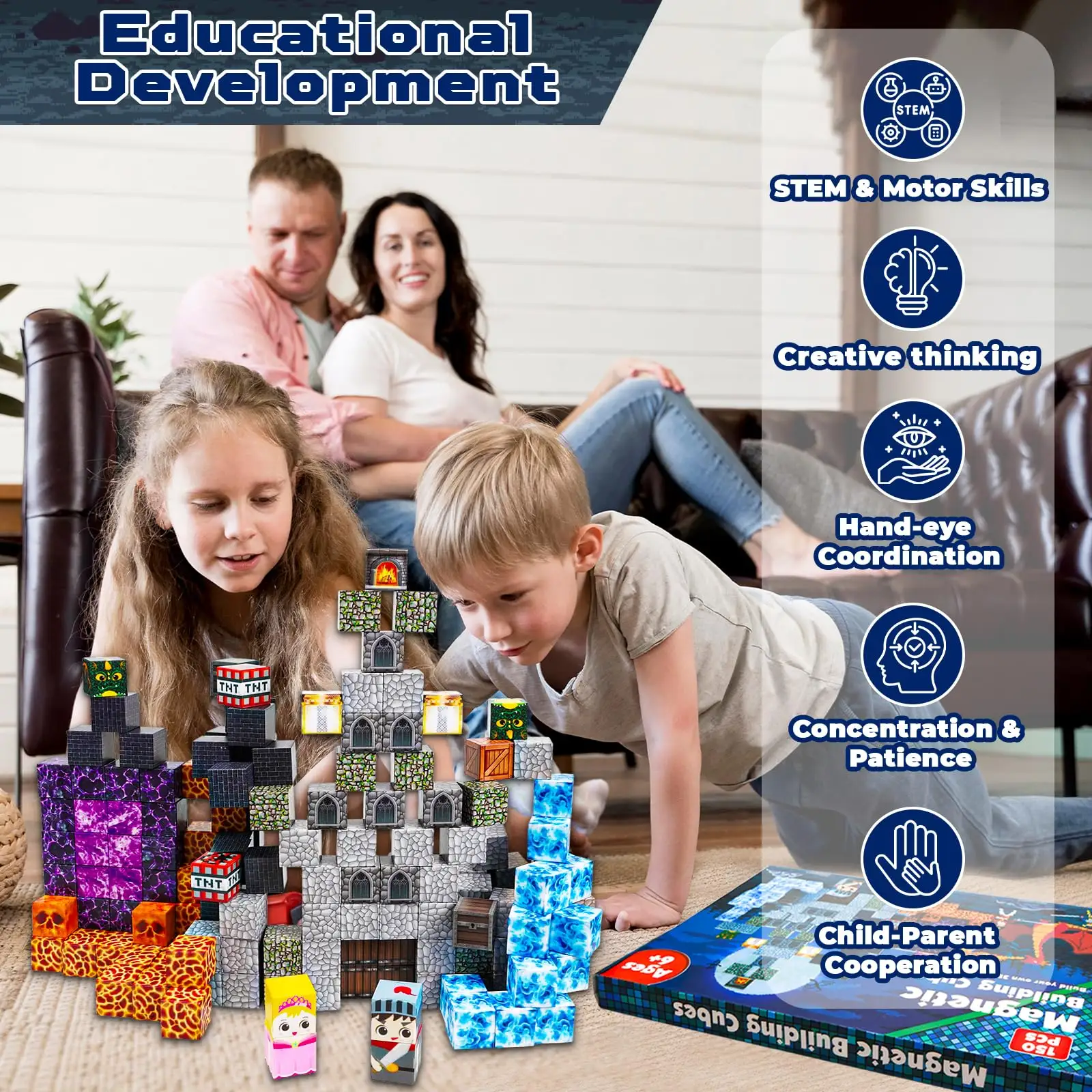
Another major marketing angle is STEM and Montessori value: these cubes are sold as “STEM Montessori sensory toys” teaching problem‑solving, spatial awareness, and focus. Amazon listings for similar 200‑piece magnetic building blocks highlight benefits like improved color recognition and fine motor skills, and BestReviews.guide confirms that magnetic blocks “teach basic geometry, improve fine motor skills, and encourage problem solving.” For parents, the practical impact is best captured by their own stories: as one Magnetopia customer, Evelyn H., says about a comparable 0.8‑inch set, her 6‑year‑old “spends hours building castles, houses, and even little animals… instead of being stuck on a screen.”
At the same time, some users admit the STEM label can be a bit of a buzzword. A Magnetopia buyer, Jessica M., notes that the blocks are “decent… better than those slime kits,” but not the miraculous educational upgrade other parents promised. The data suggests that when kids are already into building, these cubes amplify learning; they don’t magically turn a child who hates construction toys into a budding engineer.

Cross-Platform Consensus
Across Amazon‑style listings, Viral Vault, Quora/BestReviews.guide, and editorial roundups linked from Reddit, cross‑platform consensus confirms that 200 PCS 0.8In Magnetic Blocks are universally praised for engagement with younger kids. The Quora‑hosted BestReviews.guide ranking makes the Magneverse 200‑piece 0.8‑inch set its #1 “winner” with a perfect 10.0 score, highlighting “engages imagination and creativity” and “perfect for open‑ended play” as primary reasons.
Parents of kids 3–7 repeatedly describe these as the rare toy that gets used day after day. BestProductsReviews.com calls out how the 200 themed cubes “encourage creative construction and storytelling,” and Viral Vault emphasizes that kids can “construct, demolish, and rebuild as they please,” which lines up with reports of children building and rebuilding “portal” worlds. For families seeking screen‑free activities, BestReviews.guide notes that these magnetic blocks “provide a great non‑electronic activity that kids truly enjoy building with.”
Another universally praised aspect is magnet strength relative to size. The 220‑piece cube set marketed with 8 magnets per cube is explicitly praised for “extra stability — no more frustrating collapses,” and BestReviews.guide’s commentary on high‑quality magnetic blocks highlights “the strength of the magnet is great,” strong enough to hold structures while gentle enough for kids to rearrange. For preschoolers and early elementary builders, that reliability means fewer tears when towers grow taller.
Parents also like how cube‑based sets simplify cleanup. BestReviews.guide captures a typical sentiment: “the magnetic feature makes cleanup easier compared to traditional building toys like Legos.” Because all pieces share the same 0.8‑inch form factor, they stack into neat bricks, and magnets help clump them together—useful for teachers and parents managing a classroom or playroom.
On the complaints side, shape variety is the main recurring critique. BestReviews.guide flags that the Magneverse 200 pcs set “mainly features cube‑shaped blocks without a variety of shapes,” directly contrasting it with tile sets containing triangles, windows, and car bases. For highly creative older kids, reviewers suggest that this limits the complexity of builds compared to Magna‑Tiles or Anbalulu’s 134‑piece mixed‑shape kit.
Another common friction point is price relative to generic options. Viral Vault lists the 200‑piece Portal set at about $97, while Amazy Store sells its 200‑piece Magma cubes for around $39.99 and Amazon carries unnamed 200‑piece 0.8‑inch magnetic blocks in the $50–60 range. Parents on deal‑hunting sites and Reddit‑linked guides see the Portal‑style set as a premium skin over a similar core toy, questioning whether the themed prints and booklet justify the extra cost.
Users also mention the practical headache of 200 tiny pieces. Reviewers of large cube sets like Goody King and other 200–300‑piece kits warn about pieces getting lost and the effort required to enforce cleanup habits. For small apartments or families already overwhelmed with toys, the sheer volume can feel like overkill; some buyers say they might have been happier starting with a 100‑piece or 150‑piece magnetic building blocks set.
Divisive features center on aesthetics and age range. The portal/lava/forest pixel art clearly targets kids who love Minecraft‑style visuals. BestReviews.guide frames this as a plus, saying the themes and story booklet “encourage creative construction and storytelling,” while the BBB Scam Tracker complaint about a different brand, Magnacraft, confirms how popular “magnetic blocks that look like Minecraft” have become. Some parents love that familiarity; others prefer the clean, translucent look of Magna‑Tiles.
Age suitability also splits opinion. The BestReviews.guide write‑up describes the 200‑piece cube set as “well suited for beginners and younger kids who enjoy storytelling and basic building,” while noting that “those looking for advanced or highly versatile magnetic blocks might find the shape options somewhat limited.” Parents of 9–10‑year‑olds often gravitate toward larger tile sets with cars, ramps, and specialized pieces once the cube phase passes.
Trust & Reliability
From a trust perspective, reputable sellers of 200 PCS 0.8In Magnetic Blocks and similar 0.8‑inch cube sets generally look solid. Viral Vault publishes store ratings around 4.7/5 across multiple magnetic block products and emphasizes lab‑tested, non‑toxic materials plus a “customer satisfaction guaranteed” policy. Amazy Store and CambridgeLSAT describe their blocks’ ABS plastic and sealed magnets in detail, a sign that they expect safety‑conscious parents to scrutinize those specs.
However, scam warnings exist in the broader “Minecraft‑style magnetic blocks” space. According to the BBB Scam Tracker, a brand called Magnacraft ran Black Friday ads for Minecraft‑looking magnetic blocks, took money, then went dark—no functioning website, no working tracking links, no responses to support emails. The victim lost $133.34 and later found multiple similar complaints. While this case is not about the Magneverse/Viral Vault 200‑piece set, it shows why many parents insist on buying through recognized platforms (Amazon, established webstores, or PayPal‑protected shops).
In terms of long‑term durability, direct “six months later” reports for this exact 200‑piece set are scarce, but data from comparable products is encouraging. BestReviews.guide notes that premium magnetic tiles have “proven incredibly durable, staying in great condition even after 11 years of regular play and rough handling,” and Anbalulu’s 134‑piece kit is praised for both magnet strength and material quality. Users rarely mention magnets leaking or shells cracking on the better cube sets, suggesting that when you buy from a vetted seller, longevity is more influenced by how roughly kids treat them than by inherent design flaws.
Alternatives
Several alternatives repeatedly appear in discussions about magnetic building blocks for kids 3+ and are worth weighing against 200 PCS 0.8In Magnetic Blocks. According to BestReviews.guide, the main premium competitor is Magna‑Tiles Classic 100‑Piece, which scores 8.2/10 and is celebrated for durability, variety of shapes, and compatibility with other Magna‑Tiles sets. Parents say the tiles “have proven incredibly durable… even after 11 years of regular play,” making them a long‑term investment.
Another strong contender is Anbalulu 134‑piece magnetic building tiles, ranked #2 by BestReviews.guide with a 9.1 score. Users praise its “outstanding build quality” and magnet strength, plus the mix of shapes and two included cars. For kids interested in STEM structures—bridges, towers, vehicles—this mixed‑shape set offers more engineering variety than cube‑only blocks.
For families focused specifically on cube‑style magnetic Minecraft toys, Amazy Store’s 200 pcs lava/magma cubes and Magnetopia’s 0.8‑inch “Pixel World” collection play in the same aesthetic space as the Portal set. Amazy emphasizes value (“double the building potential” vs 100‑piece sets) and strong neodymium magnets at around $39.99, while Magnetopia positions its 200‑piece sets at a higher price but highlights robust construction and has testimonials from parents like Priya P., who reports that the whole family builds towers and bridges together.
If your child is very young (1–3 years) or prone to mouthing toys, users often steer toward larger soft blocks or oversized magnetic cubes like Pairez’s 1.65‑inch set, which BestProductsReviews.com rates at 9.2/10 and describes as having “bright and vibrant rainbow colors” with smooth, safe edges. These don’t offer the same detailed pixel art or dense 200‑piece count but are better aligned with toddler safety.
Price & Value
Pricing for 200 PCS 0.8In Magnetic Blocks varies sharply by seller and theme. Viral Vault’s Portal‑themed set lists around $97, positioning it at the premium end of 200‑piece cube kits. Amazy Store’s 200‑piece Magma version comes in at about $39.99, while an Amazon listing for 200 pcs 0.8‑inch magnetic blocks shows a price near $59.98. Cross‑platform, parents are clearly being asked to pay extra for branding, themes, and storytelling booklets.
According to eBay data, premium tile brands like Magna‑Tiles command high resale value: a new 100‑piece set lists around $79, with used sets selling for roughly $60. That suggests a resale retention of 70–80% when a brand has strong recognition. Generic or house‑brand 0.8‑inch cube sets, including many 200‑piece options, appear less frequently as branded resale listings, implying lower second‑hand value unless you bundle them generically as “magnetic blocks.”
Users trying to maximize value often choose the mid‑priced 200‑piece options from Amazon or Amazy, where the cost per cube is significantly lower than themed sets. Buying guides linked from Reddit emphasize that “more pieces = more complex builds and more kids playing together,” but they also recommend checking for coupons and bundle deals—some Amazon cube sets offer 20–30% discounts or promotions that narrow the gap with big‑name brands.
Community Buying Tips (Summarized)
- Check seller reputation: Parents