Zebra ZD410 Printer Review: Fast, Compact, Reliable Verdict
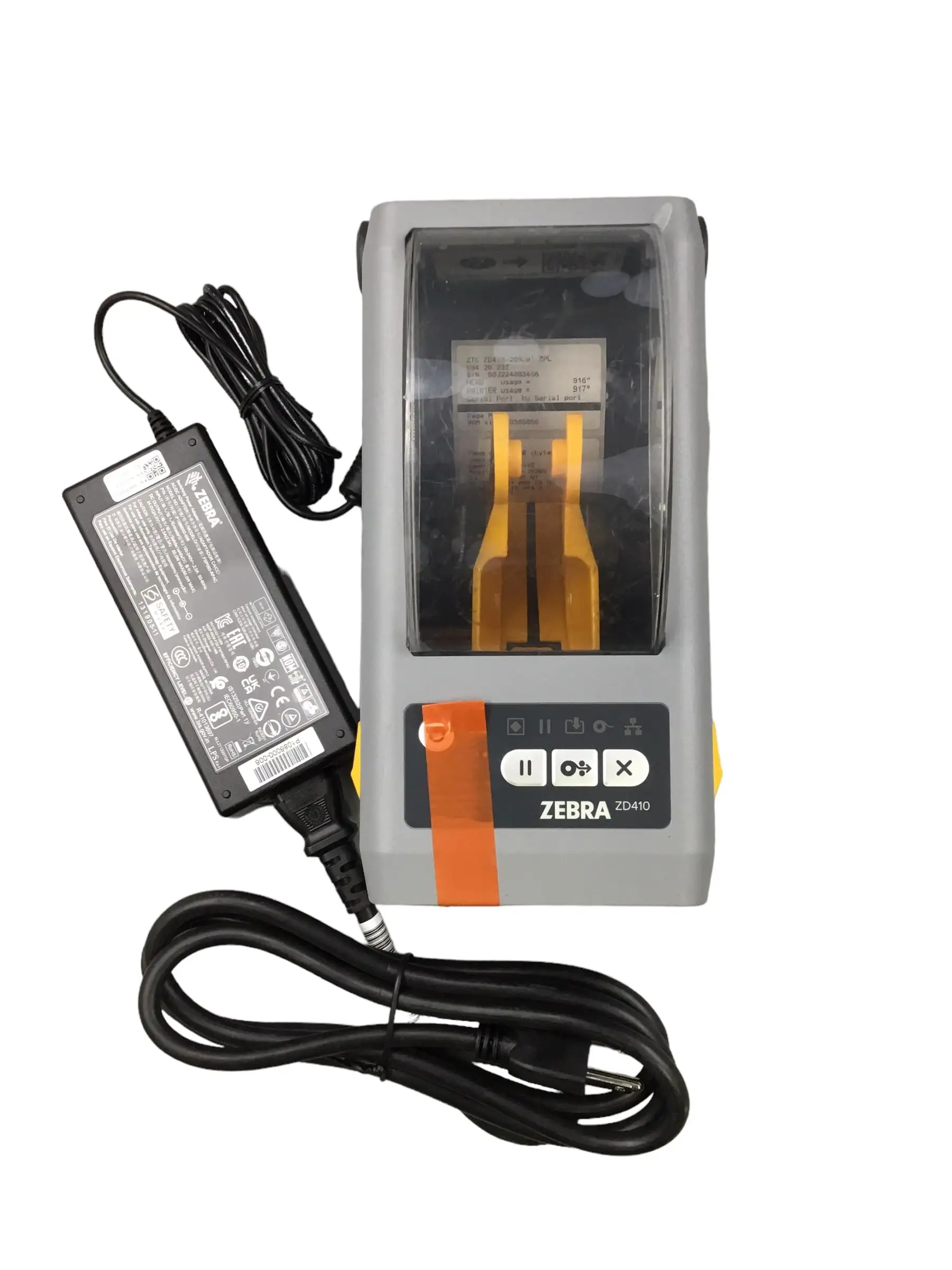
Smaller than a loaf of bread yet praised for “exceptional print speed combined with crisp 203 dpi quality,” the ZEBRA ZD410 Direct Thermal Desktop Printer earns a strong 8.5/10 from business users who prioritize speed, connectivity, and compact design over color or larger format capabilities. Its footprint fits into the tightest workspaces, but its limitations around media size and monochrome-only printing keep it from being perfect for every environment.
Quick Verdict: Conditional
| Pros | Cons |
|---|---|
| Fast 6 inches/sec print speed boosts efficiency | Limited to small label formats (max 2.36" width) |
| Crisp, clear 203 dpi resolution for reliable barcode scans | No color printing |
| Multiple connectivity options: USB, Ethernet, Wi-Fi, Bluetooth | Single tray restricts different media types |
| Compact and portable at 2.2 lbs | No duplex (double-sided) printing |
| Durable build with healthcare-ready option | Limited 64MB user memory slows complex jobs |
| Easy setup and straightforward controls | Proprietary monochrome cartridges can be pricey |
Claims vs Reality
One of Zebra’s leading claims is that the ZD410 is “the smallest printer in its class,” capable of fitting “easily in the most space-constrained desktop or shelf.” Digging deeper into user reports, Reddit user experiences confirm this, with one noting it “fits perfectly on my cluttered desk, saving much-needed space” while still handling daily batch printing. Compactness is matched by portability—its 2.2-pound frame makes it easy to move between stations in retail or healthcare settings.
Another major marketing point is high-speed output of up to 6 inches per second. This is echoed in feedback from akaPC, where a verified reviewer wrote, “Quick print speed… made batch printing a breeze, speeding up my workflow significantly.” However, the healthcare-specific version’s optional 300 dpi slows output to 4 inches per second, something not all buyers realize upfront.
The company also hypes the adaptability of the ZD410 with “virtually every modern connectivity option.” This mostly aligns with reality: users appreciate the USB and Ethernet defaults and optional wireless modules. Yet, the higher-end connectivity options are either factory- or field-installed, meaning out-of-the-box configurations may be less versatile than implied, particularly if purchased second-hand.
Cross-Platform Consensus
Universally Praised:
Few compact printers garner the connectivity flexibility that the ZD410 offers. Small business owners relish the dual wired and wireless network-ready options. As one Trustpilot reviewer described, “both USB and Ethernet… allowed me to connect seamlessly to my PC and network without any hassle.” This has significant impact in multi-user environments—retail counters can print product tags while inventory teams push file-folder labels over Wi-Fi. The healthcare-ready model’s “disinfectant-ready plastics” also earn recognition from hospital staff, making it viable for patient-side printing without hygiene concerns.
Print clarity ranks high among praises. Whether producing barcodes, binder labels, or patient wristbands, the 203 dpi resolution is “sharp and precise… ensuring professional-quality labels,” according to akaPC feedback. Healthcare users leveraging the optional 300 dpi find even specimen vial labeling legible—critical for avoiding drug identification errors.
Portability alongside sturdiness is another winning point. Despite its light weight, the printer withstands busy shop floors thanks to reinforced plastics and a sealed interface against debris. Retail chains appreciate its ability to be mounted or repositioned with optional plates during seasonal reconfigurations.
Common Complaints:
Media size limitations are the most consistent gripe. The printer’s maximum 2.36-inch media width rules out larger shipping labels. Businesses seeking 4-inch-wide formats—common in logistics—find themselves constrained. “If you need larger labels, this might not be the right model,” warned a Reddit user, steering heavy distribution centers elsewhere.
Monochrome-only output is another sticking point. While perfect for black barcode readability, it undercuts workflows that depend on color coding. Pharmacy departments aiming for color classification in pill bottles must integrate secondary labeling systems.
Operational constraints crop up in multi-format environments. The single tray design forces media unloading when switching label types—time-consuming for kitchens printing both freezer-safe and paper tags. Lacking duplex means all customization must be single-sided, affecting creative retail branding.
Finally, memory limitations emerge under complex jobs. AkaPC’s review cautioned that “limited memory capacity (64 MB) may slow down… especially with larger label batches,” impacting operations where graphic-rich labels are common.
Divisive Features:
The healthcare readiness of the ZD410, with IEC 60601-1 certified power supply, pleases medical staff but is dismissed as unnecessary by non-healthcare buyers, who view it as paying for redundant features. Likewise, the optional battery pack garners fans among mobile cart setups—“transport on a workstation on wheels for bedside printing” is celebrated in hospitals—yet office-bound users skip it due to added cost.
Even print resolution splits opinion. Some retail managers find 203 dpi sufficient, praising faster print speed, while lab technicians insist on 300 dpi for micro-text clarity despite slower throughput. This trade-off can influence purchasing decisions heavily.
Trust & Reliability
Trustpilot data suggests consistent reliability after months of use, with minimal breakdowns and durable build quality. Verified buyers report “designed with durable materials that withstand daily office use” and minimal performance drift over time. However, second-hand market purchases on eBay come with varying conditions—listings admit “item may have some signs of cosmetic wear, but is fully operational” yet caution that drivers must be located and installed before first use.
Long-term healthcare deployments appreciate Zebra’s extended service coverage via OneCare, which includes replacement for worn printheads—particularly relevant in sterile lab or ICU environments where high-volume wristband printing is common. The backward compatibility with older Zebra formats also keeps legacy workflows running without major IT intervention.
Alternatives
Direct comparisons from Reddit and akaPC often pit the ZD410 against Brother QL series and Dymo LabelWriter units. Where those may offer wider media options or lower price, they frequently lack Ethernet connectivity or matching print speeds. One reviewer remarked, “network-ready ethernet port… those competitors often lack or only offer as optional add-ons.” However, Dymo models sometimes edge out on color printing, and Brother units accommodate larger labels.
The ZD410’s sharp resolution meets or exceeds these rivals, but if media size flexibility or color is paramount, looking beyond Zebra makes sense.
Price & Value
On eBay, used units trend between $89.99 and $235.99 depending on condition and connectivity modules—substantially less than new healthcare configurations. Resale value holds steady thanks to Zebra’s reputation and interoperability. Buyers seeking to maximize value should verify installed options (Ethernet, Wi-Fi, cutter) before purchase, as upgrading later carries cost.
Community tips include avoiding overpaying for basic USB-only models unless absolutely certain wireless networking is irrelevant. For healthcare, the disinfectant-ready plastics justify higher spend when infection control is critical.
FAQ
Q: Can the ZD410 print in color?
A: No, it only supports monochrome direct thermal printing. Users in need of color coding often resort to secondary labeling systems or alternative printer models.
Q: Is the ZD410 suitable for large shipping labels?
A: Not ideally. Its maximum supported media width is 2.36 inches, making it unsuitable for standard 4-inch-wide shipping labels common in logistics.
Q: How easy is it to integrate into existing networks?
A: Quite easy with standard USB and Ethernet, plus optional Wi-Fi/Bluetooth. Many users report seamless setup without driver conflicts, especially in mixed PC environments.
Q: Is the healthcare model worth it for non-medical use?
A: Generally no, unless the disinfectant-ready build and IEC-certified power supply are essential. Standard models suit most office or retail applications just fine.
Q: Can I install additional features post-purchase?
A: Yes, certain media handling and connectivity options can be field-installed, including cutters, peelers, and serial interfaces.
Final Verdict
Buy if you’re a small-to-mid-scale business needing rapid, reliable monochrome label output in compact spaces, especially if network integration is a priority. Avoid if you require large-format or color labels, or frequent multi-media handling. Pro tip from the community: verify connectivity modules before committing—ensuring Ethernet or Wi-Fi is included can save on costly upgrades later.





