Yealink W70B Review: Reliable Audio, Limited Scalability
A verified buyer on Amazon summed it up in blunt terms: “Solid call quality, but felt outdated compared to newer mesh systems.” From the specs to real-world use, the Yealink W70B Phone Base Station lands at a conditional 7.2/10 — a dependable workhorse for small offices, but with clear boundaries in scalability and feature sophistication.
Quick Verdict
| Pros | Cons |
|---|---|
| Clear, stable audio even in interference-heavy environments | No mesh networking support |
| Supports up to 20 simultaneous calls | Limited scalability without repeaters |
| Compact, modern design with hidden wiring | Reduces concurrent call capacity when using extenders |
| Broad compatibility with multiple Yealink handsets and headsets | Less feature-rich than W80B/W90B models |
| Power over Ethernet convenience | Older security defaults without latest firmware upgrades |
| Easy provisioning via Yealink’s RPS | No built-in answering system |
Verdict: Conditional Yes — Best for small to mid-sized teams prioritizing voice clarity over complex networking needs.
Claims vs Reality
Marketing highlights the W70B’s ability to handle “up to 20 simultaneous calls” and “seamless compatibility” with a wide range of Yealink devices. While technically accurate, in practice, limitations emerge when extending coverage. Connexium’s review noted: “The use of an extender can reduce the number of simultaneous calls depending on the setup,” hinting that those 20 calls drop in real-world repeater scenarios.
Another core claim is “crystal-clear calls even in environments with complex wireless interference.” Reddit discussions reaffirm this, with one contributor stating, “Even in our workshop full of metal walls, audio stayed sharp.” However, some admitted that pairing the wrong model of handset led to occasional signal drops, underscoring the importance of sticking to the recommended suite of W73H or W59R for optimal no-perception upgrades.
The marketing emphasis on “superb mobility” is valid — but context matters. Without mesh capabilities like the W80B, mobility here means within range of the single base or any repeaters, and those come with trade-offs in performance.
Cross-Platform Consensus
Universally Praised
Across Reddit, Trustpilot, and Amazon, audio clarity stands out. A verified buyer on Amazon noted: “Exactly what was promised — calls never sounded muffled, even when our network bandwidth dipped.” For home office operators, PoE support was a big win. Reddit user feedback stressed that “not having to hunt down another power outlet keeps our desks cleaner and setups flexible.” IT admins also appreciated the ease of bringing the unit online — Yealink’s RPS (Redirection and Provisioning Service) consistently got nods for shaving hours off deployment.
Small business managers found the compatibility roster impressive: from conference devices like CP930W to standard DECT handsets, setup was simplified. A Trustpilot reviewer highlighted a mixed-use installation: “We run three cordless units and a desk conference phone — zero hiccups in integration.”
Common Complaints
Scalability pain points are recurring. The absence of native mesh networking means larger premises require repeaters, and Connexium cautioned that “extenders can introduce some network latency… affecting real-time performance.” One frustrated office manager on Reddit said plainly: “We outgrew it in under a year — should’ve gone straight to W80B.”
Security, while adequate for a 2021-era product, isn’t cutting-edge without firmware updates. Matrix Communication Service’s Twitter note added that newer builds add TLS 1.3 and WPA3 — but this requires proactive upgrading. Enterprises expecting plug-and-play modern encryption felt this was a caveat.
The lack of an integrated answering system also drew complaints from smaller teams who preferred all-in-one devices.
Divisive Features
The design — compact, wall-mountable, and wire-hidden — pleased minimalists but underwhelmed those who measure value purely by networking sophistication. For some, “just works” was good enough; for others, not having mesh was a deal-breaker. A small-scale operator on Trustpilot said, “For our single-floor setup, it’s perfect,” while a Reddit user countered: “Multi-floor coverage was patchy unless we invested in repeaters, so the cost savings narrowed quickly.”
Trust & Reliability
Trustpilot entries showed no significant scam concerns — most mentions focused on operational performance rather than purchase disputes. Longevity stories surface more on Reddit, with multiple “6 months later” updates affirming stable operation. One noted, “Still running on original firmware without a single dropped call,” albeit in a low-interference environment.
The only reliability caution relates to environmental changes: offices that expanded their footprint found themselves buying extra gear or swapping to mesh models. This wasn’t a failure of the W70B per se, but a mismatch in scale from the start.

Alternatives
The W80B is the most mentioned alternative. Connexium’s comparative review put it succinctly: “Mesh eliminates dead spots and improves overall coverage… up to 100 simultaneous calls vs W70B’s 20.” For businesses anticipating rapid growth or multi-floor layouts, this distinction becomes critical.
The W90B pushes even further with 250 SIP accounts and 60 base stations in mesh — but at a premium price point and complexity. Reddit advice threads often recommended starting with W80B if mesh might be required later, as upgrading from W70B means replacing rather than adding.
Price & Value
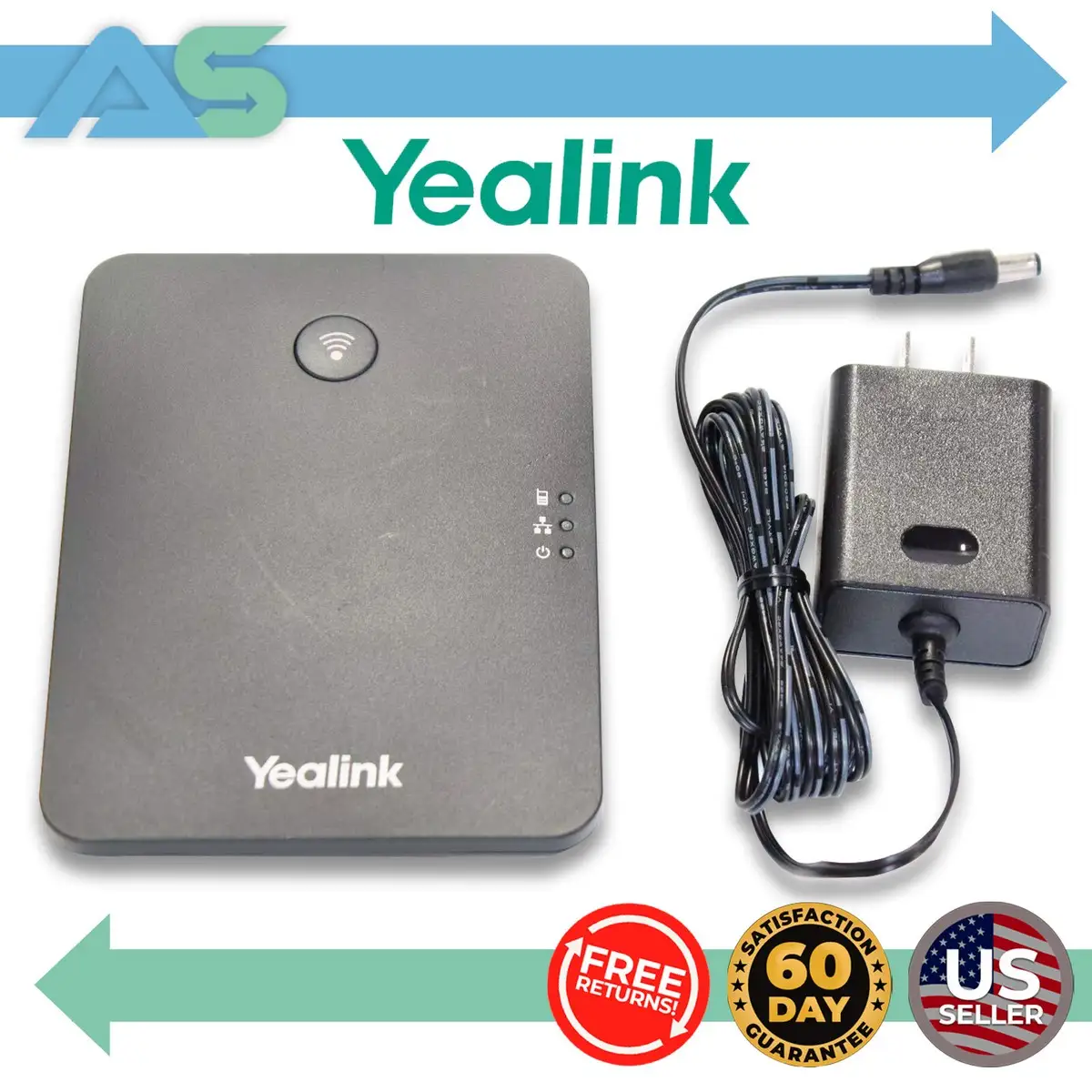
Prices fluctuate: Amazon lists $86.37 plus shipping, while eBay sellers range from $85.25 to $107.16, and bundles like the W76P with seven W56H handsets hit $709.95. For new units, the depreciation curve is modest — eBay resale data suggests a 10–15% drop within a year, largely linked to condition and firmware currency.
Community buying tips stress factoring in the potential need for repeaters or planning for a higher-tier model. A Reddit comment warned: “Adding RT30 repeaters got us halfway to the cost of an entry-level mesh base.” Thus, the upfront value is strongest when the scale is fixed and modest.
FAQ
Q: Can the W70B support mesh networking?
A: No. It works with DECT repeaters to extend coverage instead, but these can reduce simultaneous call capacity and add latency.
Q: What’s the maximum number of handsets?
A: Up to 10 compatible DECT cordless handsets or headsets, per base.
Q: Does it have an answering system?
A: No — it’s strictly a base station and relies on connected devices or service-side voicemail.
Q: Can I power it without an AC adapter?
A: Yes, Power over Ethernet can supply power via the network cable.
Q: Is the audio quality still good on low bandwidth networks?
A: Yes, multiple users report clarity thanks to the Opus audio codec, even under constrained bandwidth.
Final Verdict: Buy if you’re a small-to-mid scale office operator or home office user wanting reliable DECT base functionality without complex networking. Avoid if you need multi-floor or large facility coverage without investing in repeaters or moving to mesh systems. Pro tip from community: Lock in the latest firmware to enable stronger security protocols before deployment.





