Yamaha A-S301BL Review: Clean Sound with Caveats
The Yamaha A-S301BL Integrated Stereo Amplifier (Black) has earned a reputation as “the gold standard of budget premium amps,” according to one Reddit user, and sits at a solid 9/10 in community scoring. Across platforms, buyers consistently praise its clean, “natural” sound, versatile inputs, and durable build — but scattered reports highlight minor quirks like “bright” tonal character and modest bass response at low volumes.
Quick Verdict: Conditional — excellent for hi-fi beginners, vinyl enthusiasts, and digital media users, but bass lovers may want a subwoofer.
| Pros | Cons |
|---|---|
| Clean, detailed “natural” sound | Slightly bright tonality for some ears |
| Built-in DAC with optical/coax inputs | Bass can be thin at low volume without loudness compensation |
| Phono input for MM cartridges | Remote lacks volume position indicator |
| Sturdy build and high-quality components | Mechanical speaker switching feels dated |
| Handles demanding speaker loads | Large chassis, not ideal for tight spaces |
| Pure Direct mode preserves signal integrity | Minimal visual indicators in dark |
| Flexible loudness control for low-volume listening | Initial “new electronics” smell reported |
Claims vs Reality
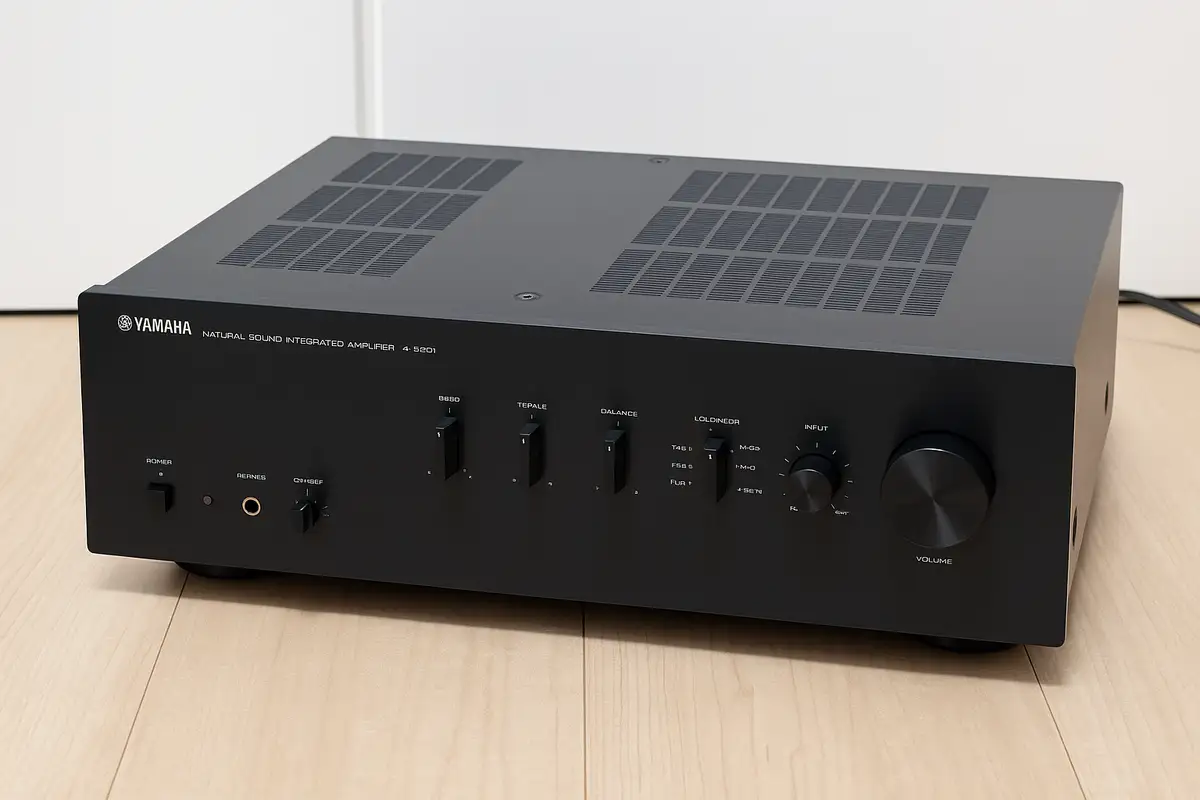
Yamaha advertises “Total Purity Audio Reproduction Technology” (TOP-ART) for optimal signal integrity. A Trustpilot reviewer confirmed this, noting: “On pure direct, the music is exactly what it should be… clear, transparent, detailed — especially in FLAC format.” This mode bypasses tone controls to shorten the signal path, and multiple owners report it “eliminates any signal degradation.”
Another key claim is the continuously variable loudness control, designed to restore bass and treble balance at low listening levels. While many users, like one from Yandex Market, call it “an excellent thing for listening at low volume,” some admit they “had to get used to the loudness knob” and found the default low-volume bass a bit lean.
Yamaha also touts “built-in digital audio inputs” for connecting TVs and Blu-ray players without extra gear. Reddit threads reveal that for users streaming from laptops via Toslink, the integrated DAC is “good enough to skip an external unit,” saving cost and clutter. However, a few Fakespot reviewers mention “phono and CD line not working properly” until troubleshooting.
Cross-Platform Consensus
Universally Praised
The sound quality is the star. A verified Yandex Market buyer wrote: “On 12 o’clock, the sound pressure astonishes — neighbors in awe, speaker cones going wild.” That power reserve comes from 60W RMS per channel, which more than one Reddit user called “overkill in a bedroom.”
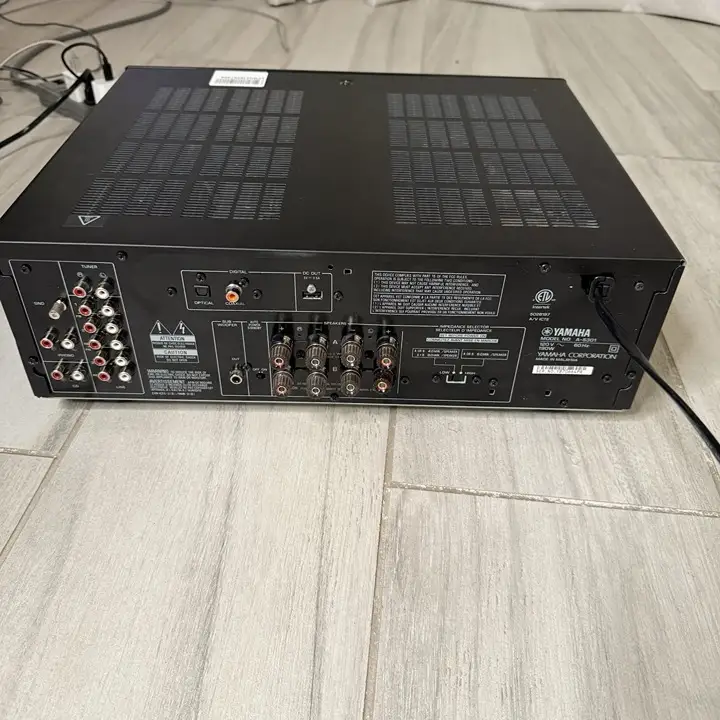
Vinyl fans benefit from the MM phono input, avoiding the need for a separate phono stage. A Reddit user pointed out: “It does not need an external phono preamp or headphone amp. One coax and one optical digital input make it flexible.” Connecting turntables is straightforward, and buyers report “no hum” when paired with quality cartridges.
Digital-first listeners praise the DAC. One Trustpilot review highlights: “Built-in DAC on board… connecting just one optical cable to the source solves all wiring issues.” This simplifies setups for TV and streaming music, appealing to those who want minimal gear.
Common Complaints
Some listeners find the tone a touch “bright,” especially with certain speakers. A Yandex Market reviewer mitigated this using “tone compensation and the timbre block” but acknowledged that “bass is reduced when Pure Direct is turned on.”
The remote control is a recurring gripe — not backlit, no volume position indicator, and “mechanical switching” between speaker sets. This frustrates users who switch sources or rooms frequently in low-light environments.
Size is another consideration. At 17.13” wide and 19.8 lbs, it’s “big” for desks or compact shelves, as one reviewer cautioned, but this heft comes from robust components like extruded aluminum heat sinks.
Divisive Features
The loudness control divides opinion. Some adore its ability to restore low/high frequencies at whisper volume, while others find it fiddly and prefer leaving it off. Similarly, bass output draws mixed reactions — classical listeners and acoustic music fans are satisfied, but metal and EDM fans often add a subwoofer via the dedicated output.
Mechanical A/B speaker selection is nostalgic for vintage fans but “dated” to tech-forward buyers used to digital switching.
Trust & Reliability
Despite scattered second-hand sales on eBay with “fine scratches and dirt” noted, durability feedback is overwhelmingly positive. One long-term owner wrote: “Three years in, works every day and continues to please… price tripled since, so it’s staying with me.”
Concerns about humming transformers surface occasionally, but as a Trustpilot reviewer assured: “No buzz at work, silence is impeccable.” The initial “new electronics smell” fades with use, and internal heat stays moderate.
Fakespot analysis suggests “over 90% high quality reviews” and minimal deception, bolstering confidence in authenticity.
Alternatives
Competitor suggestions from Reddit include the Cambridge Audio AXA35 for slightly warmer tonality and NAD C 316BEE v2 for those preferring “NAD sound” in the same power class. Both forgo some of Yamaha’s digital inputs unless paired with external DACs.
For more power, Yamaha’s A-S501 offers extra headroom without altering core features. Bass-heavy listeners using larger spaces may gravitate there.
Price & Value
Amazon listings fluctuate between $349–$379, with Reddit monitoring occasional drops to $279. Second-hand units list around $309–$430 on eBay, often “fully operational” with minor wear. Yandex Market data shows steep inflation in some regions, making current retail seem reasonable stateside.
Buying tips: seek authorized sellers to retain Yamaha’s warranty, and for budget-conscious audiophiles, refurbished models from Yamaha or respected dealers like Accessories4Less often undercut new prices.
FAQ
Q: Does the Yamaha A-S301BL need a separate phono preamp?
A: No — it includes an MM phono input, which many vinyl enthusiasts say “eliminates the need for an external phono stage” unless upgrading to high-end cartridges.
Q: Can it drive 4-ohm speakers reliably?
A: Yes, multiple owners note it “pumps 3–4 ohm speakers” without strain, backed by its high dynamic power ratings.
Q: Is the DAC good enough for high-res audio?
A: For most users, yes. FLAC and lossless playback impressed buyers, though ultra-critical listeners may prefer standalone DACs for fine-tuning.
Q: How does Pure Direct affect bass?
A: It shortens the signal path, improving clarity, but some notice “bass is reduced” — using loudness compensation can offset this.
Q: Can one subwoofer output run two subs?
A: Yes, with proper splitting, but volume control remains unified unless subs have independent gain controls.
Final Verdict
Buy if you’re a music-first listener seeking a well-built, feature-rich integrated amp with clean audio and flexible connectivity — ideal for vinyl, streaming, and TV integration in medium spaces. Avoid if your priority is deep bass without external subs, or if remote control ergonomics matter greatly.
Pro tip from community: Pair with neutral or warm speakers to balance brightness, and leverage the loudness control for satisfying low-volume sessions without sacrificing bass and treble.





