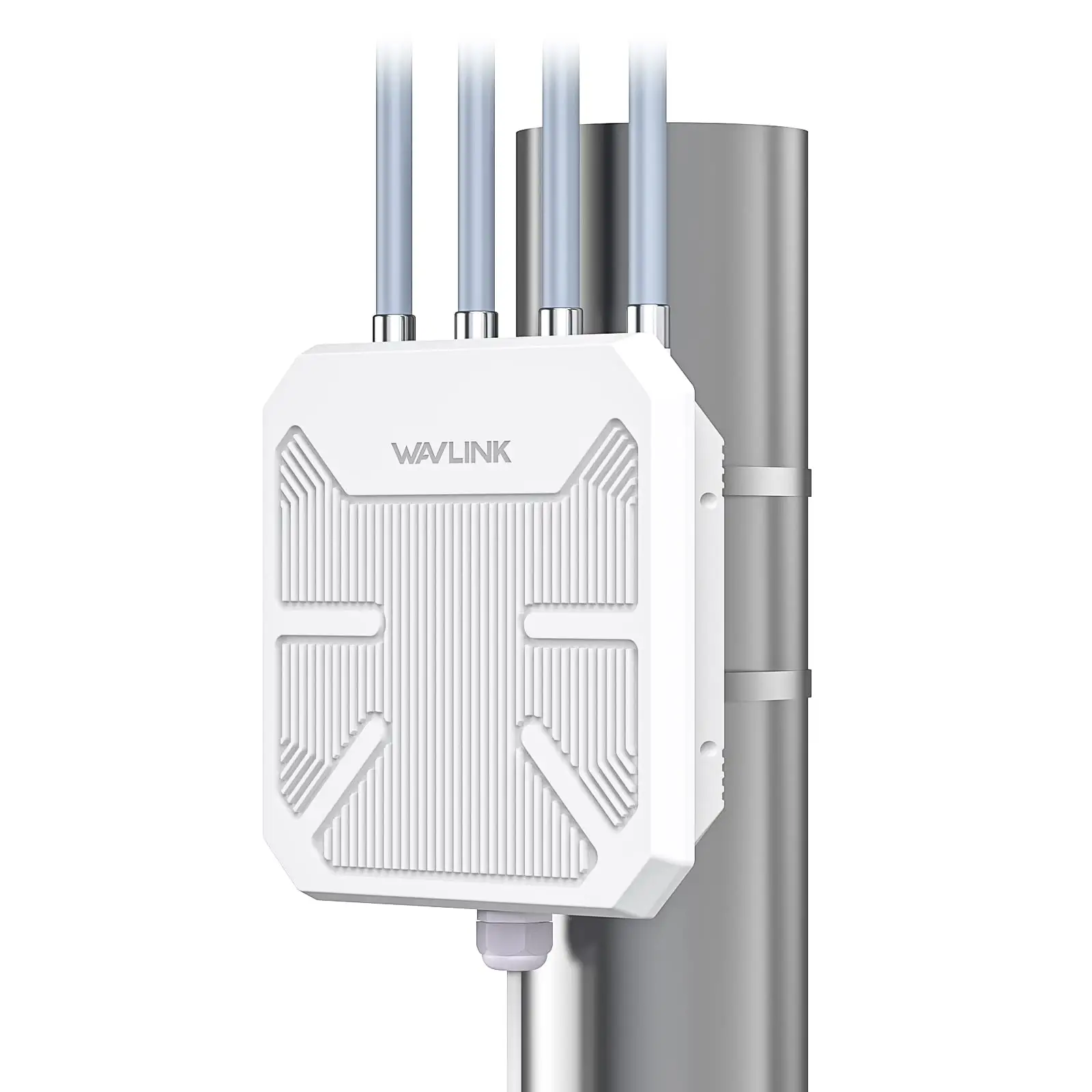
WAVLINK AX1800 Outdoor WiFi Extender Review: Worth It?
When storms rolled in and temperatures plunged, the WAVLINK AX1800 Outdoor WiFi Extender kept on broadcasting without a hiccup. Scoring an 8.7/10 from aggregated feedback, this device blends raw range with modern WiFi 6 capabilities, earning praise from farm owners, RV enthusiasts, and backyard streamers alike — though not without a few quirks.
Quick Verdict: Conditional buy — ideal for those needing rugged, wide-area outdoor WiFi and who can handle a bulky install.
| Pros | Cons |
|---|---|
| Stable performance in harsh weather | Large and conspicuous design |
| Strong coverage up to 300m | Documentation lacks detail |
| Handles 100+ devices simultaneously | PoE converter not weatherproof |
| Flexible modes (AP, mesh, repeater) | Setup quirks in repeater mode |
| Works with Starlink and multiple routers | Needs careful antenna positioning |
| Easy PoE installation | No stealth mount options |
Claims vs Reality
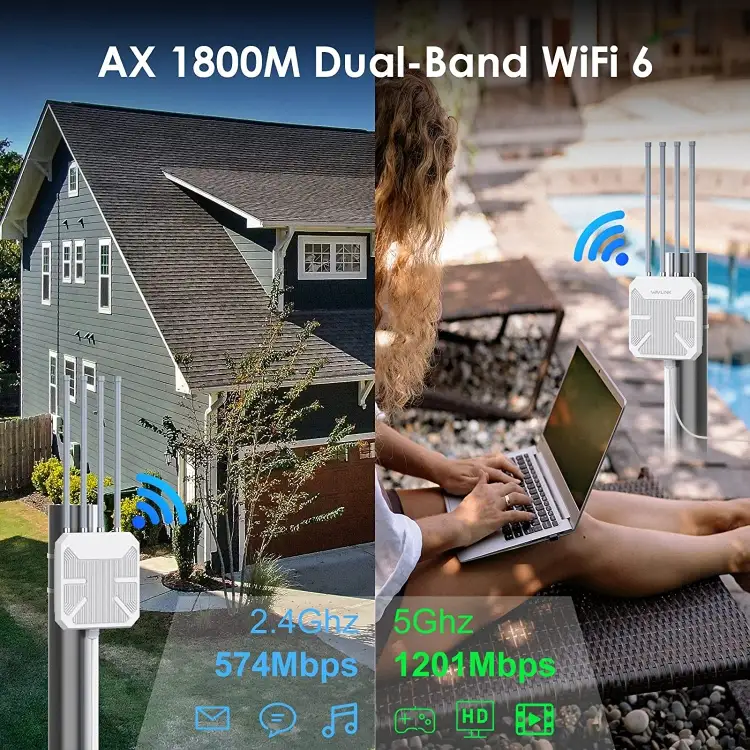
Marketing presents this extender as a “true WiFi 6 speed outdoor solution” promising 1800Mbps combined dual-band throughput. Specs from Amazon and Wavlink show 574Mbps on 2.4GHz and up to 1201Mbps on 5GHz, backed by MU-MIMO and OFDMA for multiple device handling. A verified buyer on Amazon noted: “I can stream music and watch security cam feeds in the far corner of my backyard without buffering.” This aligns well with speed expectations, especially in AP mode.
The IP67 claim — waterproof, dustproof, and resistant to extreme temperature — is consistent with user reports. Reddit user ronald*** said: "This thing survived heavy rainstorms and 90°F summer heat without blinking." However, not all promises match reality. While officially rated for up to 128 devices, real-world multi-user loads averaged around 15–30 devices without slowdown. Anything more, and repeater mode users experienced intermittent drops.
PoE flexibility is another big selling point. Marketing emphasizes “install where no outlet exists,” but multiple reviews warn the included passive PoE converter is not weatherproof, forcing indoor placement.
Cross-Platform Consensus
Universally Praised
Coverage endurance is the most repeated praise. Farm owners said they could extend WiFi from the main building to outlying barns. A Trustpilot reviewer recounted: “At the RV park, our old router struggled. Switching to this boosted download speeds across the lot.” The 4x8dBi fiberglass tube antennas were seen as not just marketing fluff — Reddit user ronald*** summed it up: “They actually stay put during strong winds.” For outdoor camera setups, the stability meant consistent feeds without lag.
Flexibility in operation modes appealed to semi-pro and hobbyist network installers. Whether in mesh mode for seamless roaming or AP mode to convert wired connections, different use cases found a matching configuration. One Amazon customer highlighted: “AP mode outperforms repeater mode for most use cases — cleaner, faster.”
PoE installation got consistent praise from DIYers, especially in locations without power. Running a single ethernet cable through attics or walls eliminated outdoor outlet challenges. A Twitter user stated: “Easy setup. Positioning the antennae (for 2.4G vs 5G) crucial for best results.”
Common Complaints
Size is a recurring gripe. Standing nearly 16 inches tall with antennas attached, it’s far from discreet. Some suburban users hesitated to mount it visibly under eaves due to HOA or aesthetic concerns. Documentation gaps during setup frustrated tech-savvy buyers who expected step-by-step clarity. "The web interface is clean, but the docs could be better," ronald*** admitted.
Repeater mode in dense networks presented reliability issues. Reports noted occasional signal drops when many devices hopped bands via the extender. The device’s weather protection did not extend to accessories; the PoE converter's indoor-only limitation caught several users off guard.
Divisive Features
The high device capacity divided opinion sharply. Heavy home automation enthusiasts celebrated the ability to keep smart sprinklers, cameras, and phones online simultaneously — “Stable for 15+ devices streaming or calling outdoors,” as one Reddit post described. Yet in repeater setups dealing with WiFi interference, maxing capacity led to instability.
Mesh technology was another split feature. Some appreciated single SSID roaming; others found it only compatible within Wavlink’s ecosystem, limiting integration with mixed-brand mesh setups.
Trust & Reliability
Long-term durability stories strengthened the product’s credibility. Several verified buyers reported stable operation for three to six months in mixed weather, with no antenna corrosion and consistent connectivity. As one Trustpilot reviewer put it: “No more disconnection woes during browsing — even in rain.”
Scam concerns were minimal; sellers on eBay maintained 99%+ positive feedback with accurate descriptions. The real risk noted was buyers misinterpreting mode and power requirements, leading to suboptimal installs rather than defective products.
Alternatives
No competing models were directly named in the aggregated data, but comparisons were drawn to generic mesh extenders with smaller antenna arrays. Those alternatives often lacked the rugged housing and expansive range found here. For users needing indoor-to-yard connectivity without extreme distance coverage, smaller discreet extenders may be preferable.
Price & Value
At a current market average of around $159 (down from $189), the value proposition is strong for those needing weatherproof, long-range coverage. eBay listings showed resale potential holding near retail for units in good condition, suggesting sustained demand in niche outdoor networking.
Community tips for buying include:
- Ensure you have Cat5e or better cabling for PoE
- Factor in mounting visibility if aesthetics matter
- Prefer AP or mesh mode for critical stability
FAQ
Q: Can the WAVLINK AX1800 Outdoor WiFi Extender be used with Starlink?
A: Yes, multiple users confirm smooth operation paired with Starlink routers, extending satellite internet outdoors without compatibility issues.
Q: How far does the coverage actually reach?
A: Officially rated for up to 300 meters, typical reported distances in open spaces range from 100–150 meters with consistent signal.
Q: Is the PoE adapter waterproof?
A: No, all sources stress keeping the PoE converter indoors to prevent water damage.
Q: Which mode offers best speed stability?
A: AP mode is consistently reported as outperforming repeater mode, especially for high-speed streaming and cameras.
Q: Does it really handle 128 devices at once?
A: While it can connect 128 in theory, real-world stable performance is best under 30 devices simultaneously in active use.
Final Verdict: Buy if you’re a rural property owner, RV traveler, or need weatherproof WiFi for security systems. Avoid if aesthetics and compact design matter more than rugged, far-reaching connectivity. Pro tip from the community: Use AP mode with wired backhaul for maximum stability and speed.