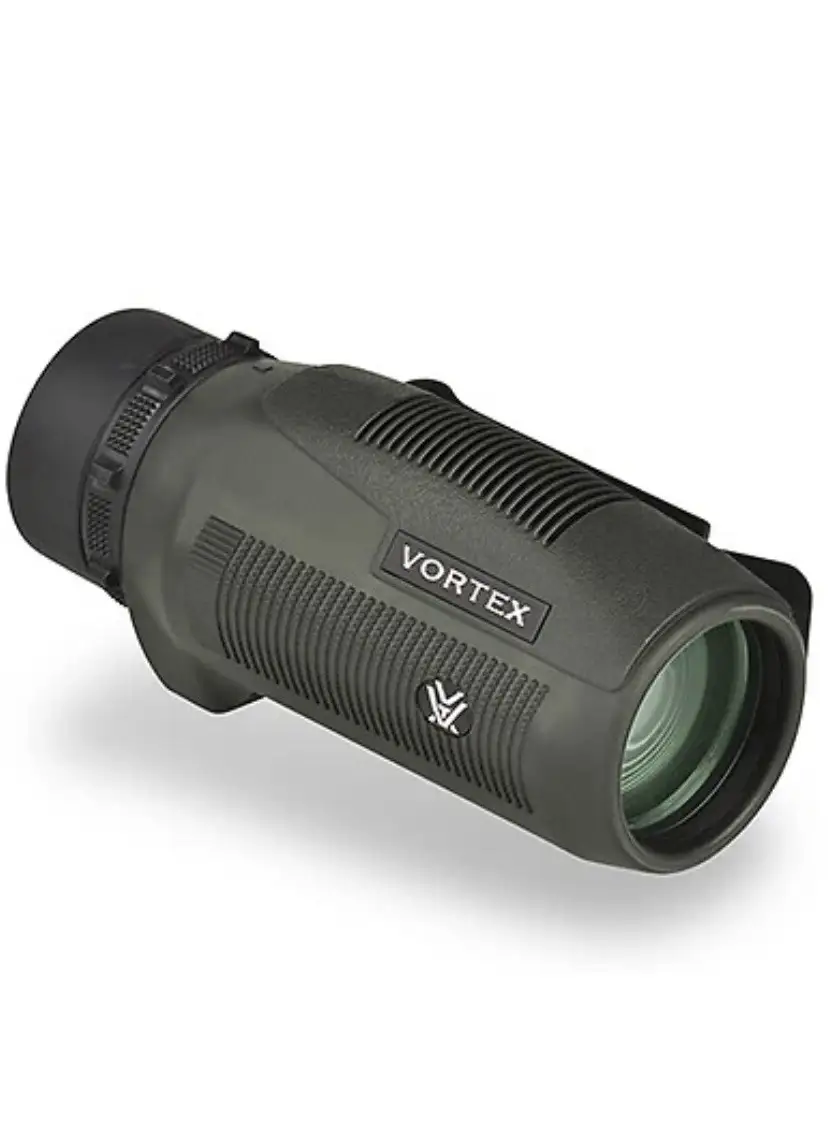
Vortex Solo Monocular 10x36 Review: Worth It? 8.5/10
“Snag one here, don’t think too hard.” That blunt endorsement from Ben Brooks frames how many owners talk about the Vortex Optics Solo Monocular 10x36: a compact optic that wins people over on clarity and toughness, with a few nagging ergonomic and accessory gripes. Verdict from cross‑platform feedback: a strong, field‑ready monocular with some consistency and comfort caveats. Score: 8.5/10.
Quick Verdict
Yes, with conditions. Most feedback celebrates image quality and durability for the price, but eyeglass comfort, close‑focus limits, and accessories are recurring sticking points.
| What users like / dislike | Evidence from feedback |
|---|---|
| Clear, sharp optics for the price | Ben Brooks wrote on his blog: “they were consistently sharper and more clear than i expected every time i used them.” HuntingOptics reviewer Jeff Byrnes called clarity “best in class.” Fakespot summary highlights “clear optics.” |
| Rugged build, takes abuse | Jeff Byrnes said his unit “fallen from my 20-foot tree stand… without damage.” Fakespot users describe it as “tough and reliable.” |
| Handy carry/clip options | Fakespot notes praise for “various methods for attachment such as clip or lanyard.” Ben Brooks said clipping it to a backpack “work[ed] well… and stayed firmly in place.” |
| Close focus too long for near subjects | Optics‑Planet community review notes close focus “a little more than 16 feet,” not suited to butterflies/insects. Jeff Byrnes echoed that “weak point… lies in close focus.” |
| Eye relief short for some eyeglass wearers | Jeff Byrnes complained: “eye relief is really too short… i had to press the monocular against my eyeglasses uncomfortably hard.” |
| Accessories feel cheap or incomplete | Jeff Byrnes: case “does not fully cover… sides are open,” and “does not” include lens cover. Fakespot quote: “the lanyard is right out of a cracker jack box.” |
Claims vs Reality
Marketing claim #1: compact, pocket‑friendly carry. Official materials describe an “ultra‑compact design” that can “slip… into your pocket” and highlight its 4.9‑inch length and 9.3‑oz weight. Digging deeper into user reports, the size is still considered small compared to binoculars, but not universally pocketable. Ben Brooks stressed the trade‑off: “with 10 × 36 you are getting a physically large monocular. it won’t fit in your pocket. it will fit in a cargo pocket.” For hikers and beachgoers, he still liked the portability, saying it “accompanies every hike i go on now,” but his note suggests the pocket‑carry claim is conditional on clothing or gear setup.
Marketing claim #2: comfortable for eyeglass wearers with 15 mm eye relief and adjustable eyecup. Specs and product pages present 15 mm eye relief as “comfortable for most eyeglass wearers.” Users split here. Optics‑Planet’s community write‑up says “15 mm eye relief… should make it very comfortable,” but Jeff Byrnes directly contradicted that in practice: “with just 15 mm of eye relief, i found that i had to press the monocular against my eyeglasses uncomfortably hard to get the largest field of view.” While officially rated as 15 mm, multiple users report it feels short if you want the full image circle without strain.
Marketing claim #3: waterproof, fogproof reliability. The monocular is advertised as nitrogen‑purged, O‑ring sealed, and “waterproof… fogproof.” User stories mostly align. Jeff Byrnes described using it in “all sorts of weather conditions,” saying it “never failed to provide fantastic viewing.” Fakespot also shows generally positive waterproof sentiment, with owners citing use “during light rain.” But there are small durability complaints tied to sealing‑adjacent parts: Fakespot mentions “lanyard loop” issues and “rubber eye piece falling off within the first day of use,” hinting that while internal sealing performs, external fittings can be hit‑or‑miss.
Cross-Platform Consensus
Universally Praised
Clarity and resolution are the loudest theme. Across blogs and aggregated Amazon feedback, a recurring pattern emerged: users don’t expect premium glass at this price, but feel they get unusually sharp viewing anyway. Jeff Byrnes wrote that “for the money, the clarity and resolution are best in class,” adding it “exceed[s] every other monocular at this price range.” Ben Brooks backed that from a casual‑user perspective, comparing it with other optics and concluding: “with the 10 × 36 i could read [a license plate]… consistently sharper and more clear than i expected.” For hunters and birders, that translates to quick target ID at distance; Byrnes described using it to spot “a bird for observation or a deer for hunting” easily thanks to the generous field of view.
Ruggedness is another shared high point. The Solo is marketed as shockproof and rubber‑armored, and user stories reinforce real‑world durability. Jeff Byrnes offered the most dramatic example: his monocular “fallen from my 20-foot tree stand on more than one occasion without damage.” Fakespot‑captured Amazon owners echo that toughness in plainer terms, calling it “tough and reliable and water proof.” For backpackers, range shooters, or anyone tossing gear into a pack, these accounts imply less worry about bumps or weather.
Convenient carry options round out the praise. The built‑in utility clip on the 36 mm model is widely appreciated by users who want binocular‑like reach without the bulk. Fakespot notes people like “attachment such as clip or lanyard,” framing it as a “lighter alternative to packing… full binoculars.” Ben Brooks described leaving the case behind and relying on the clip: “i clipped it to my backpack each time. it work well for that, and stayed firmly in place.” For hikers, hunters, and beach walkers, that kind of quick‑access carry seems to be part of why the monocular gets used regularly rather than staying at home.
Common Complaints
Close‑focus distance is consistently flagged. Specs list close focus at 16.4 feet, and multiple reviewers say that’s limiting for near‑field nature viewing. The Optics‑Planet community review puts it plainly: “you won’t be able to use it to observe close‑up targets such as butterflies or insects.” Jeff Byrnes similarly called close focus the “weak point,” noting you “need to be at least 16.4 feet away… to get a crisp focus.” For birders watching feeders, hikers wanting macro‑style insect views, or museum/indoor use, these accounts suggest frustration because the optic simply won’t snap near targets into focus.
Eye relief comfort for eyeglass wearers is another recurring sore spot. Even though adjustable eyecups are praised in theory, some users say the 15 mm eye relief doesn’t feel generous enough. Jeff Byrnes’ complaint is specific: “i had to press the monocular against my eyeglasses uncomfortably hard to get the largest field of view.” That makes the Solo less friendly for people who want relaxed, all‑day glassing with glasses, especially if they’re sensitive to smudging lenses or facial pressure.
Accessories are described as the weak link. Jeff Byrnes called the add‑ons a “hit and miss bag,” praising the clip and lanyard quality but criticizing the case: “does not fully cover the monocular – the sides are open,” letting in dust. He also wished for an objective lens cover, saying “it does not” come with one. Fakespot‑pulled Amazon feedback is even harsher about the strap: “the lanyard is right out of a cracker jack box.” Owners who hike in dusty areas or want more complete lens protection seem to view the stock kit as underwhelming relative to the monocular itself.
Divisive Features
Weight and focus stiffness split users. Officially around 9.3–9.7 oz, some reviewers say it feels heavier than expected for a monocular. Jeff Byrnes noted “other reviewers have commented negatively about the weight,” but he personally argued the heft improves steadiness: “much easier to hold steady when the clip is attached… that extra heft lets gravity do its thing.” For steady‑handed hunters, that added mass is a plus; for ultralight backpackers, it may feel like unnecessary bulk.
The focus ring also draws mixed reactions. Ben Brooks found it “slightly tight so for fine tuning… you need two hands,” treating it as a minor annoyance. Optics‑Planet’s community review reports more serious dissatisfaction from some owners: “focus adjusting wheel… causing lots of problems,” while also admitting many report no issue. Their take is that failures may be “manufacturing flaws,” which aligns with a pattern of inconsistency rather than a universal defect.
Trust & Reliability
Fakespot’s analysis suggests low deception risk in the Amazon review pool, stating “minimal deception involved” and an adjusted “solid build, clear optics” bottom line. That lends some credibility to the dominant praise trends. Still, Fakespot also detected Amazon‑side alteration/removal activity, implying the review environment isn’t perfectly clean even if most feedback looks genuine.
Long‑term reliability stories skew positive. Jeff Byrnes’ account of repeated drops without damage points to durability over time, and he underscores Vortex’s “VIP unconditional lifetime warranty,” saying repairs or replacements are handled “no matter how the damage happened.” One Fakespot‑captured owner described a return experience: “sent back to vortex and they corrected the problem and shipped back,” suggesting warranty support is a real backstop when QC issues crop up.
Alternatives
Only a few competitors appear in user discussions. Ben Brooks mentioned owning and disliking the Brunton Echo, saying the “big issue… was the clarity,” and that he “could not read [a license plate] with the brunton — at all,” while the Solo delivered a readable, sharp image. That positions the Solo as a clarity upgrade for buyers coming from budget monoculars.
He also said the only other monocular he’d “consider is the maven,” though he hadn’t tried it. The implication from his narrative is that Maven sits in a higher‑end bracket, while the Solo feels like a sweet‑spot tool that’s “inexpensive and more than good enough” for general outdoor use.
Price & Value
Current Amazon pricing hovers around $129, down from a higher list price. Users consistently frame that as strong value. Jeff Byrnes called it “an excellent buy for the money,” comparing it favorably to $300 optics and saying you get performance “darned close… at a third of the cost.” Fakespot‑captured reviews echo this sentiment with lines like “for the price, it’s a great value” and “it isn’t the junk you see advertised for much lower prices.”
Resale and market pricing on eBay show steady demand around the same $120–$130 range, with multiple listings moving units quickly. That suggests the monocular holds value reasonably well, especially for a long‑running model. Community buying tips are indirect but clear: if you’re in the ~$100–$150 monocular market, multiple owners imply this is where to spend rather than dropping to cheaper, blurrier alternatives.
FAQ
Q: Is the Vortex Solo 10x36 good for birdwatching and hiking?
A: Yes for distant viewing. Users describe it as a “good lighter alternative to packing… full binoculars,” and Jeff Byrnes used it to find birds and deer easily. But close focus is over 16 feet, so it won’t help with near birds at feeders or insects.
Q: Can eyeglass wearers use it comfortably?
A: Mixed results. Specs list 15 mm eye relief and adjustable eyecups, and some users find that adequate. Others, like Jeff Byrnes, say eye relief feels short, requiring pressing it against glasses to see the full field of view.
Q: How durable is it in real use?
A: Very durable based on user stories. Jeff Byrnes reported multiple 20‑foot drops without damage, and Amazon owners call it “tough and reliable.” When defects do happen, users say Vortex warranty service fixes issues quickly.
Q: Does it fit in a pocket?
A: Not always. Although marketed as pocketable, Ben Brooks said the 10x36 is “physically large… won’t fit in your pocket,” though it works in a cargo pocket or clipped to a pack. Portability is better than binoculars but not tiny.
Q: What are the biggest downsides?
A: Close focus distance, short eye relief for some, and weak accessories. Users repeatedly cite the 16.4‑foot close focus limit, discomfort for certain eyeglass wearers, and a case with “open sides” plus missing lens caps.
Final Verdict
Buy if you’re a hiker, hunter, birder, or casual outdoors user who wants sharp 10x reach in a tough, clip‑and‑go monocular. Avoid if your main use is close‑up nature viewing or if you need generous eye relief for glasses. Pro tip from the community: treat the included case and strap as placeholders—Jeff Byrnes’ “case is the weakest link” line captures why many owners upgrade carry gear while keeping the monocular.