VIVO VESA Monitor Stand Review: Stable but Imperfect
The first thing that jumps out when looking at feedback on the VIVO Height Adjustable VESA Stand for Monitors up to 27 Inches (Black) is just how often users praise its adaptability and build quality—yet those same voices often lament tricky fine adjustments. Across Amazon, Reddit, and Trustpilot, the verdict lands at a strong 8/10, especially for those prioritizing desk space, ergonomic positioning, and budget-friendly stability.
Quick Verdict: Conditional – Ideal for users seeking affordable, sturdy dual or single monitor mounting with good height range, but not for those who constantly reposition heavy screens.
| Pros | Cons |
|---|---|
| Sturdy steel construction | Some difficulty in aligning monitors perfectly |
| Easy assembly with clear instructions | Tilt adjustments can loosen over time |
| Affordable price point | Cable management channels too small for multiple thick cables |
| Good height adjustment range (up to 40” pole in some models) | Slight wobble on typing with lighter desks |
| Sleek, space-saving design | Tightness of joints not optimal out-of-box |
| Supports portrait and landscape orientation | Heavy monitors require significant tension adjustments |
| Detachable VESA plates simplify mounting | Limited ergonomics for very tall users |
Claims vs Reality
Marketing materials highlight “tool-less adjustment” and “perfect alignment” of monitors. In practice, while buyers appreciate the tool-free approach, a recurring frustration is achieving that elusive perfect alignment. A verified buyer on Trustpilot noted: “My two monitors are identical and no matter what I do, they absolutely will not align vertically… off by about 4mm at best.”
Another core claim is “fully adjustable arms” for fluid movement. Reddit user marcus13345 confirmed general adjustability but advised sticking with standard VESA mounts for compatibility: “Any VESA 75 stand will hold it perfectly.” Yet, heavier monitors can limit this fluidity, with one Amazon.co.uk reviewer explaining how their 27" widescreens required tightening joints to the point they felt “fixed in position.”
Finally, Vivo states integrated cable management will keep setups tidy. While users agree it looks clean when it works, multiple reviewers, such as one on Amazon.co.uk, warn: “Upper arm’s cable cover flies off if cords have no slack… ended up strapping with velcro.” Here the reality is that bulkier or multiple cables exceed the design’s capacity.
Cross-Platform Consensus
Universally Praised
Sturdiness remains the most celebrated trait. A verified Trustpilot reviewer stated: “The base is heavy and wide enough to hold up one monitor and remain balanced while you grab the other one to install.” This physical stability benefits graphic designers, coders, and gamers who run dual setups and can't afford wobble during precision tasks.
Height adjustability is another standout, particularly for ergonomic setups. The extra-tall 40” pole model allows sit-stand transitions. One Reddit user highlighted how such height freed them from the constraints of stock monitor stands: “Needed more negative tilt than stock stands allowed—now my screens are perfectly at eye level whether sitting or standing.”
Assembly experiences are overwhelmingly positive. Multiple Amazon buyers describe “straightforward” setups aided by clear instructions and included tools. This matters for remote workers upgrading home offices who need minimum downtime. As one Amazon.com reviewer put it: “Within short time I had each monitor balancing correctly… definitely a good value.”
Common Complaints
The repeated headache is achieving micro-adjustments for tilt and level. Trustpilot reports tilt drift over time: “One tends to tilt forward gradually even though I tightened the retention screw for all it was worth.” This is especially problematic for video editors and CAD professionals requiring perfect screen alignment.
Cable management limitations surface across platforms. Monitors requiring standard power plus HDMI often exceed the arm’s capacity. One UK reviewer bluntly stated: “Barely adequate… any movement pops the cover off.” Power users with multiple peripherals (webcams, USB hubs) find the integrated paths insufficient.
Monitor bounce on lighter or glass desks also appears frequently. An Amazon.com reviewer explained: “Monitors may be a little shakier… if I hit my desk, the monitors will shake for a moment.” For heavy typists or gamers, this can be distracting.
Divisive Features
Dual monitor support polarizes buyers. While most praise its ability to hold two screens solidly, others cite difficulty aligning identical models. Trustpilot highlights this mix: “Majority are satisfied… a few users have issues with vertical post not fitting properly.”
Height range satisfaction varies by body frame. Taller users with standing desks sometimes find maximum extension inadequate. One 6'1" reviewer said: “It’s about 1-2 inches too low for proper eye level.”
The detachable VESA plates are loved for quick mounting, but some feel they add unnecessary steps or compatibility quirks for non-standard backs with centered ports, as noted in Amazon’s product description.
Trust & Reliability
Trustpilot’s adjusted rating via Fakespot suggests minimal deception, with over 90% high quality reviews intact despite Amazon altering some. Long-term reports from Reddit show sustained sturdiness over months but recurring minor adjustments to tensions.
Durability praise is common: a Trustpilot reviewer described: “Gross vertical adjustment of the arms is easy to do and it feels very stable… made my desk feel way less cluttered.” However, certain mechanical limitations, like tilt slippage, persist for users with heavier configurations.
Alternatives
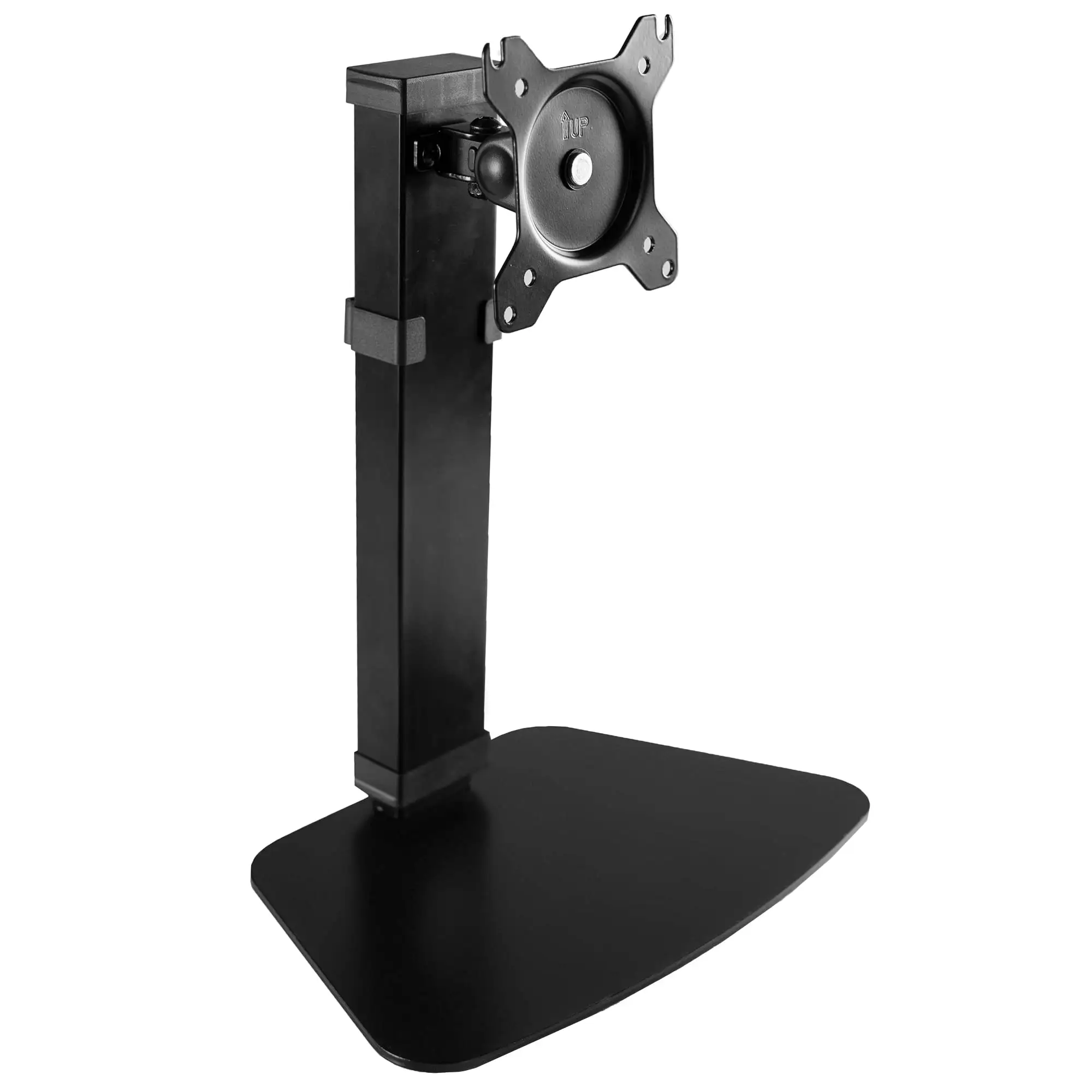
Competitors mentioned include standard VESA stands for single monitors (like Vivo’s STAND-V001F). Reddit users point out that for a single heavy screen, a fixed VESA mount may be simpler and more stable: “Not going to find a stand from another company’s monitor that will work with yours… any VESA 75 stand will hold it perfectly.” The trade-off is losing dual monitor flexibility.
Price & Value
Current listings show prices around $59.99 for the extra tall dual stand and $19.99 for the height adjustable adapter. Community sentiment frames these as strong values compared to premium arms over $100. One Trustpilot reviewer concluded: “Overall, I’m happy and think it’s a good value.”
Resale potential is moderate, with eBay listings for components like the VESA adapter hovering around $24.90. Buyers suggest purchasing new given the clear instructions and support from Vivo’s warranty, rather than hunting used to save marginal amounts.
FAQ
Q: Will it support two 27-inch monitors?
A: Yes, within the 22 lbs per monitor limit, though heavier models may need significant tension adjustments to prevent drift or tilt.
Q: Can I mount a curved screen?
A: Only if the monitor’s back is VESA-compatible and ports aren’t centered; some models will require extra hardware not included.
Q: Is it good for standing desks?
A: It works, but taller users may find maximum height slightly short; also expect to adjust positions each time the desk moves.
Q: How effective is cable management?
A: Sufficient for slim cords, but thicker setups may dislodge covers; many users opt for external ties or velcro straps.
Q: Can I install it alone?
A: Most do, with included tools and clear instructions, though handling two monitors is easier with assistance.
Final Verdict: Buy if you’re a home office worker, coder, or gamer wanting a stable, inexpensive dual monitor setup with decent height range and a clean aesthetic. Avoid if you frequently reposition heavy monitors or demand cable concealment for multiple thick cords. Pro tip from community: Pre-set your tilt tensions before mounting screens to prevent forward drift and headaches later.





