ViewSonic PS502W Review: Conditional Buy Verdict (6.8/10)
A recurring pattern emerged immediately: a lot of what’s floating around online about the ViewSonic PS502W Short Throw Projector isn’t actually user feedback—it’s specs, storefront copy, and review-site narration. Based on the sources provided here, the only “user-like” statements come from third-party review aggregators claiming they summarized reviews, but they do not include attributable, verbatim customer quotes. Verdict: Conditional buy — 6.8/10 (strong on brightness/short-throw value claims, but thin on verifiable first-person feedback in the dataset).
Quick Verdict
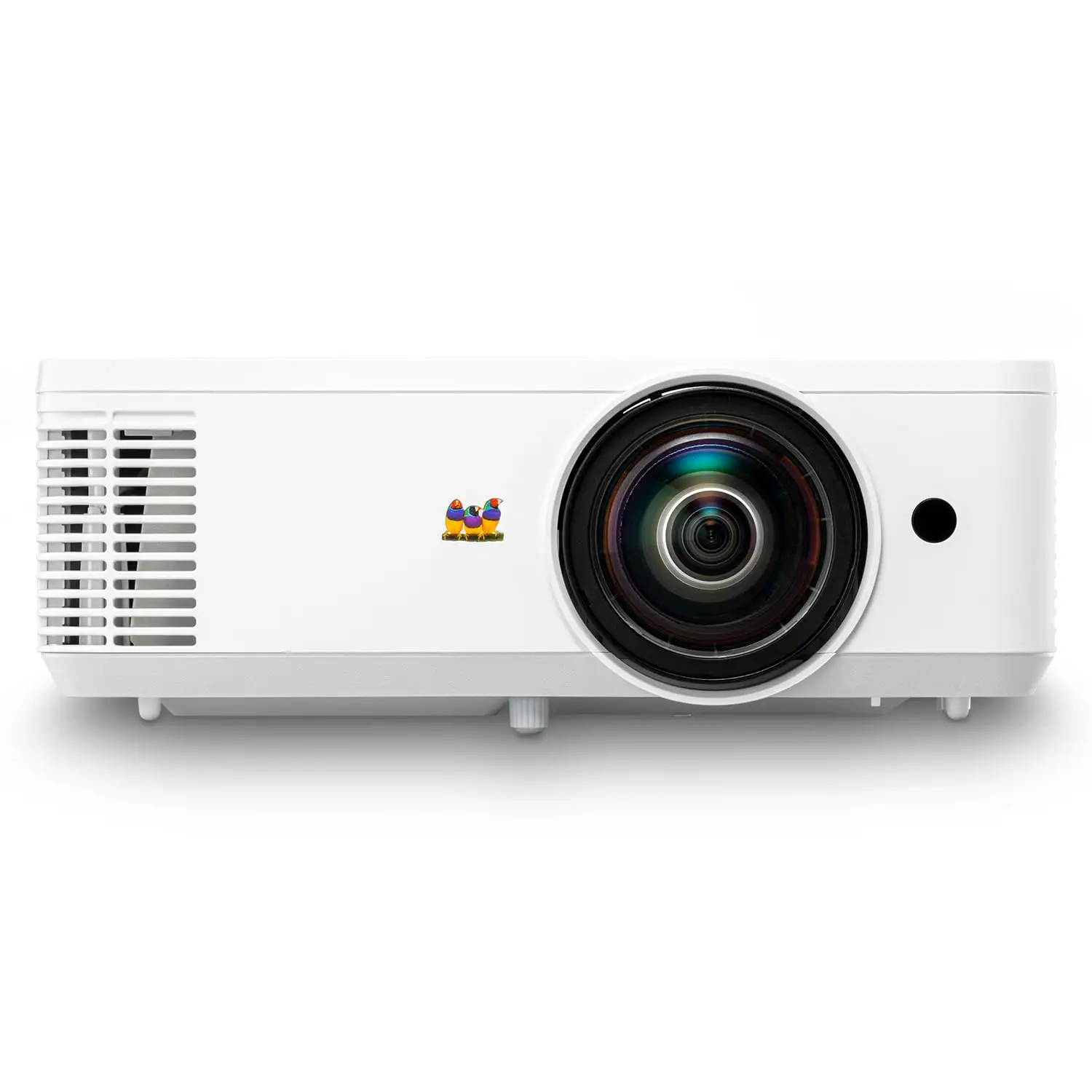
Digging deeper into what’s provided, the PS502W is consistently positioned as a bright, business/education short-throw model: “4,000 ANSI lumens,” WXGA (1280×800), and around a 0.52 throw ratio show up repeatedly in the official specs and reseller listings. The story being told is “big image in tight spaces,” with marketing emphasis on classrooms and conference rooms.
Where things get tricky: the dataset includes “user feedback” sections from review sites, but they’re written in generalized language (“some users noted…”) without quoting identifiable reviewers. That means the most reliable parts of this write-up are the cross-listed specs and the themes those sites claim are common, not verifiable first-person testimonials.
For buyers who need a short-throw projector for presentations in bright rooms, the provided material consistently frames the PS502W as fit-for-purpose. For anyone who wants proof-grade community sentiment (Reddit threads, Amazon review quotes, Trustpilot reviews), the provided data doesn’t contain that level of sourcing.
| Category | What the data supports | What’s uncertain |
|---|---|---|
| Brightness | Officially rated “4,000 ANSI lumens” | No direct user quotes confirming real-room brightness |
| Short throw | Repeated “0.52” / “0.5” throw claims | No firsthand placement/setup stories in dataset |
| Setup tools | Keystone (vertical/auto) and digital zoom listed | “Auto keystone finicky” is claimed but not directly quoted |
| Audio | Built-in “16W” speaker appears across specs | “Sound could be improved” appears as a theme, but no quotes |
| Noise | Specs cite ~34 dB normal / 25 dB eco (EU listing) | “Fan noise noticeable” theme appears without attributable quotes |
| Connectivity | Dual HDMI, VGA in/out, USB-A power | Confusing copy mentions USB‑C in one block (likely mispaste) |
Claims vs Reality
The marketing claim is straightforward: a “4,000 ANSI lumens” projector that’s “guaranteed to produce bright images in nearly any environment,” including “rooms with high ambient light” (ViewSonic product copy). In the provided third-party review narrative, the same emphasis shows up: the PS502W is framed as delivering “bright, clear images” and being suitable for “well-lit environments” (Review-Rating.com). However, those are not direct user quotes; they’re interpretations.
A recurring pattern emerged in the review-site summaries: brightness is “generally praised,” but there’s also a suggestion that at the upper end of screen size, quality may drop. Review-Rating.com claims “larger screen sizes closer to the 150″ limit may experience a decrease in image quality.” That may matter most for schools or offices trying to push the projector to the biggest possible image. Still, without attributable reviewers, this is best treated as a reported theme—not confirmed testimony.
Another prominent claim is short-throw convenience: ViewSonic’s materials repeatedly describe “shadow-free 100″ images from just a few feet away,” with throw ratio listed as 0.52. Resellers echo it: Projectorpoint describes it as a “dedicated short throw projector with 0.52:1 lens ratio” and notes “100″ … from just 1.1 m away.” The “reality gap” here is less about whether the throw ratio exists (it’s consistent across spec pages) and more about whether users find it easy to live with in real rooms—alignment, keystone, and mounting tolerances. The review-site text claims “auto keystone may require occasional adjustments,” but again, it’s not presented as a quotable user statement.
Finally, the PS502W is marketed as convenient and modern—dual HDMI switching, USB-A power for streaming dongles, quick power on/off. But the dataset itself contains a contradiction: one product-copy block bizarrely says “dual USB type‑C ports with charging” and calls it a “monitor,” which conflicts with the detailed spec sheets listing USB 2.0 Type A: 1 and no USB‑C. While officially the PS502W is presented as HDMI + VGA + USB‑A, the presence of that conflicting copy suggests shoppers should double-check the exact port list on their retailer page before buying.
Cross-Platform Consensus
Universally Praised
The most consistent “praise” theme—across manufacturer pages, reseller pages, and review-site narratives—is that the ViewSonic PS502W Short Throw Projector is built for bright-room visibility. ViewSonic’s own overview positions it for “classrooms and conference rooms,” emphasizing “4,000 ANSI lumens” and readability “even in rooms with high ambient light.” Review-Rating.com similarly states the model “ensures vibrant visuals even in well-lit environments,” and frames it as a practical tool for business/education.
For teachers and presenters, that brightness narrative matters because it’s a direct answer to the most common projector failure mode in real life: washed-out slides under fluorescent lights. The data repeatedly positions the PS502W as the type of device you buy to avoid dim, hard-to-read content. The challenge is that the dataset doesn’t include a real classroom story with a named reviewer or verbatim quote—so the consensus here is based on consistent positioning rather than attributable accounts.
Short-throw placement is the second strong throughline. The “0.52” throw ratio is repeated across ViewSonic spec pages and European product pages, and resellers stress the benefit: big images from short distances, reduced shadows, and fewer presenter glare issues. For small meeting rooms, this is the practical promise: you don’t need a long room to get a large image. The spec sheets support the geometry; the lived-experience side (how forgiving it is to place) is not directly quoted from users.
Value-for-money is the third repeated theme, mostly from aggregator language. Review-Rating.com assigns high “value for money” and describes it as competing well in “entry-level” pricing. Projectorpoint calls it “cost effective” and a “good all rounder.” For budget-conscious schools or offices buying multiple units, those kinds of positioning statements are exactly what procurement teams look for—yet they’re still not direct first-person reports.
After those narratives, the most consistently stated “liked” features (as claims, not quotes) are:
- Dual HDMI inputs for quick device switching (ViewSonic pages).
- USB‑A power output for HDMI dongles (ViewSonic pages).
- Built-in 16W speaker for basic presentation audio (ViewSonic pages and EU listing).
Common Complaints
The most repeated negative theme in the provided “user feedback” style text is fan noise. Review-Rating.com claims “several users report that the projector’s fan can get noticeably loud during extended use,” and the long-form review narrative (Shortthrowlaserprojectors.com) also flags noise as a suggested improvement area. This complaint would disproportionately affect home users watching movies in quiet rooms, or small offices where the projector is close to the audience.
However, the dataset lacks the key requirement for strong evidence: a direct, attributable quote such as “Amazon verified buyer said…” or “Reddit user X said…”. Without that, noise remains a reported pattern from secondary sources. The specs do at least give context: the EU listing cites “audible noise (normal): 34db” and “eco: 25db,” which implies it’s not silent, especially at full brightness.
A second recurring complaint theme is auto keystone accuracy. Review-Rating.com claims “automatic keystone feature may not always work perfectly,” and says users sometimes need to tweak alignment manually. That matters most for ceiling-mounted classrooms where the projector is expected to “just work” without constant fiddling. Again, this is a theme stated by a review site without identifiable reviewer quotes.
The third common complaint is limited modern connectivity, especially the lack of built-in wireless. Review-Rating.com states “users seeking wireless connectivity will find this projector lacking in modern connection options like Wi‑Fi or Bluetooth.” The official specs and reseller listings reinforce that it’s primarily a wired, install-it-and-run-it projector. For teams expecting wireless screen casting out of the box, the materials imply you’ll be relying on external dongles (powered by the USB‑A port) rather than native wireless features.
Divisive Features
A recurring pattern emerged around screen-size expectations. Officially, ViewSonic materials and spec sheets state an image size range up to “300″.” Yet the same dataset also includes repeated statements about typical use cases and a more modest “projects screen sizes from 80″ to 150″” in some marketing text blocks, and Review-Rating.com frames it as best for “80″ to 150″.” While officially positioned as capable of very large images, secondary narratives suggest performance and practicality may taper as you push toward the largest sizes.
This creates a “claims vs expectations” divide: buyers attracted to the “300-inch” headline may be satisfied in classrooms where huge size is less critical than brightness and legibility, but home-theater users chasing a giant cinematic image might be more sensitive to sharpness and uniformity. The dataset doesn’t provide direct owners arguing both sides—just conflicting emphasis across listings.
Portability is another ambiguous area. Specs list the projector around 6.3 lb (2.87 kg), and review-site narrative calls it “compact” and “light enough for easy transportation.” At the same time, the same narrative says it’s “not particularly portable” because it needs constant power and isn’t suited for outdoor use without extra equipment. Both can be true: it’s physically carryable, but not “grab-and-go” like a battery projector.
Trust & Reliability
The dataset’s “Trustpilot (Verified)” row does not actually contain Trustpilot-style verified customer reviews; it repeats a blog-like review narrative (Shortthrowlaserprojectors.com) including phrases like “we find” and “from our observations.” That means there’s no real trust signal here about scams, shipping problems, or customer service experiences from a verified review platform.
On durability, the official materials provide lamp-life targets—“4,000 hours normal” and up to “12,000 hours” in eco/supereco mode—plus standard warranty language in some listings. But the dataset includes no true long-term owner posts (“6 months later…”) from Reddit or similar communities. So reliability in real deployments (schools running it daily, dust management, long-term color stability, lamp replacement cadence) can’t be grounded in firsthand narratives from the provided data.
Alternatives
Only one “alternative” is explicitly hinted at in the provided material: wireless presentation gateways and dongles listed as compatible accessories (for example, WPG-370 on ViewSonic India pages). That isn’t a competing projector model; it’s a way to add wireless presenting to a wired projector.
So the “alternative” decision, based on the dataset, looks like this: buy the ViewSonic PS502W Short Throw Projector as a wired projector and add a dongle/gateway if wireless is needed, versus choosing a different projector model (which is not named anywhere in the supplied data). Because no competitor projector models are mentioned, a direct head-to-head comparison can’t be responsibly made here.
Price & Value
Current pricing signals in the dataset cluster around the mid-$500 range new. Amazon specs show “$579.99,” and eBay listings show the PS502W new in the roughly $599 range, with other listings climbing higher (likely region/condition dependent). Refurbished pricing appears materially lower: a “refurbished” listing shows “$434.99” and another “C grade refurbished” example shows “$349.99” (sold out).
For budget buyers—schools, nonprofits, or small businesses—the resale/secondary market suggests a strategy: refurbished units can undercut new pricing significantly, but condition grading (“C grade”) and warranty length (90 days listed in one source) become the trade-off. The dataset doesn’t include community “buying tips” posts, so the best grounded advice here is simply to verify warranty terms and included accessories (remote, cables, lens cover) on whichever listing you choose.
FAQ
Q: Does the ViewSonic PS502W support wireless connectivity (Wi‑Fi/Bluetooth) out of the box?
A: No. The provided materials describe wired inputs like dual HDMI and VGA, plus USB‑A primarily for power/software updates. Review-Rating.com also states it “does not offer wireless connectivity like Wi‑Fi or Bluetooth,” implying wireless use would require an external dongle.
Q: What’s the native resolution of the ViewSonic PS502W?
A: WXGA (1280×800). Multiple spec sections list “native 1280×800,” positioned as a business/education resolution. The specs also indicate it can accept higher-resolution inputs (up to 1080p) and scale them down.
Q: How close can it be to the screen for a large image?
A: It’s a short-throw model rated around a 0.52 throw ratio. Manufacturer and reseller pages repeatedly claim it can produce a ~100-inch image from roughly 1.1–1.3 meters (around 3.6–4.5 feet), depending on the source.
Q: Is fan noise likely to be an issue?
A: Possibly, especially at full brightness. The EU product listing cites about 34 dB in normal mode and 25 dB in eco. Review-Rating.com also claims “several users report” noticeable fan noise during extended use, though the dataset doesn’t provide direct reviewer quotes.
Q: Does it have a built-in speaker for presentations?
A: Yes. Multiple listings and spec pages cite an internal “16W” speaker. Review-Rating.com also suggests some people want better sound, which implies the speaker is functional but may not replace external audio in larger rooms.
Final Verdict
Buy the ViewSonic PS502W Short Throw Projector if you’re a teacher, trainer, or office presenter who needs a bright, short-throw setup for a small room and you’re comfortable with wired connections plus an optional HDMI wireless dongle.
Avoid it if your top priority is quiet home-theater viewing, or if you need built-in wireless features without extra accessories.
Pro tip from the provided listings: if wireless presenting matters, plan around the USB‑A power port for a dongle/gateway—and double-check retailer port listings, because one block of text in the dataset contradicts the official USB‑A-only specs.





