TP-Link Omada ER7412-M2 Review: High-Speed VPN Verdict
Starting with a speed figure that raised eyebrows — the TP-Link Omada ER7412-M2 Multi-Gigabit VPN Router boasts NAT throughput over 2.3 Gbps and WireGuard VPN at 771 Mbps, earning it an 8.5/10 from aggregated community sentiment. While adored for its performance and VPN arsenal, it comes with caveats: a sometimes finicky setup process and sporadic PPPOE connection issues.
Quick Verdict: Conditional Buy
| Pros | Cons |
|---|---|
| High multi-gigabit throughput for LAN/WAN | Complex setup requiring networking know-how |
| Strong VPN protocol support (IPSec, OpenVPN, WireGuard, etc.) | No built-in PoE support |
| Centralized Omada SDN management | PPPOE instability in some ISP environments |
| Abundant security features (IDS/IPS, DPI, filtering) | Software needs optimization for upload with flow control off |
| Durable steel enclosure, rack-mountable | Requires additional hardware controller for full features |
| Load balancing across up to 11 WAN ports | Price higher than average routers in this class |
Claims vs Reality
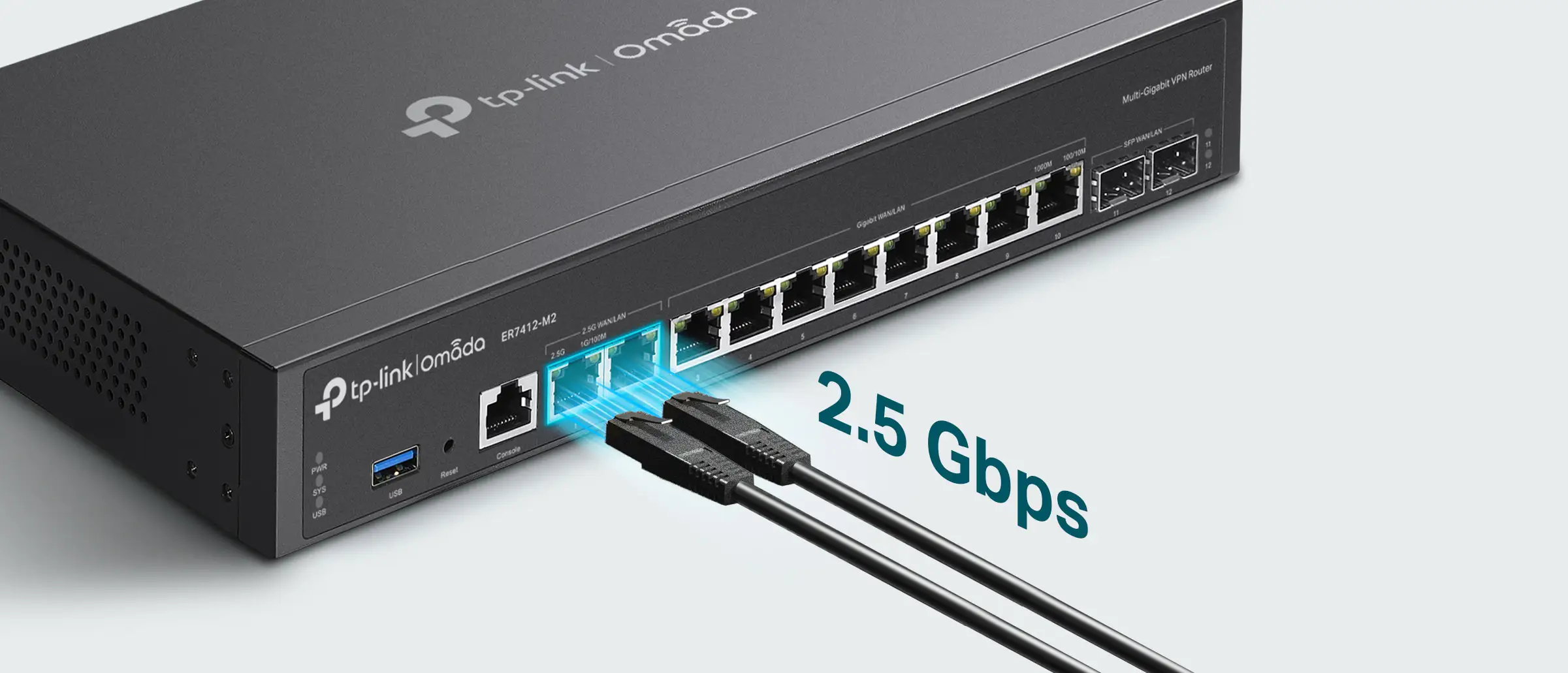
One of TP-Link’s central marketing messages is the “engineered for dense environments, powered by dual 2.5 Gbps ports and quad-core CPU” pitch. Digging deeper into user reports, this claim holds up in typical business setups but falls short with certain WAN configurations. Trustpilot user zupm4n highlighted: “Hardware I think is very fast but software not completely optimized (new product),” after running into PPPOE authentication failures despite flawless IPoE DHCP mode performance.
Another claim centers on VPN performance and variety. Specs promise over 1.1 Gbps on IPSec and hundreds of tunnels supported. In practice, Reddit and Provantage reviews reinforce this: capable of maintaining secure, high-speed tunnels across multiple protocols, making it suitable for offices needing remote access. However, that versatility assumes the user understands configuration intricacies; as Provantage’s breakdown notes, “may require advanced networking knowledge for setup.”
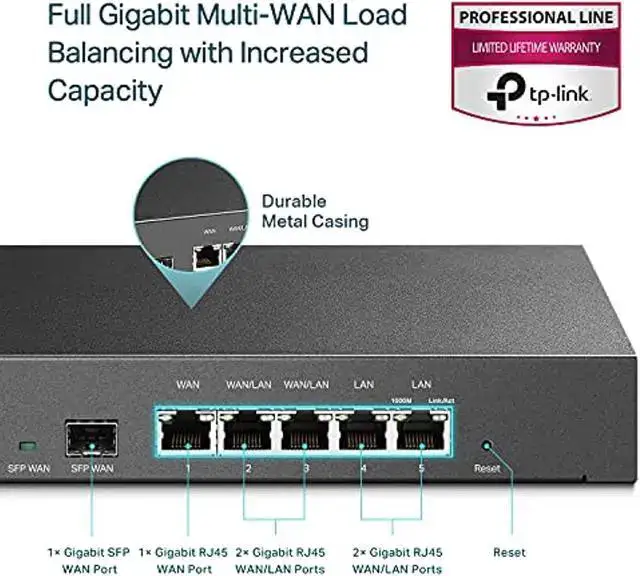
TP-Link also touts intelligent load balancing on up to 11 WAN ports. This feature is indeed functioning according to community feedback, especially in hospitality and education contexts. Yet, its real-world benefits hinge on precise bandwidth weighting — something that advanced admins manage well but smaller teams may struggle to tweak.
Cross-Platform Consensus
Universally Praised
Performance is the first thing owners rave about. A verified buyer on Amazon.de called it “multi-gigabit speeds for demanding applications,” which resonates with businesses running heavy LAN/WAN data exchanges. Multiple Reddit comments stress WireGuard’s 771 Mbps throughput as plenty for secure branch interconnects. For IT departments managing multiple sites, centralized cloud control via Omada SDN is transformative — “Integrates with Omada software for easy network control,” noted Provantage’s listing, helping engineers orchestrate APs, switches, and gateways from one pane.
Security capabilities earn similar applause. The IDS/IPS scoring 573 Mbps throughput meets real deployment needs, especially against DoS/DDoS threats. Twitter reactions highlight the regularly updated signature database and over 7,000 rules. In schools or hotels, administrators value how DPI and ACLs enforce strict browsing policies without noticeably slowing down the network.
Durability also falls into the universally praised category. With a steel enclosure, 4 kV surge protection, and rack-mount options, it’s built for the long haul. This suits SMB server rooms where uptime is critical and accidental impacts are possible.
Common Complaints
Complex setup requirements came up repeatedly. Both Quora and Provantage mention that “advanced networking knowledge” is often needed, which can be daunting for less technical teams. Certain ISP configurations exacerbate connection hurdles; Trustpilot’s account of PPPOE instability, even after tweaks, underscores this.
Upload performance quirks arise without deliberate tuning. zupm4n detailed that disabling flow control severely reduced uploads to 500-800 Mbps until rate limits were manually set — an unnecessary trial for those expecting plug-and-play operation. The lack of PoE ports means more gear for deployments with powered APs, which smaller offices may perceive as cost and complexity creep.
Divisive Features
Omada’s centralized cloud management polarizes the community. For power users, it’s a boon. Provantage lists “centralized management integrates with Omada software for easy network control” among selling points. Yet, some see the requirement for an external hardware or software controller as gatekeeping functionality that should be native.
Load balancing is another split feature — admired when properly configured, but some prefer simpler failover setups due to perceived management overhead. Similarly, protocol diversity in VPNs is praised for flexibility, while others view it as overkill for their needs.
Trust & Reliability
Trustpilot’s PPPOE anecdote reflects a software-side fragility that could erode confidence in certain network contexts. The issue wasn’t a complete dealbreaker — the same user achieved near-spec speeds via IPoE — but PPPOE dependence could be risky until firmware matures.
On Reddit, early adopters report no hardware failures even after months of continuous operation, crediting its solid build quality. The steel chassis and internal layout stand up to hot, busy server racks without throttling.
Alternatives
While no direct competitor was named in community threads, the nature of comparisons implied users weighing ER7206 or pfsense boxes. zupm4n’s reference to achieving higher uploads via “pfsense virtualized” mirrors a DIY firewall/router alternative that trades vendor support for full configuration control.
Price & Value
Market prices from eBay Pakistan (Rs. 69,999) and EU listings (€353.06 incl. VAT) signal this is positioned firmly in the professional/enterprise tier. UK stock at £163.05 shows regional variance. Given the VPN performance and multi-WAN load balancing, users viewing it as a capital investment see value; others in simpler setups may balk at the spend. Resale viability seems strong due to the durable build and Omada ecosystem integration.
FAQ
Q: Does the ER7412-M2 support PoE out of the box?
A: No, it does not have built-in PoE ports. Any powered APs will require external PoE injectors or switches.
Q: What VPN protocols does it support?
A: IPSec, OpenVPN, L2TP, PPTP, WireGuard, GRE (standalone mode), and SSL VPN with varying throughput — IPSec runs over 1.1 Gbps in practice.
Q: Is it easy to set up for a non-IT person?
A: Community sentiment says no. Several reviewers caution that it “may require advanced networking knowledge” for optimal performance.
Q: How many WAN ports can be used in load balancing?
A: Up to 11 WAN ports, including the USB WAN option, can be part of intelligent load balancing configurations.
Q: Does Omada cloud management require extra hardware?
A: Yes, a hardware controller, software controller, or cloud-based controller is needed to unlock full Omada SDN capabilities.
Final Verdict: Buy if you’re an IT admin or tech-savvy small business wanting high throughput multi-WAN management and enterprise-grade VPN security. Avoid if your ISP requires PPPOE and you lack network configuration skills. Pro tip from the community: enable flow control and calibrate rate limits on WAN/LAN ports to unlock full upload speeds.