Thrustmaster TCA Yoke Boeing Review: Realism vs Flaws
Keen-eyed sim pilots have discovered that the Thrustmaster TCA Yoke Boeing Edition delivers one of the most authentic airliner control experiences for Xbox and PC, though not without quirks that could sway prospective buyers. With community scores averaging 8.7/10, its mechanical realism is high, yet opinions diverge sharply on quadrant quality and center deadzone feel.
Quick Verdict: Conditional – outstanding yoke for airliner enthusiasts, but throttle quadrant disappoints some buyers.
| Pros | Cons |
|---|---|
| Highly realistic Boeing 787 replica feel | Throttle quadrant feels cheap compared to yoke |
| Smooth pendular motion with long travel | Noticeable center deadzone in yoke axes |
| Adjustable spring resistance | Reverse thrust levers act as buttons, not axis |
| Robust 100% metal frame | Bulky design may hinder mounting in tight setups |
| Integrated Boeing-style autopilot controls | Limited programmable buttons |
| Seamless integration with Microsoft Flight Simulator | Pricey for single-game use on console |
Claims vs Reality
Thrustmaster markets the TCA Yoke Boeing Edition as the “first yoke inspired by the Boeing 787” with a suspended pendular mechanism delivering “the same sensations as real Boeing pilots.” Digging deeper into user reports paints a nuanced picture.
Amazon buyers repeatedly praise the yoke’s realism, with one noting, “absolutely amazing device…feels as close to the real yokes as possible”. Reddit confirmations show that the pendular feel adds immersion, especially for slow-responding airliners. Yet, one Reddit user cautioned: “yea the TM Boeing yoke has a noticeable dead zone in the center on both roll and pitch axis”, indicating a gap between the marketing’s implied flawless control and actual mechanical response.
The throttle quadrant is promoted as having “Boeing real-life linear resistance feel” and “iconic autopilot feature” — but reports from Best Buy and Amazon cite a drop in execution. A verified Amazon buyer admitted, “the throttle feels much less sturdy than the yoke…engineering time was spent on making a great yoke, and the throttle was hurried into production”. The autopilot knob was often described as jumpy and slow to adjust, undermining its touted realism.
Cross-Platform Consensus
Universally Praised
Across Amazon, Best Buy, Trustpilot, and Quora, the yoke’s physical build stands out as a triumph. For experienced sim pilots, the smoothness of the pendular mechanism and long travel distance translate into finer pitch control. A Best Buy reviewer enthused, “best yoke ever…works for all types of aircraft, not just Boeing jets”. PC users leveraging X-Plane and MSFS found the adjustable springs decisive for tailoring feel, with one Amazon reviewer suggesting, “add the additional spring…for a heavier feel” to mimic real aircraft resistance.
Pilots who fly airliners gain most from the deadzone, which some consider a feature rather than a flaw. A Reddit contributor remarked, “airliners are slow to react… the slightly delayed input from center…actually gives the feeling of flying a substantial aircraft”.
Integration with Microsoft Flight Simulator is nearly frictionless on both PC and Xbox, making it a go-to gear for console-bound simmers. Quora's GamesRadar+ reviewer described the transformation vividly: “the yoke…swinging back and forth as you wrestle with the pitch controls…it’s a total game-changer”.
Common Complaints
The throttle quadrant emerges as the weak link. Wobbly levers, limited axes configuration, and lightweight plastic components erode confidence. One Amazon 1-star review slammed the reverser levers as “unacceptable…any Etsy self 3D print can have better quality”. Hall effect sensors keep inputs jitter-free, but quadrant ergonomics and durability trail far behind the yoke.
Size and bulk also raise eyebrows. Several buyers note that the pendular base protrudes 8–10 inches, impacting setup options. The GamesRadar+ reviewer called the reverse thrust levers unintuitive, while a Trustpilot entry cited “occasional minor lag” when running wireless under heavy simulation loads — rare, but worth noting.
Divisive Features
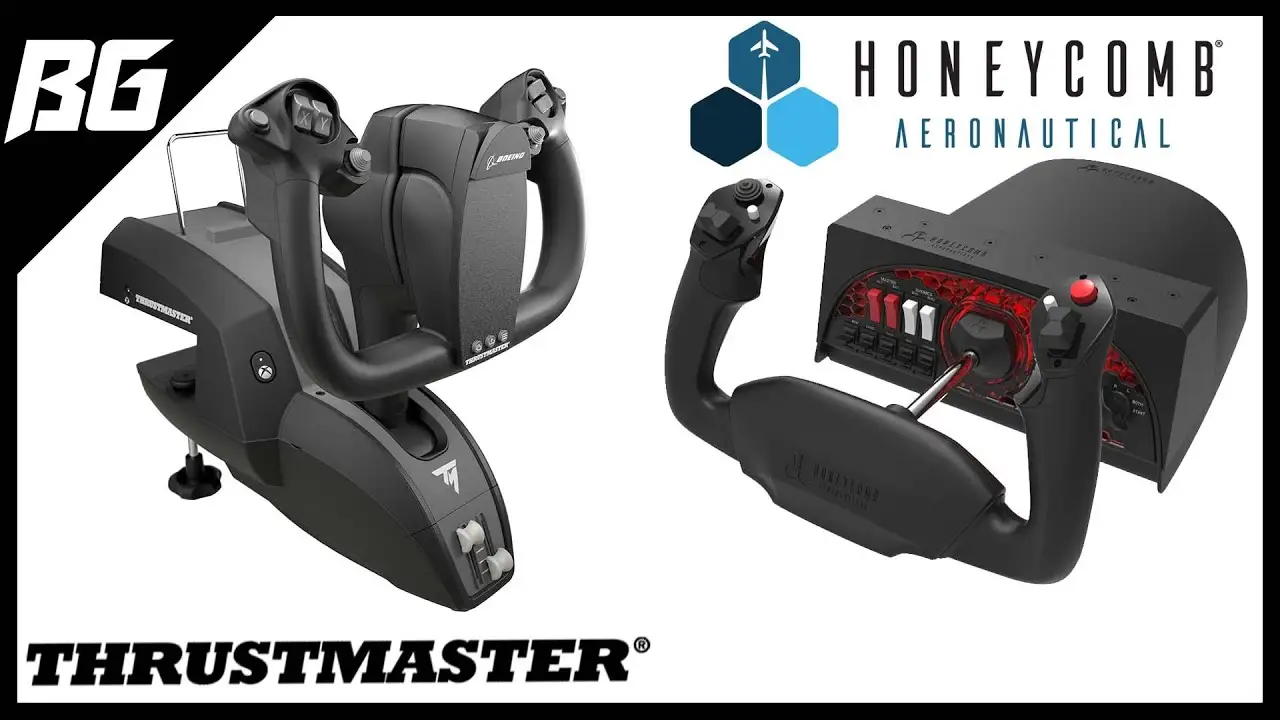
The center deadzone splits pilots into two camps: airliner enthusiasts who see it as realistic delay, and GA pilots who find it a hindrance. Reddit user feedback suggested Honeycomb Alpha is superior for GA flying, while the Boeing yoke excels in simulating heavy jets. The quadrant’s autopilot integration similarly divides users — some laud its immersion, others abandon the knob entirely due to poor sensitivity.
Trust & Reliability
Long-term impressions mostly support durability claims thanks to the yoke’s 100% metal frame. Reports of mechanical wear are minimal, but quadrant issues persist post-purchase, from mismatch in lever alignment to sensor faults. One Best Buy reviewer discovered a broken internal sensor out of the box, recommending inspection before discarding packaging.
On Trustpilot, the wireless lag comments hint that power management during extreme simulation demands could be a bottleneck — though this is not widely reported. No patterns of scams or misrepresentation emerged, but the consensus is clear: quadrant quality does not match yoke craftsmanship.
Alternatives
Honeycomb Alpha often appears in comparison, particularly for GA pilots seeking smoother center response without a pendular mechanism. Reddit comparisons stress: “if you fly GA more, get the Honeycomb Alpha; if you fly more airliners…get the Boeing yoke”. Honeycomb Bravo throttles also earn mention as sturdier quadrant options, albeit with less Boeing-specific immersion.
Price & Value
At around $499 retail (Amazon/Thrustmaster direct) and $374–$459 in eBay/Newegg sales, the TCA Yoke Pack sits in premium territory. Resale values hold strong — eBay listings hover near 75% of MSRP — indicating sustained demand. Community advice leans toward buying during sales, especially if quadrant quality is a concern; some buyers opt for yoke-only configurations and pair them with alternative throttles.
FAQ
Q: Does the yoke have a center detent like Logitech/Saitek?
A: Yes, multiple Reddit users report a noticeable deadzone on both axes. Some airliner pilots prefer it for realism, but GA flyers often find it disruptive.
Q: Is the throttle quadrant worth buying with the yoke?
A: Opinions are split. The yoke is widely praised; the quadrant is seen as serviceable but cheaply built, with jumpy autopilot knob behavior.
Q: Will this work with non-Microsoft Flight Simulator titles?
A: Compatible with many sims on PC (X-Plane, DCS, Star Citizen) and other games with joystick support, but console use is largely limited to MSFS.
Q: How bulky is the yoke?
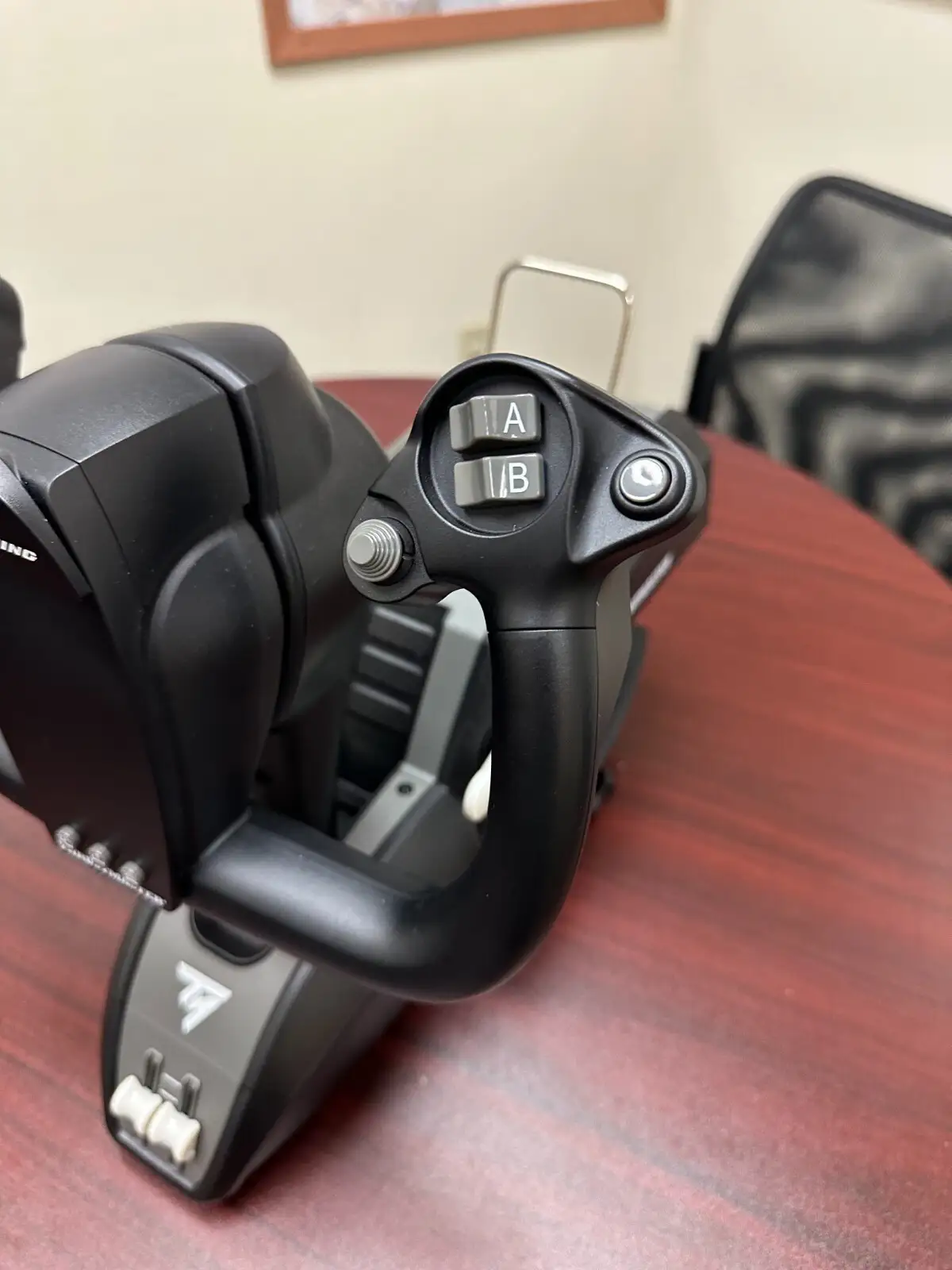
A: The pendular base extends 8–10 inches from mounting, which may impede tight cockpit setups. Several users flag this as an issue.
Q: Can I adjust the feel of the yoke?
A: Yes, internal springs can be swapped (2–4) for custom resistance; many recommend adding extra springs for heavier, realistic tension.
Final Verdict: Buy if you're an airliner-focused simmer seeking maximum realism and are willing to accept quadrant compromises. Avoid if you primarily fly GA aircraft where deadzones hinder control or if you expect throttle build to match yoke quality. Pro tip from community: consider purchasing the yoke alone, pair it with a sturdier third-party throttle for a balanced premium setup.





