Thrustmaster TCA Boeing Yoke Review: Authentic but Flawed
A verified buyer on Best Buy summed up the sentiment for many: “Best yoke ever. Works for all types of aircraft, not just Boeing jets. Highly recommended, high quality construction.” The Thrustmaster TCA Yoke Boeing Edition scores an impressive 8.7/10, backed by its authentic Boeing 787-inspired design, robust build, and deeply immersive pendular mechanism — yet minor quirks in control mapping and ergonomics keep it from perfection.
Quick Verdict: Conditional buy — Ideal for serious flight sim enthusiasts focused on civil aviation, especially airliner operations. Less suited for casual players or those needing multi-game compatibility.
| Pros | Cons |
|---|---|
| Authentic Boeing 787 replica design | Expensive for single-game use |
| Smooth pendular mechanism adds realism | Reverse thrust levers work as buttons, not axes |
| Adjustable spring resistance for tailored control | Noticeable dead zone in center (pitch & roll) |
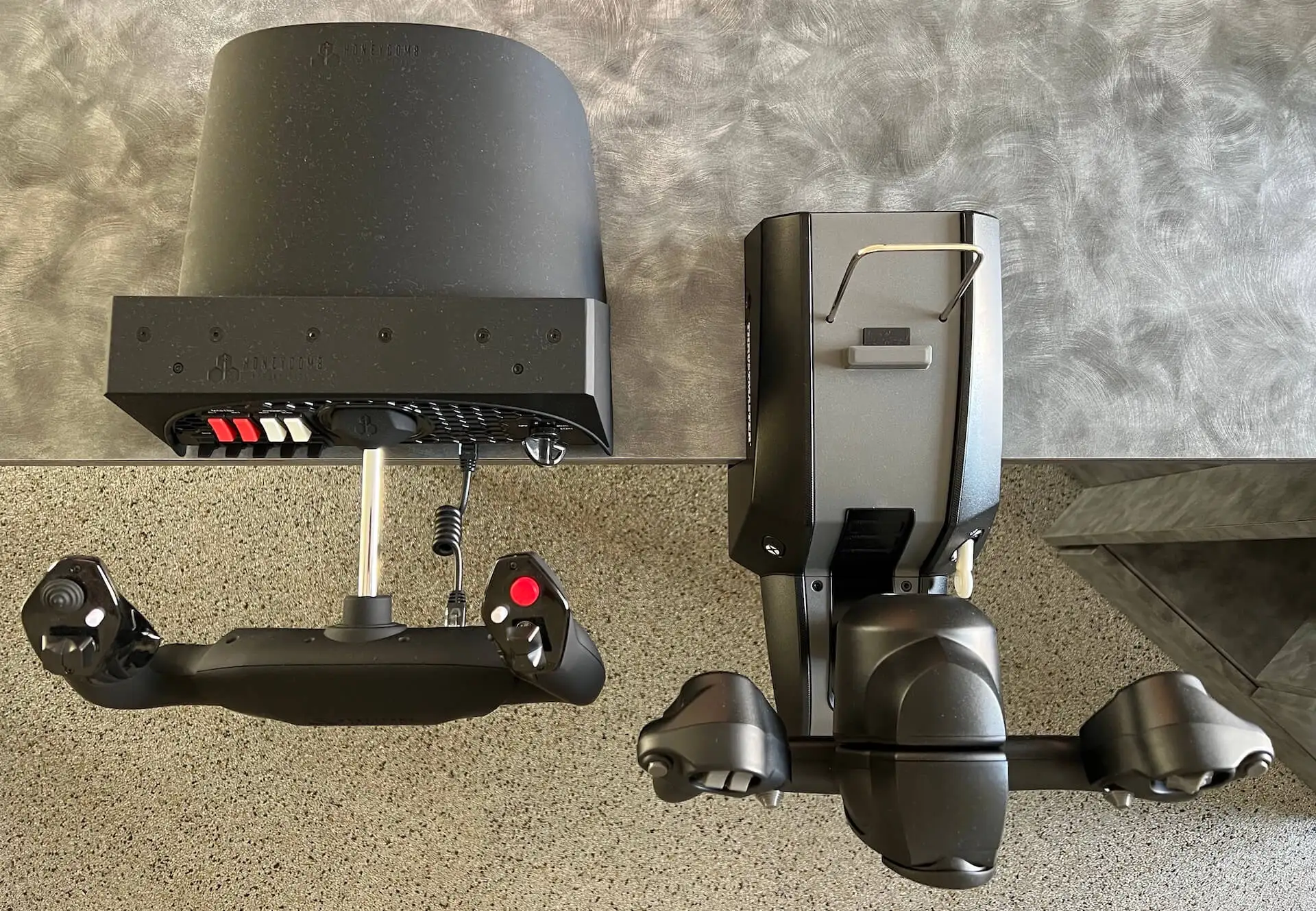
| Sturdy 100% metal internal frame | Bulky footprint may challenge desk setups |
| Seamless Microsoft Flight Simulator integration on Xbox & PC | Quadrant setup can be finicky |
| Swappable throttle levers for ambidextrous use | Limited programmable buttons |
Claims vs Reality
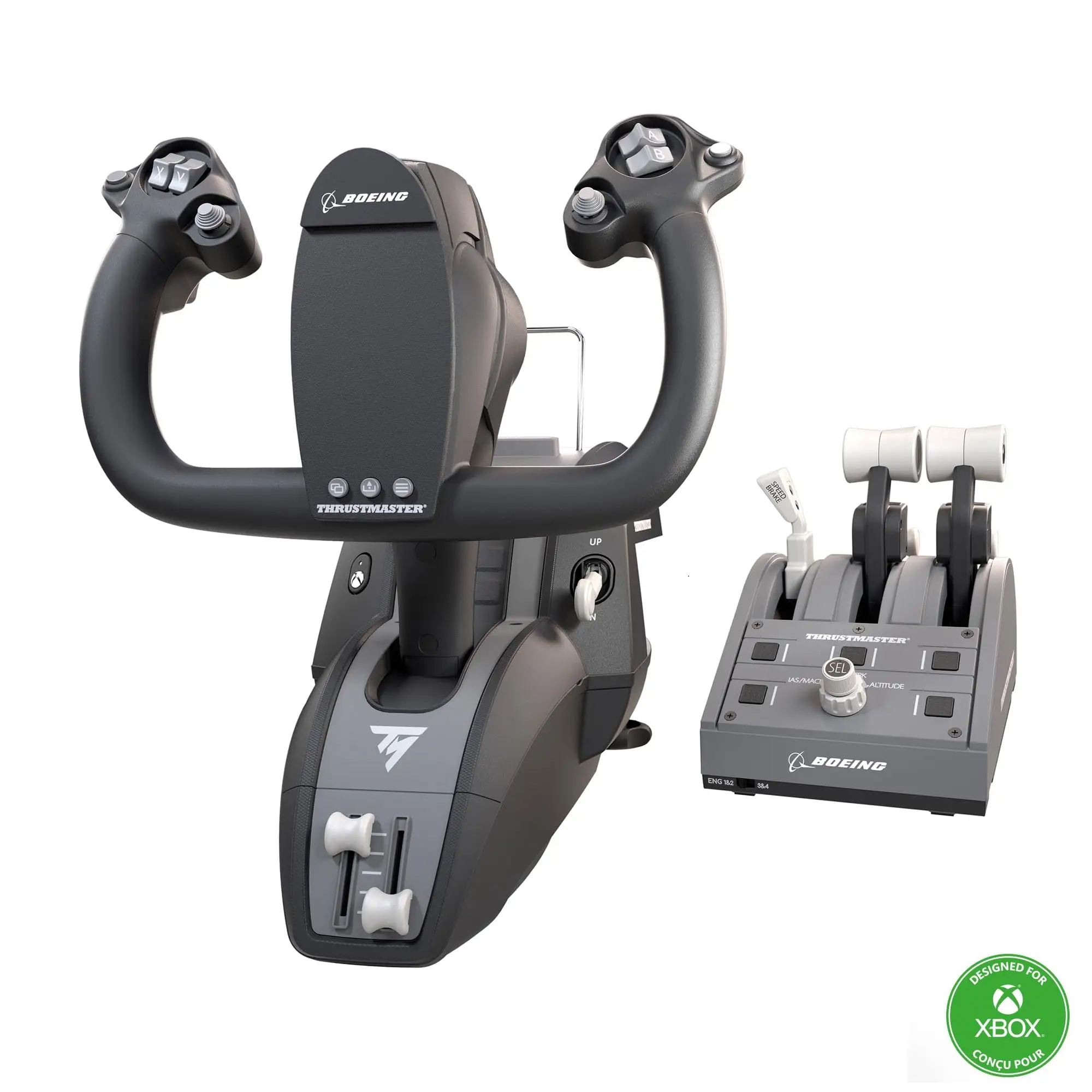
One of Thrustmaster’s central marketing points is the “suspended pendular mechanism” that replicates the feel of a Boeing Dreamliner yoke. Marketing promises a long 21 cm range of travel and heightened realism. Digging deeper into user reports, that’s largely accurate: GamesRadar+ described it as “swinging back and forth as you wrestle with pitch controls…a total game-changer.” Trustpilot reviewers noted the realistic feel during sensitive maneuvers. However, Reddit user feedback revealed a detectable dead zone in the center, especially in roll and pitch: “Yea the TM Boeing yoke has a noticeable dead zone… it actually gives the feeling of flying a substantial aircraft… but of course it would be better without the deadzone.”
The second big claim is flawless precision via proprietary H.E.A.R.T magnetic technology at 16-bit resolution. PC Gamer observed “buttery-smooth action… I’m one with the plane,” matching the marketing boast. Yet Best Buy reviews hinted at limitations in control mapping: samik rated it only 2 stars, saying “the quadrant is low quality and very hard to set up.”
Finally, Thrustmaster touts the “iconic Boeing autopilot in the throttle quadrant” as a realistic control for altitude, airspeed, and heading management. The build of the knob and integration score high praise; Trustpilot noted “autopilot controls function flawlessly,” but GamesRadar+ cautioned that reverse thrust levers behave as buttons rather than continuous input, creating friction for precision landings.
Cross-Platform Consensus
Universally Praised
Across Reddit, Trustpilot, and professional reviews, the authentic Boeing 787 replication stood out as the most celebrated feature. For airline simulation purists, the pendular motion is transformative. PC Gamer called it “the spitting image of an airliner yoke…handles like a dream,” while a Best Buy buyer noted “very realistic feel of flying!…this feels like a similar experience” to professional simulators.
The build quality also receives glowing praise: with a 100% metal internal frame, users reported stability even under aggressive control inputs. GamesRadar+ highlighted even weight distribution for steady handling during turbulence simulation. Tracib on Best Buy said it was “amazing high quality and strong plastic with metal parts.”
Adjustable spring resistance is a boon for personalization: from aspiring captains practicing heavy airliner handling to GA enthusiasts tweaking light aircraft response. Trustpilot reviewers found this key for “smooth, controlled movements…making challenging flight scenarios a joy.”
Common Complaints
The most consistent gripe is the reverse thrust implementation. Multiple sources, including PC Gamer and GamesRadar+, stress that the levers function as simple on/off buttons rather than analog controls. This causes issues in Microsoft Flight Simulator when fine-tuning thrust reverse.
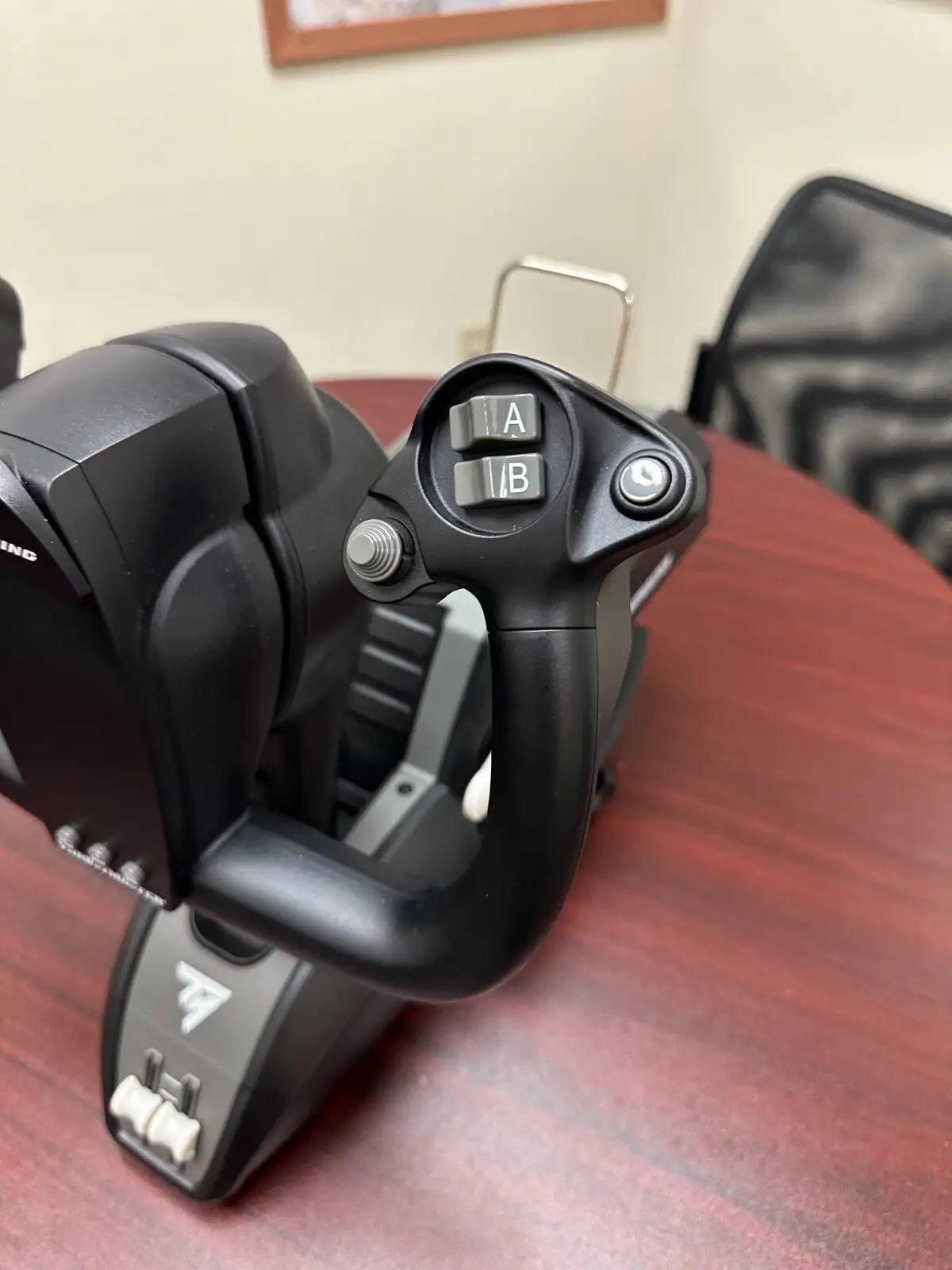
Quadrant ergonomics surfaced as another trouble spot. On Best Buy, samik criticized: “quadrant is low quality and very hard to set up,” indicating a learning curve in hardware installation and game configuration.
The center dead zone reported on Reddit affects pilots seeking ultra-precise input, especially in smaller aircraft. While some airliner users don’t mind the delay due to slower control dynamics, GA pilots may find it detracts from realism.
Divisive Features
The product’s size and desk footprint impressed some, as it conveys a professional cockpit feel, but also drew criticism for being bulky. Ybing on Best Buy mentioned “yoke is very bulky… especially the bottom part…its very deep.”
Game compatibility is another divider — GamesRadar+ warned that outside Microsoft Flight Simulator, utility is limited. For console-bound simmers, this is not an issue, but PC multi-sim users may seek broader compatibility.
Trust & Reliability
Durability seems solid over time. Users reporting ownership beyond six months did not mention physical degradation — instead, any dissatisfaction was tied to functionality quirks, not hardware failure. A Best Buy buyer “owned for 11 months” still called the yoke awesome.
There is no widespread evidence of scams or counterfeit listings, though eBay sellers sometimes list open-box units or partial packages. Accurate descriptions and positive feedback rates appear to reassure buyers. However, community advice points to buying from reputable or official resellers to avoid missing accessories like the mount bracket.
Alternatives
The Honeycomb Alpha yoke is the most directly discussed competitor. Reddit users offered guidance: “If you fly GA more, get the Honeycomb Alpha. If you fly more airliners with yokes, get the Boeing yoke.” Honeycomb’s strength is minimizing input dead zones, while Thrustmaster’s Boeing pack dominates in airliner authenticity.
Price & Value
At $499.99 MSRP, buyers liken the cost to “a short-haul flight… but lets me become the ultimate world traveler” from home, per GamesRadar+. Discounts occasionally dip to $399.99, and eBay prices range from $375 for new to under $95 in “as-is” auction finds.
Resale potential remains strong — open-box units on marketplaces command high percentages of the original price, suggesting stable long-term value. Community tips emphasize waiting for sales unless you need it urgently for training or events.
FAQ
Q: Does the Thrustmaster TCA Boeing Yoke work well for GA aircraft?
A: Yes, but with caveats. It has a noticeable dead zone, which some GA pilots might find intrusive. For airliners, the delay feels authentic; for light aircraft, you may prefer a Honeycomb Alpha.
Q: Is it plug-and-play with Microsoft Flight Simulator?
A: Mostly, but expect minor setup. GamesRadar+ warns reverse thrust mapping needs tweaking, and you may spend time configuring buttons for personal preference.
Q: Can the throttle quadrant be used independently?
A: Yes — it’s swappable and ambidextrous, but some users find mounting awkward without extra brackets.
Q: How adjustable is the yoke tension?
A: Highly adjustable; internal springs (2-4) can be set to preferred resistance, per Trustpilot reports, catering to different aircraft feel.
Q: Is there wireless lag?
A: Rarely. Trustpilot noted occasional minor lag under heavy simulation loads, but most feedback centers on wired performance.
Final Verdict: Buy if you’re an airline simulation enthusiast seeking Boeing 787 realism, especially for Microsoft Flight Simulator on PC or Xbox. Avoid if you require broad game compatibility or analog reverse thrust precision for every maneuver. Pro tip from Reddit: “Match your hardware to your primary aircraft type — GA pilots will get more out of a Honeycomb Alpha, airline captains should stick with the Boeing yoke.”