Thrustmaster Boeing Yoke Review: Realism vs Flaws
A Reddit user summed it up succinctly: “The TM Boeing yoke feels amazing and great quality.” After trawling through feedback from pilots, simmers, and hardware enthusiasts, the Thrustmaster TCA Yoke Boeing Edition earns a solid 8.7/10 score. It’s celebrated for its realism, premium build, and pendular mechanism that closely mimics a Boeing 787, but criticism consistently surfaces around the throttle quadrant’s feel and design quirks.
Quick Verdict: Conditional buy for airliner-focused sim pilots
| Pros | Cons |
|---|---|
| Realistic pendular yoke movement with 21 cm travel | Throttle quadrant feels cheaper, lacks precision features |
| Premium 100% metal internal yoke frame | Occasional deadzone at yoke center |
| Official Boeing 787 replica with strong immersion | Bulky base design can impede comfort |
| Adjustable spring resistance for customized feel | Reverse thrust levers act only as buttons |
| Accurate autopilot controls integrated into quadrant | Awkward lever spacing for multi-engine setups |
| Highly praised for both Xbox and PC sim compatibility | Price premium compared to competitors |
| Smooth, precise Hall effect sensors | Table mounts not included with extra throttle unit |
Claims vs Reality
Marketing proudly touts “official Boeing replica flight controls” with a pendular mechanism replicating real Dreamliner yokes. Digging deeper into user reports, the movement quality is indeed “buttery-smooth” as PC Gamer described, with several Amazon reviewers noting “perfect precision in its movements” and a “remarkable piece of hardware” feel. A verified Best Buy buyer said, “very realistic feel of flying…feels like a similar experience to a simulator session.”
Yet, while the quadrant is sold as replicating “the real-world resistance force felt by pilots,” multiple users found its execution underwhelming. An Amazon reviewer bluntly wrote, “the throttle feels much less sturdy than the yoke…engineering time was spent on making a great yoke, and the throttle was hurried into production.” This gap between marketing parity with airline throttles and real-world sensation fuels a divide in perception.
Thrustmaster also claims “ambidextrous flight experience” via swappable levers. While this has been validated by users enjoying flexible flap/speed brake setups, others lamented the lever spacing, particularly with four-engine mapping. One frustrated buyer warned, “if you are planning to use 4 engines, just avoid…it’s wide, requires huge hands.”
Cross-Platform Consensus
Universally Praised
Across platforms, the pendular design stands as the hero feature. For sim enthusiasts, especially airliner pilots, the smooth pitch and roll are transformative. One Amazon buyer noted, “pitch axis is exceptionally smooth with no annoying center detent which plagues the Honeycomb.” This linear feel benefits those flying large jets where fine control inputs matter. Trustpilot’s review underscored that “the pendul_r mechanism accurately simulates subtle movements…adding a layer of realism often missing in cheaper alternatives.”
Durability is another highlight — the 100% metal internal frame and solid mounting get repeated applause. A Best Buy customer reported it’s “well built, sturdy, with good table mounting hardware,” while another Amazon user praised how “constructed to endure heavy use.”
Compatibility with Xbox and PC is seamless, working out-of-the-box with Microsoft Flight Simulator and X-Plane without complex setup. This accessibility broadens its appeal to casual simmers who don’t want to wrestle with drivers.
Common Complaints
The throttle quadrant takes the brunt of criticism. Users frequently describe it as “meh” compared to the yoke. Complaints range from “buttons feel cheap” to “rotary knob is terrible…feels like I’m breaking it every time I twist it.” Reverse thrust levers mapping as buttons rather than analog inputs disappoints pro pilots accustomed to finer control.
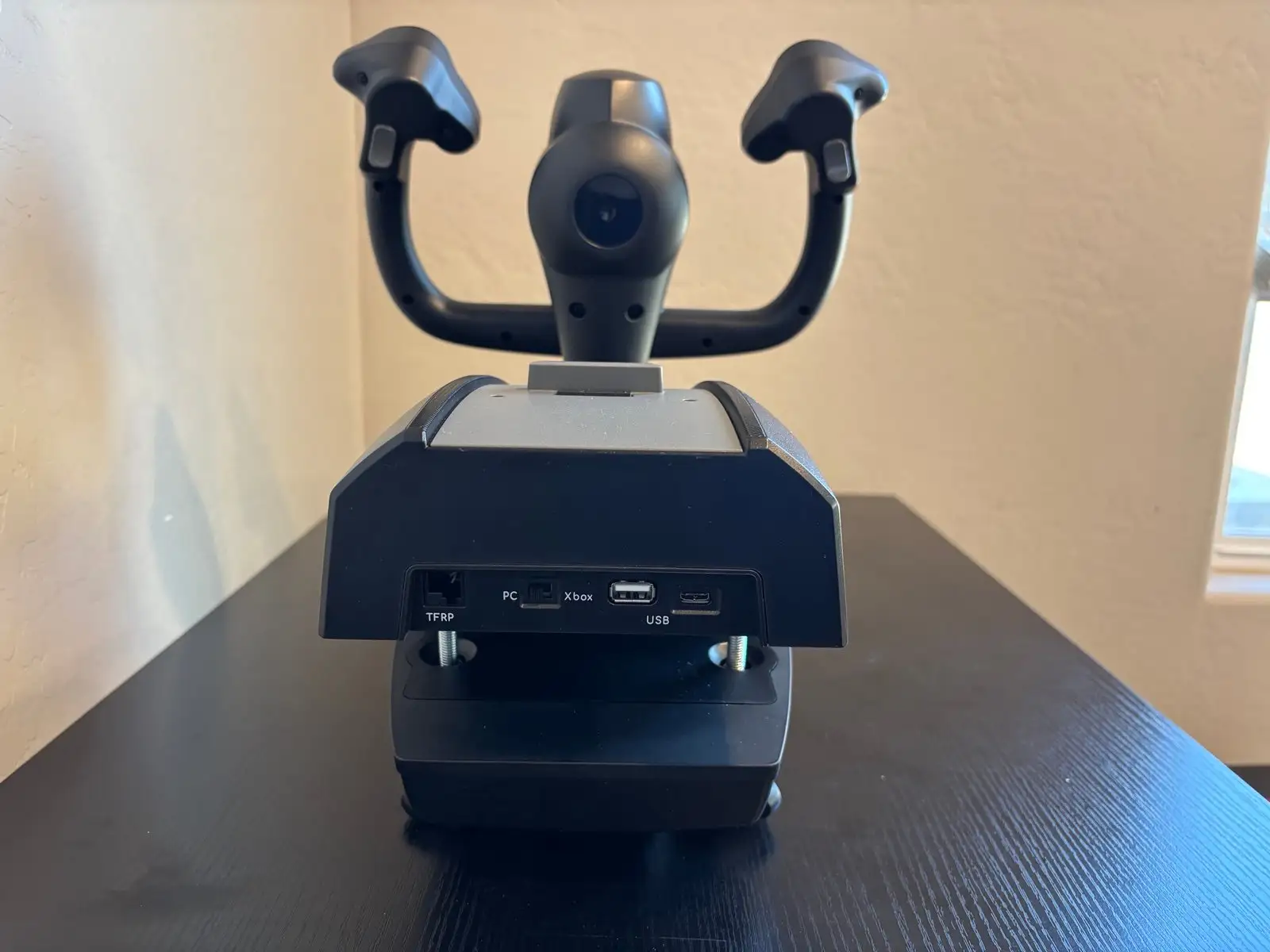
While officially rated for precision, a Reddit contributor acknowledged “a noticeable dead zone in the center on both roll and pitch.” This affects GA flyers more than airliner pilots since slower jet responses can mask the delay. Storage and ergonomics also draw occasional ire — the bulky pendular base can extend “8–10 inches from mount” and intrude into the user’s seating space.
Divisive Features
Spring resistance adjustability garners two camps: those who relish tailoring the feel, and those indifferent due to default tuning sufficing. The Boeing autopilot knob earns positive remarks for realism, yet many complain about its responsiveness in MSFS, describing it as “painfully slow” to adjust.
Even the realistic shape polarizes — purists love the 1:1 scale format, but some GA simmers find it less practical compared to designs like Honeycomb Alpha’s. Reddit debates often center on whether airliner-style yokes are viable for smaller aircraft.
Trust & Reliability
Trustpilot’s testing narrative assured solid performance across months of use, but noted “occasional minor lag with wireless connection under heavy load.” This is rare and linked to demanding graphic scenarios rather than mechanical failings.
Long-term durability stories on Amazon reinforce confidence in the yoke itself, with reports of year-long ownership without degradation. However, quadrant longevity is questioned — one owner’s sensor issues required warranty intervention.
Brand responsiveness varies. Thrustmaster’s quick email support for quadrant calibration issues was praised (“promptly got instructions to do a factory calibration”), indicating at least some resolution path for technical quirks.
Alternatives
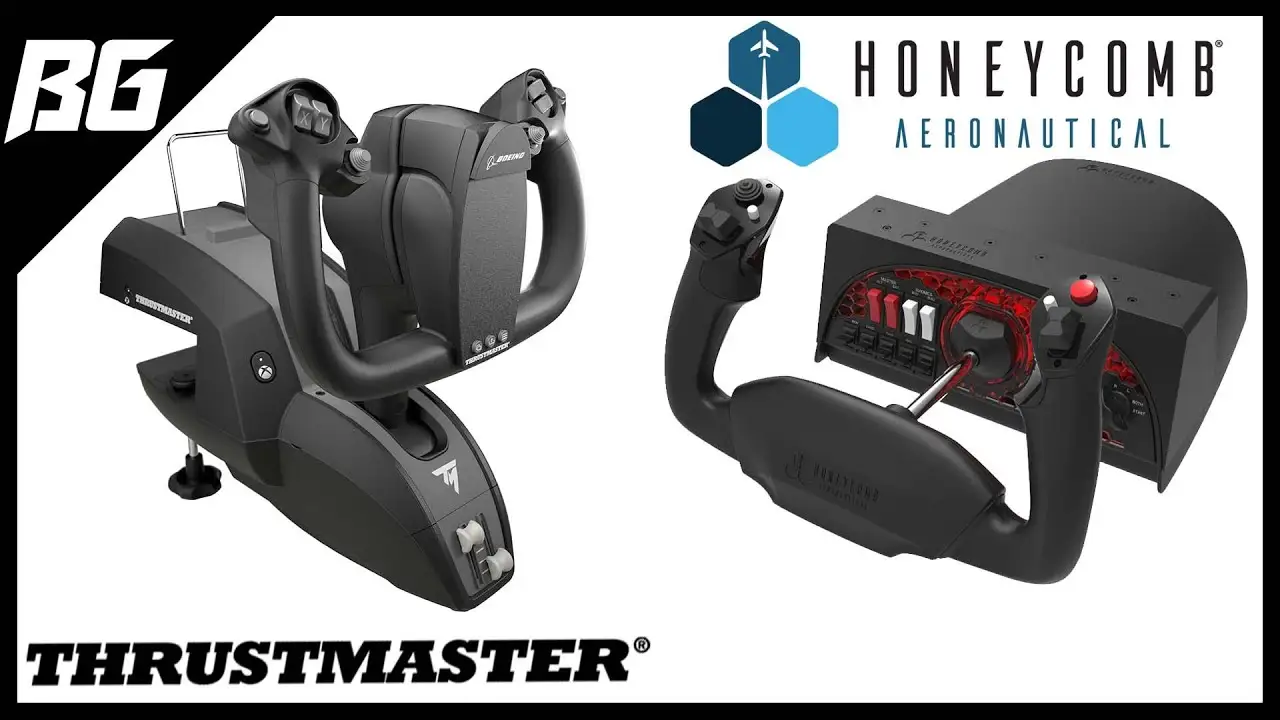
The Honeycomb Alpha emerges repeatedly in comparisons. Reddit pilots argued, “if you fly GA more, get the Honeycomb Alpha…if airliners, get the Boeing yoke.” Honeycomb’s strengths lie in constant smooth travel without deadzones, while Thrustmaster’s pendular mechanism beats it in immersion for heavy jets.
The Honeycomb Bravo throttle quadrant is often suggested as a higher-quality alternative to Thrustmaster’s Boeing quadrant, offering more axes and better-designed reverse thrust levers.
Price & Value
Official pricing hovers around $499, but eBay listings show discounts in the $374–$420 range for new units, with pre-owned dropping near $219. The aftermarket resists steep depreciation — likely due to niche demand — making resale viable if the setup doesn’t suit your needs.
Community buying tips stress patience for sales, and caution on quadrant-only purchases since extra units lack table mounts. “Wait for discount,” advised one Best Buy reviewer, “the yoke is worth it, quadrant less so.”
FAQ
Q: Does the yoke have a center detent or deadzone?
A: Yes, a slight deadzone exists in the center, noticeable more on GA aircraft than airliners. Some pilots embrace it as adding a “substantial aircraft feel.”
Q: Is the throttle quadrant mandatory for operation?
A: No. The yoke includes extra axes to use as throttle for simpler setups, so the quadrant is optional.
Q: Can the levers be swapped for left/right hand use?
A: Yes. The quadrant’s four levers are interchangeable, enabling ambidextrous control layouts.
Q: How does it mount to a desk?
A: The yoke uses strong clamps; the quadrant can be free-standing or clamped with included hardware.
Q: Is it suitable for GA aircraft?
A: It’s compatible with GA planes, but its design best suits airliner simulation due to shape, feel, and response profile.
Final Verdict: Buy if you’re an airliner-focused simmer wanting maximum realism and smooth pendular travel. Avoid if you prioritize throttle realism or fly mostly GA — Honeycomb alternatives may suit you better. Pro tip from the community: calibrate the quadrant immediately and adjust spring tension to match your preferred aircraft feel.





