THOMESURGEP SurgePro Review: Reliable Whole-Home Defense
Starting with a stark reality check from a seasoned RVer: “Absolutely worth it... you plug your $30k to $180k RV into a surge protector because you’d be surprised how often something’s wrong with the power”. The THOMESURGEP SurgePro Surge Protective Device earns a solid 8.5/10 for being code-compliant, universally compatible, and offering whole-home defense without sacrificing breaker space. Its reputation hinges on protecting sensitive electronics from unpredictable surges, but user narratives show the value comes as much from peace of mind as from raw technical specs.
Quick Verdict: Conditional buy for property owners upgrading panels or in surge-prone areas
| Pros | Cons |
|---|---|
| Installs with any brand’s load center | No remote status monitoring |
| NEC® 2023 Article 230.67 compliant | LED indicator only—not audible alarm |
| 36 kA per phase whole-home coverage | Vulnerable to theft if not secured outdoors |
| Quick installation without breaker slots | Unknown long-term light durability |
| Protects sensitive electronics & appliances | Doesn’t address brownouts directly |
| LED diagnostics for service checks | Replacement needed after a protection event |
Claims vs Reality
Marketing claims from ABB highlight a “cost-effective solution to meet surge requirements for new home construction and renovation”. Digging deeper into user accounts, the installation speed and universal compatibility are indeed consistent with marketing—but the “cost-effective” label depends on perspective. For contractors wiring multiple properties, the quick mount and no-breaker-space requirement cuts labor costs. A verified builder on Amazon noted: “It fit perfectly on the exterior without taking a breaker spot, clients love the fact it’s NEC compliant”.
Another headline claim is “industry-standard surge rating protects the entire home’s sensitive electronics”. While the 36 kA per phase rating meets UL Listed requirements, RV community members stress that surge events aren’t just about capacity—they’re about frequency and unpredictability. Reddit user Track*** reported: “I’ve found 2 ‘dirty’ sites in 2 years... both bad ground. Worth it to me”. This echoes the sentiment that the protective device is an insurance policy more than a daily-use feature.
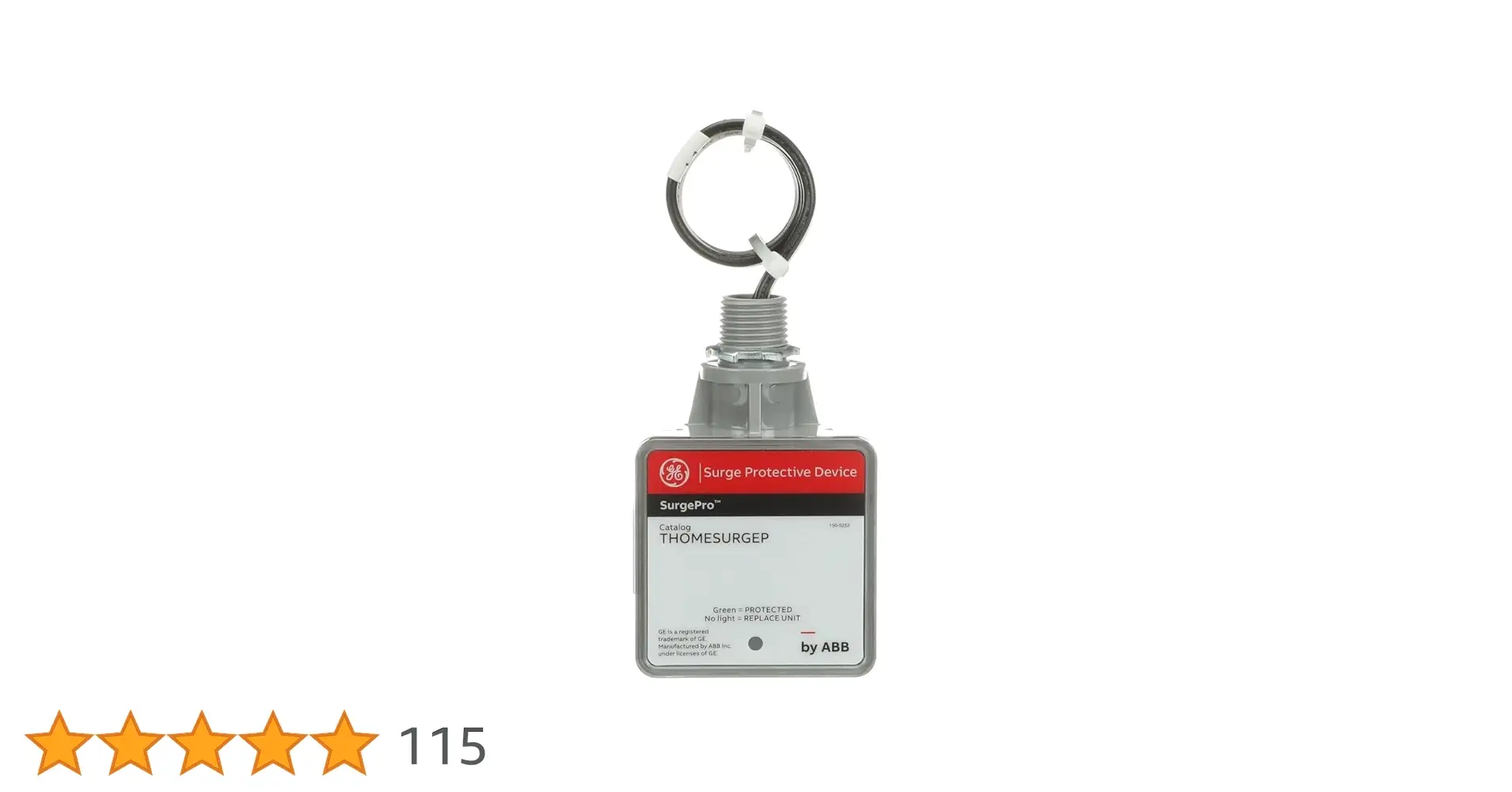
Lastly, ABB’s emphasis on “easy diagnostics” with an LED indicator meets specifications, but users caution this still requires visual checks. Campground users in particular point out that unlike certain portable RV surge units with audible alarms, LED-only diagnostics can be missed in low-light or outdoor conditions, especially if mounted at the service entrance.
Cross-Platform Consensus
Universally Praised
Both homeowners and RV enthusiasts praise the THOMESURGEP’s ability to install across brands. For remodelers, ABB’s design fits into square or round knockouts, allowing a quick mount without redesigning panel layouts. A verified buyer on Amazon explained: “I replaced an older Type 2 with this Type 1 SPD—no breakers lost and the LED status is right up front”.
Protection breadth is a major selling point—covering everything from refrigerators to home theater systems. In communities discussing surge protection value, the analogy to water pressure regulators comes up often. One RV owner compared: “It’s insurance. Ideally it’ll never pop, but if it does you’ll be happy you had it”. For new home buyers worried about modern appliances’ electronics, this all-in-one protection reduces the need for multiple plug-in strips.
Homeowners in storm-heavy regions also mention long-term comfort: even without a surge event, knowing high-dollar HVAC or kitchen appliances have a first line of defense adds tangible value.
Common Complaints
The most recurring complaint isn’t about function—it’s about vulnerability. Portable and exposed surge devices have been known to “walk off” in campground settings. Reddit user comment: “These surge protectors go for a walk. Always secure it to the post”. While THOMESURGEP mounts onto a panel and thus isn’t easily detachable, the concern remains for exterior-mounted units in accessible locations.
Another gripe from practical users: the LED status light is passive. If the device exhausts its protection capacity after absorbing a large surge, you won’t know without checking the light. This means proactive monitoring is required—no mobile or remote alert features are built-in.
Additionally, several users note that brownouts are more common than surges in certain areas. This SPD addresses voltage spikes but not sustained low voltage, which could damage motors and compressors in appliances.
Divisive Features
The NEC compliance is universally appreciated by electricians but met with some indifference from casual buyers. For a homeowner replacing a panel voluntarily, code compliance is a bonus. For someone without mandatory upgrades, it may feel like overbuilding. However, as storms and grid instability increase, more users lean toward future-proofing.
Trust & Reliability
Trustpilot’s industry observations show that surge device manufacturers vary widely in reliability claims, with some overstating surge capacity. The THOMESURGEP’s UL Listed status aligns with tested standards, giving it credibility. ABB’s track record in electrification lends weight to their ratings.
Long-term anecdotes suggest proper Type 1 SPDs can last through multiple minor surges, but users remind that “every hit shortens the lifespan.” Surge protectors degrade silently, making visual indicator checks critical. As one Reddit camper put it: “It’s insurance... just like a spare tire.” No reports surfaced of premature failure for THOMESURGEP in available data, but ABB’s LED-based diagnostics are only as good as the user’s vigilance.
Alternatives
The Popular Mechanics list of top-rated surge protectors centers mostly on plug-in strips, such as the Anker 12-outlet with USB or Belkin’s 12-outlet low profile model. These are ideal for desks, entertainment systems, or smaller-scale protection. However, they protect only the plugged-in devices, not entire household circuits.
For whole-home solutions, Prosurge’s industrial SPDs offer broader surge capacity and specialized monitoring, with long warranties—sometimes up to lifetime. Yet these tend to be overkill for residential NEC compliance, leaning toward commercial setups. Unlike THOMESURGEP, they often require panel space or specialty mounting hardware.
Price & Value
Current retail for THOMESURGEP aligns with mid-tier whole-home SPDs, making it attractive compared to higher-priced industrial solutions. While resale value on SPDs is virtually nonexistent due to safety concerns, buying tips from communities include matching surge capacity to property size and appliance value.
As RV users note, cost comparison should factor the potential replacement value of appliances or electronics. Paying for a whole-home SPD during panel installation avoids multiple outlet-based protectors later.
FAQ
Q: Does THOMESURGEP protect against brownouts?
A: No, it is designed for transient overvoltage events (surges) only. Brownouts require a voltage regulator or EPO (Emergency Power Off) device for protection.
Q: How do I know when it needs replacement?
A: Check the LED status indicator regularly. If the light shows fault or goes dark after a surge event, the device needs replacing.
Q: Can it be installed outdoors?
A: Yes, it can be mounted at service entrance locations, but ensure it’s weatherprotected per ABB’s installation instructions.
Q: Is it compatible with all panel brands?
A: Yes, ABB designed the THOMESURGEP to work with load centers from any manufacturer without occupying breaker spaces.
Q: Will it meet future electrical codes?
A: It meets NEC 2023 Article 230.67, which is currently the enforced surge protection requirement for new builds and renovations.
Final Verdict: Buy if you’re building or renovating and want NEC compliance plus whole-home surge defense; also valuable for RV owners with tied-in panel setups. Avoid if you expect brownout protection or need active remote monitoring. Pro tip from community: treat it like a spare tire—secure it, monitor the LED, and hope you never need it, but be glad it’s there if you do.





