Taramps HD 3000 Amplifier Review: Power & Verdict
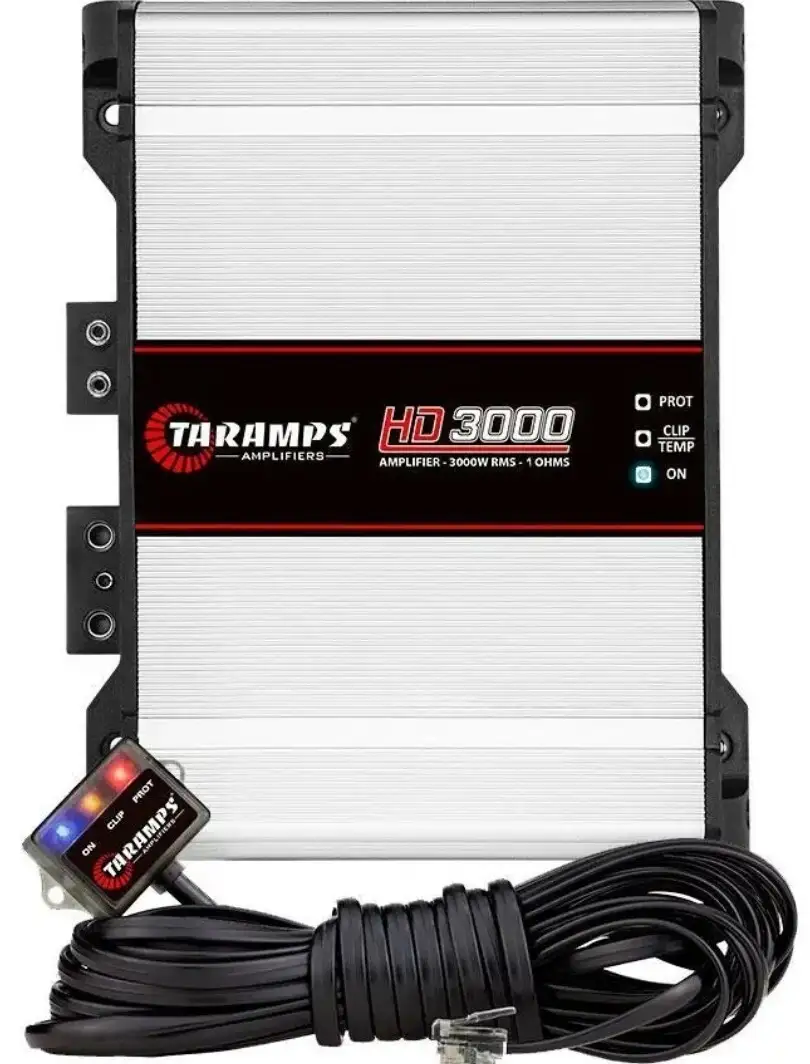
The Taramps HD 3000 Monoblock Car Amplifier consistently earns high marks from car audio enthusiasts, with Trustpilot reviews hitting an impressive 4.9/5 and Amazon sitting at 4.3/5. Power output stories dominate the feedback—one verified buyer flatly stated: "This little beast is by far the best amp I've owned… rocks this fifteen like nothing I've had hooked up to it so far!" Combining 3000W RMS in a compact form factor, it appeals to users pushing serious subwoofer setups without wanting to sacrifice trunk space.
Quick Verdict: Conditional Buy
| Pros | Cons |
|---|---|
| Extremely powerful 3000W RMS output | Demands significant electrical upgrades |
| Compact size fits tight installs | Sensitive to voltage drops (below 11v cuts out) |
| Adjustable high/low pass & bass boost | Fan noise reported by some users |
| Strong protection systems | No extras like stickers/accessories in some orders |
| Praised for deep bass performance | Can blow inadequate speakers quickly |
| Fast shipping from Brazil reported often | Not ideal for casual/listener-level setups |
Claims vs Reality
One of the boldest marketing points is its "full range" frequency response of 10 Hz–20 kHz, designed to work with subs, mids, and highs alike. While this is technically accurate, digging deeper into user reports reveals that most owners use it predominantly for bass-heavy builds. A verified Trustpilot reviewer using a 2-ohm model admitted: "Pushing four audiopipe 12's… gets scary loud!", suggesting while it can run full-range, buyers often harness its brute force for low-end impact.
Another big claim from Taramps is "3000 watts RMS at 1 ohm" with “technology and sophistication” in design. That output figure seems spot-on in real-world use—multiple Trustpilot reviewers confirmed the amp “makes rated power if you have the electrical upgrades to back it up.” The caveat? As one warned: "Make sure your car's electrical system is upgraded. These amps don't like voltage under 11 volts. They will stop working."
Lastly, their smart cooler fan system is marketed as “temperature or audio responsive.” While effective at thermal management, there’s still nuance for users—one long-time owner noted: "First one was a 1 ohm model… worked great (had fan noise) but worked awesome!" So while overheating isn’t a recurring complaint, acoustic fan presence is noticeable in quieter operation contexts.
Cross-Platform Consensus
Universally Praised
Power delivery is the standout asset across Amazon, Trustpilot, and Reddit discussions. For bass enthusiasts, the HD 3000’s output transforms builds from competent to competition-grade. A Reddit thread describing mid-bass applications framed it as “perfect for 6x9’s, phenolic drivers, super tweeters, and others”, underscoring flexibility. Verified buyers seem equally impressed with how compact it is for that wattage: “The amp is small and sounds real good”, said one Trustpilot user.
Its tuning options—adjustable high pass, low pass, and bass boost—allow builders to fine-tune tone. A Trustpilot member who blew their 15s noted, “Now I have to find some speakers to satisfy this little beast”, showing it’s capable of driving hardware beyond its limits if settings push extremes.
Common Complaints
Voltage sensitivity is the strongest recurring complaint. The HD 3000’s protection circuitry shuts operation below ~11 volts. Owners who hadn’t upgraded alternators or added sufficient battery support experienced abrupt cutouts. This disproportionately affects casual buyers attempting big bass on stock electrical systems.
Thermal fan noise appears in multiple accounts. Owners running systems for mids/highs rather than subs found the cooling system acoustically intrusive, especially during low-volume listening. Another minor gripe is Taramps’ inconsistency with accessories: several verified buyers expected stickers or branding extras based on previous orders and were disappointed when they didn’t arrive.
Divisive Features
Bass boost capability (up to +10.5 dB at 50 Hz) splits opinion. Heavy bass users praise the authority: “Nice deep bass running it at 2 ohms”. But others warn it can push subwoofers past mechanical limits quickly. The amp’s full-range marketing also divides users—those chasing precision across the spectrum see it as versatile, while purists feel specialized amps for highs/mids outperform it in those ranges.
Trust & Reliability
Trustpilot patterns suggest strong shipping reliability; “super fast” from South America was a recurring praise. This matters for international buyers wary of Brazil-sourced gear delays. Long-term reliability stories are positive—owners with multiple Taramps units report consistent high performance over months without overheating or failures.
Longevity, however, is contingent on proper electrical prep. The same users who praise its durability emphasize voltage stability. Those ignoring this prep often report premature trips into protection mode.
Alternatives
Where comparisons do surface, they’re often against the MMATS 8K—seen as a higher-tier competitor in sheer output. One user who owned both stated: “Best I’ve had except for my 8K MMATS”, indirectly confirming HD 3000’s sub-league spot in extreme SPL circles. The Taramps Smart 3 Bass appears as a sibling option, with broader impedance flexibility (0.5–2 ohms) but similar RMS rating, making Smart 3 viable for multi-sub builds without strict 1 or 2-ohm limits.
Price & Value
On Amazon, pricing hovers around $213–$248, with eBay listings ranging from $219 to $374 depending on impedance and add-ons. Market churn shows strong resale viability—used units move fast, especially 1-ohm versions with bundled clip monitors. Community buying tips stress securing electrical upgrades in budget planning; “if u go with another brand ur crazy bc this right here is the best… for the monies,” wrote one Trustpilot reviewer, emphasizing the value-for-watt ratio.
FAQ
Q: Does the Taramps HD 3000 work for highs and mids?
A: Yes, it’s full range (10 Hz–20 kHz) and can run mids, highs, and subs, though most users prefer it for bass-heavy setups due to sheer output.
Q: What happens if my car voltage drops below 11v?
A: The amp’s protection circuitry will cut output. Users recommend an upgraded alternator or additional batteries to maintain stable voltage.
Q: Is fan noise a problem?
A: Depends on your application. Subwoofer builds won’t notice, but mids/highs at low volumes in quiet environments may reveal fan sound.
Q: Can it actually output 3000W RMS at 1 ohm?
A: Yes—verified by experienced installers, but only if electrical support meets demand (around 150–153A draw at music levels).
Q: Does it come with accessories like stickers?
A: Not consistently. Some buyers received extras in previous orders, others did not.
Final Verdict: Buy if you’re a bass enthusiast or SPL competitor with a solid electrical system. Avoid if you’re on factory electrical or want ultra-quiet operation in full-range builds. Pro tip from community: budget at least as much for electrical upgrades as for the amp itself—only then will the HD 3000 deliver its rated output without cutting out.





