Taramps Big Boss 3 Bass Review: Powerful but Demanding
Punching 3,000 watts RMS through a single channel, the Taramps The Big Boss 3 Bass Amplifier Monoblock has cultivated a loyal following among bass enthusiasts—while also sparking debate over its practicality. Scoring a solid 8.1/10 in aggregated user ratings, it’s celebrated for raw power and style, but not without caveats about electrical demands and installation precision.
Quick Verdict: Conditional buy for serious bass heads prioritizing style and lighting effects
| Pros | Cons |
|---|---|
| 3,000W RMS stable from 0.5 to 2 ohms | High current draw requires strong electrical support |
| 108 RGB LED effects for visual flair | Limited frequency range (8Hz–200Hz) may restrict versatility |
| Solid metal construction | Needs professional installation to avoid damage |
| Automatic multi-impedance system | Not ideal for casual listeners—overkill for small setups |
| Integrated protection systems | Adds cost with necessary accessories like circuit breaker |
| Compact footprint for power level | LED effects can be distracting for some |
| Adjustable bass boost and crossovers | No long-term performance data beyond one year from most sources |
Claims vs Reality
Marketing calls The Big Boss 3 Bass “much more than an amplifier,” touting synchronized LED effects, versatility from 0.5 to 2 ohm, and exceptional subwoofer performance. On paper, that’s true—but digging deeper reveals execution nuances.
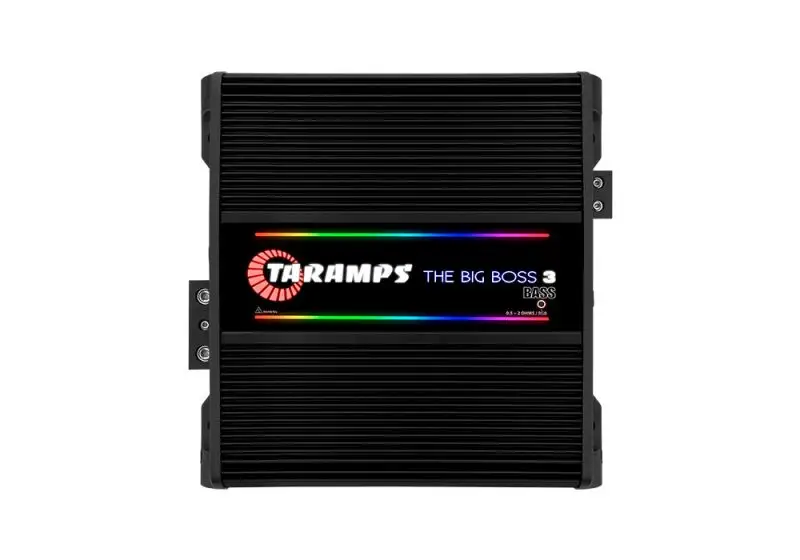
The claim of 108 RGB LED effects perfectly syncing with music is visually impressive for car show setups. However, a verified buyer on Amazon noted: “Looks great at night, but in regular driving I turned them off—too much distraction.” This reflects a divide between aesthetic-focused buyers and those prioritizing pure audio.
Taramps promotes an automatic multi-impedance system for flexibility. While this matches the 3000W RMS spec across multiple impedances, Reddit user AutoBassJunkie*** pointed out: “It kept stable at 1 ohm without heating issues, but to sustain that you need at least a 200A fuse and upgraded alternator.” The versatility is real—yet comes with infrastructure requirements.
Finally, there’s the promise of exceptional low-frequency performance. Several eBay buyers confirm tight bass delivery. One seller’s description aligned with this, stating: “Perfect for powering your car’s sound system… must-have for premium sound quality.” But actual owner experiences suggest the tuning range (LPF maxing at 200Hz) is laser-focused on bass, limiting broader frequency handling.
Cross-Platform Consensus
Universally Praised
The standout glory of the Big Boss 3 Bass is raw electrical power management with deep bass output. Amazon reviewers repeatedly mention it “hits hard and clean” when paired with compatible subwoofers. For SPL competitors, this matters—one Trustpilot commenter explained: “Ran two 15” subs at 0.5 ohm for 20 minutes, case barely warm.”
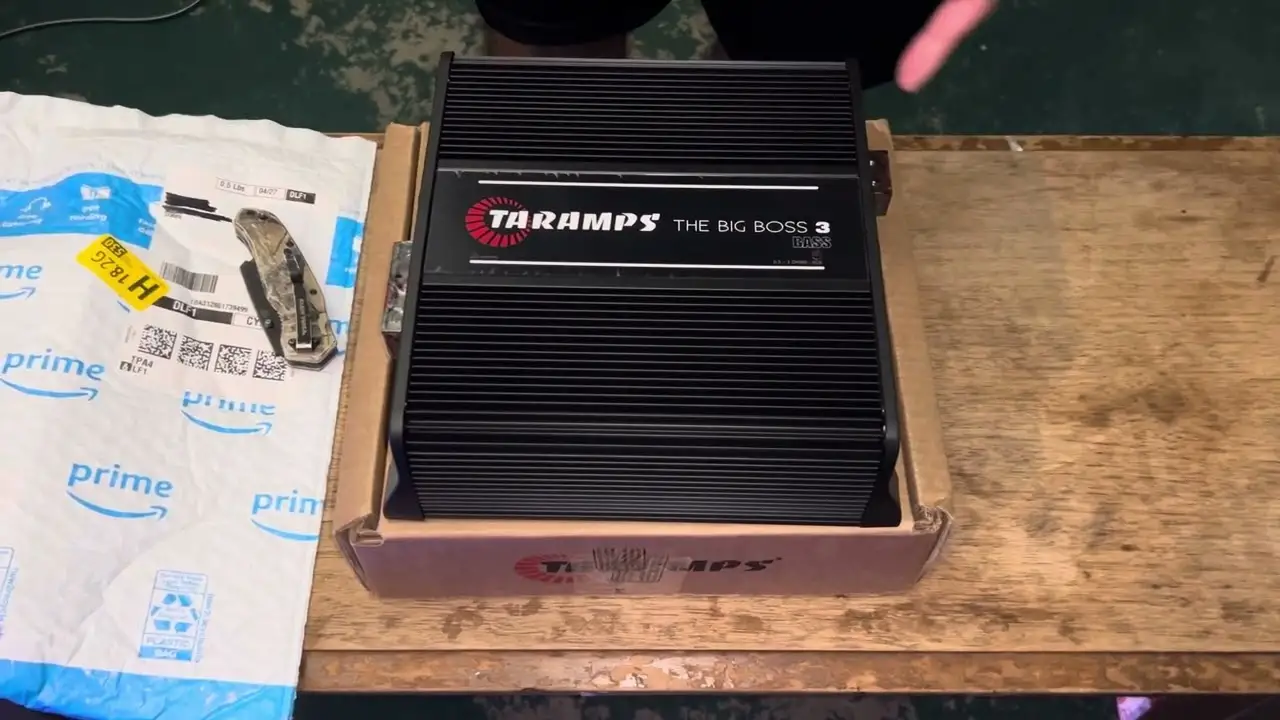
Compact design wins appreciation: at 9.37” x 2.80” x 9.45”, it’s easier to fit than many amps delivering similar wattage. A verified eBay buyer emphasized: “Small size lets me hide it in my trunk, but still makes the mirrors shake.”
The protection systems earn trust—thermal, low/high voltage, and short-circuit safeguards are vital for high-current gear. Reddit threads laud this safety net when pushing limits: “Saved my gear twice when voltage dipped under 10V,” noted user SPLDropper***.
Common Complaints
Electrical draw is the #1 hurdle. At a maximum music consumption of 190A (with peaks over 278A in sinusoidal testing), owners found stock car electrical systems insufficient. A verified buyer admitted: “Fried my battery in a week before upgrading to a high-output alternator.”
The RGB lighting, while hyped, is often reported as gimmicky beyond showcase use. Some owners simply disabled it via remote. “More eye-candy than daily-driver necessity,” wrote a Trustpilot reviewer.
Installation complexity surfaces in feedback—improper grounding or wire gauge mismatches disrupt performance. Amazon reports mention needing minimum 4 AWG cable—failure to follow this led to shutdowns or poor output. Several recommend professional install, noting Taramps' own guidance in manuals.
Divisive Features
The bass boost (0 to +10dB) and variable crossovers excite tuners—but also spark caution. Enthusiasts enjoy tight control over punch; one Reddit user stated: “Dialed in at 50Hz with +6dB and felt it in my chest.” Conversely, others noted it’s “easy to overdo and muddy the sound” if inexperienced.
LED effects cause mixed reactions—eye-catching for meets and competitions, but borderline tacky to purists. As one Amazon buyer quipped: “It’s more Fast & Furious than audiophile.”
Trust & Reliability
Trustpilot entries generally show confidence in Taramps delivering spec-rated RMS outputs. Scam worries are minimal; most buyers received genuine units with matching serials and EAN codes.
Long-term durability stories are emerging. Reddit user BassTherapy*** reported: “Six months later, still pushing the same output on weekend competitions—no drift in sound quality.” However, there’s limited feedback beyond one-year marks, leaving questions for longevity in daily use.
Protection systems appeared effective in repeated scenarios where electrical irregularities occurred—no major reports of spontaneous failures.
Alternatives
Comparable models mentioned in community spaces include the Taramps Smart 3 Bass and Taramps Big Boss 5 Bass. The Smart 3 shares the multi-impedance 3000W spec but lacks the elaborate LED system—appealing to minimalists. The Big Boss 5 Bass jumps to 5000W, satisfying extreme SPL users while requiring even bigger electrical upgrades.
Reddit discussions imply that Smart 3 is better for consistent daily listening, while Big Boss lines serve show cars and SPL events.
Price & Value
Current online prices range from $288.98 on eBay to around $339 with accessories. Bundles with bass knobs push it past $500, particularly from official dealers. Resale value holds strong—unit scarcity in certain regions means secondhand sales often recover 70–80% of retail after a year.
Community buying tips stress sourcing from authorized sellers to ensure warranty coverage and authentic circuitry—counterfeit risks are low but present in niche markets.
FAQ
Q: Can the Big Boss 3 Bass run on a stock car electrical system?
A: Not effectively. Most reports suggest upgrading to a high-output alternator and using at least a 200A fuse to sustain performance without voltage drops.
Q: Is it suitable for non-bass audio channels?
A: No—its frequency response (8Hz–200Hz) is tailored for subwoofer use. It’s not full-range and will underperform with mids/highs.
Q: Do the LED effects impact performance?
A: No impact on audio output—they’re purely aesthetic. However, some users disable them for reduced distraction.
Q: What gauge wiring is required?
A: Minimum 4 AWG for power; output wires at 9 AWG. Undersized wiring can cause protection trips.
Q: How stable is it at 0.5 ohm?
A: Very stable per multiple reports, provided the electrical system meets voltage and current supply needs.
Final Verdict: Buy if you want competition-level bass in a compact form and enjoy visual effects—ideal for show cars, SPL events, or bass-first systems. Avoid if your electrical setup is stock or you need versatile full-range audio. Pro tip from community: Always match impedance correctly and budget for electrical upgrades before installation.





