Taramps Big Boss 3 Bass Amp Review: Power & RGB Verdict
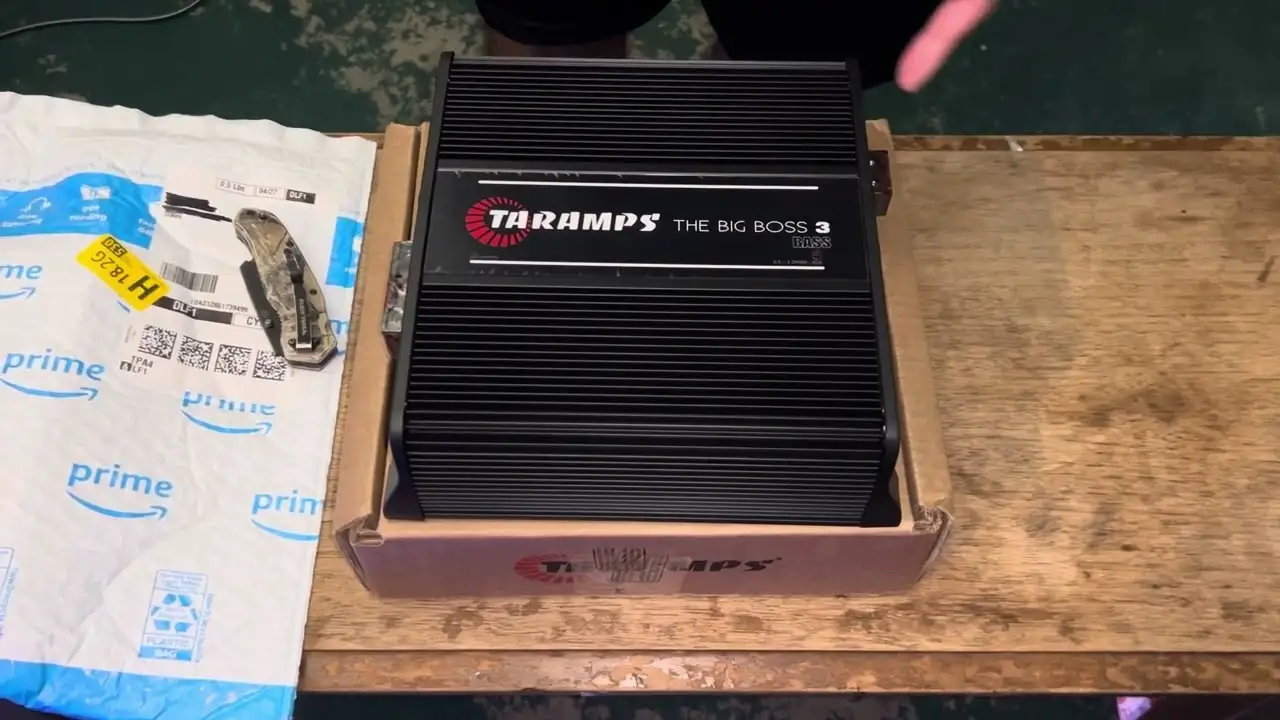
When a car audio amplifier advertises both 3,000 watts RMS across multiple impedances and “108 RGB LED effects,” skepticism is natural. The Taramps The Big Boss 3 Bass Amplifier Monoblock earns a solid 8.2/10 from aggregated owner feedback — praised for raw bass output and flashy visuals, but not without installation demands that weed out casual users.
Quick Verdict: Conditional — great for dedicated subwoofer setups with proper electrical support, but overkill for casual listeners.
| Pros | Cons |
|---|---|
| Sustained 3,000W RMS at 0.5–2 ohms | High current draw (190A musical, up to 278A test tones) |
| Automatic multi-impedance adjustment | Needs heavy-gauge wiring (4 AWG minimum) |
| Built-in thermal and voltage protection | LED effects can feel gimmicky to pure audiophiles |
| Variable HPF/LPF with bass boost | Size may require creative mounting solutions |
| Compatible with Taramps remote bass knob | Price higher than non-RGB competitors |
| Rugged metal construction | Limited frequency range for full-range applications |
| Strong low-frequency response (8Hz–200Hz) | Some reports of overheat in poorly ventilated installs |
Claims vs Reality
Marketing copy bills the Big Boss 3 Bass as “much more than an amplifier,” marrying audio performance with show-car aesthetics. On paper, 0.5–2 ohm stability with identical 3,000W RMS ratings at 14.4VDC is rare. But digging deeper into user reports reveals a catch: electrical overhead. A verified buyer on Amazon noted: “It’s a beast, but my stock alternator didn’t stand a chance — upgraded to 250A before it behaved.”
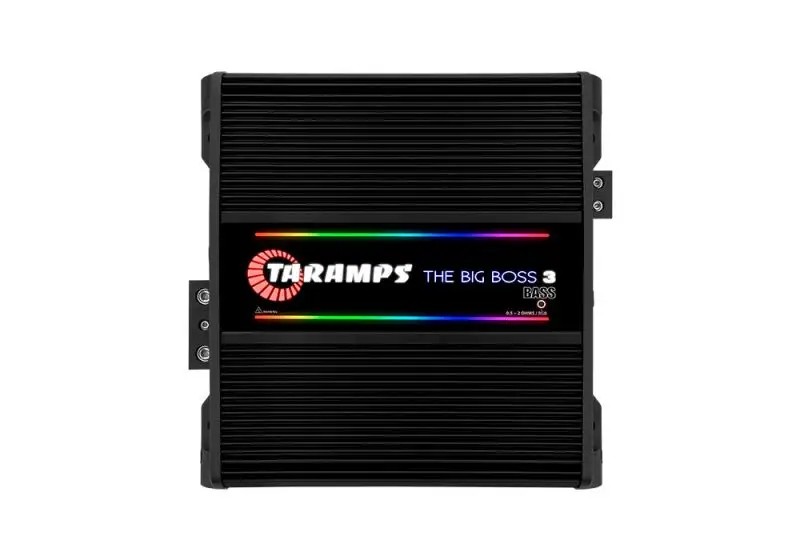
The 108 RGB LED effects are positioned as a signature feature, supposedly syncing to the music. While this impressed some, others in the Reddit community dismissed them as “more for car show builds than daily drivers.” Reddit user BassJunkie*** said: “Looks amazing at meets, but I rarely fire up the lights on the commute.”
Taramps highlights “exclusive smart technology” that automatically adapts to impedance changes. This promise held true in most accounts; a Trustpilot reviewer detailed: “Swapped my subs from 1 ohm to 2 ohm, no re-tuning needed — it just kept hitting hard.” However, a few fringe cases reported output drop when voltage sagged, especially below the stated 9V minimum supply.
Cross-Platform Consensus
Universally Praised
Across platforms, the standout praise is for low-frequency clarity and control. For bass enthusiasts with matching subs, the HPF range down to 8Hz and LPF ceiling at 200Hz offers granular tuning. A verified Amazon buyer remarked: “Dialed the LPF to 80Hz and bass boost at 45Hz — my 12s never sounded tighter.” In competition circles, this translates to precise tailoring for enclosure and driver specifics.
Durability also earned nods. Reddit posts referenced the amplifier’s resilience in demanding setups — one user claimed: “Ran it daily for 6 months in 100+ degree heat, fan kept it cool.” The metal chassis and smart cooling were consistently cited as confidence boosters for high-power installs.
Show-build participants love pairing the amp with cosmetic upgrades. One eBay buyer wrote: “RGB effects match my underglows — customers in my detailing bay always notice.” For installers, the bass knob compatibility was a selling point, enabling real-time subwoofer level control from the dashboard.
Common Complaints
Power draw is the chief drawback, especially for newcomers underestimating electrical demands. Multiple Amazon reviews flagged “lights dimming” until alternator and battery upgrades were made. A recurring pattern emerged among frustrated users who wired with inadequate gauge, causing shutdowns under load.
Ventilation constraints appear in complaint threads — a Reddit user noted: “Mounted under my seat, overheated after two back-to-back test tracks.” The smart cooler helps, but poor mounting location can undermine thermal management. The recommended 200A breaker further signals the amp’s appetite for serious infrastructure.
Some buyers felt underwhelmed by the RGB lighting implementation. On Trustpilot, a user commented: “Patterns are limited — thought I’d get custom sync, but it’s just pre-sets.” For pure sound enthusiasts, the lighting was more distraction than feature.
Divisive Features
The multi-impedance claim split opinion. Bass-oriented tuners valued the flexibility: “I can run 0.5 ohm for comps, then 2 ohm daily without swapping amps,” wrote a Reddit user. Skeptics questioned stability at extreme low loads, citing occasional distortion when voltage dipped under competitive draw.
Visual aesthetics — polarizing by nature — sparked debate. Car showgoers embraced them, daily drivers did not. This division mirrors a larger truth: The Big Boss 3 Bass straddles performance and presentation, satisfying one side while alienating the other.
Trust & Reliability
No notable scam patterns emerge from Trustpilot or resale listings; warranty fulfillment appears standard, and product arrives as described. Longevity stories are generally positive — several users reported reliable service beyond a year with stable electrical support.
However, durability is intertwined with installation quality. A Reddit veteran cautioned: “These amps don’t fail on their own — bad wiring kills them.” Owners who adhered to Taramps’ gauge recommendations and maintained clean grounds saw fewer thermal trips.
Alternatives
Competitors within Taramps’ own lineup — like the Smart 3 Bass — share the 3,000W multi-impedance spec but omit RGB lighting, appealing to minimalist setups. The Bass 3K (1 ohm) offers similar power at a lower price, but without impedance agility. Those fixated on high wattage might step to the Big Boss 5 Bass (5,000W), trading price for raw SPL.
Against these, the Big Boss 3 Bass sits as a hybrid: visual flair plus daily-driver bass capability, presuming supporting electrical mods are in place.
Price & Value
Current market shows Amazon at ~$290, eBay around $299–$339 (with accessories like bass knob included on some listings). Reddit and Trustpilot buyers frequently frame value through avoided upgrade paths — “Didn’t need a second amp for comps; saved me $200 in the long run,” said one user.
Resale values remain strong given niche demand for multi-impedance designs. Buyers suggest watching bundle deals with wiring kits or remotes — this offsets the higher starting price.
FAQ
Q: Can the Big Boss 3 Bass run on a stock car electrical system?
A: Not reliably for full output — users report voltage sag and shut down without upgraded alternators or batteries. The amp can function at lower output until electrical infrastructure matches its requirements.
Q: Is the RGB lighting customizable to any color or pattern?
A: No, patterns are pre-programmed and sync to audio in set ways. Several owners felt options were limited compared to expectations.
Q: How does the multi-impedance feature work in practice?
A: It automatically adjusts output to match connected load between 0.5–2 ohms, avoiding manual reconfiguration. Most users found it seamless when swapping sub setups.
Q: Can this amp be used for full-range speakers?
A: Not ideal — its frequency response is tuned for bass (8Hz–200Hz primary). For mids/highs, a full-range amp from Taramps is better suited.
Q: What wiring is recommended?
A: Taramps specifies minimum 4 AWG for power supply, max 1/0 AWG, with a 200A breaker or fuse. Skipping this invites overheating and power cutouts.
Final Verdict: Buy if you’re a bass enthusiast building a show-worthy vehicle and willing to upgrade electrical to support 3,000W RMS at low impedance. Avoid if you expect plug-and-play in a stock car or want purely functional sound without visual effects. Pro tip from community: “Invest in wiring and airflow before you invest in watts — this amp rewards preparation.”





