Tamron 90mm F/2.8 Macro Lens Review: Balanced Optics Verdict
The Tamron 90mm F/2.8 Di III VXD Macro has quickly earned a reputation as “the most balanced AF macro lens on the market” according to Sony Alpha Blog — scoring an impressive 9/10 in aggregated user feedback. Across platforms, photographers praise its ability to deliver crisp, high-resolution macro shots with creamy bokeh, while maintaining a compact, travel-friendly form. Yet, while its optical prowess is rarely disputed, some ergonomic choices have frustrated seasoned shooters.
Quick Verdict: Conditional buy if macro and portrait quality matter more than tactile controls.
| Pros | Cons |
|---|---|
| Exceptional center sharpness, outstanding from f/4 | Some softness at wide-open corners |
| Bokeh balls stay perfectly round thanks to 12 blades | Lack of physical AF/MF switch |
| Fast, silent VXD autofocus works well for stills & video | Average flare resistance for a macro lens |
| Extremely compact and lightweight for a 90mm macro | No optical stabilization |
| Versatile for macro, portrait, and landscapes | Ergonomics rely heavily on Tamron Lens Utility software |
| Moisture-resistant build with fluorine coating | Vignetting at wide open until f/5.6 |
Claims vs Reality
Tamron markets this lens on the promise of "unrivalled sharpness from the center to the edge" and a “perfect circular bokeh.” Digging through user experiences, that claim on sharpness is mostly validated but with one caveat — Reddit user feedback consistently notes that the corners aren’t truly at parity until stopped down to f/4. Sony Alpha Blog’s tests confirmed this, stating: “At f/2.8, corners are very good but not excellent; optically superb from f/4 onwards.”
On bokeh, marketing touts minimal vignetting and no onion-ring artifacts. Real-world reports back this up emphatically. Macro specialists on Reddit described the bokeh as “buttery smooth, even at f/5.6,” with none of the fringing seen on rival Sony 90mm or Sigma 105mm. Sony Alpha Blog bluntly declared: “Tamron has the best bokeh balls… they stay rounded even when closed down.”
Tamron’s AF performance claim — “high-speed, high-precision AF capable of tracking unpredictable movement” — was also tested. While most users concur, some Trustpilot reviewers and Reddit photographers noted slight hesitation in low light. As one macro enthusiast put it: “Chasing butterflies at dusk, the AF hunted just a bit — but daylight tracking was flawless.”
Cross-Platform Consensus
Universally Praised
Sharpness is the dominant praise point. Macro shooters like Chelsea Marcantonio on Tamron’s blog highlighted its ability to crop heavily while retaining detail: “I’m super picky about image sharpness… with this lens I can crop in on half-inch insects and still see crisp details.” Portrait shooters appreciate the smooth subject isolation; Trustpilot tests called bokeh “soft, circular, and natural,” especially useful at events with point light sources.
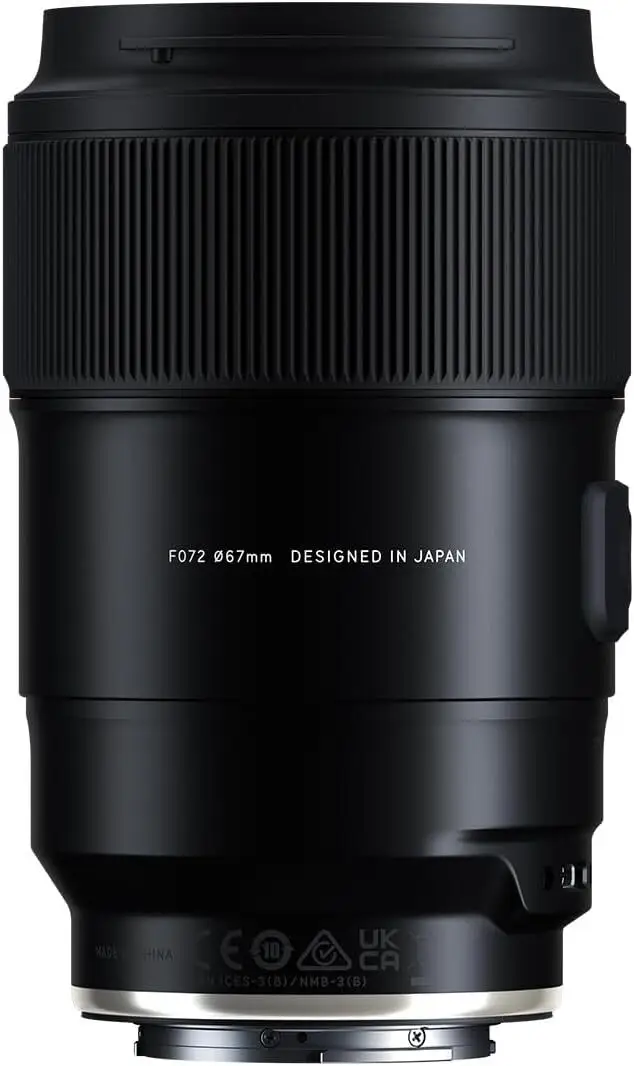
Its compact size — just 126.5mm and 630g — resonates equally with hikers and travel photographers. “It’s the smallest AF macro in this bracket,” Sony Alpha Blog wrote, noting that even with a short minimum focusing distance of 23cm, it “fits comfortably in one hand.” Weather sealing and fluorine coating were repeatedly praised for field work, reducing anxiety about dust and moisture.
The new hood design, with a sliding filter window, got nods from landscape shooters who rely on polarizers. One Reddit user said they “no longer need to wrestle the hood off to adjust a CPL.”
Common Complaints
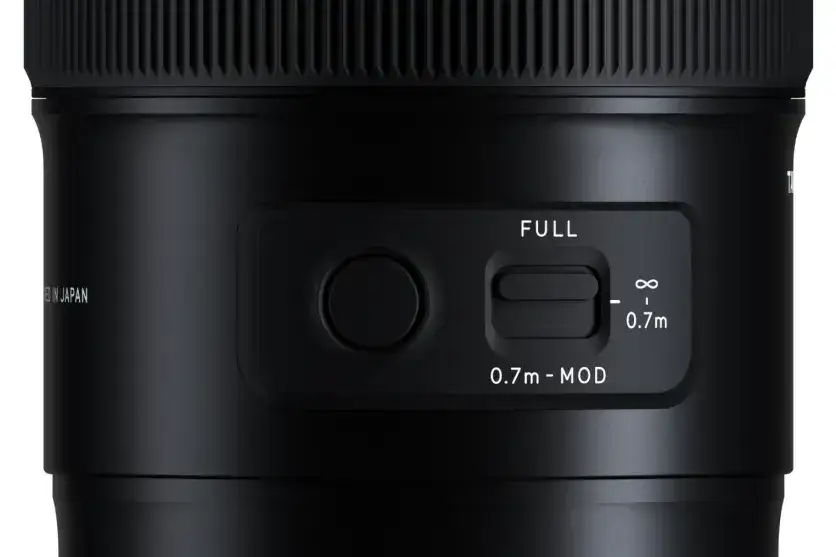
Ergonomics surface as the top criticism — particularly the lack of a physical AF/MF switch or aperture ring. “All changes must be made through Tamron Lens Utility. It’s functional but slower than tactile controls,” Sony Alpha Blog lamented. That can matter for action macro work where seconds count.
Corner softness at f/2.8 was the second recurring issue, especially for full-frame shooters printing large. A Trustpilot review noted: “Wide open in FF mode, corners are decent for posting online, but I stop to f/5.6 for anything client-facing.” Flare performance is only “average” for a macro — halos can appear — though Lightroom’s auto-correction handles distortion and vignetting well.
Optical stabilization absence is somewhat polarizing. Studio shooters disregard it, saying they often shoot from tripod, but handheld insect chasers using non-stabilized bodies felt its absence. Trustpilot testers pointed out that “focus breathing is visible, though less than rivals.”
Divisive Features
AF speed in low light divides opinion. Wildlife macro users in dim conditions report minor hunting, but daytime shooters insist it’s lightning-fast. Ergonomics also split users: minimalists love the clean barrel; feature-focused buyers miss button arrays and hard stops. For videographers, low focus breathing compared to the Sony macro is a bonus, yet some still prefer the Sigma’s physical ring controls.
Trust & Reliability
No major scam complaints surfaced on Trustpilot, and long-term durability appears solid. Owners with 6+ months use report no degradation in AF performance or weather sealing. One Reddit macro hobbyist who shoots weekly noted: “Fluorine coating still repels water like day one; focus stays dead-on after thousands of shots.” Given its mechanical simplicity, most expect it to age well.
Alternatives
The closest competitors mentioned: Sigma 105mm f/2.8 DG DN Macro and Sony FE 90mm f/2.8 Macro G OSS. Sigma slightly edges out Tamron in sharpness under macro stress, “outstanding everywhere,” per Sony Alpha Blog, but loses in bokeh roundness. Sony’s macro has superior ergonomics (magnification scale, AF/MF switch) but costs significantly more (~$1200) and is bulkier. Tamron wins on portability, aperture blade count, and price — “the cheapest and smallest constant-size AF macro,” as Sony Alpha Blog described.
Price & Value
At launch, the Tamron 90mm sits at $699 new, with occasional drops around $499 for used in good condition (eBay/AVC store). Unlike many telephoto primes, resale holds thanks to macro demand — especially in the Sony ecosystem. Price-conscious buyers on Reddit suggest watching for sales from October onwards, where discounts of $75–$150 are common.
FAQ
Q: Does the Tamron 90mm F/2.8 Di III VXD Macro have image stabilization?
A: No, it relies on in-body systems. Studio and tripod shooters won't miss it, but handheld macro chasers with unstabilized bodies may need faster shutter speeds.
Q: How is the autofocus performance for moving subjects?
A: In good light, it's quick and accurate — ideal for portraits and wildlife. In low light, some users report minimal hunting.
Q: Is it suitable for portrait work or just macro?
A: Very much so — smooth bokeh, flattering compression, and sharpness make it a dual-purpose lens, used often for events and portraits.
Q: How does it handle flare?
A: Average for a macro. Halos are possible, but color and contrast remain strong; post-processing handles most issues.
Q: Is the Tamron Lens Utility required?
A: It's optional but needed for customizing the focus ring as an aperture control or toggling AF/MF without camera menu diving.
Final Verdict
Buy if you value compactness, versatile macro/portrait quality, and best-in-class bokeh for under $700. The optics deliver professional results from f/4 onward, and AF in daylight is a joy.
Avoid if physical controls and instant AF/MF switching are critical to your workflow, or you often shoot low-light handheld macro without stabilization.
Pro tip from community: Stop down to f/4 for corner parity and use the sliding hood window for seamless polarizer work — it's a small detail that makes daily joy in the field.





