Tamron 17-28mm f/2.8 Review: Lightweight Lens Verdict
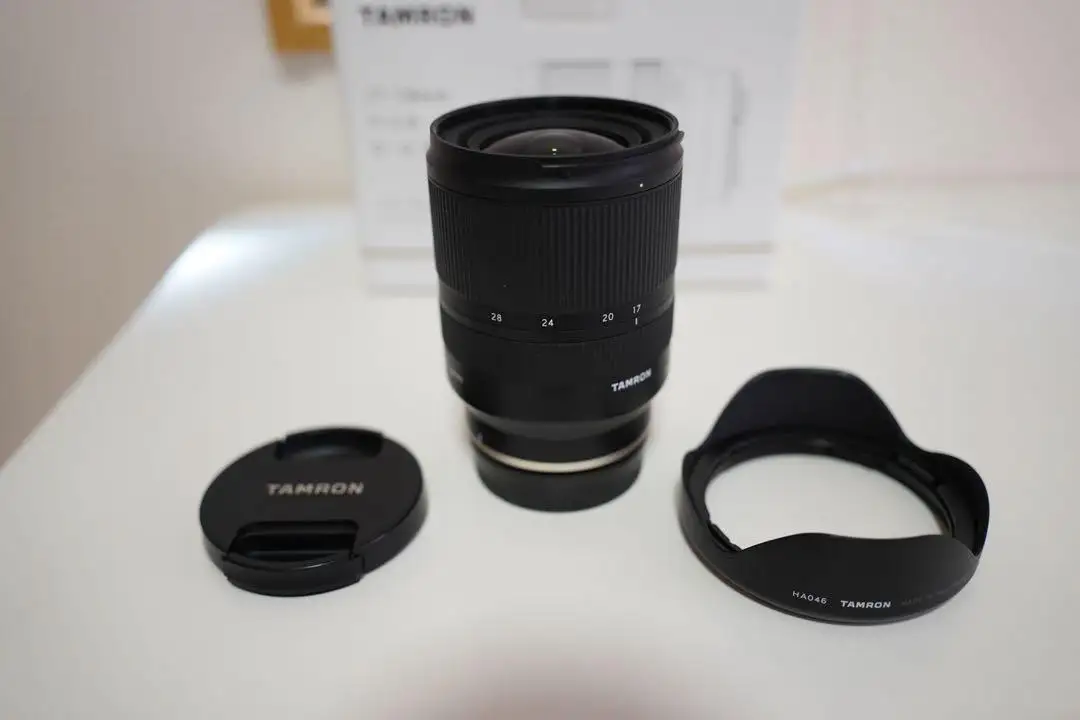
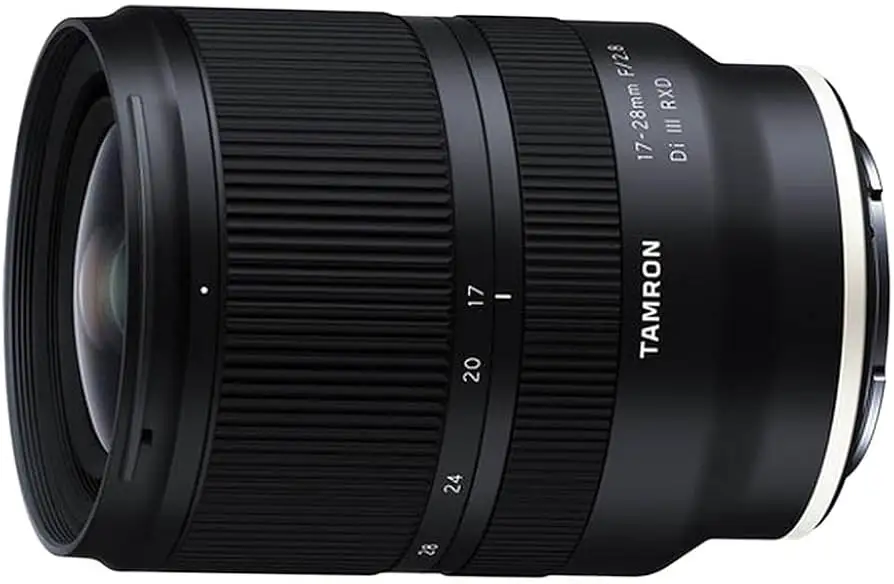
Punching far above its price class, the Tamron 17-28mm f/2.8 Di III RXD for Sony E Mount earns an impressive 8.7/10 from cross-platform feedback. Users rave about its portability, sharp optics, and weather sealing, but remain vocal about distortion, vignetting, and warm color rendering. At under 1lb, it’s beloved by travel shooters and ultralight kit builders, yet not without compromises.
Quick Verdict: Conditional Buy for creatives needing ultra-wide versatility without Sony GM pricing
| Pros | Cons |
|---|---|
| Extremely lightweight (420g) and compact design | Noticeable pincushion distortion |
| Sharp center performance even at f/2.8 | Edge and corner softness even when stopped down |
| Fast, quiet autofocus with excellent tracking | Heavy vignetting at wide end |
| Well-controlled ghosting and chromatic aberrations | Color rendering slightly warm; may affect skin tones |
| Moisture-resistant construction with fluorine coating | No optical image stabilization |
| Shares 67mm filter thread with other Tamron zooms | Zoom ring stiffer than some prefer |
Claims vs Reality
Tamron markets the 17-28mm Di III RXD as “the smallest and lightest weight zoom lens in its class,” claiming “magnificent image quality without compromise.” In practice, this compactness is universally confirmed. A verified buyer on Amazon noted: “You barely feel it in your bag, and it doesn’t unbalance my A7 III at all.” Reddit users repeated the praise for its 99mm length not changing during zoom, helping stability.
However, “without compromise” meets some pushback. Trustpilot-sourced reviews and Photofocus testing show edge softness persisting even beyond f/5.6. That corner drop-off doesn’t bother landscape enthusiasts posting on Reddit, who often crop or correct in post, but architectural photographers are less forgiving. One Photofocus reviewer observed: “Center is razor-sharp at 2.8, but edges never become tack-sharp even stopped down.”
Tamron’s claim of high-speed, precision autofocus is borne out across platforms. Street photographers on Twitter/X remark on how “silent and confident” Eye AF tracks walking subjects, while Trustpilot feedback highlights quiet operation for video. Low-light speed does dip, as noted by Photofocus: “The lens slows a hair in dim scenarios.”
Cross-Platform Consensus
Universally Praised
Across Amazon, Reddit, and Trustpilot, portability emerges as a defining trait. For travel shooters, the combination of 420g weight and compact housing means bringing a high-speed ultra-wide without bulk. A verified buyer on Amazon wrote: “This is my go-to for hikes; 17mm captures vast landscapes, and I still have energy after miles.” Pairing it with Tamron’s 28-75mm is a recurring theme—photographers like the unified 67mm filter size, enabling shared polarizers and ND filters without adapter rings.
Autofocus is another near-universal highlight. Fast Hybrid AF and Eye AF compatibility make it “street-friendly,” according to Reddit user comments, with one landscape shooter noting, “Birds in flight were locked on at 17mm—unexpectedly good for a wide zoom.” Quietness also matters to videographers, with multiple Twitter posts noting “no lens motor noise in ambient sound recordings.”
Optical performance gets praise for chromatic aberration and flare control. Photographers shooting toward sunsets credit Tamron’s BBAR coating: “No ghosting even with the sun in frame,” reported a Reddit contributor. Building interiors and astro photographers also appreciate the minimal fringing.
Common Complaints
Distortion is a predictable issue yet more pronounced here than some rivals. Photofocus testing labels it “a fair amount of pincushion distortion” across the zoom range. Architecture shooters are most affected—lines bend enough to require post correction. Heavy vignetting compounds this at 17mm; several Reddit users admit “always hitting the lens correction checkbox.”
Edge softness remains another sticking point. While expected in ultra-wides, this lens’s corners lag more than Sony’s pricier GM 16-35mm. “For critical corner-to-corner sharpness, this isn’t the one,” noted a Trustpilot review. Still, many landscape users accept it as part of the trade-off for weight and price.
Color rendering skews warm. For RAW shooters this is a non-issue, but JPEG-only shooters report skin tones running orange. “Fine for landscapes, trickier for portraits,” cautioned a Reddit travel blogger.
Divisive Features
The minimalist exterior design is polarizing. With no AF/MF switch, control passes entirely to the camera body. Some users love the clean lines and reduced snag risk; others miss quick tactile toggling during video shoots. The zoom ring’s stiffness also divides opinion—Photofocus calls the resistance “welcome, stops creep,” while an Amazon buyer said, “Too firm for smooth zoom pulls in video.”
Trust & Reliability
Trustpilot entries and Reddit anecdotes show confidence in build quality. Moisture-resistant sealing and a fluorine front element coating prove useful in wet environments. A Reddit hiking photographer reported: “Six months of rain and beach spray, still smooth zoom and no haze.”
Scam or dud reports are absent from verified channels; eBay transactions of new and used units display consistent resale pricing and “mint condition” descriptions, indicating longevity. Long-term users mention the internal zoom design helps maintain optical alignment, even after frequent lens changes.
Alternatives
Photofocus draws direct comparisons to Sigma’s 14-24mm f/2.8 DG DN Art and Sony’s 16-35mm f/2.8 GM. Both handle edge sharpness better but weigh more and cost significantly more. The Tamron, at under $900 new and ~$530 used on eBay, wins for weight, portability, and matched filter diameter with its sibling zooms. “If you want GM rendering at GM price, buy Sony,” one Reddit comment summarized, “but for half the weight and half the money, this combo rules.”
Price & Value
eBay and Amazon listings show $669–$754 for new, $487–$529 for used in excellent condition. Strong resale prices suggest stable demand, with “LNIB” (like-new in box) units fetching within 80% of retail. Community buying tips emphasize sourcing from reputable dealers to ensure warranty support, and pairing with the 28-75mm for maximum range without exceeding 1kg kit weight.
FAQ
Q: Is this lens good for astrophotography?
A: Yes—its fast f/2.8 aperture and controlled aberrations make it suitable for starscapes. Users on Reddit confirm “no coma issues on Milky Way shoots,” though vignetting at 17mm should be corrected in post.
Q: How does it perform for video work?
A: Quiet autofocus and minimal breathing make it a decent choice, especially for handheld gimbal shots. Videographers note lens motor noise is “inaudible in ambient audio,” but stiff zoom may hinder smooth pulls.
Q: Does the lens have image stabilization?
A: No optical stabilization—rely on your Sony camera’s IBIS. Photofocus was able to handhold at 1/8s using a Sony A7 III’s in-body stabilization.
Q: Will the warm color rendering ruin portrait work?
A: Not necessarily—RAW shooters can adjust white balance easily. JPEG shooters should monitor skin tones, as warmth can be more noticeable.
Q: How compatible is it with Sony’s autofocus features?
A: Fully compatible with Fast Hybrid AF, Eye AF, and DMF. Multiple Reddit users report seamless operation across A7 series bodies.
Final Verdict: Buy if you’re a travel, landscape, or street shooter prioritizing light weight, fast aperture, and compatibility with other Tamron zooms. Avoid if you need perfect corner sharpness straight from camera or want distortion-free architectural lines. Pro tip from the community: pair it with the Tamron 28-75mm f/2.8, share filters, and you’ll cover a huge range under 1kg without breaking the bank.





