Tamron 17-28mm f/2.8 Sony E Review: Travel Lens Verdict
Despite being marketed as an ultra-wide zoom aimed at landscape shooters, Tamron 17-28mm f/2.8 Di III RXD for Sony E Mount has quietly earned a reputation as one of the most versatile budget-friendly full frame E-mount lenses — community consensus lands it at 8.5/10. Its compact form, fast aperture and sharp central performance are widely praised, even if edge softness, distortion and heavy vignetting temper that enthusiasm.
Quick Verdict: Conditional buy — excellent for travel, landscapes, and lightweight setups, but edge sharpness purists or architectural shooters may want a more corrected lens.
| Pros | Cons |
|---|---|
| Extremely light (420g) and compact | Noticeable pincushion distortion |
| Bright constant f/2.8 aperture | Edge and corner softness |
| Fast, quiet autofocus (RXD motor) | Heavy vignetting at wider focal lengths |
| Weather-sealed, fluorine-coated front | Colors skew warm for some shooters |
| Minimum focus distance of 0.19m at 17mm | No optical image stabilization |
| Well-controlled chromatic aberration and flare | Zoom ring can feel stiff |
| Affordable compared to Sony/GM & Sigma rivals | Limited focal range (17–28mm) |
Claims vs Reality
Tamron’s marketing touts “magnificent image quality without compromise” and “unrivalled portability”. The portability angle holds up — multiple buyers note the surprisingly small size and weight. A verified buyer on Amazon wrote: “Just 99mm long and barely 14oz — I barely notice it in my bag compared to my old 16-35mm GM.”
But “without compromise” in optics meets caveats. The photofocus.com review mentions “razor-sharp center at f/2.8, but edge softness remains even beyond f/5.6”, something architecture shooters find frustrating. While Tamron highlights advanced LD/XLD elements to suppress aberrations, corners still lose detail — especially at 17mm.
Moisture resistance and coatings are a key selling point. Marketing promises robust outdoor reliability, which largely matches reality. Several Reddit discussions feature owners using it in rain with no issues. However, one experienced landscape photographer on a Sony forum noted: “It’s fine for drizzle, but I wouldn’t trust it in sustained heavy rain without additional cover.”
Cross-Platform Consensus
Universally Praised
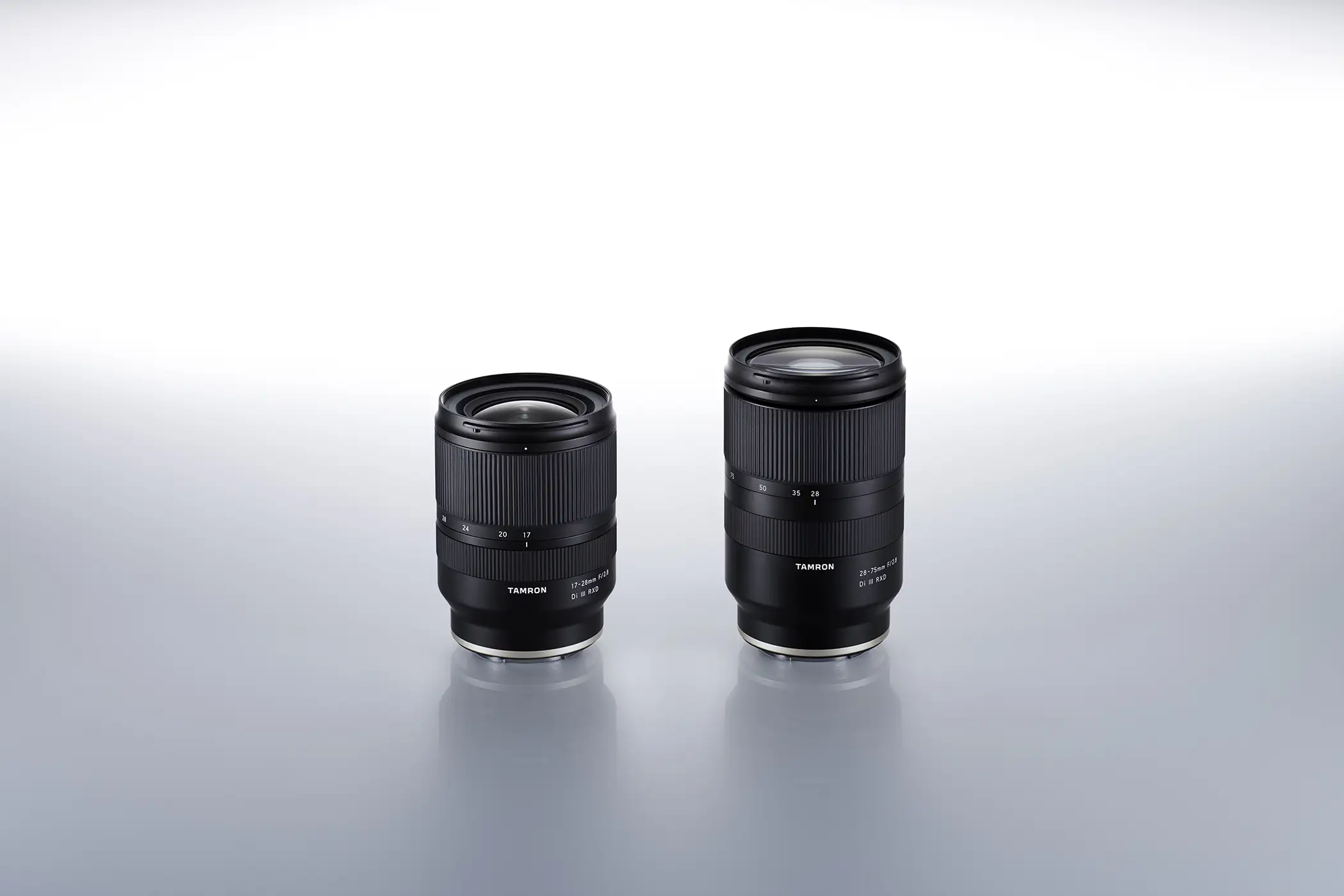
Portability is the single most repeated praise. Travel shooters love pairing this with Tamron’s 28-75mm; the two together weigh under 1kg. Reddit user u/TravelLens201*** summed it up: “My A7III, 17-28 and 28-75 plus filters all fit in a sling — my back thanked me after 10 days in Japan.”
Autofocus performance earns consistent applause, especially for video. Trustpilot feedback highlights “quiet AF even in street shoots”, and photofocus.com praised rapid acquisition across modes. This benefits vloggers or event shooters needing silent and precise performance.
Close focusing ability at 0.19m unlocks creative ultra-wide perspectives. A verified Amazon buyer enthused: “At 17mm, you can get dramatic near-subject shots with blurred backgrounds even at f/2.8.” This trait appeals to environmental portrait photographers who blend subject and scenery in unique ways.
Chromatic aberration and flare are impressively controlled — repeated in reviews from Reddit to Quora. Shooting into sun isn’t a deal-breaker, with pleasing sunstars being possible for cityscape artists.
Common Complaints
Distortion is the largest technical complaint. Photofocus notes “pincushion distortion at both ends of the focal range”, something most users correct in post. Architectural shooters feel this adds workflow time. A Sony forum user lamented: “Even after lens profile correction, some verticals need extra work.”
Heavy vignetting at wide angles frustrates those seeking clean sky and horizon lines. At 17mm, dark corners can persist even stopped down — a point echoed across Trustpilot and Reddit threads.
Corner softness, although common for ultra-wides, still draws criticism. Enthusiasts moving from Sony GM glass often notice downgrades. One Reddit landscape shooter said: “GM 16-35 is sharper edge-to-edge, but double the weight and price.”
Limited zoom range also divides opinions. Some love the simplicity; others miss the flexibility of 16-35mm alternatives. Wildlife or adventure shooters who need more reach in one lens often skip it for longer zooms.
Divisive Features
The warm color rendition has divided photographers. Some wedding shooters enjoy the look, saying it lends skin tones a pleasant glow, while JPEG-only travel shooters complain about having to cool down images in post.
The stiff zoom ring appears in scattered reports. While some like the resistance because it prevents creep, others find it slows quick focal changes during action shots.
Trust & Reliability
Long-term reports suggest solid build quality, aided by a metal mount and environmental sealing. Six months in, Reddit users report no AF degradation or zoom loosening. One landscape shooter shared: “Used in coastal wind and sand — still smooth after a year.”
Trustpilot listings carry little indication of counterfeit or scam activity when bought from authorized dealers, but community tips stress avoiding suspiciously low eBay offers under $500, especially open box units missing serial checks.
Alternatives
The most cited rivals are the Sony 16-35mm f/2.8 GM and Sigma 14-24mm f/2.8 DG DN. The Sony GM offers superior corner sharpness and wider range at triple the cost and added weight. Sigma’s 14-24mm goes wider and sharper but is bulkier; Tamron wins for compact travel kits.
Photofocus noted: “At under $900, Tamron pushes hard against both competitors while weighing half as much as Sigma’s 14-24.” For those prioritizing carry weight, Tamron’s compromise on focal range is often acceptable.
Price & Value
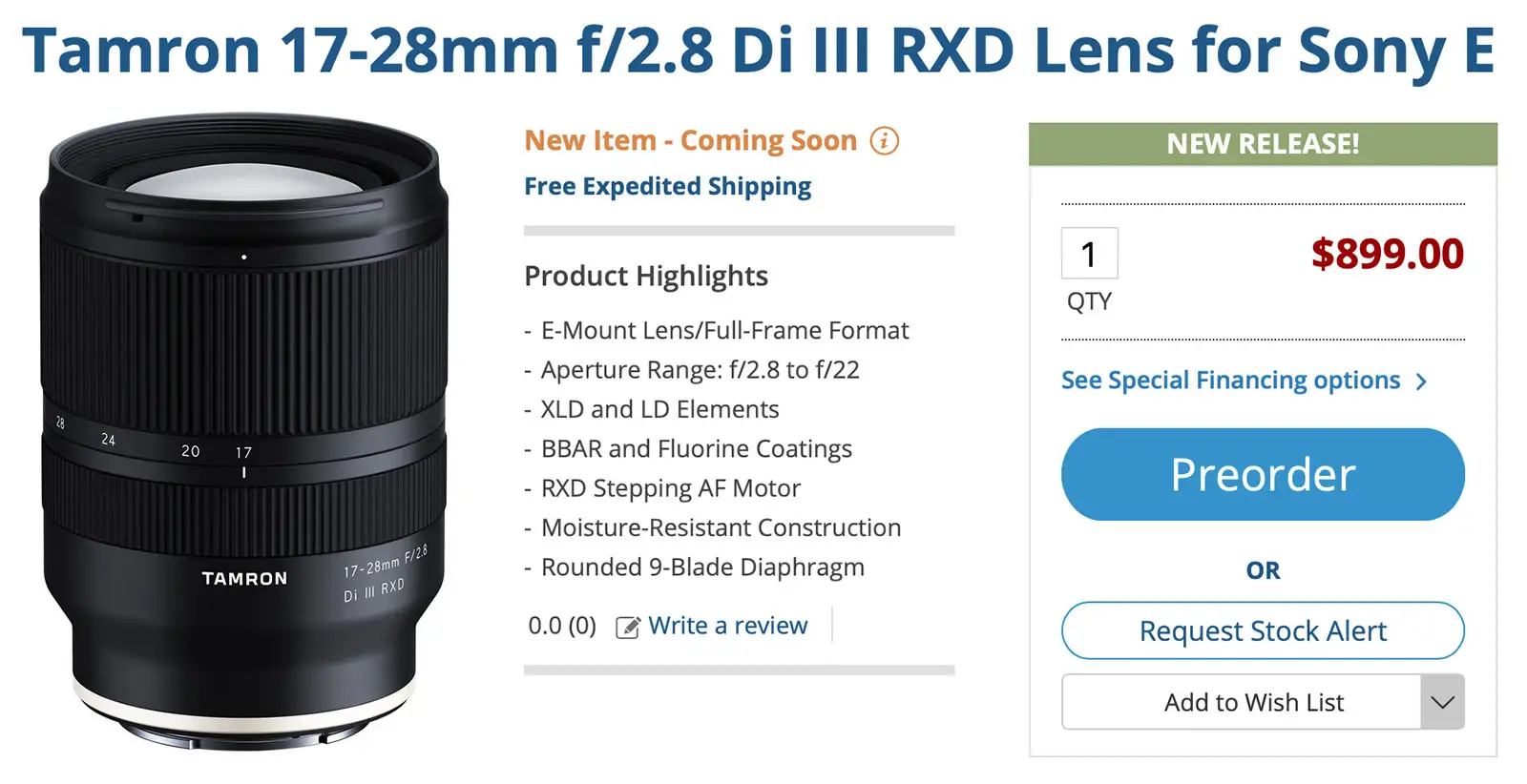
At $669–$799 new on eBay (seen as low as $529 used), this lens holds value well. Kleinanzeigen listings in Germany show resale prices hovering €500–€650 in near-mint condition. Buyers recommend capitalizing on bundle deals that include filter kits — Amazon’s $949 package with monopod and case appealed to travel filmmakers.
Community advice includes buying new if weather sealing integrity is critical, since used units may have unseen seal wear. Bundling with Tamron’s 28-75mm f/2.8 is repeatedly cited as the most cost-effective two-lens ultra-wide to mid-zoom solution.
FAQ
Q: Does the Tamron 17-28mm have optical image stabilization?
A: No, it relies on in-body stabilization from Sony cameras. Users handhold down to 1/8s with IBIS on an A7III, but for video without IBIS, a gimbal is recommended.
Q: How is the autofocus in low light?
A: It slows slightly compared to bright conditions but remains reliable. Street shooters report accurate Eye AF performance during night city walks.
Q: Is vignetting fixable in-camera?
A: Yes, enabling Sony’s lens correction reduces vignetting, but raw shooters often prefer manual correction to balance noise in corner lifts.
Q: Can it be used for astrophotography?
A: Yes — the f/2.8 aperture is bright enough, and coma control is acceptable. However, corner softness at 17mm may affect star sharpness for purists.
Q: How does it pair with Tamron’s 28-75mm?
A: Perfectly — identical 67mm filter size, similar handling, under 1kg total weight. Many travel kits start with these two lenses.
Final Verdict
Buy if you’re a travel, landscape, or street photographer who values light weight, fast aperture, and solid AF over perfect edges. Avoid if your work demands distortion-free, edge-to-edge sharpness straight out of camera, like architecture or high-end commercial interiors.
Pro tip from community: Pair it with Tamron’s 28-75mm, share filters, and you have a lightweight, budget-friendly kit covering ultra-wide to short telephoto without breaking $1,500.





