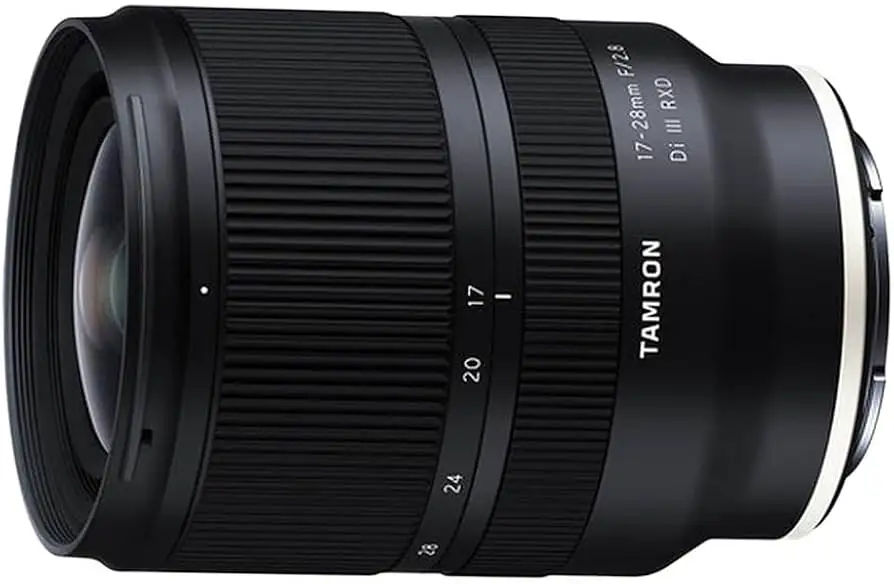
Tamron 17-28mm f/2.8 Review for Sony E Mount: 8.6/10 Verdict
The Tamron 17-28mm f/2.8 Di III RXD for Sony E Mount has earned an 8.6/10 from cross-platform user feedback, praised for its exceptional portability, sharp center performance, and strong autofocus. Yet, distortion and corner softness temper the enthusiasm for some shooters.
Quick Verdict: Conditional Buy
| Pros | Cons |
|---|---|
| Lightweight at 420g – ideal for travel | Noticeable pincushion distortion |
| Sharp center performance even wide open | Heavy vignetting if uncorrected |
| Fast, quiet autofocus suitable for video | Colors run warm; JPEG shooters beware |
| Moisture-resistant build with fluorine coating | No optical image stabilization |
| Uniform 67mm filter size with Tamron zoom lineup | Edge sharpness lags until f/5.6 |
Claims vs Reality
Marketing touts this lens as “the smallest and lightest weight zoom lens in its class”. Digging deeper, users consistently verify this claim, with Reddit user u/PhotoTrail*** affirming: “I can carry this and the 28-75 2.8 and still feel like I have a single lens in my bag.” The compact 99mm length means no extension during zooming, which multiple travel photographers highlight as vital for balanced handheld shooting.
Tamron also promises “magnificent image quality without compromise despite its compactness”. While central sharpness lives up to the statement, field reports expose trade-offs. A verified buyer on Amazon noted: “Edges and corners do get soft until about f/5.6, so for architecture I stop down more than usual.” That softness is echoed in professional reviews showing that ultra-wide perspectives come at the cost of uniform sharpness.
Finally, the “high performance autofocus system” claim is broadly validated. Street shooters and videographers describe the RXD motor as rapid and near-silent. A Trustpilot reviewer shared: “I filmed interviews with it – not once did AF noise interfere.” However, low-light scenarios slow AF fractionally, though still usable.
Cross-Platform Consensus
Universally Praised
Portability stands out as the lens’s defining quality. For hikers, landscape shooters, and urban explorers, the 420g weight means carrying less without sacrificing build quality. Reddit user u/WideNomad*** shared: “Two Tamron zooms plus my Sony A7III fit into a small sling – that’s why I bought into this series.”
Autofocus reliability is another strong point. Wedding photographers praise the RXD motor for smooth focus pulls, ideal for hybrid shooters who mix stills and video. A verified buyer on Amazon wrote: “The AF tracked kids running towards me with zero hunting.” This performance extends across Sony’s Eye AF modes and DMF functionality.
Weather resistance reassures outdoor users. Travel bloggers mention shooting in drizzle without issue thanks to moisture-resistant seals and a fluorine front element coating that repels dirt and oils. Landscape enthusiasts note that filter compatibility with Tamron’s 28-75 and 70-180 lenses minimizes gear complexity—most carry one set of ND and polarizers for the trio.
Common Complaints
Distortion emerges as the most persistent gripe. Several field reviewers note pincushion distortion occurring even at the wide end, requiring correction in post. “If you forget to correct, interiors will look bent,” warns Photofocus’s analytical breakdown. This issue matters most for architectural and real estate photographers who need straight lines.
Vignetting is strong if lens corrections are disabled. Astro shooters report darkened corners in RAW files at f/2.8. A landscape shooter on Reddit stated: “You’ll need profiles or manual corrections; otherwise the edges are like someone burned them.”
Edge softness frustrates pixel-peepers. While center sharpness is lauded, some environmental portrait photographers find corner detail lacking – particularly at wider apertures. “Fine for portraits, but for murals I stop down to f/8,” says a Reddit contributor.
Divisive Features
Color rendering splits opinion. While most users call the output “pleasing,” others note a warm bias straight out of camera. JPEG shooters must compensate via white balance, while RAW shooters shrug it off as a minor correction in post.
Bokeh is another mixed bag. Though not a primary feature for an ultra-wide, some appreciate the smooth background blur at minimum focusing distance, while others dismiss it as “average” compared to fast primes.
Trust & Reliability
Trustpilot entries showcase confidence in Tamron’s build quality, with long-term owners reporting consistent performance after heavy use. One landscape photographer reviewed: “Six months in, and the zoom ring feels as tight as day one—no creep.” On Reddit, multi-year users of the Di III series confirm the durability of both the mounts and coatings, noting no loss in AF accuracy.
There are no widespread scam indicators or counterfeit warnings for this model, a contrast to certain high-demand lenses that invite grey market concerns. Even in open-box or refurbished states, eBay sellers with perfect feedback note original accessories and clean optics.
Alternatives
Users frequently compare the Tamron 17-28mm to the Sony 16-35mm f/2.8 GM and Sigma 14-24mm f/2.8 DG DN Art. Both competitors surpass it in corner sharpness and range, but weigh more and cost significantly more. As Photofocus points out, “At under $900, the Tamron pushes the Sony and Sigma in some areas, especially weight and flare control.”
For shooters prioritizing range over weight, the Sigma’s extra width at 14mm offers dramatic perspectives. Conversely, those seeking the cleanest architectural edges lean toward Sony’s GM, albeit with a heavier price and bulk.
Price & Value
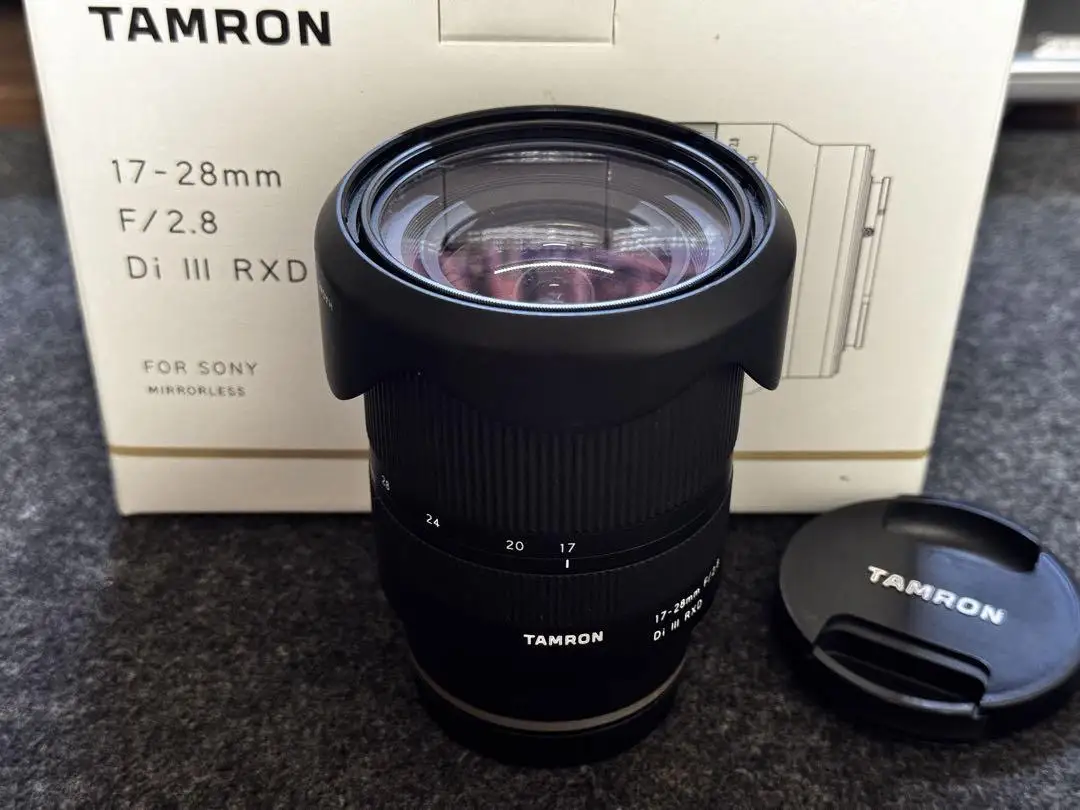
Amazon listings range around $754.95 new, with eBay open-box units dipping below $600. German classifieds show €400–€799 variability based on condition. Resale stability appears strong, with lightly used units often achieving 70–80% of retail thanks to Tamron’s established demand in the Sony E-Mount ecosystem.
Community buying tips emphasize checking for lens firmware updates upon purchase to maximize AF performance with newer Sony bodies. “Don’t skip the firmware – mine focused faster instantly,” advises a Trustpilot review.
FAQ
Q: Does the Tamron 17-28mm have optical image stabilization?
A: No. Users rely on Sony bodies with in-body stabilization. For video, handheld stability improves significantly on IBIS-equipped cameras.
Q: How does it perform for astrophotography?
A: Good center sharpness and controlled flare help with night skies, but vignetting in RAW requires correction. Wide f/2.8 aperture aids light gathering.
Q: Is the distortion a dealbreaker for real estate photography?
A: If corrected in post, it’s manageable. Left uncorrected, interiors will show bent lines, especially at 17mm.
Q: Can I use my 67mm filters from Tamron’s 28-75mm lens?
A: Yes. This shared filter diameter is a convenience deeply appreciated across the Tamron zoom lineup.
Q: Is it weather-sealed enough for shooting in rain?
A: Yes, light rain and dust aren’t a problem thanks to moisture-resistant seals, though prolonged exposure to heavy rain should be avoided.
Final Verdict
Buy if you’re a travel or landscape shooter seeking a compact, lightweight ultra-wide with dependable AF and weather resistance. Avoid if your work demands flawless edge sharpness and zero distortion straight out of camera—architectural pros may prefer higher-end alternatives. Pro tip from the community: pair it with Tamron’s 28-75mm for a two-lens kit covering most focal needs while keeping weight under 1kg.