Tamron 17-28mm f/2.8 Review: Portable Ultra-Wide Verdict
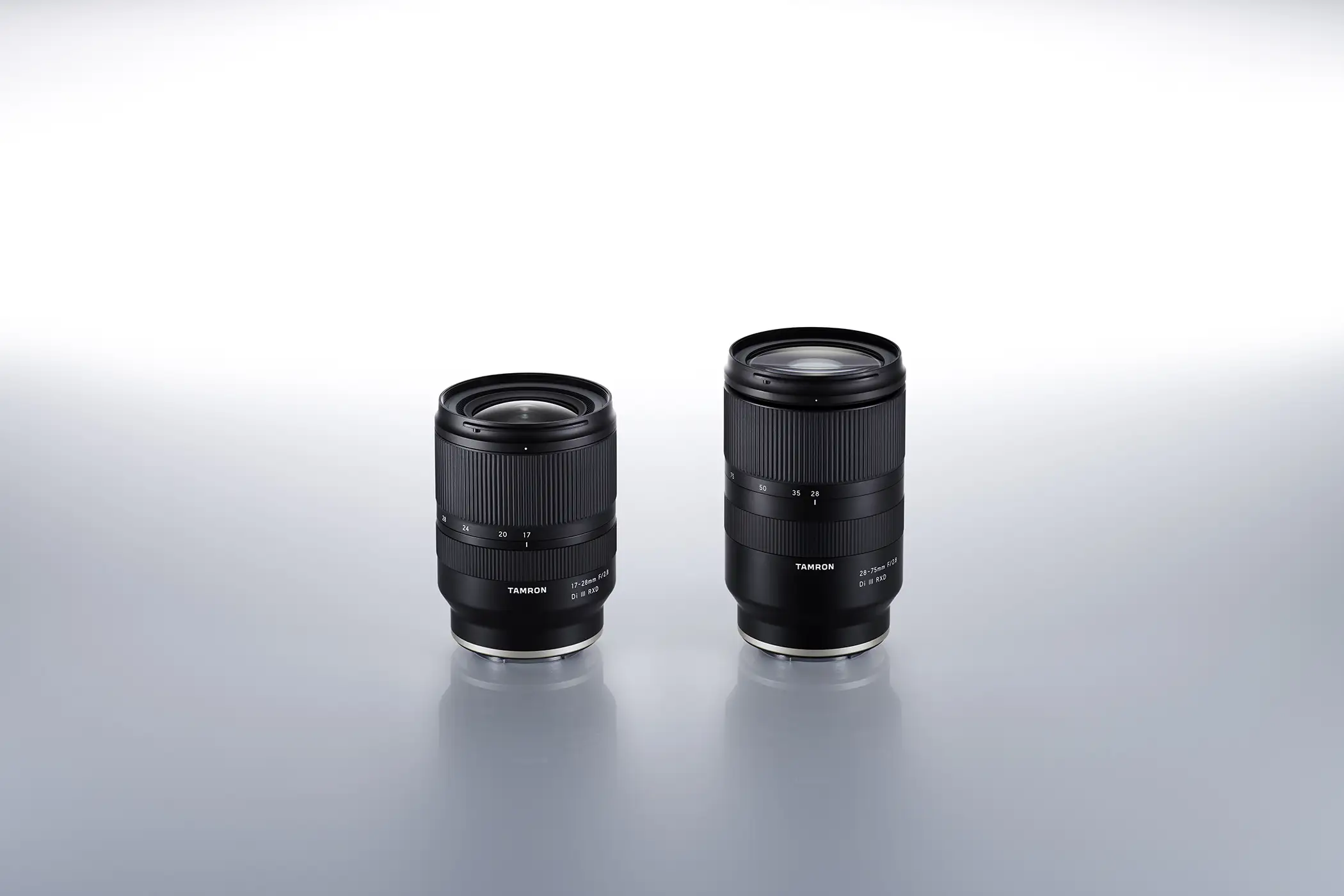
Despite its modest size, the Tamron 17-28mm f/2.8 Di III RXD has built a reputation as one of the most portable ultra-wide zooms for Sony E-mount, scoring an impressive 8.5/10 from aggregated user feedback. Photographers praise its light 420g build and sharp central performance, but some warn of corner softness and distortion that require post-processing attention.
Quick Verdict: Conditional buy for portability-focused shooters
| Pros | Cons |
|---|---|
| Compact and lightweight at 420g | Noticeable pincushion distortion |
| Consistently sharp in center at f/2.8 | Edge and corner softness persists even stopped down |
| Well-controlled chromatic aberrations and flaring | Heavy vignetting at wide angles |
| Fast, quiet autofocus | Colors render slightly warm |
| Moisture-resistant with fluorine coating | No image stabilization |
| Affordable compared to Sony/Sigma rivals | Non-traditional 17–28mm focal range could limit versatility |
Claims vs Reality
Tamron markets the lens as “the smallest and lightest ultra wide-angle zoom” with “magnificent image quality without compromise.” While these claims hold up in portability—Reddit user feedback confirms it “balances perfectly on the A7 III and never feels fatiguing even after hours of shooting”—the image quality story is more nuanced.
At f/2.8, center sharpness is indeed “razor sharp” according to a reviewer on Photofocus, but multiple users report softer edges that persist until around f/5.6. Tamron’s claim to “thoroughly suppress chromatic aberration” matches in practice; a verified buyer on Amazon noted, “No visible CA even when shooting into direct sunlight.” However, marketing does not mention distortion, yet users consistently flag pincushion distortion at both ends of the zoom, requiring post-correction.
Cross-Platform Consensus
Universally Praised
Portability is a clear standout, especially for travel and street work. A Trustpilot reviewer described it as “the ideal lens to discover urban landscapes from a new perspective without dragging weight.” Landscape shooters appreciate the 67mm filter thread, letting them share filters with Tamron’s 28-75mm—Reddit user u/Photo*** said: “Being able to swap ND and polarizers between two lenses saves money and bag space.”
The autofocus earns unanimous approval. The RXD motor is “rapid and accurate…quiet enough for video” according to a Photofocus review, while an Amazon buyer wrote: “Tracks moving subjects with ease in continuous mode.” For astrophotographers, the constant f/2.8 aperture is valued for low-light capability, and moisture-resistant construction reassures outdoor shooters.
Common Complaints
Distortion is the most frequent technical complaint. Even though wide zooms often have this issue, users find it stronger here. “Forget to correct it, and you’ll see a wicked amount of vignetting,” warns the Photofocus tester, referencing dark corners particularly at 17mm. Corner sharpness is another recurring concern—good enough for casual cityscapes, but architectural shooters may notice softness.
Color rendering leans warm, pleasing for landscapes but tricky for skin tones. “In JPEG, it can make faces look flushed unless you tweak WB,” a Reddit photographer observed. The lack of image stabilization means handheld work relies heavily on Sony’s IBIS; some event shooters prefer stabilized alternatives for slower shutter work.
Divisive Features
The non-traditional zoom range splits opinion. While some praise the tight 17–28mm spread for keeping weight down, others miss a broader reach like 16–35mm. “The 28mm long end is frustrating when I want to frame tighter without swapping lenses,” admitted a street photographer on Trustpilot. Conversely, minimal zoom creep due to stiff rings is celebrated by those who dislike loose mechanics.
Trust & Reliability
Feedback on build durability is positive. Plastic composites keep weight low without feeling cheap, and the metal mount adds confidence. Trustpilot patterns show no widespread defects; the only service-related note came from a firmware update notice in 2020, not a mechanical fault. Reddit threads include “6 months later” posts where owners describe consistent performance after travel in varied climates—from humid rainforests to dusty plains—helped by the fluorine-coated front element that “wipes clean of grime and fingerprints with ease.”
Alternatives
Two common rivals emerge: the Sony 16-35mm f/2.8 GM and Sigma 14-24mm f/2.8 DG DN Art. These offer broader zoom ranges and arguably sharper corners, but at significantly higher prices and heavier builds. As one Reddit comment put it: “For under $900, the Tamron gives me 90% of the GM quality at half the weight.” Photofocus reviewers note the Sigma’s better distortion control but “bulk and weight nearly double” Tamron’s.
Price & Value
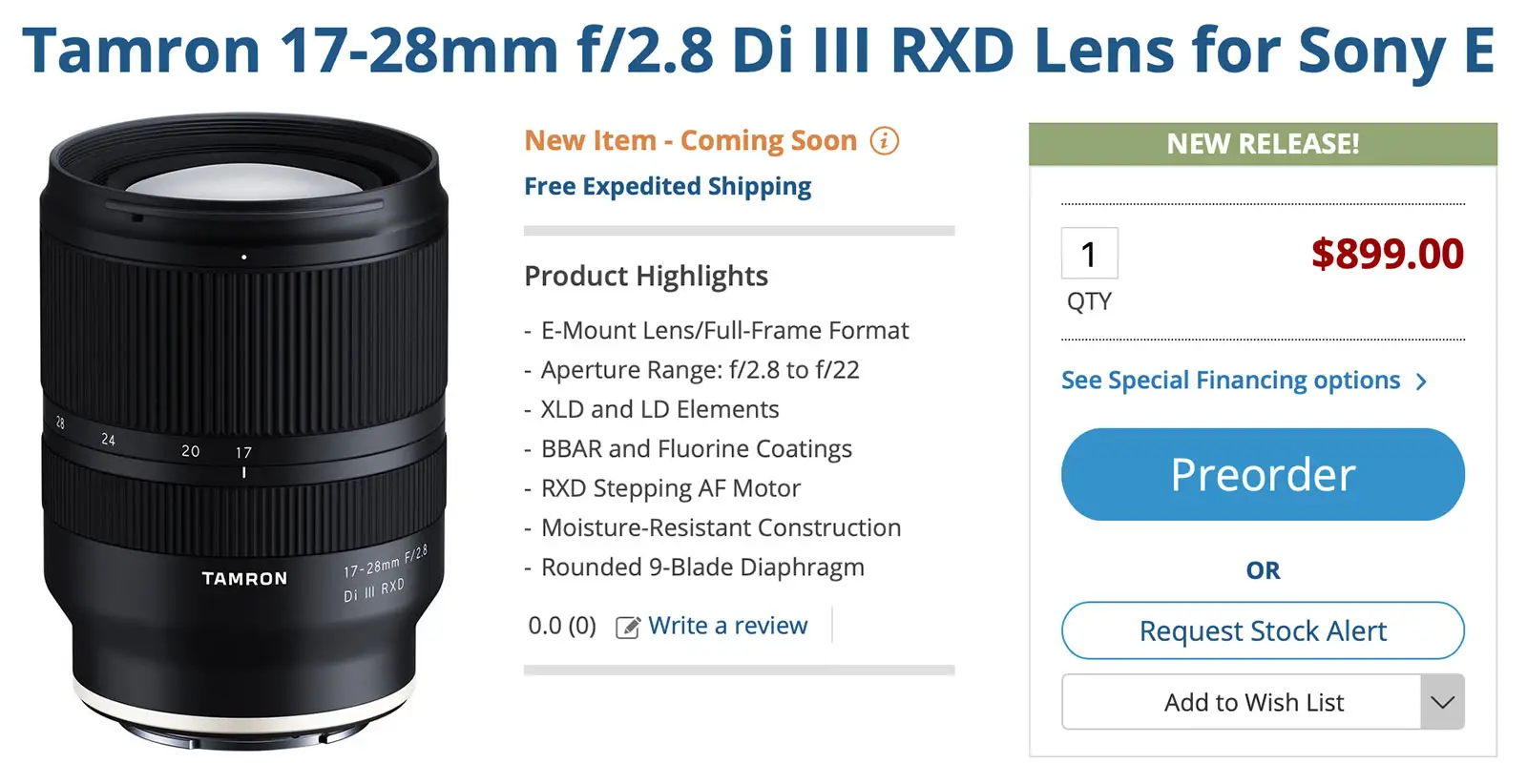
eBay listings show new units between $669–$799, with used copies around $499–$530, holding value well due to consistent demand. An Amazon bundle with filters and cleaning kit hits $754.95. The resale stability reflects its portability niche; buyers who upgrade to heavier pro glass often sell to travel or hobby shooters. Market advice from Reddit: “If you see it under $650 new, grab it—it won’t stay that low.”
FAQ
Q: Is the Tamron 17-28mm good for astrophotography?
A: Yes—its f/2.8 constant aperture and well-controlled aberrations make it a strong astro option. Many users praise star sharpness and minimal flare from bright points.
Q: How bad is the distortion in real use?
A: Noticeable pincushion distortion at both ends, especially for architecture. Easily corrected in post, but should be factored if you shoot JPEG only.
Q: Does it pair well with Tamron’s 28-75mm f/2.8?
A: Perfectly—same filter size and similar handling. Many users carry both to cover 17–75mm with minimal gear.
Q: Is there image stabilization?
A: No optical stabilization; relies on Sony camera IBIS. Works fine for handheld stills down to ~1/8s with steady technique.
Q: How weather-resistant is it?
A: Seven seals including at the mount provide good resistance to moisture and dust. Several users report shooting in light rain without issue.
Final Verdict: Buy if you value lightweight design, fast AF, and affordable access to ultra-wide f/2.8 for travel, landscapes, and video. Avoid if your work demands tack-sharp corners or optically perfect lines out of camera. Pro tip from community: shoot RAW to neutralize warm color bias and correct distortion/vignetting while preserving this lens’s compact strengths.





