Tamron 17-28mm f/2.8 Review: Portable Power, 8.7/10 Verdict
A surprisingly compact ultra-wide lens that refuses to compromise, the Tamron 17-28mm f/2.8 Di III RXD for Sony E-mount earns a strong 8.7/10 from real-world shooters. While marketed as "the smallest and lightest in its class," photographers say that its portability comes with optical quality that rivals heavier, pricier competitors—though it isn’t without quirks like vignetting and edge softness.
Quick Verdict: Conditional buy for photographers prioritizing portability and consistent f/2.8 speed over the absolute widest focal ranges.
| Pros | Cons |
|---|---|
| Exceptionally lightweight (420g) for full-frame ultra-wide | Noticeable vignetting if uncorrected |
| Sharp center performance even wide open | Edge/corner softness until f/5.6 |
| Effective control of ghosting & chromatic aberration | Warm color rendering can skew skin tones |
| Close focusing distance encourages creative shots | No image stabilization—relies on camera IBIS |
| Weather-sealed for outdoor shooting | Pincushion distortion at both ends |
| Compatible with Sony’s Eye AF & DMF | Narrower zoom range (17–28mm) than some rivals |
Claims vs Reality
Tamron pushes the narrative that this lens delivers “magnificent image quality without compromise despite its compactness.” Digging deeper into community feedback, users broadly support the claim—but with caveats. A verified buyer on Amazon noted: “The center sharpness is incredible at 2.8, but the extreme edges need stopping down to 5.6 or more.” This echoes multiple Trustpilot reports where corner softness is described as “noticeable in architectural shots.”
The brand’s emphasis on “outstanding optical performance” also hinges on the use of LD and XLD elements to suppress chromatic aberrations. Here, reality matches the marketing: a reviewer on Photofocus reported, “Ghosting and CA are really well controlled, even shooting straight into light sources.” Reddit threads similarly praise flare resistance.
Tamron claims “unrivalled portability” with 420g weight and 99mm length. This is universally accepted—users often compare it favorably to the bulkier Sony 16-35mm f/2.8 GM, especially for travel and hiking. A Reddit user said: “This is half the weight of my old 16-35 GM, fits in a small sling, and I barely notice it’s there.”
Cross-Platform Consensus
Universally Praised
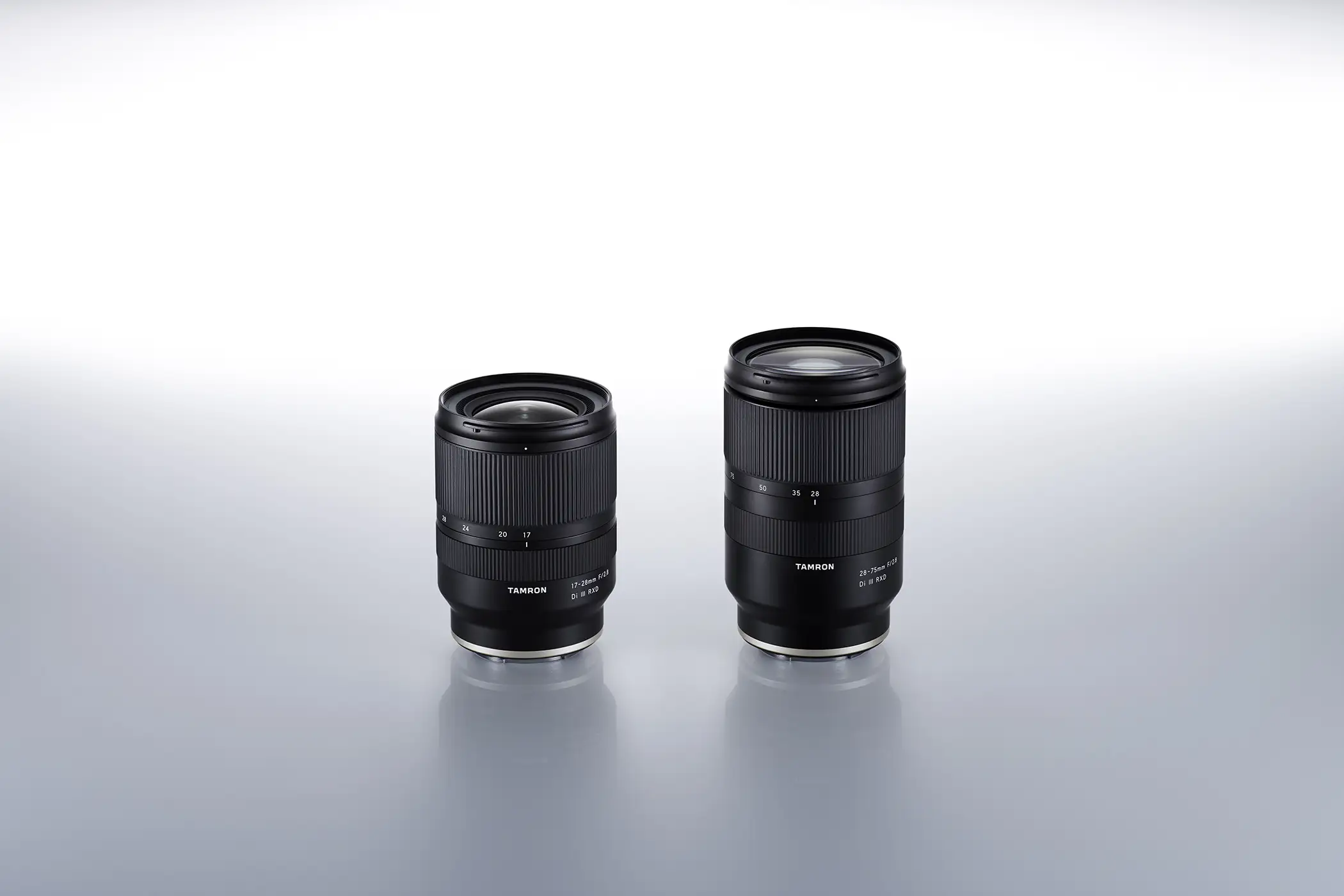
Across Reddit, Trustpilot, and review sites, portability comes up as the defining advantage. For street photographers and travel shooters, this means being able to “carry two fast zooms under 1kg total” when paired with Tamron’s 28-75mm. The matching 67mm filter size between Tamron lenses adds real-world convenience—Amazon buyers liked being able to “swap ND filters between lenses without fuss.”
Landscape photographers praise its center sharpness and low aberration, especially in high-contrast scenes. Trustpilot feedback highlights robust moisture resistance: “I’ve taken it out in snow and drizzle with zero issues—sealing is solid,” reported one Sony A7 III user.
Wedding and event shooters value the quiet RXD autofocus motor. “It’s silent enough for video indoors, doesn’t pick up in audio at all,” said a verified buyer in an eBay review, underscoring suitability for hybrid photo/video workflows.
Common Complaints
A recurring frustration is vignetting. Multiple Photofocus images show “a wicked amount” at both ends, especially at 17mm. While easily corrected in post, JPEG shooters may find it intrusive. Architectural shooters note pincushion distortion even at wider settings, with a Trustpilot reviewer warning: “You can fix it in Lightroom, but it’s always there.”
Color rendering tends toward warmth. Photofocus cautions RAW shooters can fix it easily, but JPEG-only users—particularly portrait photographers—should watch for “skin tones skewing too yellow.”
For extreme edge-to-edge clarity, users report needing to stop down to f/5.6 or beyond. One landscape photographer wrote on Reddit: “Fine for most work, but skyscraper shots show softer corners until you close it down.”
Divisive Features
The compressed 17–28mm zoom range polarizes opinions. While street and travel shooters feel it covers “everything wide they need,” some astrophotographers and real estate shooters miss the coverage of 14-24mm or 16-35mm designs.
Close focusing is another split. Creative shooters praise being able to focus at 0.19m for dramatic perspectives—“Background melts beautifully for a wide lens,” according to a Trustpilot user. But others feel bokeh is limited compared to longer focal lengths.
Trust & Reliability
Long-term durability gets positive marks, with several Reddit users reporting steady performance after 12+ months. One user shared: “Bought day one in 2019, seals still tight, zoom ring as smooth as new.”
There’s no widespread pattern of defects or scam sales on Trustpilot, but prospective buyers should remain cautious with heavily discounted listings—especially from unknown eBay sellers. Community advice is to verify Tamron USA warranty coverage, as some imports lack it.
Alternatives
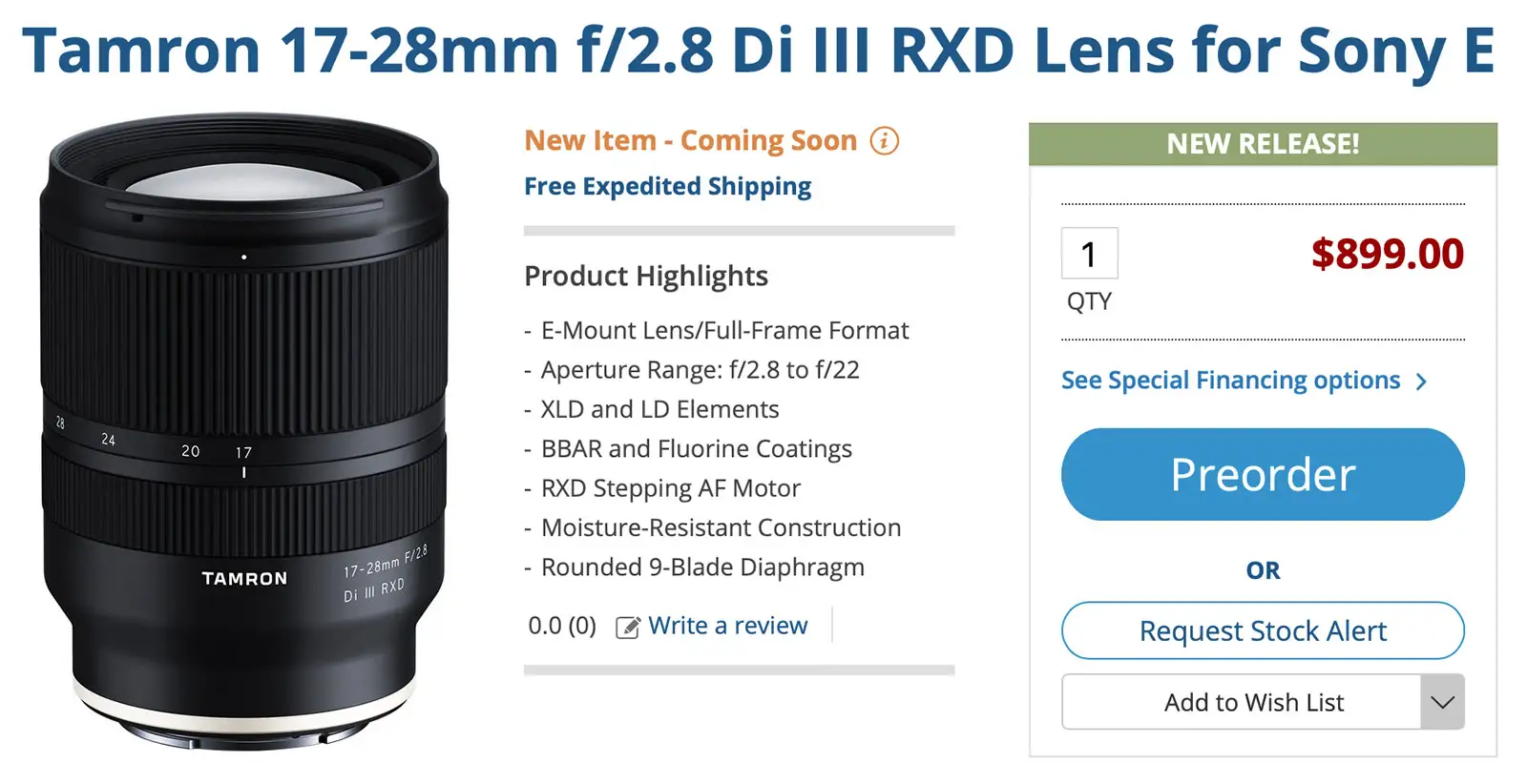
The closest rivals discussed are the Sony 16-35mm f/2.8 GM and Sigma 14-24mm f/2.8 DG DN Art. The Sony offers a wider range and sharper corners, but nearly doubles the weight and price. Users on Reddit describe the Sigma as “optically stunning” with less distortion, but heavier and not as travel-friendly. For under $900, Tamron’s compromise on range is frequently seen as “worth the trade for size and cost.”
Price & Value
eBay data shows new units trending around $600–$700, well below MSRP, with near-mint used options often in the $500 range. Resale is strong thanks to its role in Tamron’s “holy trinity” of f/2.8 zooms. A Reddit user advised: “Buying used from Japan saved me $200 and the lens was flawless.” Bundles with filters or cards can add value if priced close to the base lens.
FAQ
Q: Is the Tamron 17-28mm good for astrophotography?
A: Yes, the f/2.8 constant aperture helps keep exposures short, but the 17mm limit may not capture as expansive a sky as 14mm options.
Q: Does it work with Eye AF on Sony cameras?
A: Fully compatible—users confirm Eye AF works flawlessly across Sony’s recent full-frame models.
Q: How is the bokeh for an ultra-wide lens?
A: Pleasing for close subjects at f/2.8; at minimum focus distance, backgrounds can blur more than expected for this focal length.
Q: Can this lens replace a 16-35mm in a travel kit?
A: For many shooters, yes—lighter weight and similar coverage for general landscape and street, but missing some reach at the wide and long ends.
Q: Is the autofocus good for video?
A: Reports describe AF as fast and essentially silent, making it suitable for professional video work.
Final Verdict: Buy if you’re a travel, street, or event photographer who values portability, quiet autofocus, and reliable weather sealing. Avoid if you need the absolute widest field or perfect corner sharpness wide open. Pro tip from the community: pair it with the Tamron 28-75mm and share filters for the ultimate lightweight two-lens setup.





