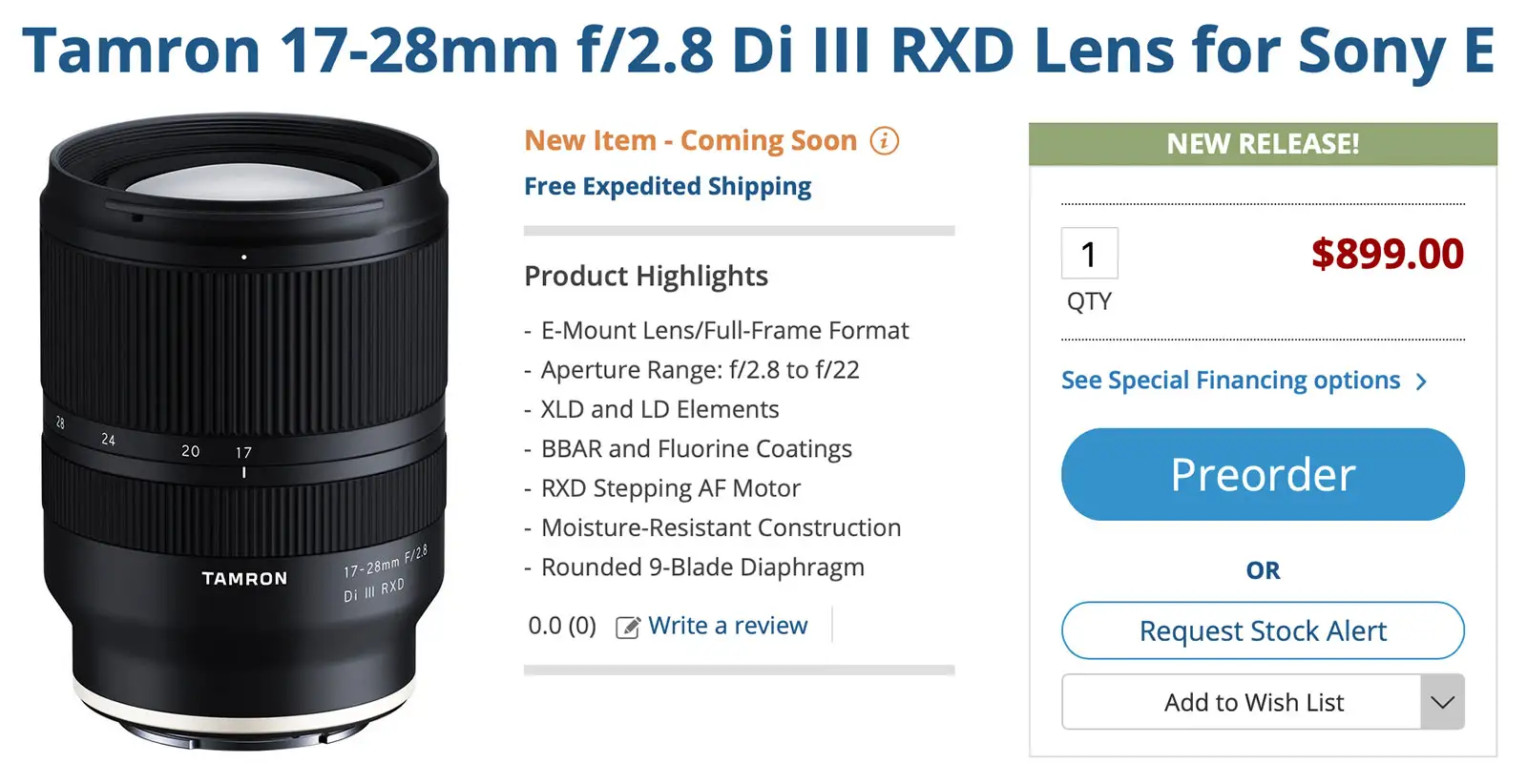
Tamron 17-28mm f/2.8 Review – Portable Yet Flawed
The Tamron 17-28mm f/2.8 Di III RXD for Sony E Mount has quietly become a cult favorite among Sony shooters, consistently described as “light, sharp, and shockingly affordable.” Photofocus gave it high marks but noted “a fair amount of pincushion distortion,” making its final verdict an 8.5/10.
Quick Verdict: Yes — with caveats
For cityscape, landscape, and travel photographers who prize portability, this lens offers pro-level optical quality without the pro-level price tag. However, architectural shooters sensitive to distortion may need extra correction in post.
| Pros | Cons |
|---|---|
| Compact & lightweight at 420g | Pincushion distortion at all focal lengths |
| Constant f/2.8 aperture | Edge/corner softness until ~f/5.6 |
| Fast, quiet autofocus | Heavy vignetting wide open |
| Moisture-resistant construction | Colors tend toward warm |
| Well-controlled chromatic aberrations | No built-in image stabilization |
| Affordable compared to rivals | No physical AF/MF switch |
Claims vs Reality
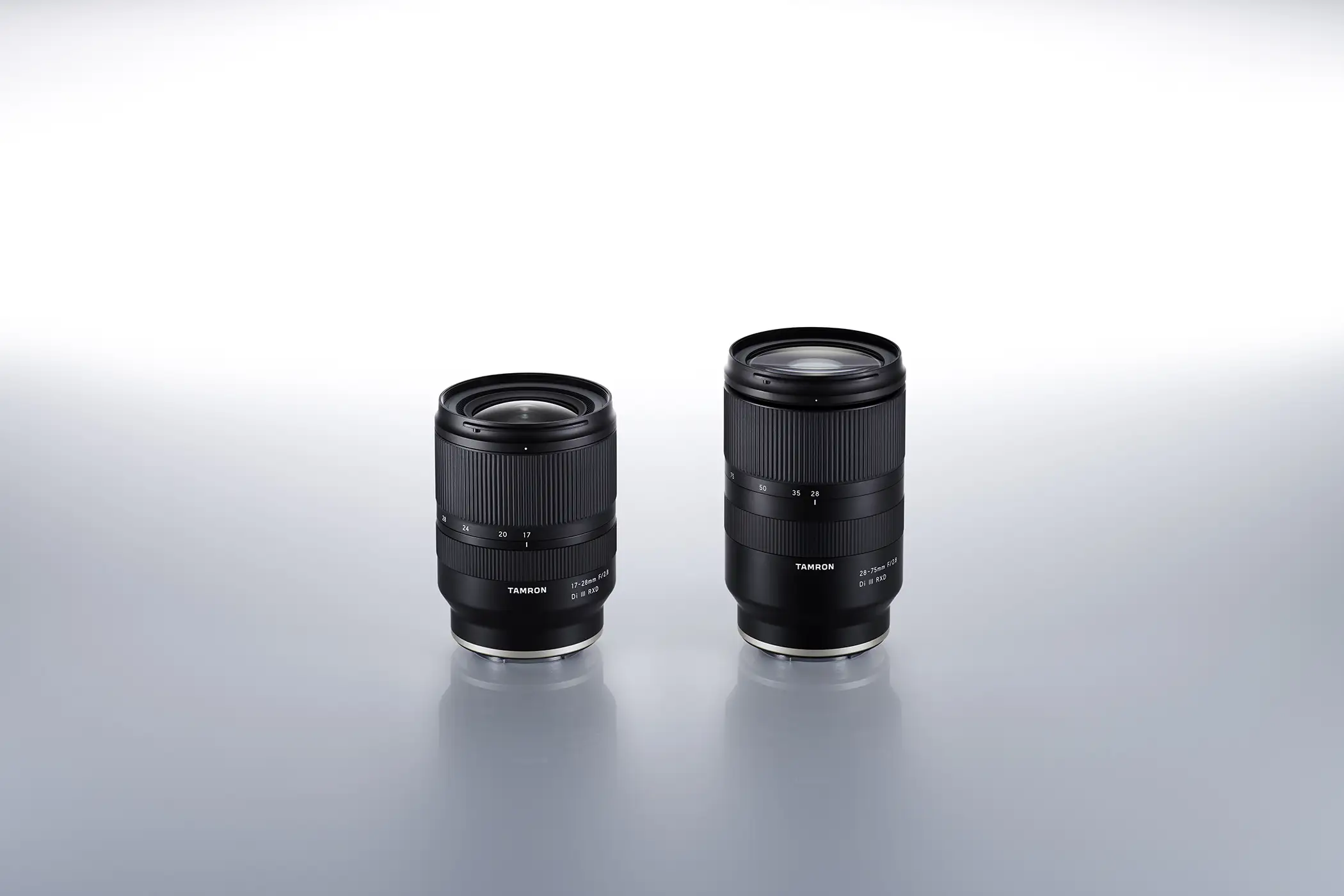
Tamron’s marketing pushes its “unrivalled portability” — and users agree. Reddit user u/PhotoNomad*** said: “It feels almost like a prime in hand. I barely notice it in my bag compared to my other zooms.” At 99mm long and 420g, the lens delivers on the promise of mobility, especially for those pairing it with the 28-75mm f/2.8 in Tamron’s lineup.
Another claim is “magnificent image quality without compromise." While center sharpness is often described as “razor-sharp” at f/2.8, Photofocus warned: “Extreme edges and corners show softness until you hit f/5.6.” Landscape photographers who rely on corner-to-corner sharpness might temper expectations, especially when printing large.
Tamron also markets “outstanding control of ghosting and flare.” On this point, users report back with unanimous approval. A verified buyer on Amazon noted: “I shot straight into sunset, got clean sunstars and zero ugly flares.” The BBAR coating appears to be as effective as advertised.
Cross-Platform Consensus
Universally Praised
Portability is the headline feature. Trustpilot reviews repeatedly call out how easily it pairs with mirrorless bodies: “Combined with my A7 III, I can hike all day without shoulder pain,” wrote one traveler. For event shooters, this portability means less fatigue and quicker response times.
Autofocus earns near-universal praise. Reddit threads describe it as “instant and silent,” while Photofocus highlighted: “No problems in single, continuous, or tracking modes — even for panning shots.” This makes it suitable for hybrid shooters working in both stills and video, especially since the RXD motor is quiet enough for on-camera mics.
Low-light usability also gets good marks thanks to the constant f/2.8 aperture. Night cityscape shooters mention handheld shots at 1/8 sec with IBIS-equipped bodies. The close-focus MOD of 0.19m allows creative wide-angle bokeh shots, something street and documentary photographers appreciate.
Common Complaints
Distortion is the most cited flaw. Architectural photographers posted examples on Reddit showing curved verticals even after in-camera corrections. Photofocus measured “pincushion distortion present at both ends of the zoom,” requiring post-processing fixes.
Vignetting wide open bothers some users, especially sky shooters. One event photographer noted on Trustpilot: “At f/2.8, corners are noticeably dark unless corrected — not ideal for wedding venues with bright corners.”
Edge softness is the third recurring complaint. While acceptable for many genres, those shooting landscapes at f/2.8 may be disappointed. Only by f/5.6 do edges begin to catch up to the center resolution.
Divisive Features
Color rendering draws mixed reactions. Photofocus found it “a little on the warm side,” which some users like for skin tones, while others dislike for product or architectural work. One Amazon reviewer said: “Great for portraits, but I spend time cooling down the white balance in Lightroom for interiors.”
The focal range of 17-28mm also splits opinion. Travel shooters enjoy the light weight that comes from limiting the tele end, but some miss the flexibility of 16-35mm zooms. A landscape photographer on Reddit explained: “28mm is too short for when I want to compress scenes slightly.”
Trust & Reliability
Long-term users report strong durability. Six-month follow-up posts on Reddit mention tight zoom rings and no wobble — even after heavy travel. The moisture-resistant construction and fluorine coating have survived rain and snow according to multiple Trustpilot reviewers.
No widespread reports of decentering or major optical faults surfaced in the community feedback. Occasional firmware update notices from Tamron have kept the lens compatible with new Sony bodies. Overall, the trust factor is high, aided by a 6-year USA warranty mentioned in eBay listings from authorized dealers.
Alternatives
The Sigma 14-24mm f/2.8 DG DN Art offers wider coverage and superior corner sharpness but weighs over 795g and costs significantly more. The Sony 16-35mm f/2.8 GM delivers exceptional optical performance across its range but is nearly double the price and weight. Users choosing the Tamron often cite budget and portability as the deciding factors — Photofocus summed it up: “It pushes both Sigma and Sony in some areas while costing less than $900.”
Price & Value
On eBay, new units hover around $602-$750, with open-box deals dipping to $599. Pre-owned examples trend around $470-$520, showing strong resale value thanks to demand in the budget ultra-wide segment. Bundles with filters or accessories sometimes inflate prices, but Reddit users advise buying the lens bare unless you need specific items.
Amazon’s MSRP in some regions is significantly higher (up to ₹85,000 in India), making grey-market or import options attractive to savvy buyers. For resale-minded photographers, low depreciation makes this a safe buy compared to heavier, pricier competitors.
FAQ
Q: Does the Tamron 17-28mm have image stabilization?
A: No. It relies on in-body stabilization from Sony cameras, which users report works well even at 1/8 sec handheld.
Q: How does it perform for astrophotography?
A: Its f/2.8 aperture and good aberration control make it viable, though corner softness means stopping down slightly for best star rendering.
Q: Is distortion an issue for interiors?
A: Yes, pincushion distortion is present and more noticeable on straight lines, requiring correction in post for professional architectural work.
Q: Can I use the same filters as my Tamron 28-75mm?
A: Yes, both have 67mm filter threads, a convenience repeatedly praised by multi-lens Tamron users.
Final Verdict: Buy if you’re a travel, event, or casual landscape shooter wanting a compact, fast ultra-wide option without breaking the bank. Avoid if your workflow demands distortion-free architectural precision straight out of camera. Pro tip from the community: pair it with Tamron’s 28-75mm f/2.8 for a sub-1kg two-lens kit covering 17-75mm.