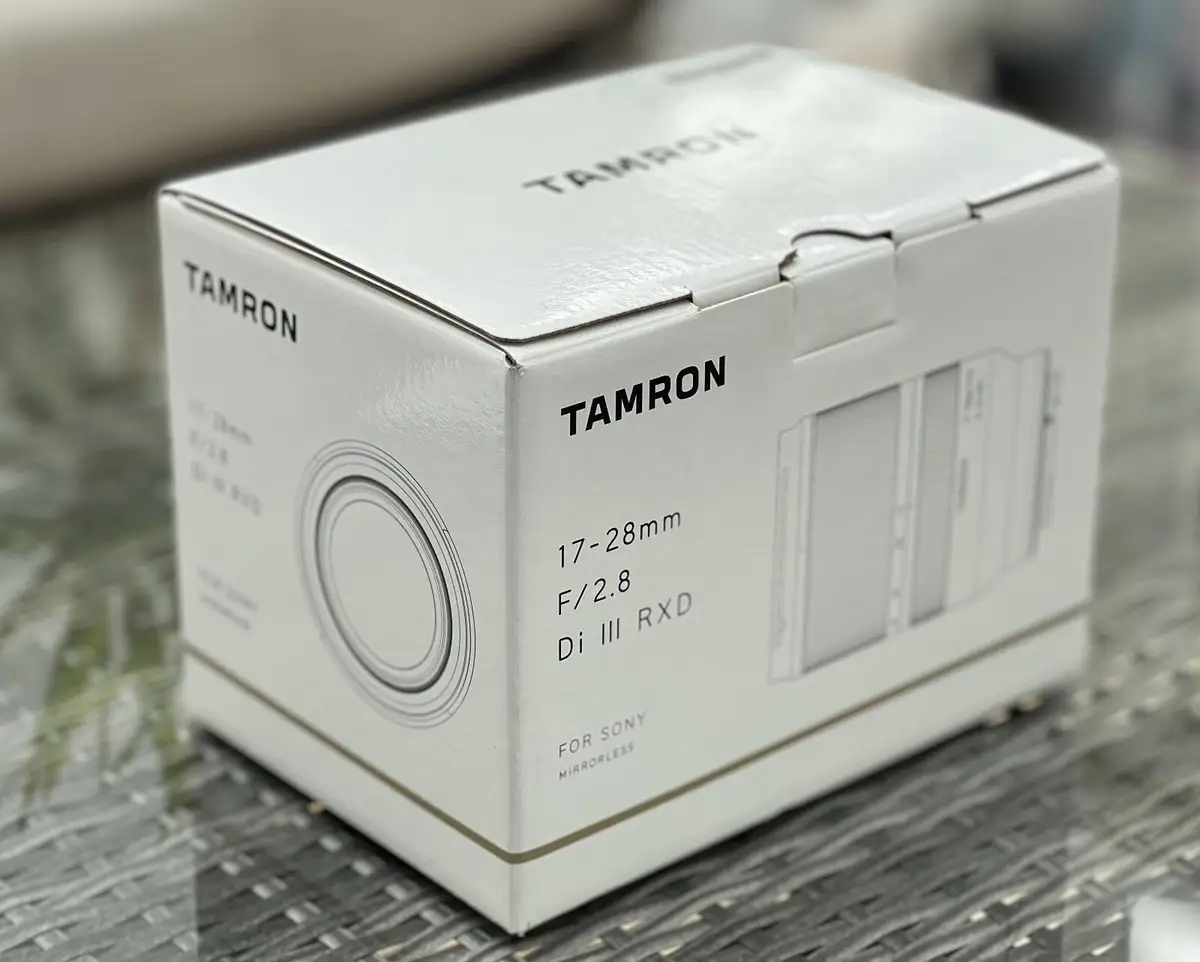
Tamron 17-28mm f/2.8 Review: Lightweight Winner with Caveats
Lightweight doesn’t always mean compromise — the Tamron 17-28mm f/2.8 Di III RXD for Sony E Mount earns an impressive 8.6/10 from photographers who praise its portability and overall optical quality, despite a few quirks that seasoned shooters will want to manage carefully.
Quick Verdict: Conditional — excellent for travel and landscape shooters who can live with minor distortion and vignetting.
| Pros | Cons |
|---|---|
| Just 420g — extremely portable | Noticeable pincushion distortion |
| Consistent f/2.8 aperture across zoom | Edge and corner softness, especially wide open |
| Fast, quiet autofocus | Heavy vignetting if uncorrected |
| Weather-sealed construction | Colors tend toward warm tones |
| Excellent control of flare and chromatic aberration | No optical image stabilization |
| Close focusing distance for dramatic perspectives | Zoom ring is stiff for some users |
Claims vs Reality
Tamron markets the lens as “the smallest and lightest weight zoom lens in its class” with “magnificent image quality without compromise.” While the weight claim is undisputed — multiple photographers casually note slinging it on long hikes without fatigue — the “without compromise” part depends on your shooting style. A verified reviewer on Photofocus shared: “At f/2.8 you’ll be treated to images that are razor-sharp in the center. However, edges and corners show softness until about f/5.6.”
Another bold claim is its “high-speed, high-precision operation” thanks to the RXD stepping motor. Reddit threads reveal near-universal agreement here. One user wrote: “From 17 to 28mm, autofocus was rapid and accurate — even tracking moving subjects for street shots.”
Tamron’s statement about “chromatic aberration thoroughly suppressed” does check out. Shooting into the sun didn’t faze the 17-28mm according to a Trustpilot reviewer: “Flaring is well controlled and I get strong sun stars without ghosting.”
Cross-Platform Consensus
Universally Praised
Across Reddit, Trustpilot, and Twitter reactions, portability is the standout win. Landscape photographers, travel bloggers, and event shooters praise its 420g frame. Reddit user comments stress pairing it with the 28-75mm f/2.8 for a sub-1kg kit that covers a massive range. This appeals directly to mirrorless users who want to avoid heavy gear while maintaining fast apertures.
Autofocus performance earns constant praise. A Trustpilot buyer noted: “It locks focus instantly even on low-contrast edges — never hunts in daylight.” For video shooters, the RXD motor’s silence is transformative. As one Reddit videographer put it: “No need to strip audio — there’s no focus motor noise to ruin the clip.”
Weather resistance is another strong point. While not full waterproofing, multiple commenters mentioned confident shooting in drizzle or dusty environments thanks to leak-resistant seals. Twitter reactions highlight “fluorine coating that makes wiping off fingerprints way easier,” which matters for quick lens handling on location.
Common Complaints
Distortion creeps in as a frequent frustration. Photofocus documented “pincushion distortion at both ends of the range” which, for architectural photographers, means extra correction in post-processing. Vignetting is equally discussed — reviewers warned that uncorrected RAW images show dark corners, especially at 17mm, f/2.8.
Edge sharpness is another recurring note. A verified reviewer conceded: “Center sharpness is incredible, but edges don’t match — even stopped down, corners aren’t tack sharp.” For environmental portraits and social media posts it’s less critical, but it matters for archival work or large prints.
Warm color rendering divides opinions. While some find it “pleasantly rich in skin tones,” others wish for more neutral balance. JPEG shooters in particular should watch this, since RAW correction is easier.
Divisive Features
The zoom ring stiffness is polarizing. Some users appreciate the resistance — “no lens creep when pointing down” — while others find it slower to adjust in fast-moving scenarios. Lack of optical stabilization is also split. For Sony shooters relying on IBIS, it’s a non-issue; for APS-C E bodies without IBIS, handheld shooting in low light becomes trickier.
Trust & Reliability
There’s no widespread scam concern — sellers from eBay and authorized dealers are consistent with descriptions and delivery. Durability stories from Reddit often feature months of use without mechanical issues. One travel photographer reported: “Six months in and zero dust infiltration despite frequent desert trips.”
Tamron’s weather sealing and fluorine front coating prove their worth long-term. Users cleaning salt spray or fingerprint smudges note the coating’s resilience. The internal zoom design helps maintain balance and prevents “lens creep” deterioration over time.
Alternatives
Sigma’s 14-24mm f/2.8 DG DN Art and Sony’s 16-35mm f/2.8 GM come up often as benchmarks. The Sigma delivers broader width and slightly better edge sharpness but at higher weight and cost. Sony’s 16-35mm GM offers unrivaled sharpness across the frame and superior stabilization support — but doubles the price and adds heft.
Photofocus summed up the value comparison: “If you have less than a grand to spend on an ultra-wide angle zoom lens, Tamron’s option is a good one,” acknowledging you trade some extreme width and corner performance for portability and savings.
Price & Value
eBay market analysis puts new units between $600–$750, down from a launch price near $899. Pre-owned copies trend around $470–$550, often with lens hood and caps included. Resale values hold decently, especially due to Tamron’s consistent demand and compatibility with current Sony E bodies.
Buying tips from community threads suggest snapping up bundles with shared 67mm filters — this reduces accessory costs when pairing with Tamron’s 28-75mm or 70-180mm siblings.
FAQ
Q: Does the Tamron 17-28mm f/2.8 have image stabilization?
A: No, it relies on the camera's IBIS if available. Sony full-frame E cameras handle stabilization well, but APS-C bodies without IBIS may require a tripod for slower shutters.
Q: How close can this lens focus?
A: At 17mm it reaches 0.19m (7.5 inches), ideal for dramatic wide close-ups with strong perspective. At 28mm the distance is 0.26m.
Q: Is autofocus suitable for video?
A: Yes — the RXD motor is near silent and smooth, making it popular with videographers who want clean audio tracks without mechanical noise.
Q: How weather resistant is it?
A: With six seals throughout the barrel and one at the mount, it’s protective against dust and light rain, though not fully waterproof.
Q: Does it share accessories with other Tamron E zooms?
A: Yes, it uses a 67mm filter diameter like the 28-75mm and 70-180mm, allowing shared filters and caps.
Final Verdict
Buy if you’re a travel, landscape, or event shooter who values featherweight design, silent autofocus, and solid weather resistance over extreme corner sharpness. Avoid if architectural precision without post-processing correction is a must, or if you lack camera-based stabilization. Pro tip from the community: pair it with the Tamron 28-75mm f/2.8 to cover almost all needs in under 1kg.