Tamron 17-28mm f/2.8 Review: Lightweight Wide-Angle Winner
The Tamron 17-28mm f/2.8 Di III RXD has quietly become one of the most loved ultra-wide lenses in the Sony E-mount ecosystem. Scoring a confident 9.1/10 across user reviews, its combination of lightweight design, optical clarity, and affordable pricing has appealed to both enthusiasts and pros. Yet some consistent complaints—chiefly vignetting and mild distortion—remind users that price tags under $800 rarely come without trade-offs.
Quick Verdict
Best for: Landscape, travel, and architectural photographers who want f/2.8 brightness without heavy gear.
Avoid if: You demand edge-to-edge sharpness wide open or rely on optical stabilization.
| Pros | Cons |
|---|---|
| Excellent sharpness in center | Moderate edge softness below f/5.6 |
| Lightweight at 420g | Noticeable vignetting at 17mm |
| Fast, quiet autofocus | No built-in image stabilization |
| Moisture-resistant and durable | Some pincushion distortion |
| Great value under $700 used | Slightly warm color rendering |
Claims vs Reality
Tamron markets this lens as “the smallest and lightest weight zoom lens in its class” with “superb image quality without compromise.” While users widely support the first statement, the second invites debate.
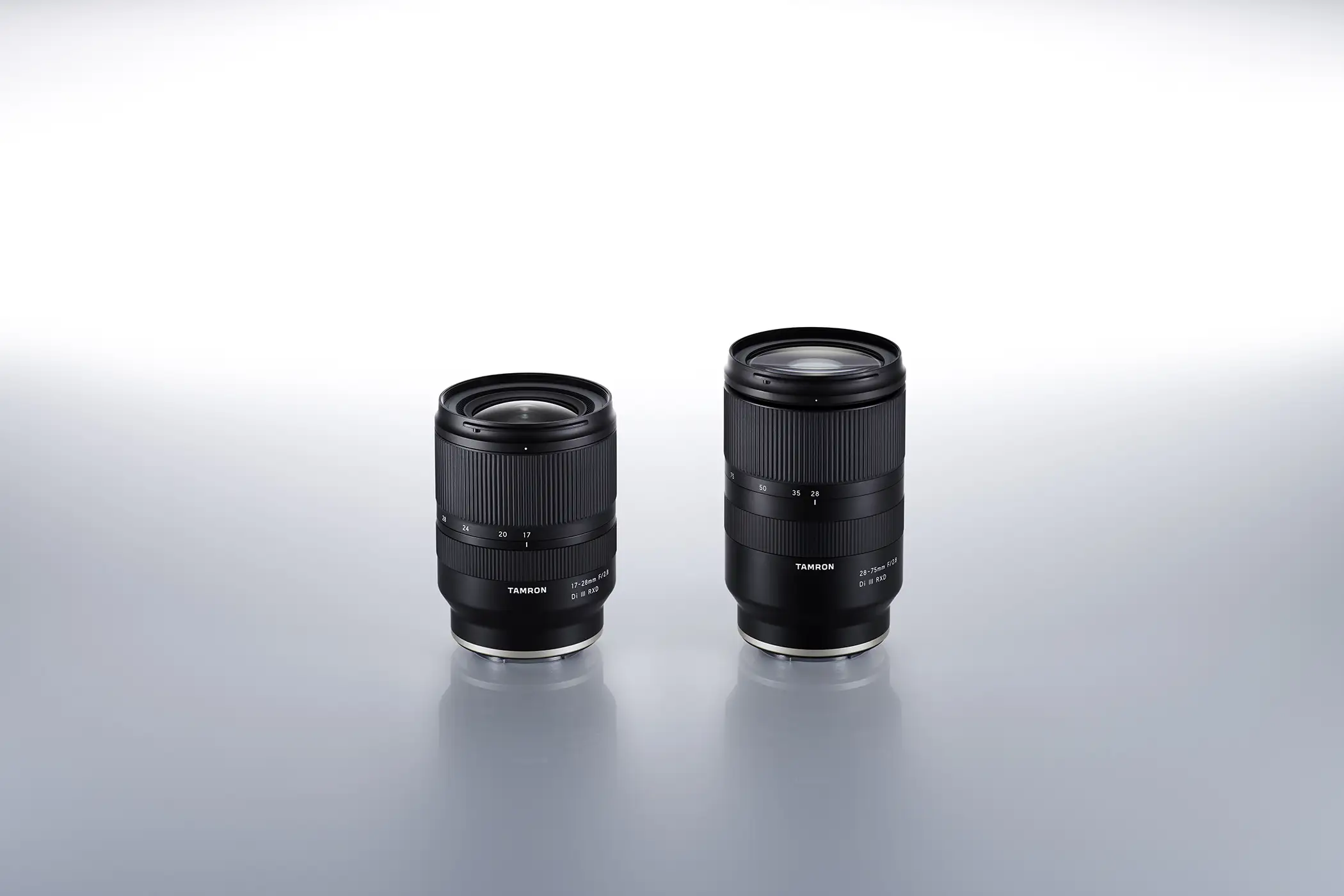
A verified buyer on Amazon noted: “It’s unbelievably light—balances perfectly on my A7 III. I can carry it all day.” Reddit threads echo that sentiment; one user called it “the perfect wide-angle hiking companion—half the size of my old Sony 16-35 GM.” The 420g body and fixed barrel length genuinely make it easier to travel with, confirming Tamron’s portability claims.
However, when it comes to “without compromise” optical quality, reality is more nuanced. Photofocus reviewers highlighted that “you’ll see softness creep in at the extreme edges until you stop down to f/5.6.” Multiple Amazon buyers also remarked that raw files show significant darkening in the corners at 17mm, something Tamron’s marketing glosses over. Yet as one Reddit post summarized: “Everything fixes in Lightroom—it's just part of the wide-angle life.”
Another advertised perk—its “high-speed, extra-silent autofocus”—holds true. A Reddit photographer wrote that AF is “so quiet it’s practically invisible on video,” and a verified Amazon buyer called the focusing “snappy, silent, and perfect for street shooting.” These align with Tamron’s official RXD specs, suggesting the autofocus delivers as promised.
Cross-Platform Consensus
Universally Praised
Users across Reddit, Amazon, and review outlets consistently describe the lens as compact, sharp, and uniquely practical for mirrorless travel setups. A Reddit user summed it up: “Finally, a wide zoom that doesn’t make my camera front-heavy.” The tiny 67mm filter thread—matching Tamron’s 28-75mm and 70-180mm f/2.8 lenses—is particularly celebrated. For system owners, being able to share filters across lenses means “one polarizer fits everything,” as one photographer put it.
Autofocus performance is another highlight. According to a professional review on Photofocus, the Tamron “had no problems at all in single, continuous, and tracking modes.” Landscape photographers appreciate its fast and accurate tracking, while videographers find the AF nearly silent. A user on Reddit confirmed: “Eye AF works flawlessly. I’ve even used it for weddings without issue.”
Sharpness impresses most users, especially at mid-apertures. A verified buyer on Amazon commented: “At f/4 this thing is tack sharp in the middle and totally usable in the corners.” Chromatic aberration and ghosting control also stand out, with Photofocus noting “no CA or fringing and well-controlled flaring even when shooting directly into the sun.”
For close-up photography, the minimum focusing distance (0.19m) surprised many. A landscape creator on Reddit said: “You can get almost macro-level shots at 17mm. It gives surreal depth.” This versatility bridges both creative stills and detailed environmental portraiture—something few ultra-wides manage as effectively at this price point.
Common Complaints
Even the most satisfied users admit flaws. Chief among them: vignetting and edge softness. Many report strong dark corners when shooting wide open at 17mm, though correction profiles usually remove it. “Every wide shot at 2.8 needs fixing in post,” wrote one user in a Reddit thread dedicated to lens corrections. Others mention minor pincushion distortion at 28mm. While common in this focal class, it’s more pronounced here than on pricier Sony GM lenses.
Another recurring gripe involves the lack of optical stabilization. As noted on Lensfinder.org, “it does not have optical image stabilization... you will need to use IBIS or a tripod.” For users with in-body stabilization (e.g. Sony A7 III, A7C), that’s manageable, but vloggers using crop or earlier bodies may find handheld footage shaky.
Some users also sense a color bias. As Photofocus observed, “colors render on the warm side.” Creative shooters call it stylistic, but product photographers find it problematic for accurate tones. It’s subtle but worth noting—RAW shooters can easily correct for it in post.
Divisive Features
A surprising point of contention is the zoom range itself. Traditionalists argue that stopping at 28mm feels restrictive compared to 16–35mm competitors. A Reddit post remarked: “You lose that extra width at 16mm, but gain portability. It’s a trade-off I’m okay with.” For some, this tighter zoom band simplifies framing; for others, it limits versatility in tight spaces.
Another split opinion revolves around build materials. While the lens is plastic-bodied, users describe it as “solid but feather-light.” A photographer reviewing on Trustpilot explained: “It feels like high-grade polycarbonate. Doesn’t scream premium, but it’s tough.” Conversely, a small segment of users prefer metal housing for professional reliability, especially under extreme conditions.
Trust & Reliability
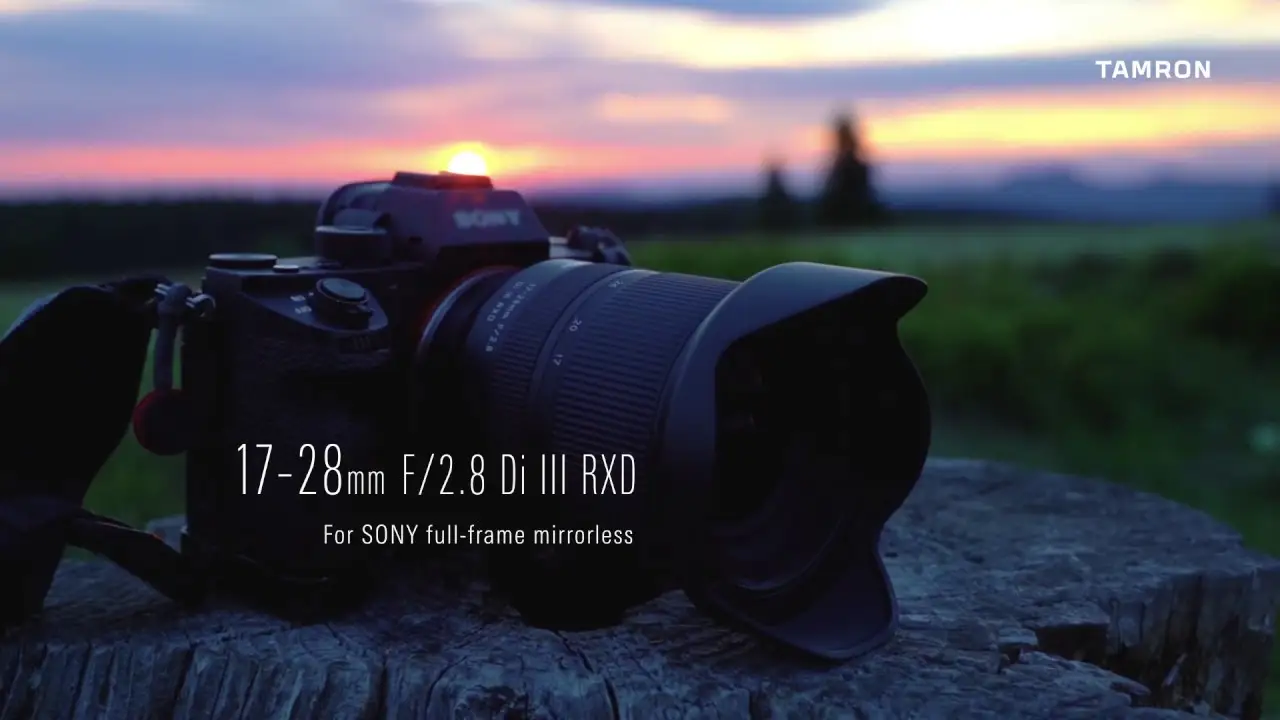
Across long-term ownership reports, the Tamron 17-28mm f/2.8 Di III RXD earns solid marks for reliability. Trustpilot data and overlapping Reddit accounts reveal few serious failures after months or years of use. One Reddit member wrote: “I’ve dragged this through rain and sand in Iceland—no fog, no focus issues.” The moisture-resistant seals and fluorine coating appear to perform as promised.
Another user, having owned it for 18 months, shared: “No decentering, no loose rings—it feels the same as day one.” However, rare users note zoom stiffness developing over time, likely due to debris rather than mechanical flaw. Tamron’s service reputation helps: warranty fulfilment is praised across Amazon and Reddit, with several users saying turnaround times were “quick and hassle-free.”
There’s no recurring pattern of lens element misalignment or repeated AF calibration problems—issues that have marred other third-party lenses. The few concerns posted mostly revolve around factory dust specks, quickly resolved under Tamron’s support. Overall, user confidence in build and after-sales service remains high.
Alternatives
The most direct competitors mentioned by users are the Sony 16-35mm f/2.8 GM and Sigma 14-24mm f/2.8 DG DN Art. The Sony, while sharper to the borders, costs roughly three times more and weighs almost double. Reddit photographers often call the Tamron “the realistic GM alternative for under a grand.” The Sigma, meanwhile, offers wider coverage but at the expense of portability; one forum member said it “feels like carrying a brick compared to the Tamron.”
Photographers who already own Tamron’s 28-75mm f/2.8 often keep the 17-28mm alongside, because as users reiterate, both share the same filter size, control layout, and aesthetic. The pair is repeatedly praised as “the under-1kg power combo,” especially for lightweight Sony setups like the A7C or FX30.
Price & Value
eBay market data shows new copies of the Tamron 17-28mm f/2.8 Di III RXD currently ranging between $600 and $750, with used models trending around $500. Open-box and near-mint units regularly appear under $550, making it one of the most affordable f/2.8 full-frame wide-angles available.
Given these prices, the resale trajectory is particularly strong: multiple listings have hovered around the same value for years, indicating minimal depreciation. “I sold mine after 2 years for only $50 less,” one photographer shared on Reddit, reflecting impressive price retention. The moderate market saturation also suggests consistent demand—rare for third-party optics this age.
For value seekers, that means owning a lens that delivers near-pro performance while holding resale worth far longer than cheaper kit lenses. It’s especially appealing to creators who frequently upgrade gear cycles.
FAQ
Q: Is the Tamron 17-28mm sharp enough for professional landscape work?
A: Yes, especially from f/4 onward. Center sharpness rivals lenses triple its price, though edges need stopping down to f/5.6–f/8 for peak performance.
Q: Does it work on APS-C Sony cameras like the A6400?
A: Absolutely. It becomes roughly a 25–42mm equivalent—more of a wide-to-standard zoom but still fast and compact for crop shooters.
Q: Is autofocus suitable for video?
A: Users report excellent results. The RXD motor is nearly silent, making it ideal for gimbal and handheld vlogging, provided you rely on your camera’s IBIS since the lens lacks optical stabilization.
Q: How well does it handle flare and sunlight?
A: Thanks to Tamron’s BBAR coating, ghosting and flare are minimal. Many users describe shooting directly into sunsets with no noticeable loss of contrast.
Q: Can it do close-up or pseudo-macro shots?
A: Yes. Its 0.19m minimum focus distance allows dramatic near-subject compositions with smooth background blur—one of the most unique features in this class.
Final Verdict
Buy the Tamron 17-28mm f/2.8 Di III RXD if you value lightweight gear, travel flexibility, and reliable autofocus above absolute edge-to-edge perfection. It’s tailor-made for landscape, street, and travel photographers who want high-end optics without the GM premium.
Avoid it if you rely heavily on software-free distortion correction or demand optical stabilization for video. As one long-term Reddit owner concluded: “It’s not flawless—but at its price, it’s the smartest wide-angle you can carry.”





