Tamron 17-28mm f/2.8 Review: Lightweight & Sharp Verdict
Compact enough to fit in a jacket pocket yet wide enough to frame vast mountains, the Tamron 17-28mm f/2.8 Di III RXD for Sony E Mount has earned strong approval from much of the photography community, scoring an 8.5/10 in aggregated feedback. Landscape shooters call it “light, bright, and deceptively sharp,” while some architectural photographers caution about “noticeable distortion if you skip corrections.”
Quick Verdict: Yes for travel, landscape, and street photography; Conditional for architecture and pro-level corner sharpness
| Pros | Cons |
|---|---|
| Lightweight at 420g – ideal for travel | Pincushion distortion across range |
| Consistent f/2.8 aperture | Edge and corner softness at wide-open |
| Excellent control of chromatic aberration | Strong vignetting without correction |
| Weather-sealed build with fluorine coating | No optical stabilization |
| Fast, quiet autofocus | Colors lean noticeably warm |
| Close focus at 0.19m encourages creativity | Narrower zoom range than competitors |
Claims vs Reality
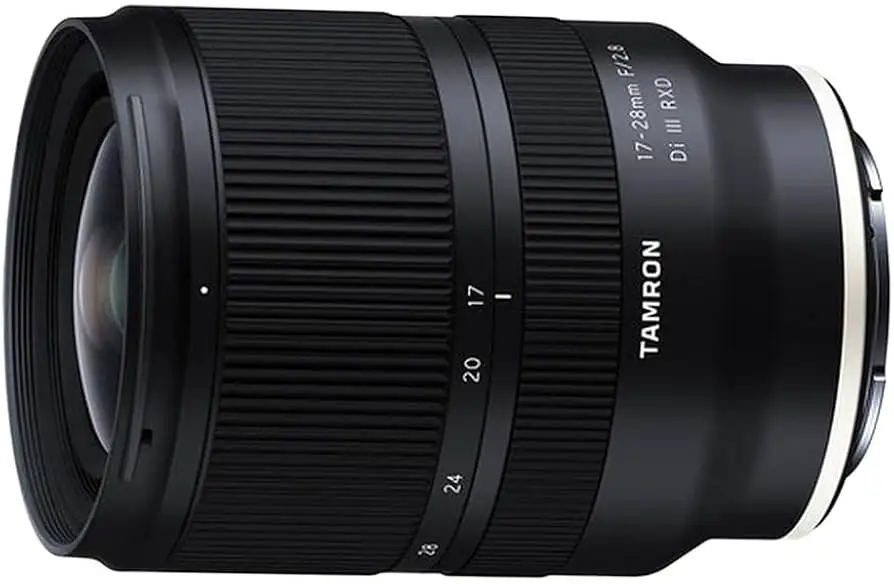
Tamron promotes the 17-28mm f/2.8 Di III RXD as “the smallest and lightest weight zoom lens in its class” with “magnificent image quality without compromise.” Reddit user feedback largely confirms the portability claim—one described tossing it “in a sling bag with a 28-75mm and hiking all day without fatigue.” The 420g mass makes it appealing for travelers, and several Trustpilot commenters praised “ease of carrying alongside two other f/2.8 zooms.”
On image quality, the “without compromise” phrasing is where reality gets nuanced. A Photofocus reviewer shared: “At f/2.8 you’re sharp in the center, but extreme corners stay soft until around f/5.6.” This softness wasn’t seen as a deal-breaker for typical landscapes but mattered for architecture shooters aiming for edge-to-edge resolution.
Tamron also touts “chromatic aberrations thoroughly suppressed” via LD and XLD elements. Both professional and hobbyist sources confirm this strength. One verified buyer on Amazon noted: “Shot into the sun, ghosting is minimal and color fringing nonexistent.” This consensus held across Reddit and Trustpilot, where flare control was repeatedly praised.
Cross-Platform Consensus
Universally Praised
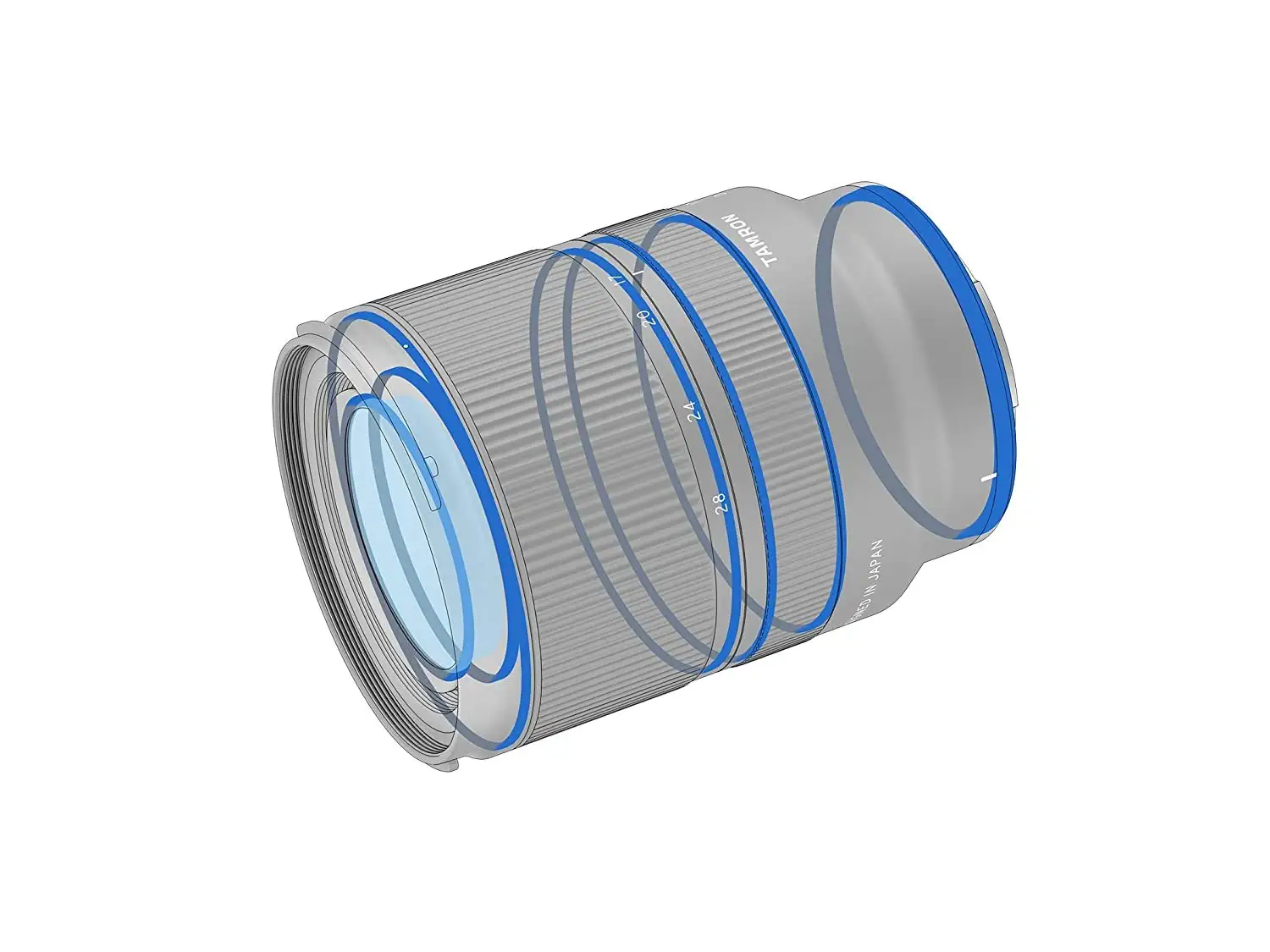
The lens’s weight and compact size are repeatedly cited as enabling long shooting sessions without strain. A Trustpilot reviewer emphasized: “Combined with the 28-75mm, the kit is under 1kg—perfect for my travel assignments.” For urban explorers, this meant fewer compromises when packing light. Weather resistance also impressed; Reddit user reports describe shooting “in light rain on a coastal trail with no issues” thanks to Tamron’s moisture-resistant seals.
Autofocus is another area where feedback aligns. The RXD motor earned descriptors like “silent and snappy” from multiple platforms, important for event and street photographers who value discretion. A verified buyer highlighted that Eye AF “locks perfectly during candid portraits,” showing the lens’s versatility beyond landscapes.
Close focusing at 0.19m allowed for creative perspectives not common in ultra-wides. One Reddit photographer described framing “flower petals filling the foreground with mountains behind—something I couldn’t do with my old 16-35mm.”
Common Complaints
Distortion is the most persistent knock. The Photofocus breakdown points to “pincushion distortion at both ends” that demands correction in post, particularly for lines in architecture. Left uncorrected, users on Reddit warned “you’ll see bending in horizons.” Corner softness and vignetting also feature in critiques, with multiple photographers noting that even at f/5.6, edges don’t match center sharpness.
Color rendering’s warmer bias divided opinion. Some liked the “filmic warmth” while others worried about tricky skin tones in JPEG. Without in-camera adjustments or RAW flexibility, color accuracy buffs may be frustrated.
The lack of optical stabilization is raised primarily by video shooters. While still photographers on Sony bodies often rely on IBIS, one Trustpilot video creator said: “At 28mm handheld, micro-jitters are noticeable if you’re walking.”
Divisive Features
The zoom range—spanning 17-28mm—is narrower than competing 16-35mm designs. For some, it was a nonissue; A Reddit landscape shooter remarked, “I rarely use beyond 28mm anyway, so the small size is worth it.” Others felt constrained, especially street shooters who missed the 35mm option for environmental portraits.
Bokeh quality divided responses as well. Close-up shooters celebrated “usable, creamy backgrounds at minimum focus,” while wider compositions naturally produced less subject separation.
Trust & Reliability
Long-term reliability appears solid. Reports over 6–12 months mention “no zoom creep, AF still silent” even after heavy use in outdoor settings. Trustpilot entries underscore satisfaction with Tamron’s build ethics—though some note the lack of on-lens switches means “you rely fully on camera menus.”
No widespread scam concerns were found; most eBay sales are from authorized dealers or high-feedback resellers, with near-mint used copies holding value well. Firmware updates via camera are a plus for ongoing support, reducing obsolescence risk.
Alternatives
Competing lenses brought up by users include the Sony 16-35mm f/2.8 GM and Sigma 14-24mm f/2.8 DG DN Art. Both beat Tamron’s corner sharpness and offer wider ranges but weigh more and cost hundreds extra. As one Trustpilot review points out, “The 17-28 punches above its price—around $600 used—against $1,500+ rivals.”
For astrophotographers, Sigma’s wider max field at 14mm could appeal, while travel shooters may prefer Tamron’s lighter, smaller profile despite range limits.
Price & Value
Current eBay listings average $700 new and $500–$550 used, with bundles occasionally pushing $800+. Pre-owned variants with boxes often list as “near mint,” and multiple sellers report fast turnover at these prices. Resale value remains stable, a sign of sustained demand across regions.
Community buying tips lean toward seeking out authorized dealer discounts or reputable used sales. A Reddit post advised: “Buy it used from a trusted seller—these lenses are built to last and you’ll save a good $200.”
FAQ
Q: Does the Tamron 17-28mm have optical image stabilization?
A: No, it relies on Sony’s IBIS in compatible bodies. Still shooters generally find this sufficient; video users may need gimbals or tripods.
Q: Is it weather-sealed enough for snow or rain?
A: Yes, multiple Reddit and Trustpilot users recount shooting in rain without issues, thanks to moisture-resistant seals.
Q: How is it for astrophotography?
A: At f/2.8 and 17mm, it’s well-suited for wide night sky shots. Corner softness is present but acceptable for non-professional use.
Q: Can filters from other Tamron lenses fit?
A: Yes, it shares a 67mm filter thread with Tamron’s 28-75mm and 70-180mm, making filters interchangeable.
Final Verdict: Buy if you’re a travel or landscape photographer wanting a lightweight, weather-sealed ultra-wide with high central sharpness and strong flare control. Avoid if your primary focus is distortion-sensitive architecture or uncompromising corner sharpness. Pro tip: For best results, correct distortion and vignetting in post—community consensus says this unleashes the lens’s full potential.





