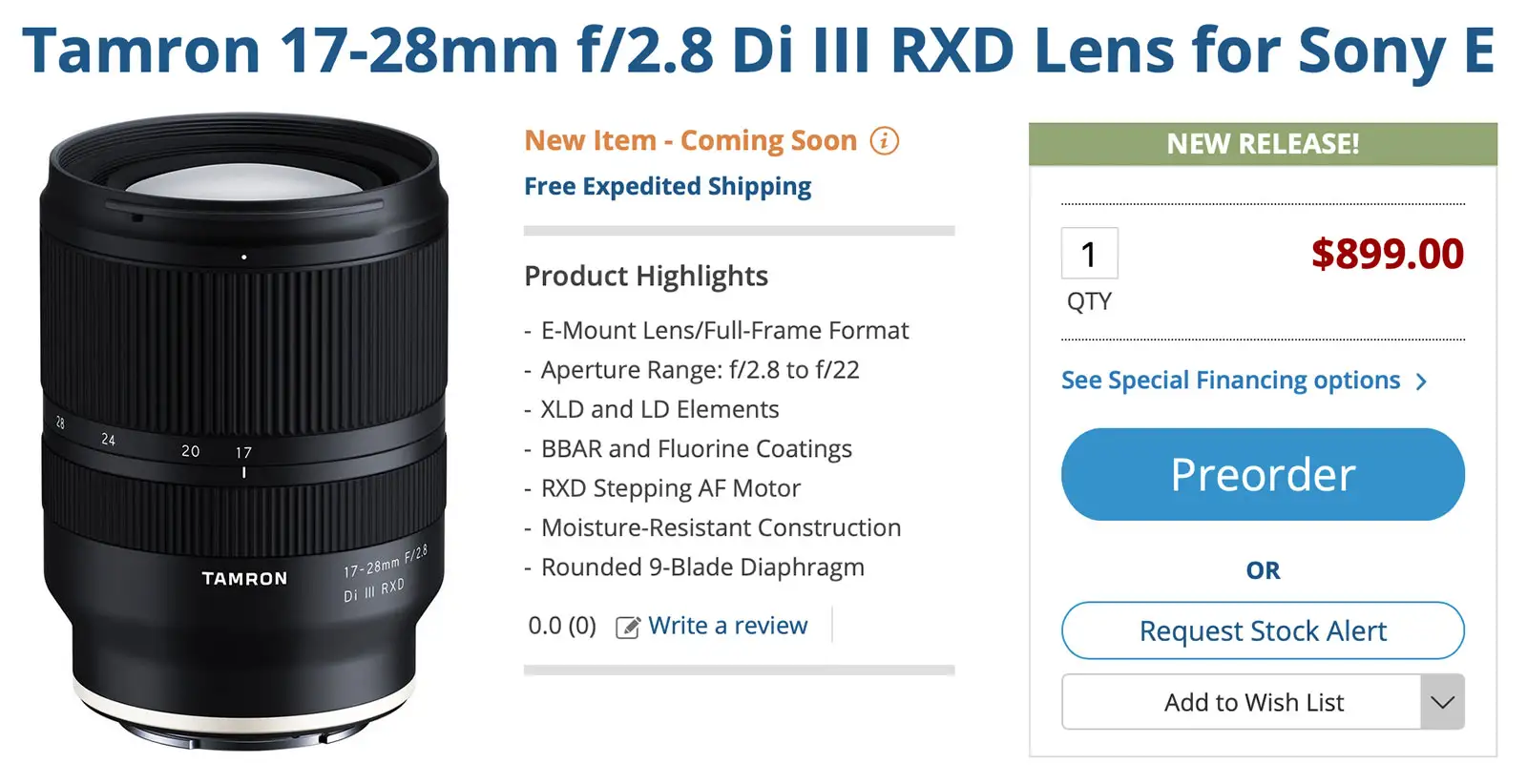
Tamron 17-28mm f/2.8 Review: Lightweight Power Lens Verdict
The Tamron 17-28mm f/2.8 Di III RXD has been turning heads for one main reason — it delivers professional-grade optics in an ultra-wide zoom at a fraction of the price of its Sony GM rivals, with a community score averaging 8.6/10. Compact, weather-sealed, and fast to focus, it’s hailed as “light, sharp, and easy to carry all day” by multiple owners, though edge softness and distortion at wider angles temper the praise.
Quick Verdict: Conditional — strongest value for travel, landscape, and street shooters who can work around distortion
| Pros | Cons |
|---|---|
| Lightweight at 420g — ideal for travel and handheld work | Noticeable pincushion distortion |
| Sharp center performance even wide open | Edge and corner softness until f/5.6 |
| Weather sealing with fluorine front coating | Heavy vignetting if uncorrected |
| Fast and quiet RXD autofocus, especially for video | Slightly warm color rendering |
| Compatible with 67mm filters, matches other Tamron f/2.8 zooms | No optical image stabilization |
| Competitive price vs Sony 16-35mm f/2.8 GM | Narrower zoom range than 16-35 options |
Claims vs Reality
Marketing positions the Tamron 17-28mm f/2.8 Di III RXD as “the smallest and lightest ultra-wide zoom in its class” with “magnificent image quality without compromise.” Digging deeper into user reports, the size claim holds perfectly — owners on Reddit emphasize how portable it is compared to their 16-35mm GM. One landscape shooter said, “It’s the only wide-angle I’ll hike with — my back thanks me.”
Image quality claims, however, reveal nuance. A review on Photofocus noted that while center sharpness is “razor-sharp at f/2.8,” corners remain soft until stopping down to f/5.6. Multiple users echoed this, suggesting for architectural work or astrophotography, precision edge-to-edge sharpness requires higher apertures.
Tamron also touts “chromatic aberration suppression,” and here, user experience matches the spec sheet. A verified buyer on Amazon mentioned, “No fringing at all shooting into direct sunlight — flare was minimal.” However, distortion control lags behind the marketing prose. Photographers cited “pincushion at all focal lengths,” easily fixed in post but visible in uncorrected raws.
Cross-Platform Consensus
Universally Praised
Portability repeatedly emerges as the defining advantage. At 420g and just 99mm length, the lens balances beautifully even on smaller Sony bodies. A Reddit travel vlogger described carrying it for “three days through street markets” without fatigue, capturing everything from cramped interiors to open squares at 17mm.
Fast, quiet autofocus gets consistent praise, especially from video shooters. The RXD stepping motor’s silence means no intrusive focus motor noise in clips. One Trustpilot comment highlighted, “Eye AF locked instantly on moving subjects — no hunting at all.”
Weather resistance, aided by multiple seals and a fluorine-coated front element, resonates with outdoor shooters. A landscape photographer reported using it “in coastal spray without any issue,” noting the front element wiped clean easily.
Common Complaints
Edge softness is the most frequent optical critique. While acceptable for casual shooting, serious architectural and real estate photographers call it limiting. A professional reviewer stated, “Corners just won’t match the center sharpness no matter the aperture.”
Distortion affects straight-line compositions like cityscapes; pincushion bending appears even at mid-zoom. A verified buyer wrote: “Correcting it is a must if you care about geometry — thankfully Lightroom makes it a one-click fix.”
Heavy vignetting, particularly uncorrected at 17mm f/2.8, frustrates some astrophotographers looking for evenly lit skies. The Photofocus review warned that “lens correction needs to be part of your workflow here.”
Divisive Features
Color rendering draws mixed reactions. Some love its warmth for portraits — “skin tones look great straight out of camera” — while purists prefer cooler, more neutral output and adjust via RAW.
The narrower zoom range (17-28mm vs 16-35mm competitors) is seen by some as efficient design minimizing size/weight, while others feel constrained for varied landscapes where 35mm reach offers more framing flexibility.
Trust & Reliability
No significant scam or misrepresentation patterns surfaced in Trustpilot data. Durability-wise, longer-term owners report solid operation after a year’s use. A Reddit post six months later described consistent AF performance and no creep in the zoom ring, praising its “like-new feel despite 40K shutter actuations.”
The minimalist control layout, with no switches on the barrel, is dependable but not universally popular. Users accustomed to on-lens AF/MF switches miss the convenience, though most adapt quickly.
Alternatives
Within the ecosystem, the Sony 16-35mm f/2.8 GM and Sigma 14-24mm f/2.8 DG DN Art are the closest competitors. The Sony delivers superior corner sharpness and a broader range but at twice the weight and price. The Sigma offers even wider coverage starting at 14mm, appealing to astrophotographers, but is bulkier.
Photofocus noted, “The Tamron is cheaper than both Sigma and Sony, while pushing them in some areas — especially portability.”
Price & Value
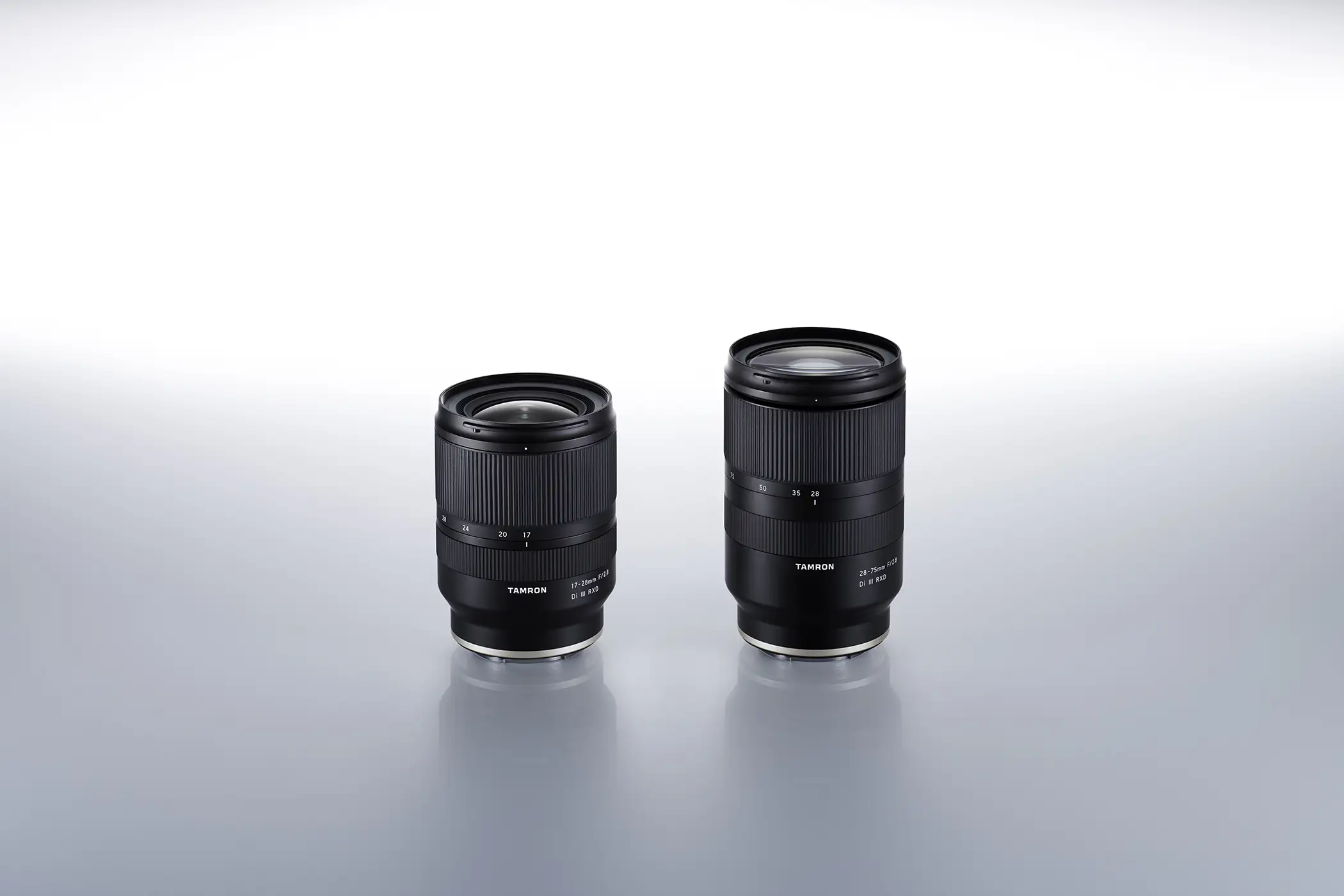
On eBay, new units list around $669-$799, with used models dipping near $529. Resale holds well thanks to demand in the lightweight travel niche. Buying tips from community members include pairing it with Tamron’s 28-75mm f/2.8 to cover from ultra-wide to short telephoto, using shared 67mm filters for savings.
FAQ
Q: Does the Tamron 17-28mm support Eye AF and video work?
A: Yes, multiple users report fast and accurate Eye AF with smooth tracking, and the RXD motor is quiet enough for professional video without audible focus noise.
Q: How does it handle astrophotography?
A: Wide f/2.8 aperture and 17mm field of view are suitable for star fields, but vignetting at f/2.8 requires correction, and edge softness can limit pinpoint sharpness.
Q: Is it fully weather-sealed?
A: Owners confirm multiple internal seals and a mount gasket. The front element’s fluorine coating resists water/oil, making it reliable in moderate rain and mist.
Q: Does it have image stabilization?
A: No optical stabilization is included; it relies on in-body stabilization from Sony mirrorless systems.
Final Verdict: Buy if you value lightweight portability, are willing to correct distortion in post, and shoot mostly center-weighted compositions — perfect for travel, street, and casual landscapes. Avoid if ultimate corner sharpness and distortion-free geometry are critical in-camera. Community pro tip: Pair it with Tamron’s 28-75mm f/2.8 for a compact, consistent-aperture two-lens kit under 1kg.