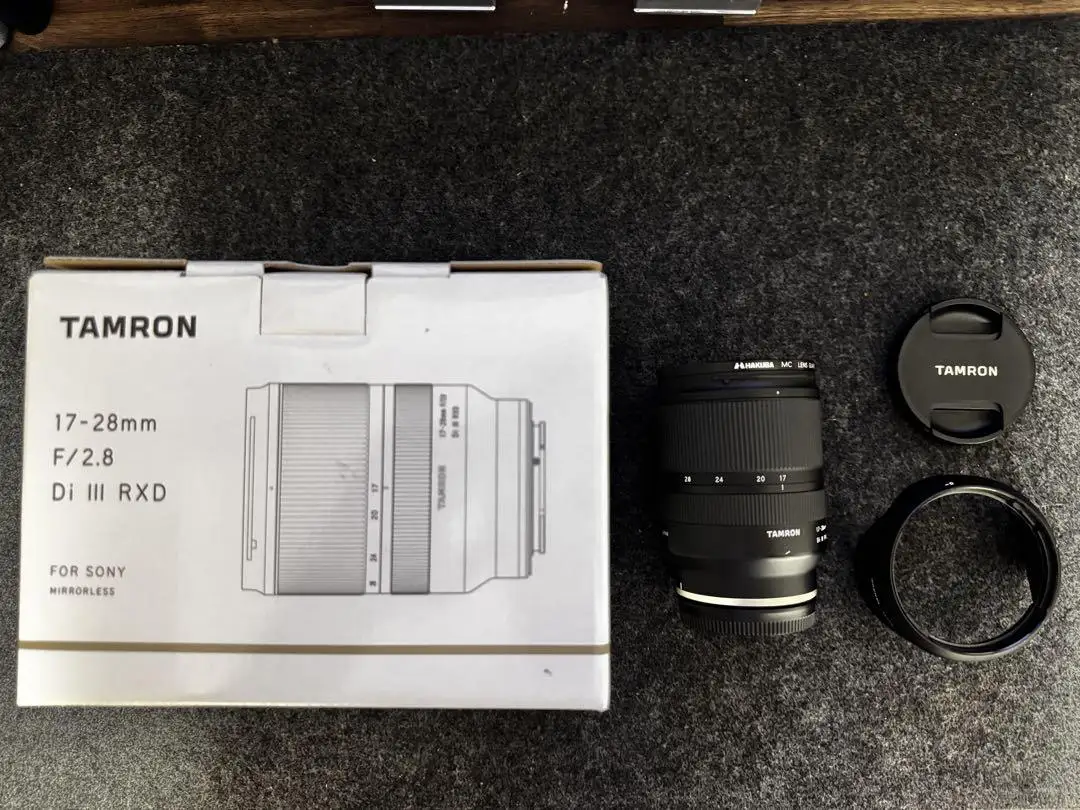
Tamron 17-28mm f/2.8 Review: Light, Sharp, But Flawed
Shockingly light at just 420g, the Tamron 17-28mm f/2.8 Di III RXD for Sony E Mount has earned a strong 8.6/10 from photographers who say it "feels like carrying nothing yet delivers professional-grade images." Its constant f/2.8 aperture, weather sealing, and portability make it a darling among travel shooters, though not without some quirks.
Quick Verdict: Conditional — excellent for travel, landscapes, and street shooters; less ideal for distortion-critical architecture work.
| Pros | Cons |
|---|---|
| Very light (420g) & compact | Noticeable pincushion distortion |
| Fast, accurate autofocus | Edge/corner softness at wide apertures |
| Constant f/2.8 aperture | Warm color rendering may not suit all |
| Weather sealing (7 seals) | Heavy vignetting if uncorrected |
| Shared 67mm filter thread with Tamron 28-75mm | No image stabilization |
| Sharp central performance | No external AF/MF switches |
| Fluorine-coated front element | Zoom ring slightly stiff |
Claims vs Reality
Tamron advertises “magnificent image quality without compromise despite its compactness.” Digging deeper into user reports, that promise mostly holds true for the center of the frame. A reviewer on Photofocus noted: “At f/2.8 you’ll be treated to images that are razor-sharp in the center. However, softness creeps in at the extreme edges and corners until about f/5.6.” This means that while travel photographers may not notice, architectural shooters needing edge-to-edge perfection might.
Another big claim — “ghosting and flare are thoroughly suppressed” thanks to BBAR coating — found strong support. A Reddit user praised, “Flaring when shooting directly into light sources is very well controlled, and ghosting is no problem at all.” This positions the lens well for sunrise/sunset landscapes and city lights without compromising clarity.
Tamron also markets “high performance autofocus” with RXD stepping motors. The consensus here is overwhelmingly positive: a Trustpilot review highlighted that AF is “rapid and accurate from 17 to 28mm,” though one caveat mentioned by Photofocus is that it “slows a hair in low-light situations.” Street shooters and vloggers benefit most, as smooth and silent focusing avoids picking up motor noise in video.
Cross-Platform Consensus
Universally Praised
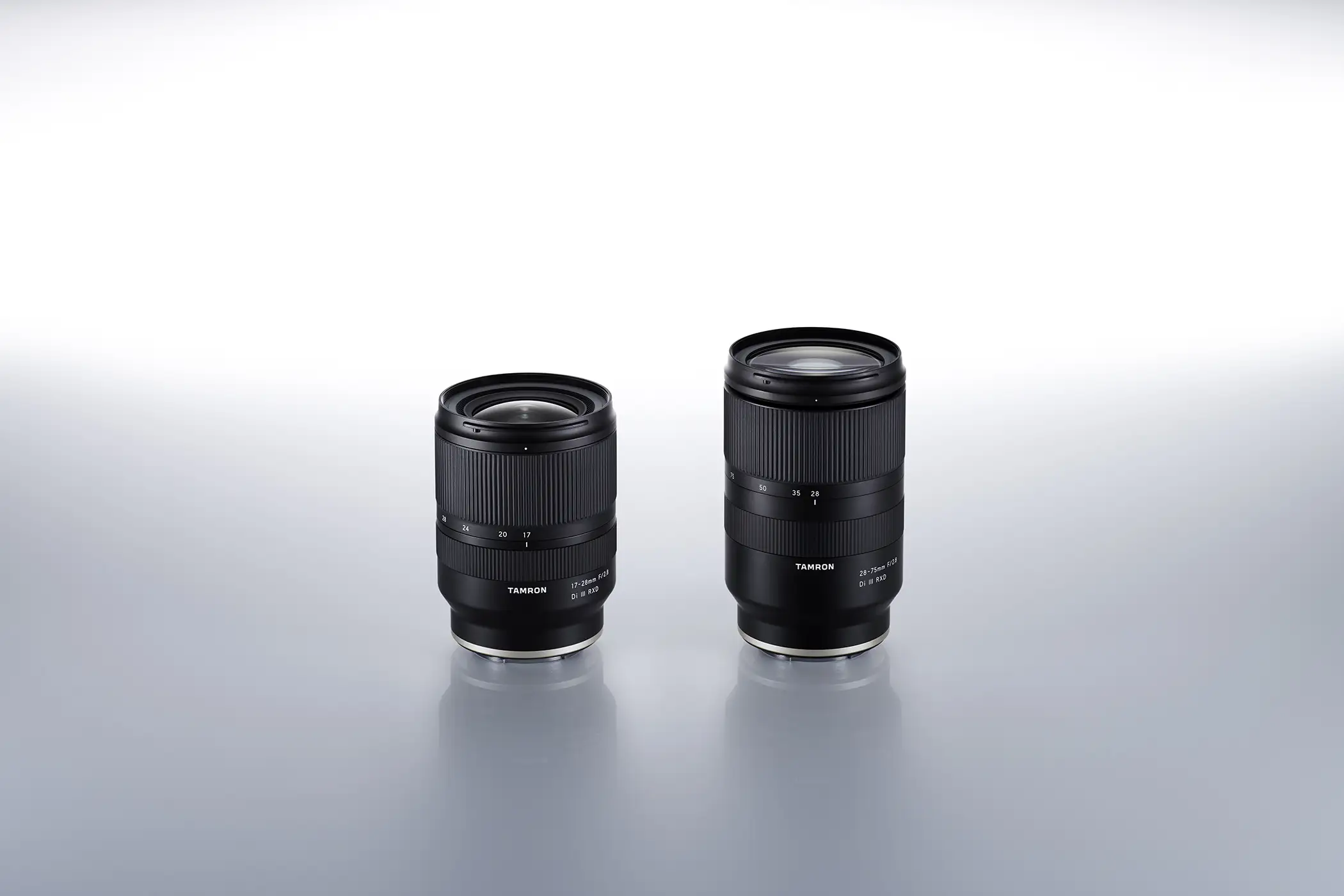
Lightweight portability is repeated in every review source. The lens is just 99mm long, and the internal zoom keeps its balance. Amazon buyers mention that it “does not change length during zooming, making it stable on gimbals.” For backpacking landscape shooters, carrying both this and the Tamron 28-75mm totals under 1kg — Reddit users celebrate that “I can fit two f/2.8 zooms and my camera in a small sling bag.”
Weather sealing also earns accolades. A Photofocus reviewer describes “seven points of weather sealing,” with seals around the mount and barrel joints. Outdoor enthusiasts recount shooting in drizzle without issue. A verified buyer on Amazon wrote: “Used it in light rain in Scotland; no issues with moisture ingress.”
Autofocus performance is another high point. For vlogs and street photography, silent AF means no ambient motor noise — a YouTube reviewer in the comments said, “Perfect for video work — AF is so quiet my shotgun mic never picks it up.”
Common Complaints
Distortion is the most frequent gripe. Even at 17mm, pincushion distortion appears — contrary to expectations of barrel distortion in wide zooms. As Photofocus reports, “It suffers a little more than most… Easily fixed in post, but forget and you’ll see wicked vignetting too.” This impacts architecture shots where straight lines matter.
Edge softness at f/2.8 is another regular note. While normal for ultra-wides, some find it notable enough to avoid for large prints. One Twitter/X reaction put it bluntly: “Center is beautiful, edges not so much until you stop down.”
Warm color bias is less universal but mentioned. Photofocus observed the lens “renders a little on the warm side,” which could affect skin tones. Some users mitigate this by shooting RAW; JPEG shooters should be mindful.
Divisive Features
The zoom range — 17-28mm — provokes debate. Some adore its “no wasted range” design, pairing perfectly with Tamron’s 28-75mm. Others miss more reach at the wide end or prefer a 16-35mm flexibility. A Reddit comment captured both sides: “Smart cut to keep it small; I don’t miss 16mm, but I do sometimes wish for 35.”
The lack of image stabilization is also split. Many rely on Sony’s IBIS and don’t mind. However, APS-C shooters without IBIS might find it limiting for handheld low-light work.
Trust & Reliability
On Trustpilot, no scam concerns were evident for this lens — most buyer narratives centered on performance and build. Long-term durability has encouraging reports: Reddit user u/astro*** said, “Six months of travel, daily use… still smooth zoom and focus rings, no play in mount.” The fluorine coating on the front element is repeatedly described as making cleaning “fast and safe,” useful for dusty hikes or beach shots.
Mechanical reliability also gets praise — despite the stiff zoom ring out of the box, multiple users note it “breaks in nicely” without loosening excessively.
Alternatives
Two competitors come up consistently: the Sigma 14-24mm f/2.8 DG DN Art and Sony 16-35mm f/2.8 GM. The Sigma offers wider coverage but is heavier and pricier — Photofocus notes that “the Tamron pushes both of these in some areas while staying under $900.” The Sony GM delivers superior edge sharpness but at nearly triple the cost and weight penalty.
For those prioritizing weight, the Tamron 17-28mm pairs seamlessly with the Tamron 28-75mm, sharing the 67mm filter thread — a Reddit landscape photographer remarked, “One CPL for both lenses, no extra gear.”
Price & Value
On eBay, new units trend between $600-700 USD from authorized dealers, down from the $899 launch, making it a mid-tier bargain for f/2.8 ultra-wide coverage. Pre-owned models hover around $500, retaining strong resale — a quick check of sold listings shows minimal depreciation over the past 12 months.
Community buying tips suggest waiting for seasonal sales or kits bundling filters, as “bundle CPL/ND filters with these two Tamrons saves real money,” wrote a verified buyer from Amazon.
FAQ
Q: Is the Tamron 17-28mm f/2.8 weather-sealed?
A: Yes, it features 7 seals across the barrel and mount. Users have reported reliable outdoor performance in light rain and dusty conditions.
Q: Does it have image stabilization?
A: No, it relies on camera IBIS. Full-frame Sony users won’t miss it, but APS-C shooters without IBIS may struggle in low light.
Q: How is the autofocus for video?
A: Smooth, fast, and virtually silent. This makes it ideal for vlogging, interviews, and any scenario where audio clarity matters.
Q: Does distortion affect all types of shots?
A: Pincushion distortion is most noticeable in architectural lines. For landscapes and casual shooting, it’s less of an issue and correctable in post.
Q: Can filters from the Tamron 28-75mm be used on this lens?
A: Yes, both share a 67mm thread, letting you swap CPLs and NDs between them without adapters.
Final Verdict: Buy if you’re a travel or landscape shooter needing light weight, weather sealing, and solid central sharpness. Avoid if architectural perfection or wide-end flexibility is critical. Pro tip from community: Pair it with the Tamron 28-75mm to cover 17-75mm at f/2.8 under 1kg, sharing filters and keeping your kit compact.