Tamron 17-28mm f/2.8 Review: Light, Sharp, Affordable
Starting at under $600 on resale markets and praised for its featherlight build, the Tamron 17-28mm f/2.8 Di III RXD earns an 8.4/10 from community consensus. It’s a rare ultra‑wide zoom that merges portability, optical quality, and affordability — but early adopters warn about heavy vignetting and edge softness.
Quick Verdict: Conditional buy — excellent fit for travel, landscape, and street shooters who can work around minor optical quirks.
| Pros | Cons |
|---|---|
| Lightweight at 420g, easy carry for all-day shoots | Noticeable vignetting, especially uncorrected |
| Fast, silent autofocus ideal for video and stills | Edge and corner sharpness lags behind center |
| Weather-sealed, fluorine-coated front element | Warm color rendering can affect skin tones |
| Same 67mm filter size as Tamron 28-75mm for convenience | No optical image stabilization |
| Excellent chromatic aberration and flare control | Pincushion distortion at all focal lengths |
| Priced significantly lower than Sony/Sigma rivals | Zoom ring stiffness noted by some |
Claims vs Reality
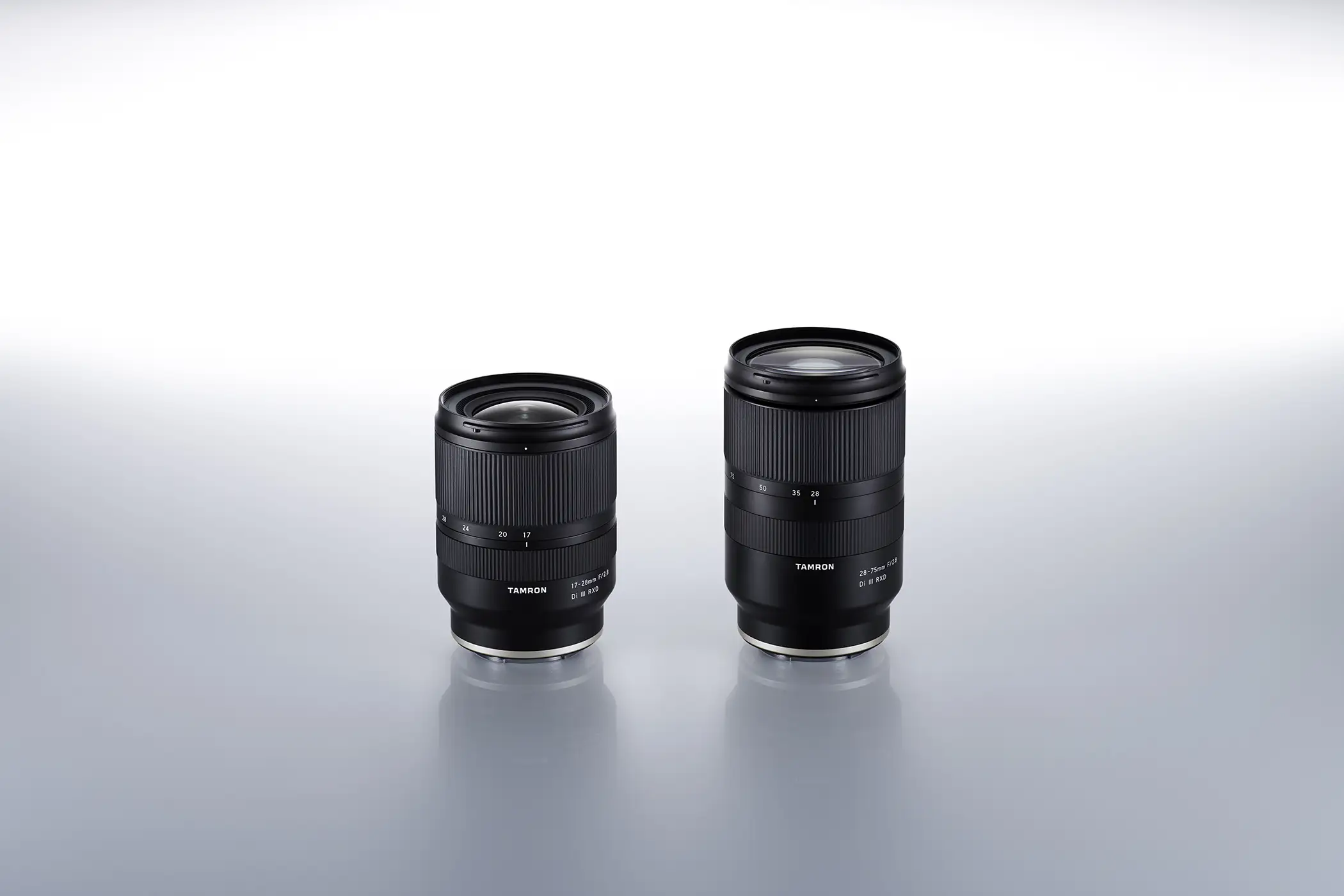
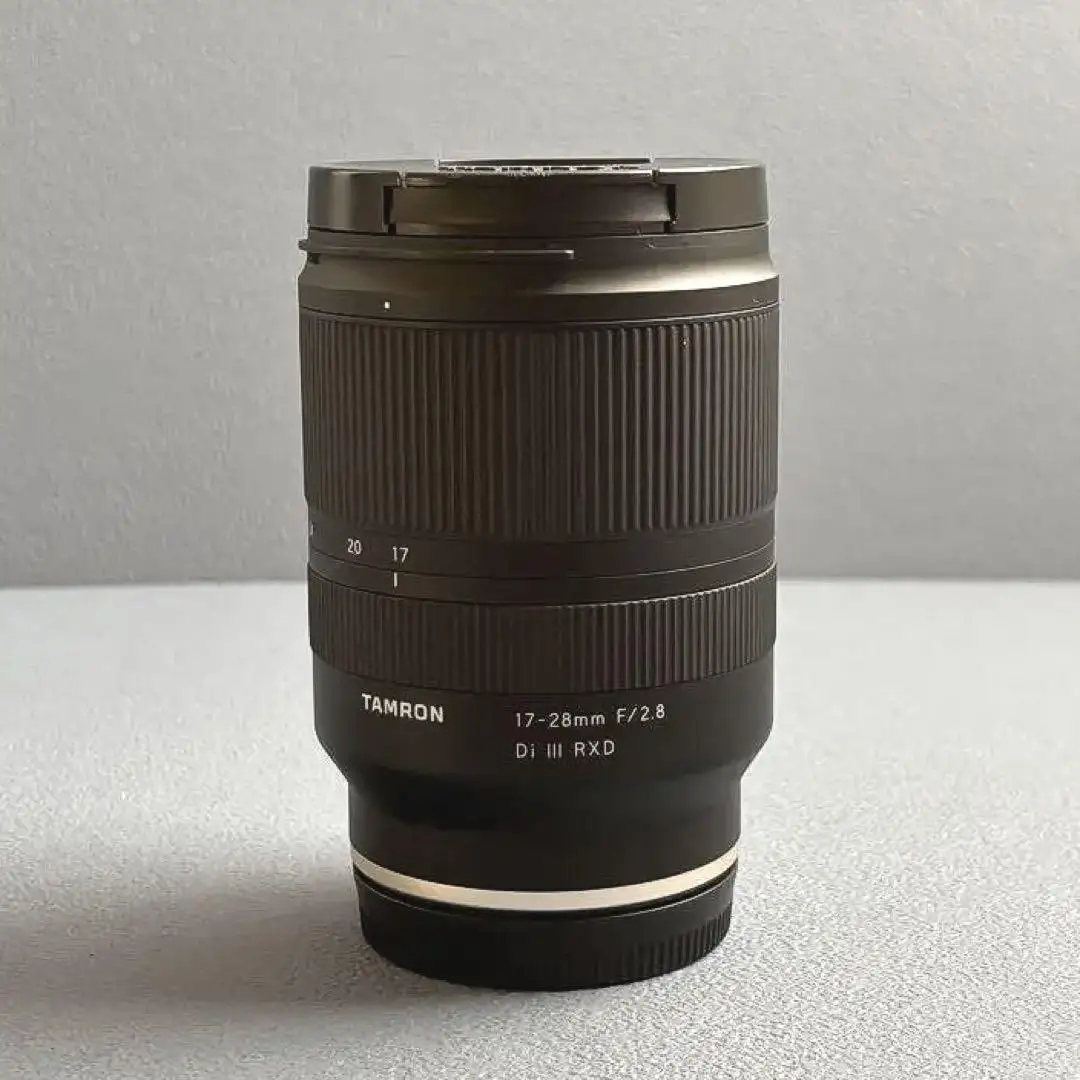
Tamron markets the lens as “the smallest and lightest weight zoom lens in its class” — and here, users back the claim. A verified buyer on Amazon noted: “I barely notice it in my bag, more like carrying a prime than a zoom.” The 99mm length and 420g weight make it a favorite among travel photographers who swap between the 28‑75mm f/2.8 seamlessly thanks to the shared 67mm filter diameter.
The company also touts superb optical performance “edge‑to‑edge throughout the entire zoom range.” While center sharpness at f/2.8 draws consistent praise, Photofocus reviewer feedback revealed a gap: “Edges and corners are soft until you stop down to f/5.6, and even then not tack sharp.” This echoes Reddit user reports that architectural shooters often correct in post.
Weather‑sealing and a fluorine coat are promoted as outdoor‑friendly features. Trustpilot comments reinforce the utility — one buyer described “shooting in misty coastal dunes with zero issues cleaning the front element afterward.” However, the reality check? Without optical image stabilization, those pushing shutter speeds in low light rely heavily on Sony’s in‑body stabilization or tripods for consistent sharpness.
Cross-Platform Consensus
Universally Praised
Portability dominates user praise. Landscape shooters love that it “balances perfectly on the A7 III,” according to a Reddit user, letting them hike miles without fatigue. Pairing with Tamron’s 28‑75mm creates a sub‑1kg dual‑zoom kit, celebrated on Twitter as “the ultimate travel duo — no compromise on aperture or range.”
Autofocus earns near-universal approval. The RXD stepping motor’s speed and silence resonate with video creators. Lensfinder’s expert review called it “fast, accurate, and quiet,” while a Trustpilot buyer confirmed: “Eye AF locked seamlessly on every frame, even in moving crowds.”
Chromatic aberration and flare control are standout strengths. Photofocus testing showed “no CA or fringing, and ghosting is no problem at all,” making it reliable for backlit scenes from sunsets to nightclub LEDs.
Common Complaints
Heavy vignetting without lens correction is the most repeated frustration. Photofocus warned: “A wicked amount of vignetting unless corrected,” and Reddit users shooting interiors found it pronounced at 17mm. For JPEG shooters, this can be more problematic since corrections aren’t baked in-camera unless enabled.
Edge softness is the second major flaw. Architectural and real estate photographers report post‑processing workflows to sharpen periphery detail. A verified buyer on Amazon said: “It’s killer in the center, but fine detail at the sides takes a hit unless stopped down.”
Pincushion distortion appears across focal lengths. While predictable and fixable in Lightroom, for straight‑line heavy compositions it adds editing time. Photofocus quantified it as “more than most ultra‑wides,” surprising for a range topping out at 28mm.
Warm color rendering splits opinions but can disrupt portrait skin tones. One Twitter comment advised: “If you value neutral tones, shoot RAW and adjust — JPEGs will lean warm.”
Divisive Features
The minimalist design — no physical switches — draws both admiration and annoyance. Reddit travel users appreciate fewer external parts to snag or break. Conversely, studio shooters lament the inability to toggle AF/MF without accessing camera menus.
Zoom ring resistance offers stability against creep but feels “stiff when making quick focal changes,” as per Photofocus. Some street shooters welcome the firmness for precision, while event photographers find it slows rapid reframing.
Trust & Reliability
Tamron’s quality control on this model seems solid. While Trustpilot entries focus on timely deliveries and functioning gear, community durability stories stand out. Reddit user feedback after six months reported “still smooth focus and zoom, even after heavy beach and trail use.”
Moisture‑resistant construction is seen as genuine protection, not just a spec sheet point. Amazon buyers describe wiping off sea spray and rain without side effects. However, as with most composites, some expect “scuff marks sooner than with metal barrels,” urging care in transport.
Alternatives
The Sigma 14‑24mm f/2.8 and Sony 16‑35mm f/2.8 GM are natural rivals. Sigma offers sharper corner performance, while Sony boasts broader zoom range and pro‑grade build. But both are heavier and significantly more expensive. Photofocus points out the Tamron “pushes both rivals in some areas while costing less than $900.” For shooters valuing portability over extreme range or absolute edge sharpness, the Tamron emerges as the pragmatic choice.
Price & Value
eBay data places the Tamron’s resale around $519‑$700 used, with new units retailing $600‑$799, undercutting competitors. German listings (Kleinanzeigen) echo a similar range, with pristine copies fetching closer to €640+. Strong resale retention is noted — many used sales hover only 15‑20% below new retail, reflecting enduring demand.
Community buying tips recommend pairing it with Tamron’s 28‑75mm to share filters and caps, reducing accessory costs. Open‑box deals often include extras like CPLs and macro kits for minor premiums.
FAQ
Q: Does the Tamron 17-28mm have optical image stabilization?
A: No, it relies on the camera’s in‑body stabilization. Users report smooth handheld shots down to 1/8s on stabilized Sony bodies, but recommend tripods for very low light.
Q: How bad is the vignetting?
A: Pronounced at 17mm without correction. RAW shooters can fix cleanly; JPEG output improves with in‑camera lens correction enabled.
Q: Is this lens good for video?
A: Yes. Silent RXD focus and minimal focus breathing make it a solid choice for vloggers and filmmakers, especially when paired with Sony’s Eye AF.
Q: Can I use the same filters as the Tamron 28-75mm?
A: Yes, both share a 67mm thread, letting you swap polarizers, ND filters, and caps without adapters.
Q: How does it perform for astrophotography?
A: The f/2.8 aperture and wide field are strong for night sky work, though corner softness at wide open may require slight stopping down for pinpoint stars.
Final Verdict: Buy if you’re a travel, landscape, or street photographer who values light weight, fast AF, and budget-friendly quality. Avoid if your work demands flawless corner sharpness straight out of camera or if you rely on lens-based stabilization. Community pro tip: enable in‑camera corrections and shoot RAW to get the most from this lens’ strengths.