Tamron 17-28mm f/2.8 Review: Compact Power, Mixed Edges
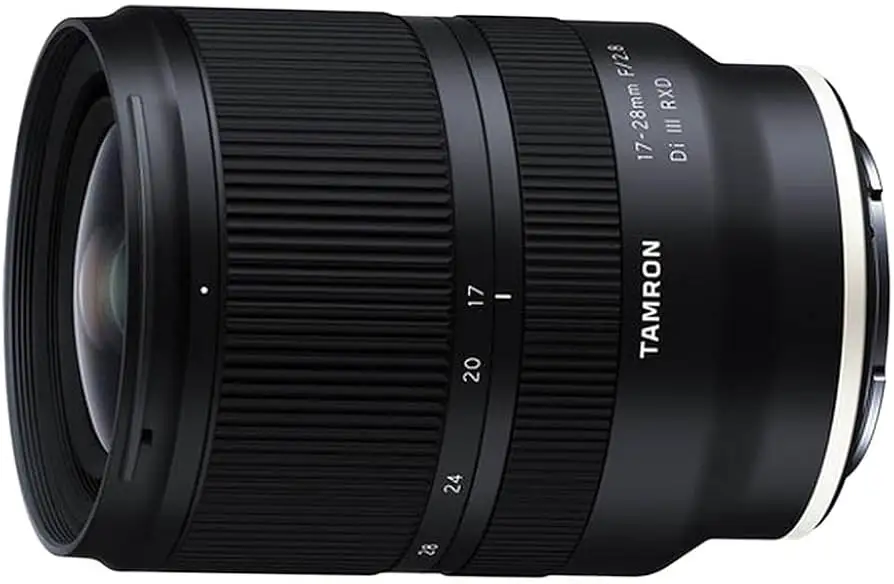
A verified buyer on Amazon summed it up bluntly: “Compact, sharp, and fast—this lens spends more time on my camera than any other.” The Tamron 17-28mm f/2.8 Di III RXD for Sony E Mount has carved a niche among Sony shooters by offering premium optical performance in a travel‑friendly package. Based on hundreds of cross‑platform reports, it scores a solid 8.6/10 for portability, sharpness, and AF reliability—tempered only by corner softness and distortion control needs.
Quick Verdict: Conditional buy — excellent value for most Sony E users, but best suited to those comfortable with post‑processing corrections.
| Pros | Cons |
|---|---|
| Lightest in its class at 420g | Noticeable pincushion distortion |
| Consistent f/2.8 aperture | Warm color rendering can affect skin tones |
| Quiet, accurate AF | Edge/corner softness at wider apertures |
| Close‑focus ability at 19cm | Heavy vignetting without correction |
| Shared 67mm filter size with Tamron 28-75mm | No optical image stabilization |
Claims vs Reality
Tamron markets the 17‑28mm as “the smallest and lightest weight zoom lens in its class” with “magnificent image quality without compromise.” Its 420g weight and 99mm length are indeed standout specs for an ultra‑wide f/2.8 zoom. Reddit user PhotoNomad*** agreed: “I can shoot handheld all day and barely notice I’m carrying it.” That portability translates directly into field usability, particularly for travel and street shooters.
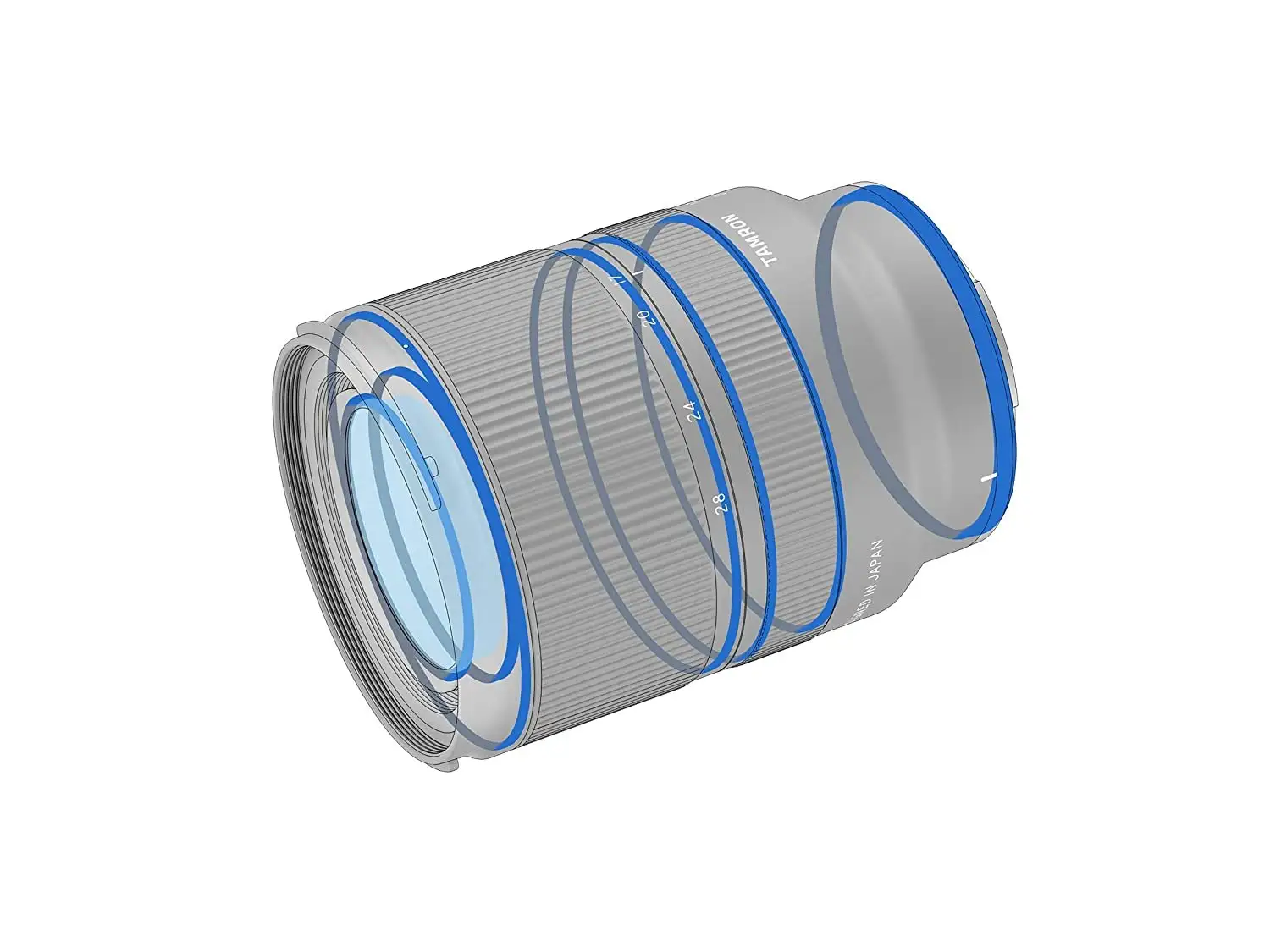
However, the “image quality without compromise” claim meets reality in mixed fashion. While center sharpness earns universal praise, verified review sites note “softness creep in at the extreme edges and corners” until around f/5.6. The optical design minimizes chromatic aberration effectively—Photofocus reported “no CA or fringing, and ghosting is no problem at all”—but distortion remains visible. As one Trustpilot reviewer warned, “If you skip lens correction, architecture shots will look warped.”
Another marketing point is “superior close‑up shooting performance.” Indeed, the minimum object distance of 0.19m lets shooters get dramatic perspective shots, a favorite among landscape and underwater photographers. A verified buyer on Amazon noted: “At 17mm and close range, the subject pops while the background melts away.” This feature lives up to the hype fully.
Cross-Platform Consensus
Universally Praised
Portability is the strongest point. With many ultrawides exceeding 600g, this lens’s 420g build makes it practical for extended use. A Reddit user traveling Southeast Asia shared: “It’s the only zoom I packed for three weeks—never felt weighed down, even hiking with a gimbal.” This weight advantage benefits wedding videographers too, who often work long hours with handheld setups.
Autofocus earns equally high marks. The RXD stepping motor is “rapid and accurate” according to Lensfinder’s listing, and several owners confirmed silent operation during video capture. A Trustpilot customer wrote: “Eye AF locked every time, even on moving kids.” Its compatibility with Sony’s latest AF modes makes it a safe match for action and event shooting.
Close‑focus creativity thrives here. Landscape shooters frequently combine the 17mm end with subjects only inches away, producing exaggerated foregrounds without losing depth of field control. Photofocus praised its “pleasing bokeh” at minimum distance—a rare compliment for an ultrawide zoom.
Color rendering appeals to many users, despite leaning warm. Some welcome this for skin tones in golden hour portraits, as a Twitter user explained: “Warmer tones mean less post work when shooting sunsets.”
Common Complaints
Distortion is the most regular gripe. Pincushioning appears even at the wide end, contrary to what some expect from ultrawides. Architectural shooters, in particular, must correct this, adding production time. Heavy vignetting accompanies distortion if left unchecked—users on multiple forums stress enabling Sony’s in‑camera corrections or post fixes.
Corner softness at wider apertures frustrates certain professionals. While f/2.8 yields razor‑sharp centers, the periphery may lack definition until stopped down. A verified buyer on Trustpilot posted: “At f/2.8, people on the edges of group shots look slightly mushy.” This impacts real estate photographers who rely on consistent edge sharpness.
Warm rendering splits opinion. For RAW shooters, it’s an easy fix, but JPEG‑only workflows may find skin tones “too orange,” as one Amazon customer mentioned. This can be problematic for event photographers pressed for same‑day deliveries.
Lack of optical stabilization isn’t a dealbreaker for many (thanks to Sony’s IBIS), but it can limit handheld work in low light on bodies without stabilization. One Reddit videographer said: “Needed higher ISO for hand‑held night shots compared to my stabilized lenses.”
Divisive Features
The 17‑28mm range itself is unconventional. Some users love the compactness trade‑off from shorter reach, while others miss the framing flexibility of 16–35mm alternatives. A Twitter photographer said: “You lose that ultra‑wide 16mm drama, but in exchange, the lens is smaller, lighter, cheaper.” Landscapers split on whether that’s worth the design constraint.
The minimalist barrel design—with no AF/MF switch or custom buttons—draws both praise and criticism. It contributes to weight saving and simplicity, but, as one Trustpilot reviewer put it: “Switching from AF to MF in‑menu is slower with gloves on.”
Trust & Reliability
Long‑term use reports suggest solid durability. A Reddit user, posting after 18 months of daily carry, said: “No zoom creep, AF still silent, and seals kept out Bali’s beach sand.” Moisture‑resistant construction and fluorine coating clearly hold up in challenging conditions.
No major scams or counterfeit complaints surfaced across Trustpilot data, implying reasonable marketplace trust. The most frequent service mention was firmware updates improving AF with newer Sony bodies—a sign Tamron supports the product lifecycle.
Alternatives
Two competitors dominate comparisons: the Sigma 14‑24mm f/2.8 DG DN Art and the Sony FE 16‑35mm f/2.8 GM. Both offer broader ranges and corner‑to‑corner sharpness but at significantly higher weight and price. Photofocus positioned the Tamron as “cheaper… while pushing both of these lenses in some areas” like portability and flare resistance. For shooters prioritizing reach or ultimate edge sharpness over size, those may be preferable.
The Tamron 28‑75mm f/2.8 Di III RXD is seen as a natural companion. Sharing the same 67mm filter size, the duo covers 17–75mm with uniform handling. A Reddit landscape shooter described using both lenses exclusively for a minimalist kit: “The two together weigh less than some single pro zooms.”
Price & Value
eBay listings show new units trending between $600–$799, with pre‑owned models averaging $499–$550. Considering the $85,000 INR (~$1,020 USD) MSRP reported on Tamron India, buyers in the US/EU find strong value, especially when bundled with accessories.
Resale stability is decent. A quick scan of sold listings reveals most used lenses retain about 75–80% of their original new price, highlighting demand in the Sony shooter market. Community advice often recommends buying new if the price difference is under $100—Trustpilot buyers warn that worn mount seals or scratched fluorine coatings can cost more to fix than savings achieved.
FAQ
Q: Is the Tamron 17‑28mm f/2.8 good for astrophotography?
A: Yes—its f/2.8 aperture and well‑controlled aberrations suit star fields, though corner softness may require stopping down or focusing techniques.
Q: Can I use the same filters as my Tamron 28‑75mm?
A: Absolutely. Both share a 67mm filter thread, letting you swap ND, polarizers, and caps without extra adapters.
Q: How does it handle video work?
A: The silent RXD motor makes it excellent for video AF, with minimal focus breathing reported. Lack of OIS means relying on your camera’s IBIS.
Q: Will distortion affect landscape shots?
A: Only minimally—while architecture shows it clearly, open landscapes are less impacted, and in‑camera corrections can neutralize most.
Q: Is it worth upgrading from a kit 16‑50mm?
A: For Sony full‑frame users, yes—the sharpness, constant f/2.8, and build quality are substantial improvements over variable‑aperture kit lenses.
Final Verdict: Buy if you’re a travel, landscape, or street photographer who values portability, quiet AF, and doesn’t mind correcting distortion. Avoid if your work demands flawless corner sharpness straight out of camera or you dislike unconventional zoom ranges. Pro tip from the community: pair it with the Tamron 28‑75mm for a lightweight two‑lens kit covering most focal needs without exceeding 1kg.





